




Anacapri: A Private Residence in Capri’s Higher Island Setting
Anacapri offers a distinct residential perspective within Capri, with a higher island setting and an atmosphere that can place greater emphasis on gardens, vegetation and the land around the house. The sea remains part of the wider landscape, but the experience of a private home is not necessarily organized around one exposed coastal edge. A residence can feel settled within its grounds, providing a domestic scale that complements the island’s more dramatic natural contours.
Within the Amalfi Coast collection, this is a separate island context rather than another mainland coastal village. Its identity belongs to Italy through a specifically Caprese relationship between building, planted exterior space and the surrounding terrain. The quality of a stay lies in the exact position of the house and the way its rooms are arranged, allowing the household to choose a home with a clear local character rather than relying on a broad island reputation alone.
The Higher Setting and Its Different Perspectives
A raised position can create a broad relationship with the horizon, but it also changes the foreground. Trees, rooflines and the contours of the island may become part of the view before the sea is reached. This layered setting can make a residence feel closely connected to the land, especially where a garden gives the main rooms a protected exterior context. The landscape is most persuasive when it is experienced through several scales rather than reduced to a single panoramic image.
Not every property has the same degree of openness. A house within a more settled architectural pattern may derive much of its identity from neighboring walls and planted courts, while a detached villa can create a more independent domestic world. These conditions offer different forms of intimacy. The appropriate residence is one whose actual setting supports the household’s preferred balance between connection and withdrawal, with architecture that allows privacy to be experienced naturally throughout the home.
The Garden as a Defining Element
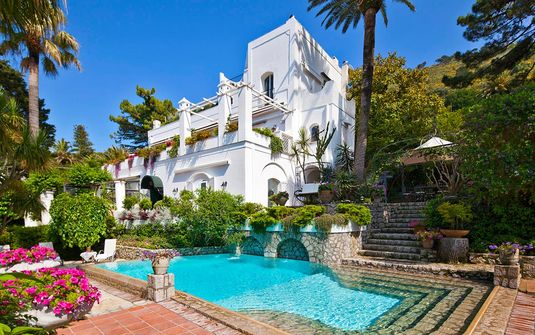
In an Anacapri residence, the grounds can contribute as much character as the principal façade. Mature trees, stone boundaries and planted terraces establish a sequence between the building and the wider island landscape. A contained court may provide an intimate setting close to a room, while a more open garden area gives the house additional breadth. These distinctions allow the exterior to feel like part of the private plan rather than simply an ornamental area surrounding the villa.
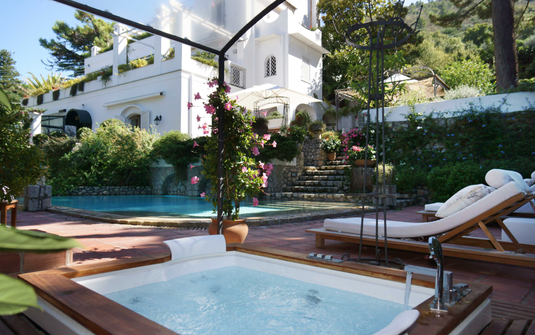
A terrace is most comfortable when it has a clear architectural scale. The depth of the space, the presence of a pergola or the protection of a building wing can make the exterior feel room-like without severing its relationship with the landscape. The sea view then becomes one element of a complete setting. A private home gains richness when the household can choose among several exterior atmospheres, from a communal area near the lounge to a quieter corner that supports personal withdrawal.
An Island House with Domestic Warmth
Traditional Caprese forms can provide a convincing architectural basis through rendered surfaces, substantial walls, vaulted rooms and a gradual transition between interior and exterior. Restoration is most successful when it preserves those qualities without turning the residence into a formal historical display. Contemporary furnishings and carefully considered materials can bring ease to the rooms, allowing the building’s proportions to remain legible while providing the comfort expected of a distinguished private address.
A more recent villa can interpret the same setting through simpler volumes and broader openings, but it benefits from retaining places of enclosure. A quiet sitting room, a private suite facing planting or a protected court gives the home a more intimate register alongside its open communal areas. The contrast between these spaces is important during a sustained stay. It allows the residence to support different routines without making every part of household life depend on one continuous sea-facing room.
Privacy Through the Arrangement of Rooms
Suite distribution determines how independently a group can occupy the property. Bedrooms within a single main building create a closer domestic pattern, while separate wings or guest accommodation provide another degree of autonomy. The appropriate arrangement depends on the household, but each room should offer a considered level of comfort and separation. A villa feels balanced when the quality of its private areas is consistent enough that the whole group can settle naturally into the residence.
The relationship with surrounding buildings is equally consequential. An elevated terrace can have an extensive outlook yet remain visible from neighboring properties, while a more contained garden-facing space may offer greater intimacy. Thoughtful orientation, walls and mature planting can provide meaningful protection. Privacy should therefore be understood from the rooms and exterior settings actually used by the household, not assumed automatically from the house’s position, apparent scale or association with a distinguished island address.
A More Personal Caprese Stay
Anacapri is particularly appealing when the residence allows the quieter details of the setting to become part of daily domestic life. The texture of an old wall, a garden seen from a familiar room and the changing depth of an island outlook can create a strong sense of belonging. These are substantial qualities because they remain present throughout a stay, giving the household a complete home rather than an environment dependent on a succession of impressive exterior views.
The enduring attraction lies in the coherence of architecture, grounds and location. A house that provides generous shared rooms, protected private suites and a considered relationship with the land can offer a refined form of island independence. In Anacapri, that experience has a particular scale and atmosphere: deeply residential, connected to the higher setting of Capri and shaped by the balance between planted enclosure, architectural warmth and the wider Mediterranean horizon.


