




British Virgin Islands: Private Homes Across an Island Landscape
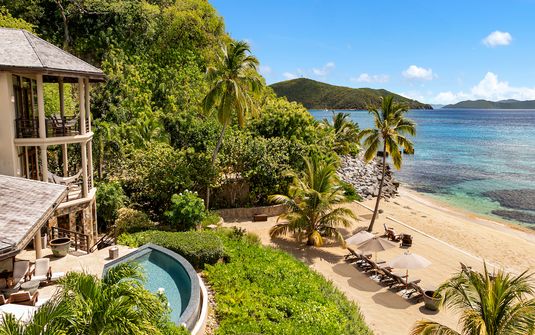
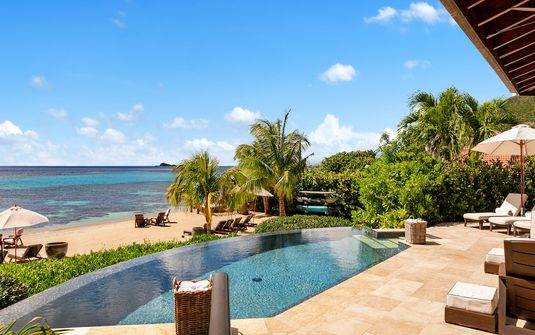
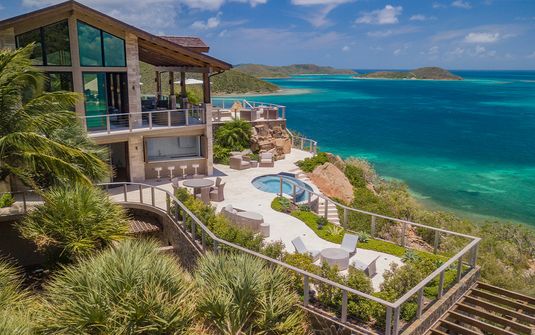
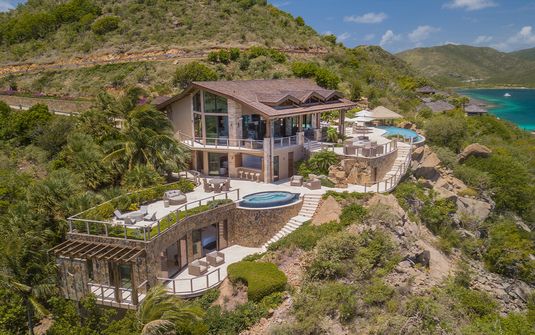
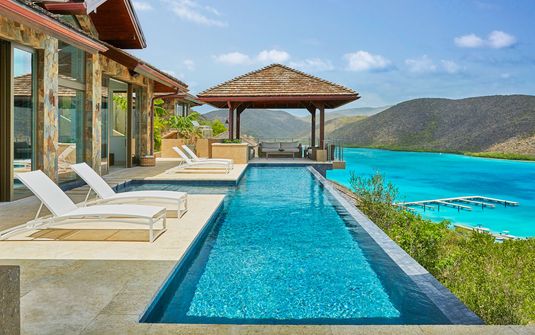
The British Virgin Islands offer a particularly layered expression of the Caribbean: steep green land rising above sheltered channels, small islands separated by luminous water, and houses whose outlook often includes several coastlines at once. The setting changes markedly between a residence on a populated hillside and an estate occupying a much smaller island. That distinction matters more than a general promise of seclusion. The most compelling stays begin with a precise understanding of the landscape around the house, the arrangement of its private spaces, and how closely the residence belongs to its particular stretch of shore.
Distinctive Islands, Different Forms of Privacy
Buck Island
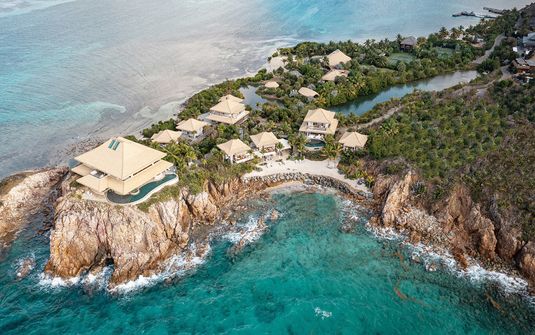
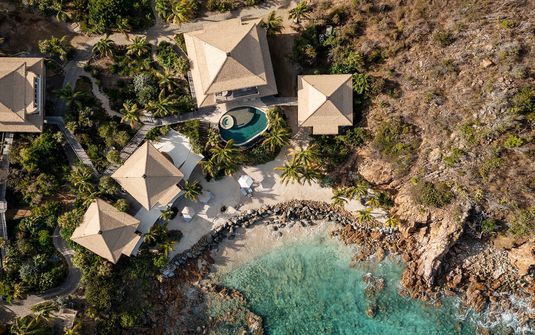
Buck Island introduces a compact private-island setting with a residential character shaped by The Aerial. Its accommodation is distributed among separate houses and individually conceived rooms, rather than expressed as a single monumental building. Natural materials and outward-facing spaces establish a close relationship with the surrounding water. For a private party, this arrangement gives the island an intimate scale while allowing different members of the group their own corners. The appeal lies in the interplay between shared surroundings and personal retreat, with the island itself providing the broader boundary around the stay.
Moskito Island
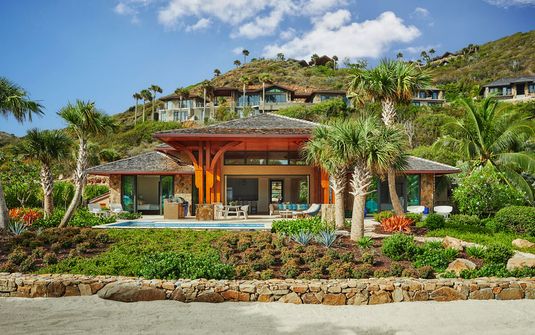
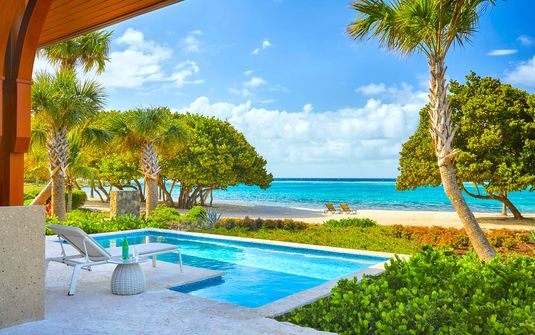
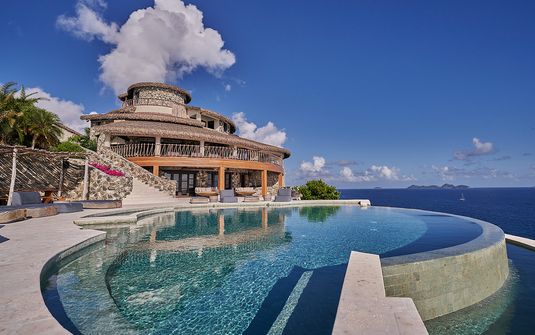
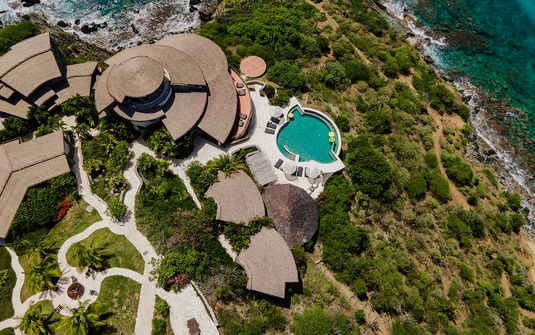
On Moskito Island, the estate is the defining architectural unit. Multiple buildings can form a single residential composition, with bedrooms, principal gathering spaces, and terraces arranged across a substantial site. The Branson Beach Estate provides one distinctive example through its Balinese-inspired houses and relationship with a private beach. Other residences must be considered on their individual merits: outlook, internal separation, and the balance between elevated and shoreline spaces vary. This is an island for guests who value a house with a clear identity and enough spatial variety to accommodate a party without making every moment communal.
Necker Island
Necker Island has an architectural vocabulary closely associated with its elevated Great House and separate Balinese-style accommodation. The highest outlooks establish the island within a wide seascape, while the dispersed buildings create more intimate settings closer to the ground. The distinction between a central house and individual retreats gives a stay several different registers. Expansive shared rooms can feel generous and sociable; a detached bedroom pavilion can feel substantially quieter. The island's character therefore comes as much from the relationship between its buildings as from the surrounding beaches and water.
Scrub Island
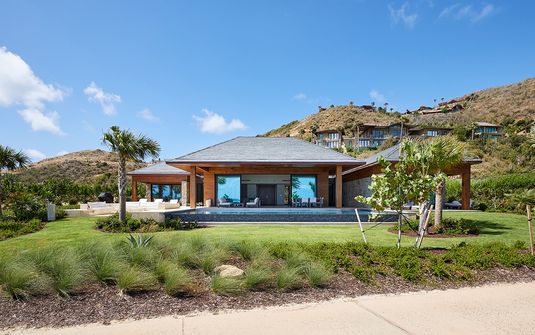
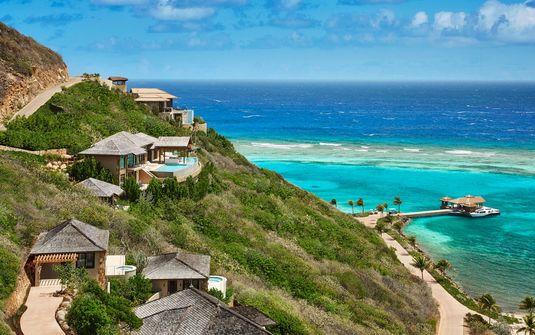
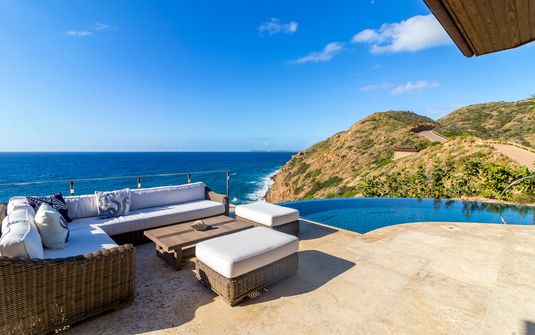
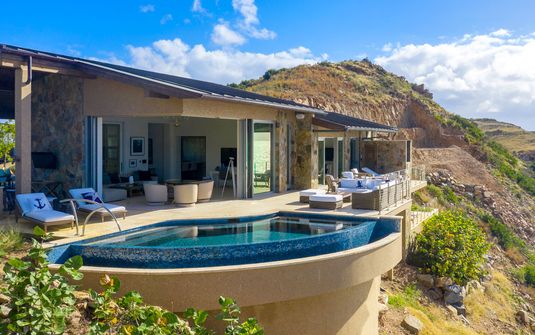
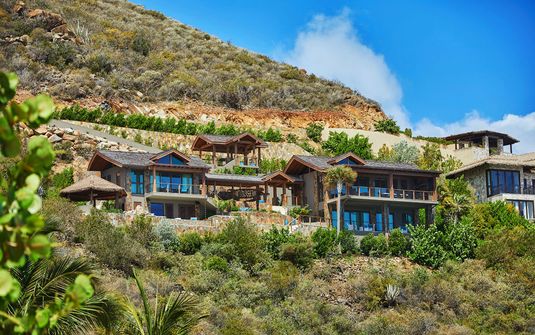
Scrub Island combines hillside residences with the visual presence of a marina and an established resort setting. Villas occupy elevated positions where the slope becomes part of the architecture, producing terraces, changes of level, and broad views across the surrounding channels. This is a more articulated coastal scene than an isolated house looking over an empty horizon. A carefully positioned residence can offer a private domestic setting while retaining that sense of a wider island community below. Orientation, terrace screening, and the position of neighboring buildings are especially important to the character of an individual villa.
Tortola
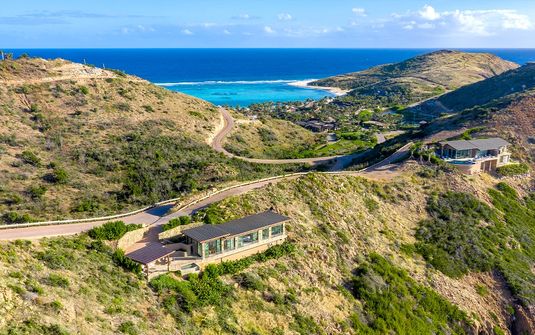
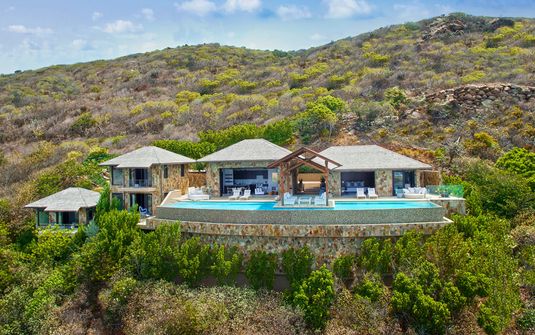
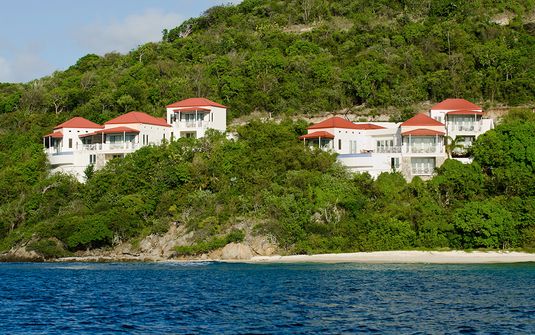
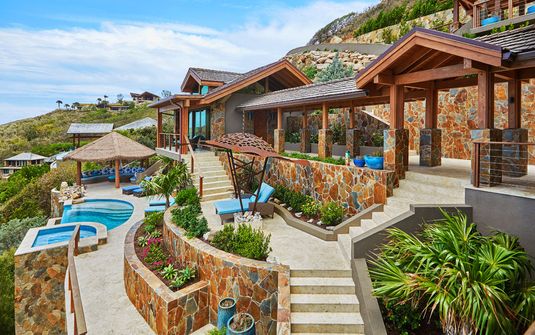
The mountainous landscape of Tortola supports a notably varied residential geography. A ridge house, a villa above a bay, and a sheltered property within a greener hillside setting can offer very different impressions of the same island. Houses often respond to sloping ground with separate wings, stepped terraces, or several outdoor levels. The resulting perspective includes folds of land as well as sea, giving depth to the view. Tortola suits guests who want an established island setting and a residence whose privacy is created through its particular site, rather than through isolation from a larger inhabited landscape.
Virgin Gorda
On Virgin Gorda, granite formations give parts of the coastline an unusually sculptural quality. The contrast between pale rock, vegetation, and clear water creates a visual language that can carry through into a residence's terraces and gardens. Elsewhere, elevated houses take in a broader panorama of bays and neighboring islands. The relationship between building and terrain deserves close attention: a home framed by mature planting will feel different from an exposed contemporary villa with long sightlines. Both can be exceptional, but their atmospheres depend on the particular composition of stone, landscape, and open space.
Architecture That Responds to the Site
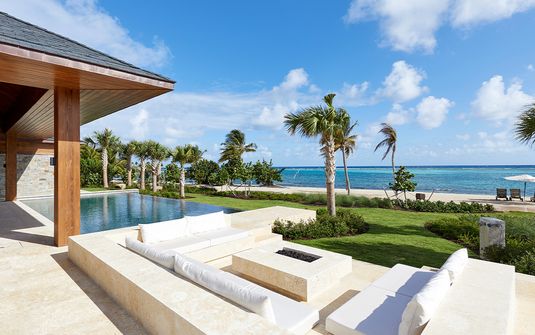
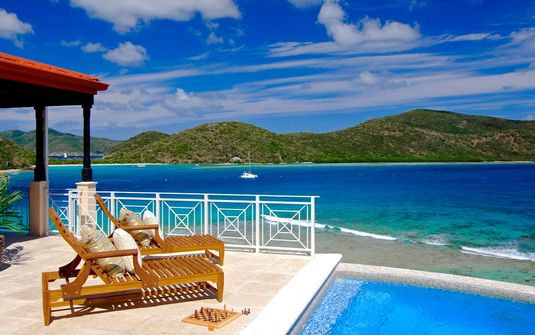
Across the archipelago, the strongest residential design treats the sea as more than a backdrop. Roof depth determines how much of a terrace functions as a comfortable outdoor room; the alignment of doors controls whether a view feels framed or expansive; and the placement of bedroom wings influences the balance between togetherness and independence. A pavilion arrangement can bring a large estate down to a human scale, while a compact house may gain generosity through a continuous veranda. These are meaningful distinctions for guests choosing between residences with similar photographs but very different spatial experiences.
Materials and Interior Character
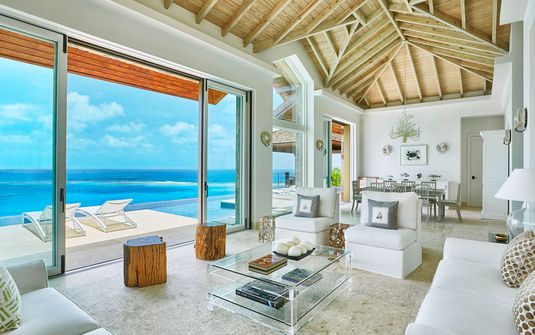
Timber, pale masonry, natural stone, and woven textures can soften the transition between a house and its setting without making every interior look alike. Some residences favor the warmth of exposed beams and richly finished wood; others use restrained surfaces and larger openings to give the landscape greater prominence. The quality of a room also depends on quieter decisions: where a bed faces, whether seating has a view beyond glass, and how storage and bathrooms are integrated. A coherent interior makes the residence feel considered throughout, including the spaces that are less visible in a panoramic photograph.
Choosing the Right Residential Arrangement
For an extended family or a group of friends, bedroom count alone reveals little about how comfortably a house will work. Equally attractive suites may sit on different levels or in separate buildings, and the route between them can materially affect the sense of connection. A principal suite beside the main terrace offers a different degree of withdrawal from one in an independent pavilion. Shared living rooms should also be proportionate to the party, with more than one place to settle. The most suitable residence allows guests to be together without requiring everyone to occupy the same setting throughout the day.
Privacy Within the Estate
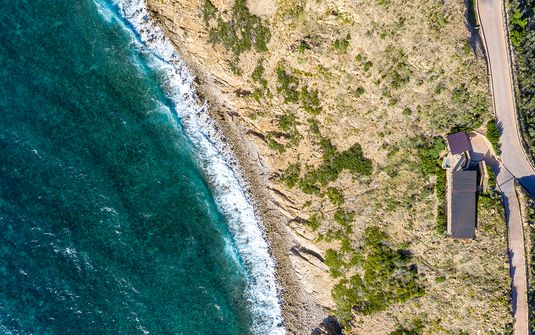
Private space is best understood as a sequence of boundaries rather than a single label. The edge of an island, the approach to an estate, the screening around a terrace, and the separation of a bedroom each contribute something different. A panoramic deck may be visually open while a courtyard is enclosed; an elevated house can feel removed yet remain visible across a bay. Planting, changes in level, and carefully offset buildings often create the most comfortable balance. These details help distinguish a property that merely looks secluded from one whose domestic arrangement supports a genuinely unhurried stay.
A Stay With a Clear Sense of Place
The British Virgin Islands are most rewarding when the choice of residence reflects the landscape and the way a party wishes to inhabit it. A smaller island estate offers a contained world; a hillside home brings the wider archipelago into everyday view; a house close to distinctive rock formations creates a more immediate relationship with the shore. None of these settings is interchangeable. The enduring appeal is the ability to choose an individual house, with its own proportions, outlook, and atmosphere, and let that particular place establish the character of the stay.


