




St. James: Distinctive Private Houses across Barbados’ Western Landscape
St. James brings together several of the most recognisable residential settings on the western side of Barbados, with private homes occupying different relationships to coast, garden and higher ground. The parish is broader than one enclave or one architectural style. Within the wider Caribbean, its appeal lies in the range of ways a household can inhabit the island: a house directly beside the sand, an established garden estate or a residence with a wider outlook from a ridge. The particular site gives each stay its atmosphere, with the architecture shaping how that setting is experienced from within.
The western landscape offers a strong coastal reference, but the private residence need not depend entirely on frontage. Mature planting, courtyards and separate accommodation can create a more intimate domestic world behind the principal view. A house becomes rewarding when its rooms have several distinct purposes, allowing guests to gather naturally while retaining spaces that feel personal and quiet. St. James offers that variety within an established parish context, with the actual grounds and plan determining whether the experience feels expansive, enclosed or a considered balance of both.
A Residential Architectural Tradition
Crystal Springs and the Messel Legacy
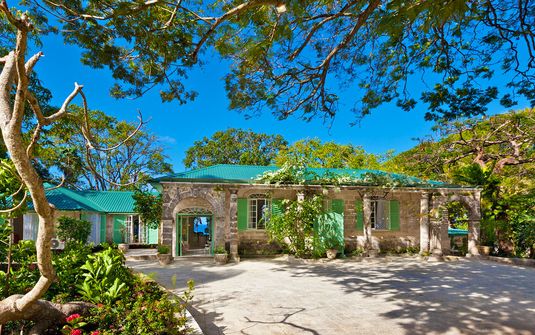
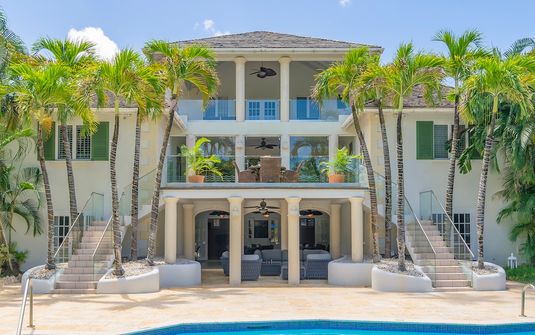
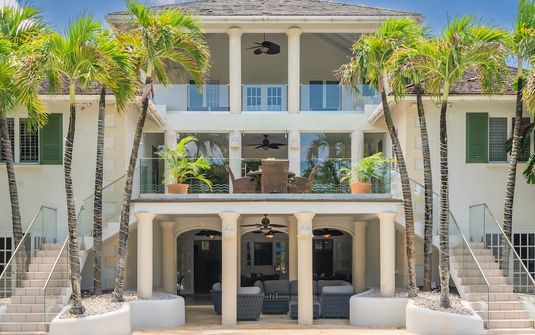
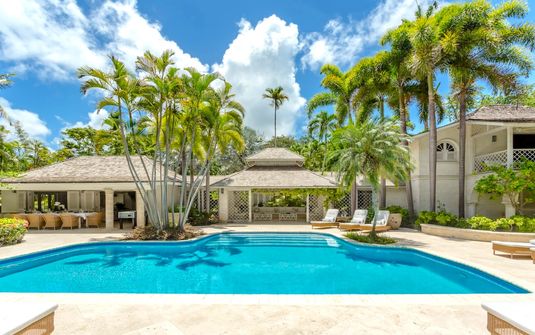
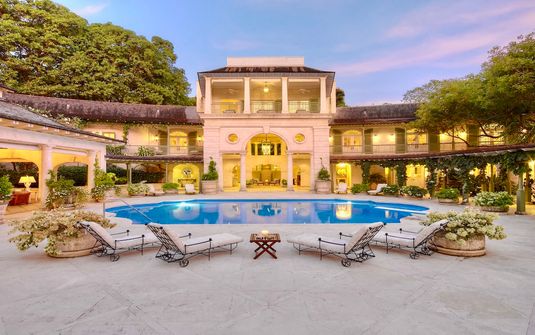
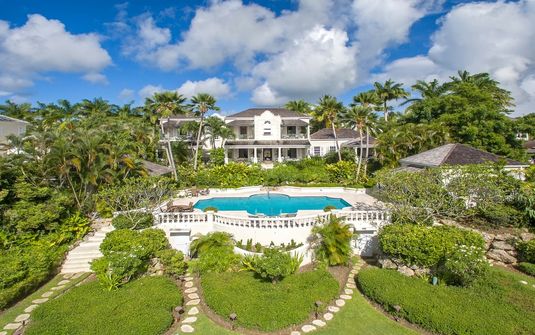
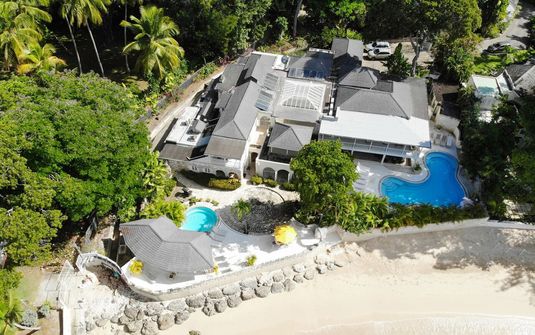
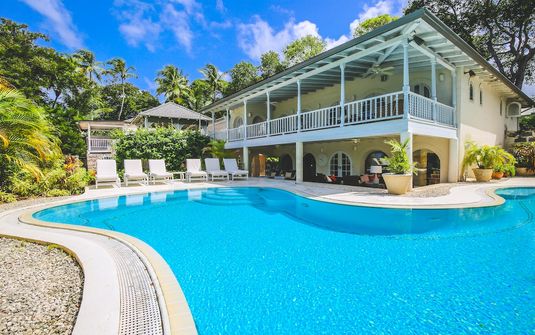
Crystal Springs provides a distinctive architectural reference within St. James. The house was reworked by Oliver Messel, whose Barbadian residential designs helped establish a particular relationship between gardens, verandas and private interiors. The property’s later restoration preserved its historic character while adapting the rooms for comfortable domestic use. Its significance is more than a decorative style: it shows how a house can gain depth through a sequence of spaces, with sheltered exterior rooms and carefully framed views giving the residence a personal scale alongside the broader coastal setting.
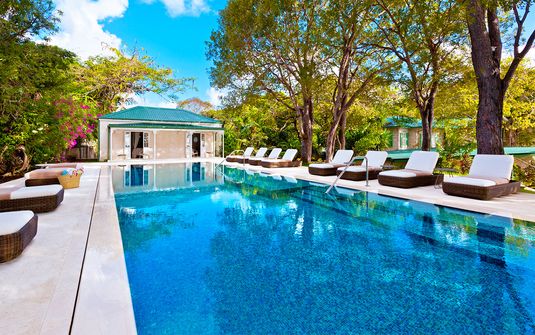
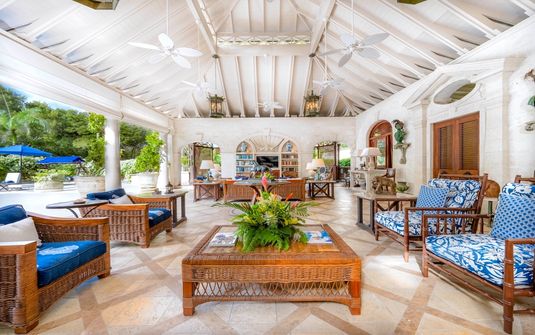
That layered approach remains useful within a larger private home. A veranda can feel like a full room, a planted court can introduce an intimate foreground and a quieter suite can have a view distinct from the principal terrace. These settings allow the household to occupy the residence in several ways without losing the coherence of one shared home. The architecture becomes more rewarding through repeated use, with smaller rooms and exterior corners retaining their own character after the initial impression of the main outlook has become familiar.
A Contemporary House at the Shore
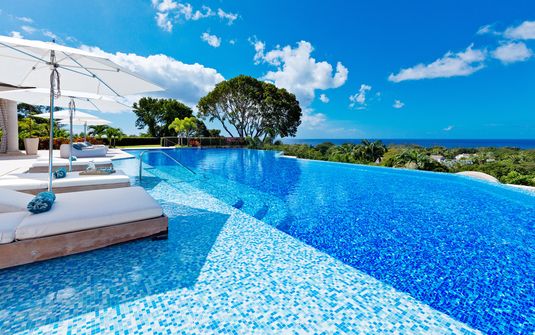
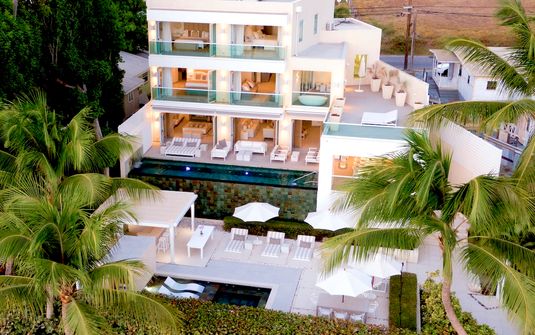
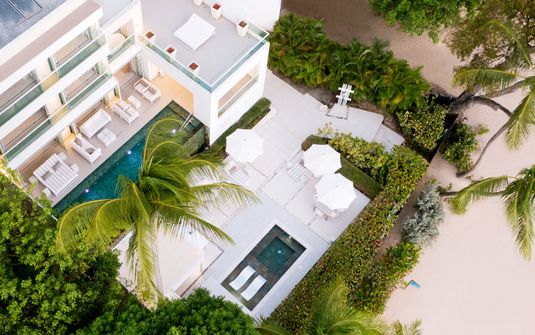
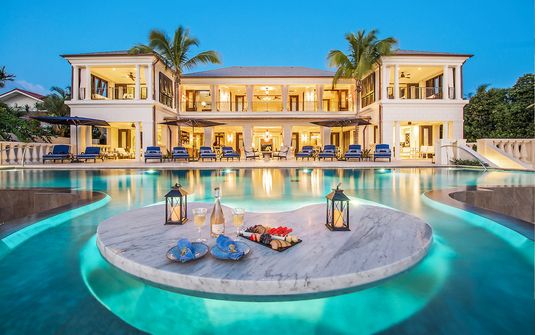
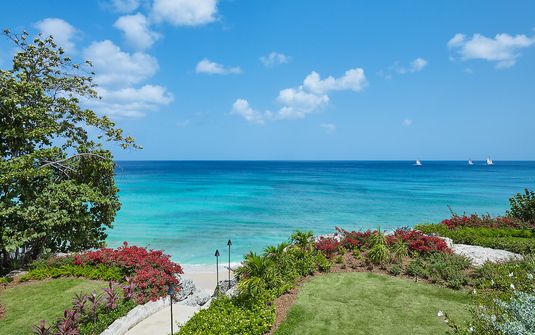
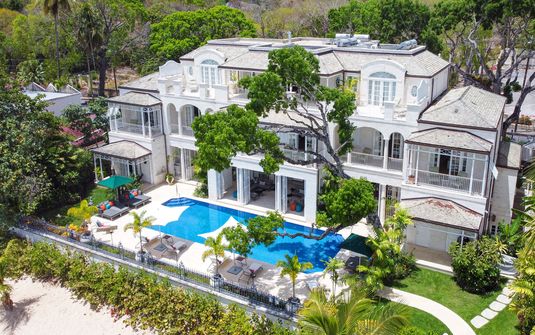
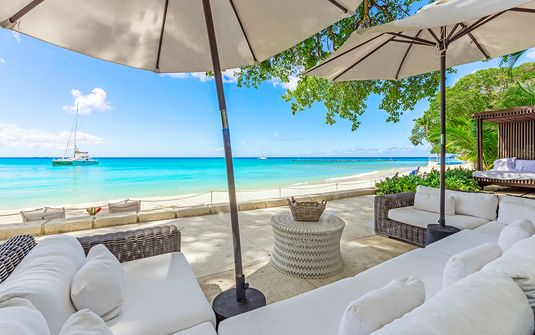
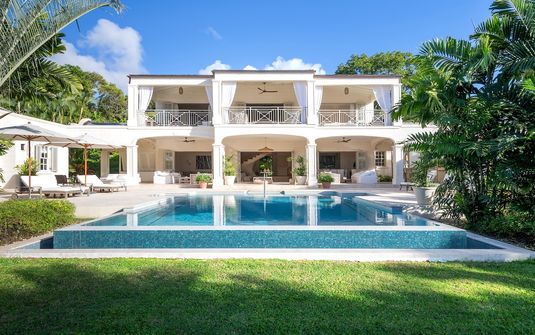
Footprints offers another architectural expression, with a contemporary beachfront position at Alleynes Bay and interiors associated with Kelly Hoppen’s measured use of line and tone. Its character is more directly connected to a modern coastal composition, with the principal rooms and exterior spaces giving the sea a prominent role. The house demonstrates the range within St. James: traditional architectural references and a more contemporary approach can occupy the same wider parish while creating different domestic experiences. The appeal of each lies in how convincingly its own rooms, materials and grounds belong together.
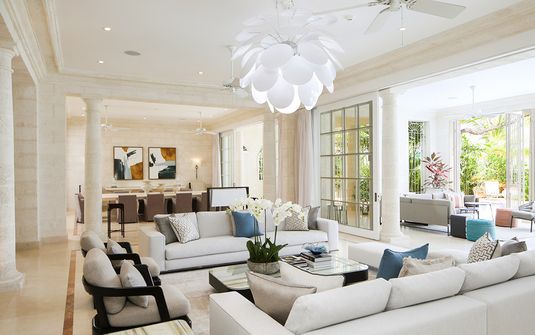
In a contemporary beach house, the transition between interior and terrace carries particular importance. A broad opening can bring the shoreline close to the main room, while a covered exterior area creates a more sheltered scale beside an open deck. Private accommodation benefits from quieter relationships, whether through a separate wing, a garden aspect or a smaller exterior corner. This variety prevents the home from becoming a repetition of one panorama, giving guests several degrees of openness and enough domestic depth to enjoy the residence beyond its most immediately impressive view.
Higher Ground and an Estate Setting
Royal Westmoreland
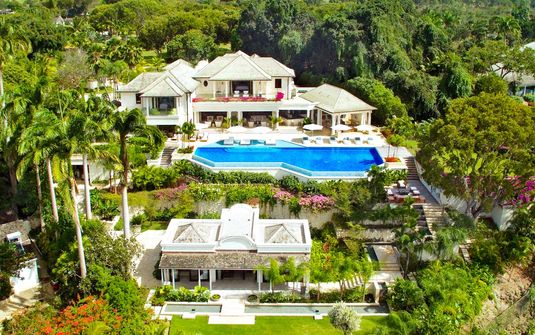
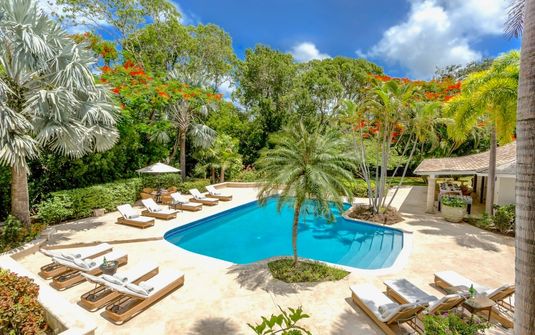
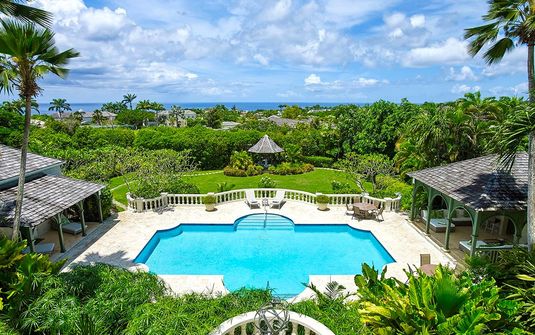
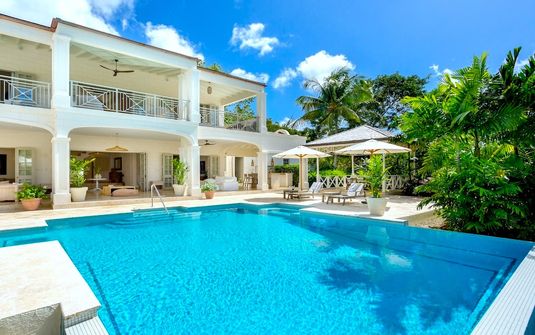
Royal Westmoreland introduces another residential context within St. James, with individual houses arranged across a more extensive estate landscape. Its architectural range includes both classical and contemporary forms, allowing different homes to establish their own proportions and interior character. A residence can use a veranda, a planted court or a more open principal room to connect with its actual site. The appeal differs from an immediately beachfront address, with gardens and the land around the building providing a stronger domestic foreground before any broader coastal prospect.
The difference between a ridge-facing home and a more enclosed garden property is important to a shared stay. An elevated principal room can feel expansive, while a lower court or suite offers another degree of intimacy. The quality of the plan lies in the natural connection between those settings, keeping shared rooms coherent and private accommodation distinct. A house feels generous when it supports several daily rhythms without requiring everyone to occupy one central terrace. The actual residence remains decisive, with its outlook, boundaries and room arrangement shaping the atmosphere more precisely than the wider estate name alone.
Landscape at the Scale of Everyday Living
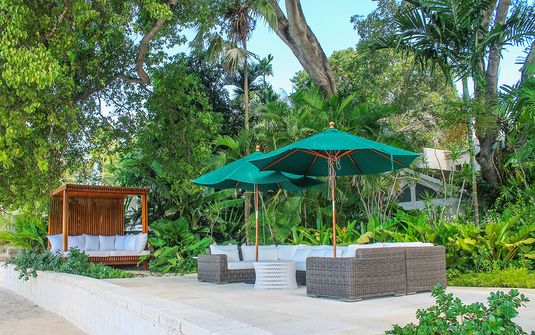
Across the parish, the grounds close to the house can be as rewarding as the distant coastal view. Planting beside a bedroom, a wall along a shaded passage or a quieter exterior sitting area gives the residence several close compositions. These settings make secondary rooms attractive in their own right, allowing the house to remain engaging from less prominent positions. The landscape becomes part of the domestic plan, connecting wings and establishing different degrees of enclosure rather than simply framing the building from outside. The result is a home with depth at both the shared and private scale.
Interior materials extend that depth through texture and variation. Timber detailing, stone surfaces and comfortable furnishings can connect the house while allowing individual rooms to have their own mood. A bedroom may feel warmer and more enclosed than the main lounge, and a garden-facing room can provide another visual centre from the principal coastal terrace. These differences sustain a longer stay, giving guests familiar places that remain comfortable through ordinary use. A residence feels more complete when its quieter interiors receive as much care as the spaces intended to make the strongest first impression.
Privacy within an Established Coastal Parish
Discretion in St. James is specific to the chosen property. The direction of neighbouring windows, the depth of the grounds and the placement of exterior rooms influence how secluded a space feels. Within the house, separate suites and quieter circulation create another degree of retreat. A larger estate or a broad view does not by itself resolve these relationships. The most comfortable private setting comes from a coherent plan and a considered boundary, allowing the residence to belong to an established parish while preserving rooms and gardens that feel personal to the household within them.
St. James offers a varied residential interpretation of western Barbados, with architectural heritage, contemporary beachfront homes and estate-scale garden settings providing different foundations for a stay. Crystal Springs, Footprints and the homes of Royal Westmoreland illustrate that range without defining every address in the same way. A rewarding residence brings its own conditions into focus through the relationship between rooms, grounds and actual outlook. Luxury feels personal when that whole remains comfortable beyond the principal view, offering enough privacy and domestic variety to sustain an extended Barbadian stay.


