




Nassau: Private Residences within a Historic Bahamian Coastal City
Nassau brings a distinctly urban and architectural dimension to private living in the Bahamas. Set on New Providence, the capital combines a recognisable historic centre with a broader residential and coastal landscape. Within the wider Caribbean world, its appeal is more layered than a single image of island seclusion. A private house can belong to an established neighbourhood, a coastal residence can frame a broader sea outlook, and an upper-level home can offer a different perspective again. The actual address determines how the household experiences the relationship between city, grounds and shore.
The quality of a Nassau stay lies in finding a residence whose private atmosphere remains clear within that wider context. Gardens, terraces and well-arranged interiors can create a personal domestic world without requiring the entire surrounding district to feel isolated. The city gives the house a strong sense of place, while the plan provides room to gather and withdraw. This balance allows the residence to feel grounded and individual, offering the comfort of a coherent home alongside the architectural and coastal character that distinguishes Nassau from the smaller island settings elsewhere in the archipelago.
An Architectural Identity beyond the Beach
Nassau’s historic building tradition gives the city a recognisable visual language. Government House is associated with Georgian Colonial architecture, while Parliament Square contributes to the capital’s established architectural setting. These buildings provide context rather than a style that every private residence must imitate. A house can acknowledge the city through proportion, roof form or a measured entrance sequence while retaining contemporary interiors. The appeal is a sense of continuity with place, allowing a private home to belong to an inhabited city rather than appearing as an anonymous coastal building detached from its surroundings.
That architectural context can make enclosure particularly rewarding. A planted courtyard, a sheltered veranda or a garden wall can create a transition between the wider neighbourhood and the private rooms within. The house acquires depth through those thresholds, with the principal interior revealed gradually rather than exposed immediately from the boundary. More intimate spaces can turn toward planting, while shared rooms acknowledge a wider outlook where the site allows. This gives a Nassau residence several scales of experience, balancing the presence of the city with the quieter domestic atmosphere expected from a private home.
The Coastal Side of Nassau
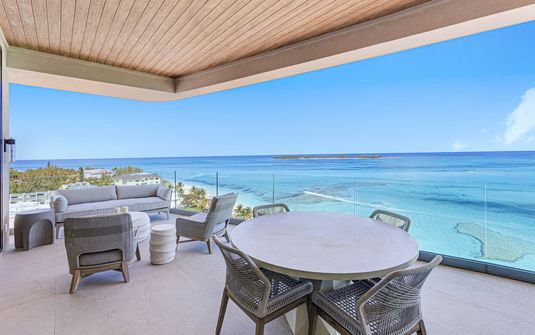
Nassau’s wider shoreline introduces another residential character beyond the historic centre. At a coast-facing address, the principal room may look broadly across the water, while a terrace establishes a private foreground between the interior and the shore. The position of the property remains important: a lower residence has another relationship to the landscape from an upper-floor home or a house set behind deeper grounds. These differences shape the atmosphere of a stay, making the actual outlook and degree of enclosure more useful distinctions than a general description of every Nassau address as an equivalent waterfront setting.
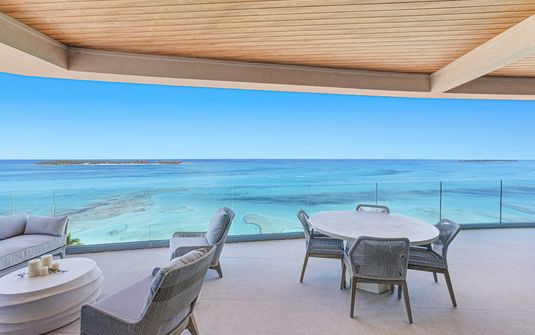
A broad sea perspective becomes more comfortable when the architecture provides several degrees of openness. A covered exterior room can feel like a natural extension of the lounge, while a more enclosed bedroom or garden-facing sitting area creates a quieter alternative. The residence gains variety through those contrasts. The coast remains a strong reference, but it does not need to be the sole subject of every interior. A thoughtful home offers spaces that are attractive in their own right, allowing the household to enjoy both the wider setting and the smaller comforts of private domestic life.
Aqualina: A Contemporary Residential Perspective
Upper-Level Homes and Coastal Outlooks
Aqualina at Cable Beach provides an example of a more vertical residential format represented in Nassau. Its contemporary architecture uses broad glazing and elevated coastal positions to give the water a prominent role within the home. Private elevator access offers a distinct entrance arrangement compared with a stand-alone house, while the residence itself remains a defined domestic setting within a larger building. This is a different way to inhabit the coast, with the quality of the interior plan, private terrace and actual outlook carrying particular importance to the household’s experience.
The penthouse format introduces another scale within that composition. A higher position can broaden the coastal perspective, while a well-proportioned interior and exterior connection keeps the residence comfortable to use. The home needs a clear shared centre and private accommodation whose atmosphere is distinct from the principal gathering room. Its appeal is not dependent on the presence of extensive grounds. A useful plan can provide generosity through the relationship between rooms, allowing the household to enjoy a coherent private residence whose identity comes from its architecture, proportions and relationship to the shore.
The Individuality of a Private Home
A stand-alone house offers another domestic experience, with gardens and boundaries creating a private foreground at ground level. A courtyard can bring planting close to bedrooms, while a veranda gives the principal interior an exterior room of its own. These settings can feel intimate even where the wider neighbourhood is established and inhabited. The residence becomes personal through its sequence of rooms and the way it handles the actual site, giving the household several attractive places to occupy without relying entirely on a distant sea view or the scale of a single central lounge.
Materials and interior detail reinforce that individuality. Timber joinery, textured walls and comfortable furnishings can give quieter rooms warmth, while the principal shared space remains more open and expansive. A bedroom may have a softer atmosphere than the main lounge, and a garden-facing room can offer a different visual centre from the coastal terrace. Recurring details keep the house coherent without making its interiors interchangeable. Over time, these differences become increasingly valuable, allowing guests to settle into particular rooms because they are rewarding to inhabit, not simply because they provide the widest outlook.
Privacy within a Shared Household
For families or couples sharing a residence, the distinction between shared circulation and private accommodation determines how comfortably different daily rhythms can coexist. A quieter suite entrance, a secondary lounge or a modest exterior corner gives guests an alternative to the principal gathering area. The home feels generous through those choices rather than through size alone. Privacy at the boundary also remains specific to the property, with orientation, planting and the relationship to neighbouring windows influencing the atmosphere. A coherent residence resolves both scales, allowing the household to enjoy company while preserving meaningful retreat.
Nassau offers a private residential setting with architectural substance and a clear urban identity alongside its coast. Historic context, individual garden houses and contemporary upper-level homes provide different foundations for a stay. The most rewarding residence brings its actual conditions into focus, with rooms, grounds or terraces that feel connected as parts of one complete home. Luxury is expressed in that domestic coherence, giving the household comfort and individuality beyond the principal view while keeping the city’s Bahamian character consistently present throughout a longer stay.


