


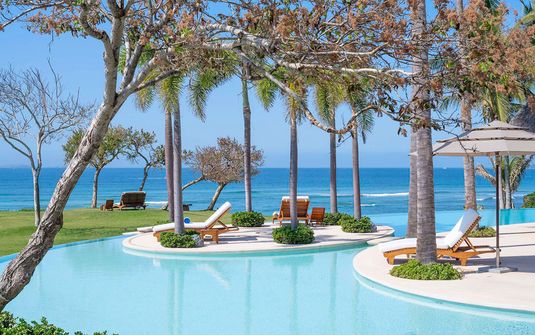
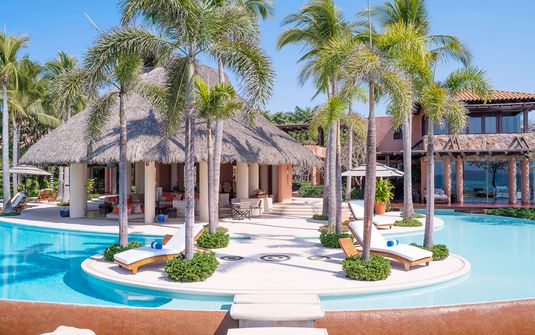


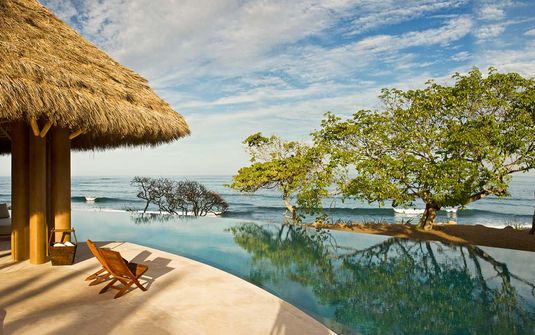
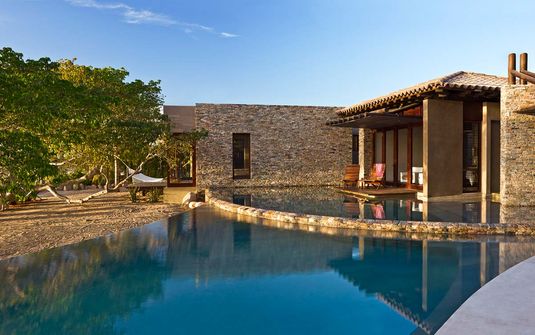
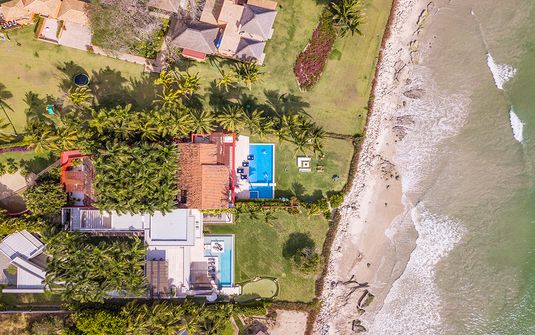
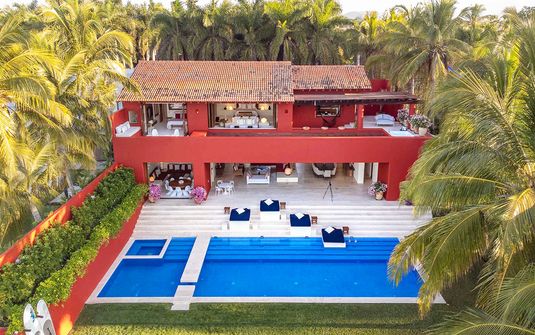
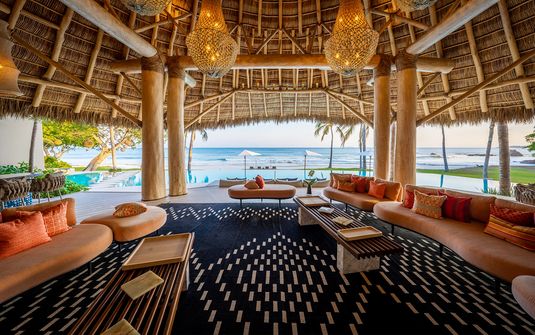
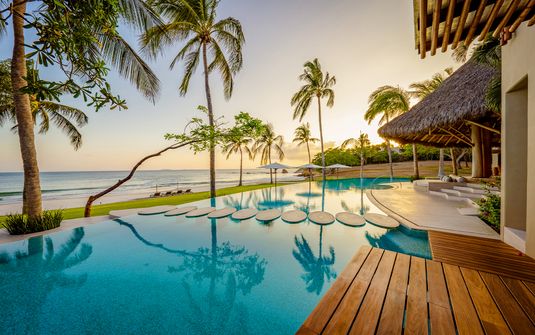
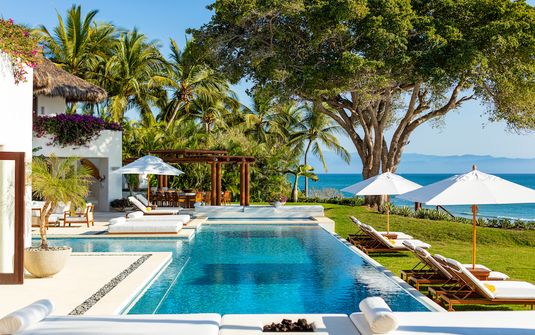
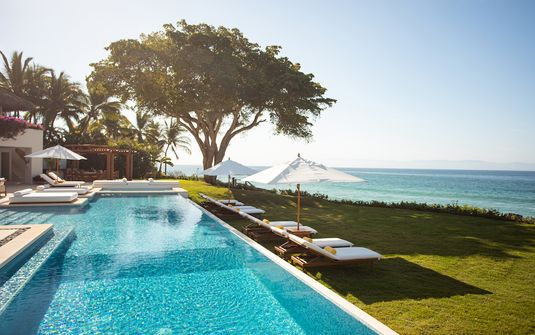
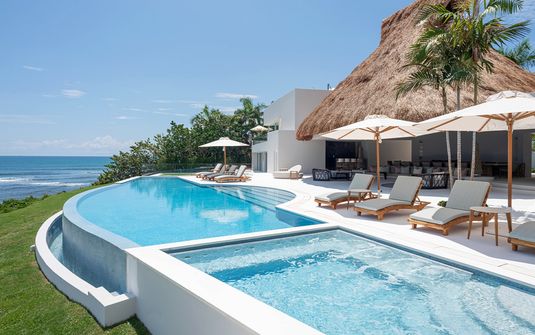
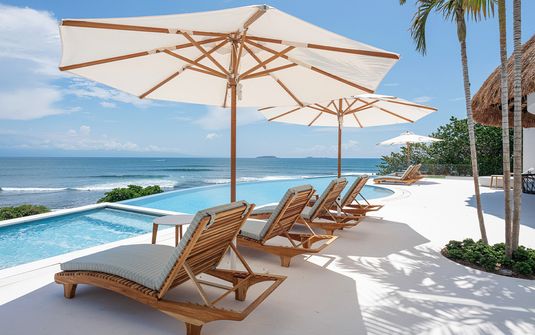
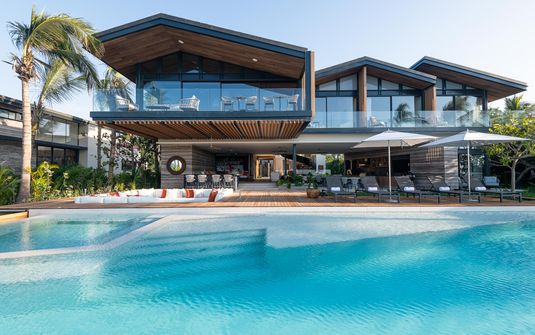
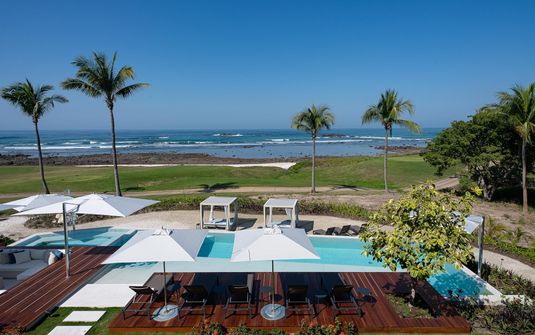
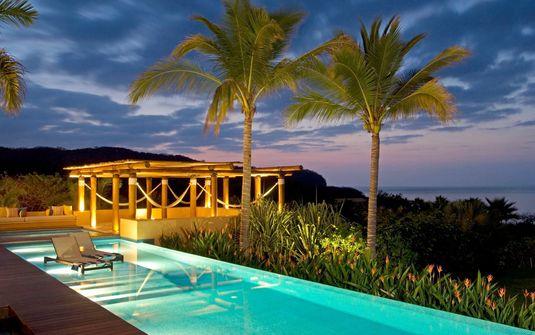
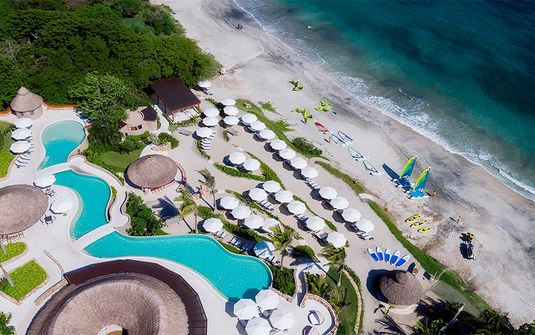
Punta Mita occupies a distinctive position on Mexico's Pacific coast, where a projecting peninsula gives the landscape several different relationships with the sea. Broad water views, smaller coastal edges and an inland backdrop of green rising country create a setting with more variety than a single beachfront prospect. Private villas can interpret that geography in different ways, from garden-centered residences to expansive coastal estates. The enduring appeal is the combination of space, discretion and a strong sense of place. A well-chosen house makes the peninsula's landscape feel personal, allowing the horizon to remain generous while the rooms and terraces retain the intimacy of a private home.
Within Riviera Nayarit, Punta Mita has become closely associated with considered residential architecture and substantial private houses. The wider destination name also encompasses several different coastal settings in LaCure's collection, so the experience should be understood through the individual neighborhood and residence rather than a single generalized image. A villa within the planned peninsula and a house farther along the surrounding coast may offer very different atmospheres. That variety is a strength when described clearly. It allows guests to choose between a more ordered residential landscape, an estate-scale setting or a coastal community whose character comes from its own relationship with the shore.
Luxury Villas in Punta Mita
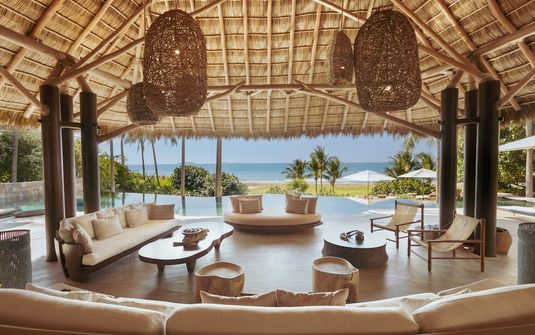
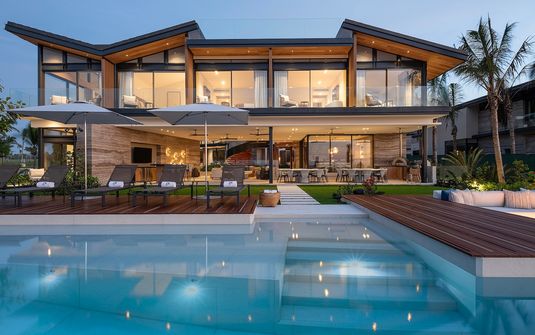
The best residences use architecture to give the sea a comfortable scale. A broad salon may open toward a terrace, while private suites turn toward gardens or more selective views. Courtyards, covered passages and separate wings can create depth within a large property, ensuring that generosity does not come at the expense of intimacy. The house should remain easy to inhabit when the full household is present. Clear circulation, well-proportioned shared rooms and carefully protected private quarters make a greater contribution to the stay than a collection of impressive features without a coherent plan. In Punta Mita, the landscape is already expressive enough for architecture to be quietly confident.
Different residential settings bring their own emphasis to this coastal experience. El Encanto and Las Palmas offer distinct points of reference for guests considering Punta Mita's private-home landscape, while Lagos del Mar adds another residential interpretation within the destination. The choice is best guided by the particular house: its orientation, garden, distribution of rooms and relationship with surrounding homes. These details can matter as much as a neighborhood name. A residence that feels settled and carefully resolved will give the stay a more personal character, whether its principal outlook is open water, a planted exterior or a layered composition that combines both.
The collection also includes Ranchos and Ranchos Estates, where an estate-oriented perspective is particularly relevant, alongside the coastal setting of Punta del Burro. Farther along the Nayarit shoreline, San Pancho brings a village context that is distinct from the private peninsula's planned residential environment. These places should not be treated as interchangeable or assumed to share the same boundaries and privileges. Their value lies in their differences. Together they show the range of private coastal living available within the broader destination, from houses with a strongly composed residential setting to homes whose identity is closely tied to a separate community and stretch of shore.
A Peninsula with More Than One Coastal Perspective
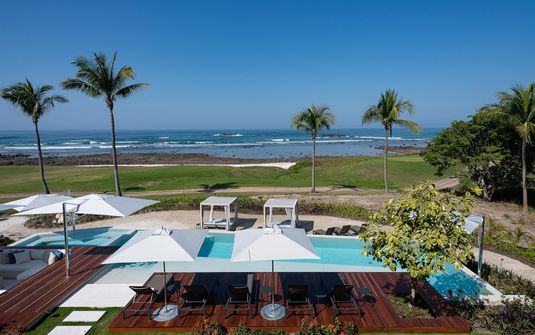
The projecting form of Punta Mita changes how the sea is experienced. Orientation becomes a defining part of a residence's character, influencing whether the view feels broad and outward-looking or more closely related to a particular section of coastline. This is why two villas can share a destination name yet offer markedly different atmospheres. A house with a long horizon may feel expansive, while another with trees and a nearer coastal edge has a more layered visual world. The architecture should work with that specific outlook, placing shared rooms and terraces where they can interpret the setting naturally rather than forcing every property into the same panoramic formula.
The land behind the shore gives the destination additional depth. Green contours and planted residential landscapes provide a softer counterpart to the openness of the water, allowing homes to offer both exposure and enclosure. A garden court can become a quiet internal center, while a principal terrace opens outward. This contrast is especially valuable in a large villa, where several distinct atmospheres make the property more accommodating. Guests can enjoy the breadth of the coastal setting without every room feeling exposed to it. The most compelling residences use this range deliberately, giving the house a sequence of spaces that remain engaging throughout a longer stay.
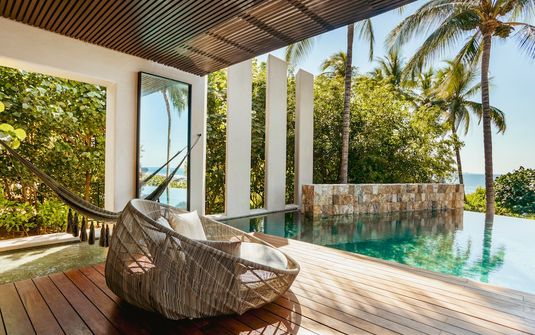
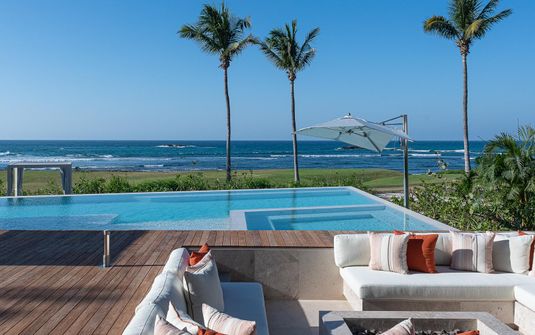
The immediate foreground is just as important as the distant sea. A planted boundary, a carefully finished wall or a line of palms can give a broad outlook scale and definition. These elements help a residence feel anchored in its site rather than visually suspended in front of the horizon. Garden design can also establish privacy between wings and soften the transition from the entrance to the principal rooms. In a refined property, the landscape is part of the architecture's organization. It does not merely decorate the edges, but creates a coherent relationship between the household's private world and the larger coastal setting beyond it.
Architecture That Makes Space Feel Personal
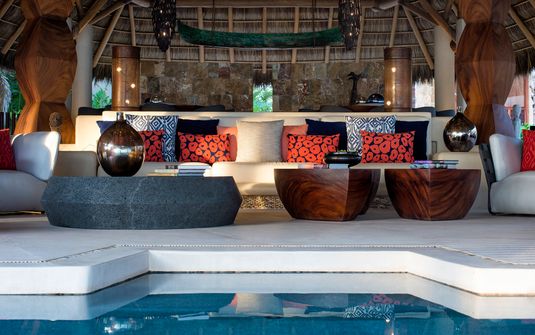
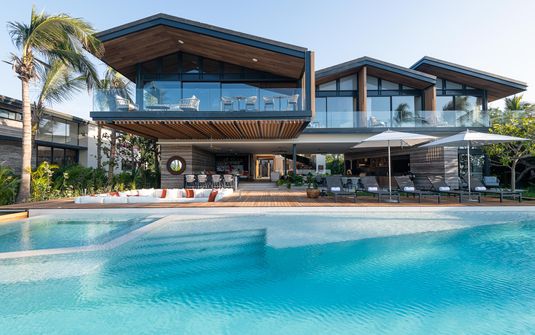
Punta Mita's villas can draw on several architectural traditions. Palapa-like roof forms, tiled surfaces and substantial timber details offer one expression, while contemporary houses may favor clean volumes, broad openings and a quieter material palette. Both approaches can feel rooted when their scale and workmanship are carefully considered. The strongest homes avoid treating coastal style as a collection of symbols. Instead, they use proportion, depth and texture to create comfort. A large open salon needs enough architectural substance to feel sheltered, while a private suite benefits from a more intimate frame. The result is a house whose character comes from how it is inhabited, not simply how it is presented.
A generous estate also needs transitions. Covered passages, planted courts and smaller sitting rooms can connect larger spaces without making the property feel like one continuous public area. These intermediate places are often what give a villa its domestic quality. They allow a guest to pause between the shared salon and a private suite, or to choose a quieter setting without becoming detached from the household. Their proportions should be as carefully resolved as the main rooms. A well-composed residence remains comfortable at several scales, supporting the full group while preserving smaller, more personal experiences within the same architectural whole.
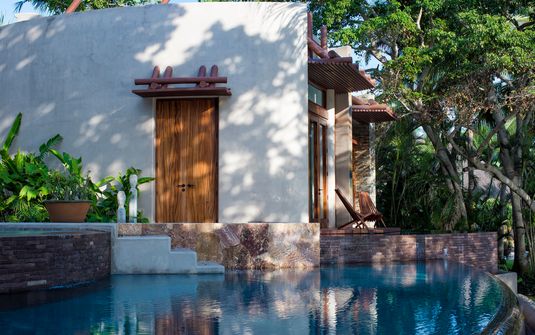
Materials can reinforce this continuity. Stone, timber, plaster and woven textiles each contribute a different kind of texture, while selected Mexican craftsmanship introduces individuality. Restraint allows these elements to retain their presence. A substantial door, a ceramic piece or a richly textured wall can be more expressive than a dense accumulation of accessories. The sea already supplies a strong visual subject, so the interior benefits from a calm and coherent background. This gives the residence depth beyond its outlook, allowing the household to appreciate workmanship, furnishings and the quality of the rooms as the setting becomes a familiar part of daily life.
Privacy at the Scale of a Private Home
Privacy should be understood through the residence itself. A substantial plot can create distance, but the orientation of rooms and terraces still determines how comfortable the house feels. Bedroom wings need protection from shared circulation, and outdoor spaces should consider neighboring sightlines as well as the view. Planting and walls can support that arrangement, but the underlying plan is what gives discretion its effortless quality. A refined villa allows guests to move between sociability and retreat without negotiation. Each private room feels complete, and the principal shared spaces remain generous enough for the household to be together without overwhelming the quieter parts of the property.
Suites may have different outlooks and positions within the house, which can add character when comfort remains consistent. One room may face the water, another a private garden and another a more enclosed court. Each should offer a clear sense of retreat through its proportions, storage and furnishings. The quality of a group stay depends on this evenness. A residence feels more generous when all guests have thoughtful private accommodation rather than one exceptional suite surrounded by secondary rooms. Bathrooms contribute to that experience through space, precise detailing and a restrained material language, supporting the quiet daily ease that makes a private villa feel genuinely comfortable.
Outdoor privacy requires the same care. A broad pool terrace may be the natural shared center, while smaller exterior spaces beside suites provide a more personal relationship with the landscape. Their boundaries should feel resolved without becoming heavy or defensive. An offset wall, a change in orientation or a planted edge can make an important difference. These elements allow the house to remain visually open where openness is welcome and more enclosed where intimacy matters. The resulting atmosphere is one of confidence and ease, with the household able to inhabit the property naturally rather than adjusting constantly to the exposure of its most dramatic spaces.
Terraces and Gardens with Lasting Substance
The principal terrace should have the depth and furnishing quality of an interior room. Comfortable seating, clear passages and a sheltered section make it usable as part of the house rather than an empty foreground to the sea. Where a pool is included, the surrounding space deserves equal attention. Its geometry can reinforce the architecture, but the complete setting depends on proportions, materials and the relationship with the shared rooms. A memorable exterior is not defined by a single striking edge. It feels coherent, with water, planting and built surfaces arranged to support the household's comfort as convincingly as they support the broader coastal composition.
Gardens can introduce a quieter register within an expansive property. A planted court beside a bedroom, a tree at the edge of a passage or a layered boundary near a sitting area gives the house close detail as well as a distant horizon. These smaller landscapes help prevent a large estate from feeling impersonal. They also provide visual continuity between separate wings, making the residence feel like a complete home rather than a group of disconnected structures. The most successful landscape design is selective and site-responsive, allowing the villa's architecture and the coastal setting to remain legible while bringing intimacy to the spaces guests occupy most personally.
Punta Mita within Mexico’s Pacific Landscape
Among the private-villa destinations of Mexico, Punta Mita is distinctive for the breadth of its residential expression. The peninsula and surrounding coast offer different relationships with water, gardens and community, giving guests a meaningful range of settings rather than one repeated idea of luxury. The residence remains the decisive element. Its plan, orientation and material character determine how the destination is experienced from within. A thoughtful choice brings the wider landscape into a house that feels personal, allowing coastal scale and private comfort to support one another without depending on generalized promises about amenities or a uniform experience across every neighborhood.
A Private Stay with a Clear Sense of Place
Punta Mita's lasting appeal lies in the way a well-resolved residence can make a generous coastal landscape feel intimate. The view provides the broadest impression, but the quality of the stay emerges through the rooms, gardens and terraces that give it context. A comfortable salon, a private suite with its own outlook and a coherent sequence of spaces create a home with depth. LaCure's perspective centers on that complete experience, respecting the differences between individual settings while placing privacy, architecture and everyday ease at the heart of the stay. The result is a personal expression of the Pacific coast, shaped by the particular house and the landscape it inhabits.


