




Capri: The Private Life of a Mediterranean Island Villa
Capri brings a distinct island perspective to the Amalfi Coast collection. Limestone contours, steep coastal edges and a long-established residential tradition give the setting an identity separate from the mainland. A private villa can place the household within that landscape without making the stay depend entirely on an iconic panorama. Its rooms, gardens and sheltered exterior spaces provide a more personal scale, allowing the island’s architecture and terrain to become part of a complete domestic environment.
Within Italy, Capri is especially recognizable for the close relationship between built form and dramatic natural contours. Houses may gather within a more compact settlement or occupy planted grounds with a stronger sense of separation. These conditions create different residential experiences, and the appeal lies in preserving their distinctions. The most convincing home is one whose outlook, plan and exterior spaces express a particular position on the island rather than a generalized image of Mediterranean prestige.
The Island’s Limestone Structure
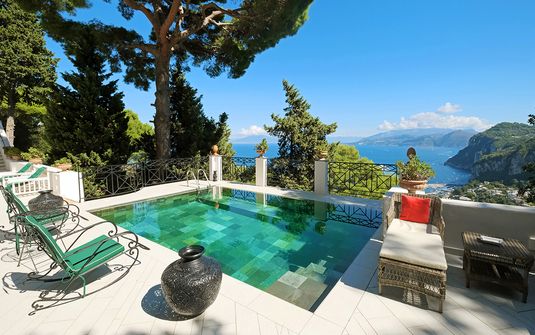
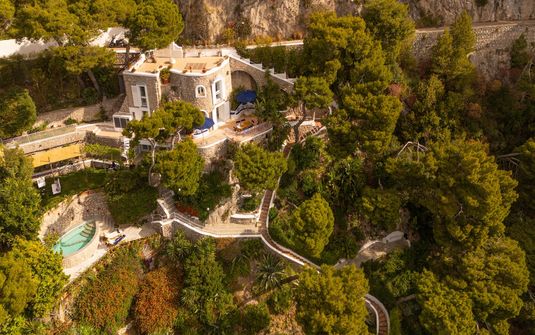
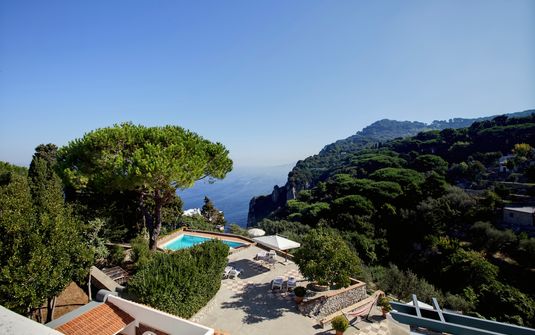
The rock gives Capri a pronounced physical presence. Coastal edges and rising contours create views with considerable depth, while the immediate foreground may be formed by gardens, walls and the roofs of neighboring houses. A residence can use this layered setting through carefully framed openings rather than relying on continuous glazing. The landscape remains powerful, but the architecture gives it a domestic scale, allowing a quiet room or protected terrace to feel as meaningful as the broadest sea-facing space.
Changes in level can also shape the organization of the house. Terraces and connected volumes may follow the site, creating a sequence between communal rooms and more private accommodation. The strongest plans make those transitions intuitive. A villa should feel coherent to inhabit, with a clear relationship between its different parts, rather than using the complexity of the terrain as an excuse for a residence whose private rooms and shared spaces are disconnected or difficult to understand.
Anacapri as a Distinct Residential Setting
Anacapri offers a more local address within the island hierarchy, associated with a higher setting and a different relationship with Capri’s land and settlement pattern. The distinction is not simply one of outlook. A residence may place greater emphasis on its grounds, the surrounding vegetation and a more contained architectural atmosphere. This gives the island collection a meaningful range, allowing the household to choose a property whose character reflects a precise preference for domestic scale and degree of enclosure.
The quality of that setting remains specific to the individual house. An elevated position can reveal a broader horizon, while a planted plot can provide greater intimacy close to the rooms. Neighboring buildings and the orientation of terraces influence how privately the residence is occupied. A well-resolved property brings those conditions into balance, allowing the household to remain connected to the island’s wider landscape without assuming that every prestigious or elevated address offers the same experience of seclusion.
The Architecture of a Caprese Home
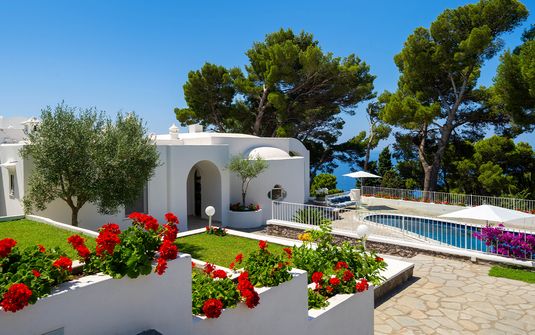
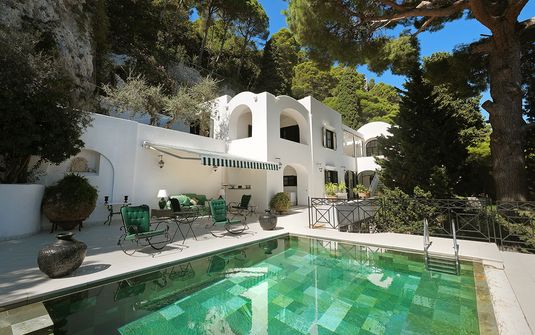
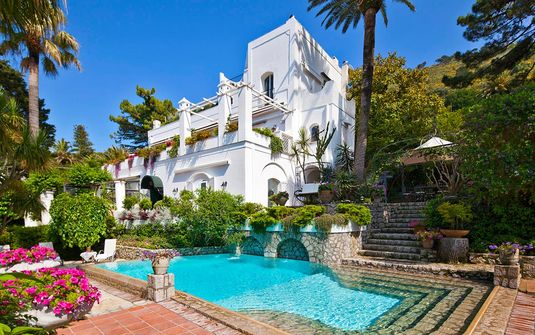
Traditional island residences can express their character through white or pale rendered surfaces, vaulted interiors, tiled details and a deliberate transition between rooms and terraces. These elements are most persuasive when they remain part of a comfortable home rather than a decorative theme repeated without variation. Sensitive restoration allows the building’s proportions and material depth to remain legible, while considered contemporary furniture and discreetly introduced comfort make the interiors appropriate for sustained private occupation.
A villa can be generous without requiring every room to be formal. The principal lounge may establish the scale of the house, while a smaller sitting area or quieter garden-facing interior introduces another atmosphere. The contrast gives the residence depth and allows the household to inhabit it in several ways. A home feels more personal when its rooms have distinct roles and outlooks, rather than when each space repeats the same polished coastal image at a slightly different size.
Gardens and Exterior Rooms
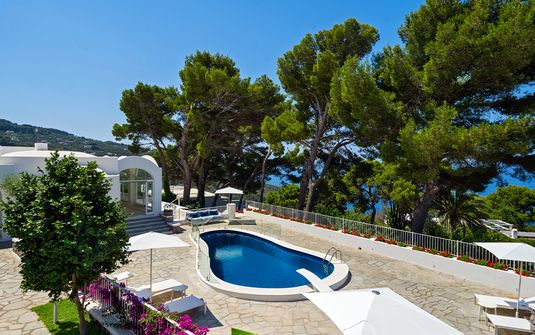
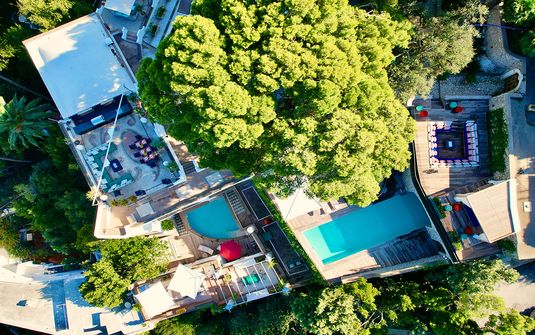
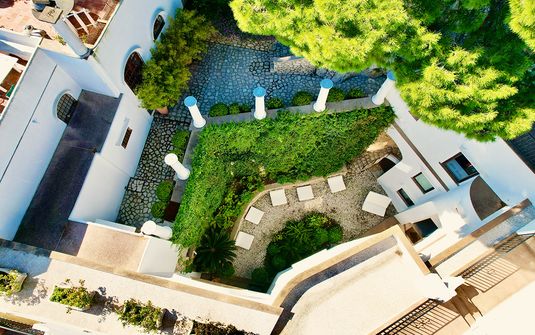
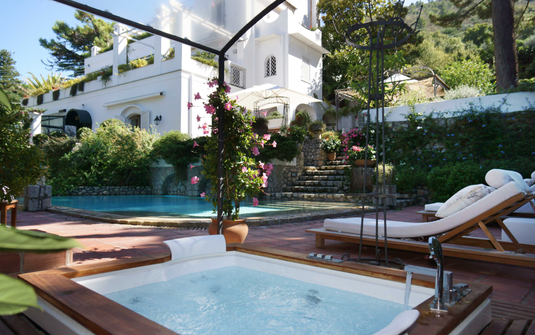
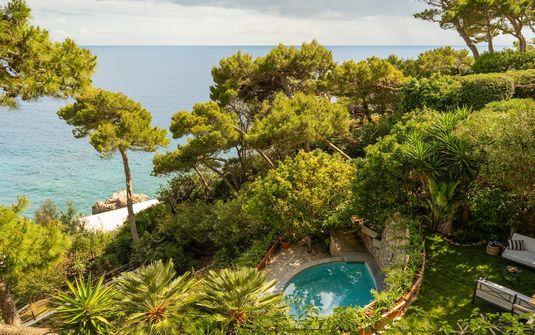
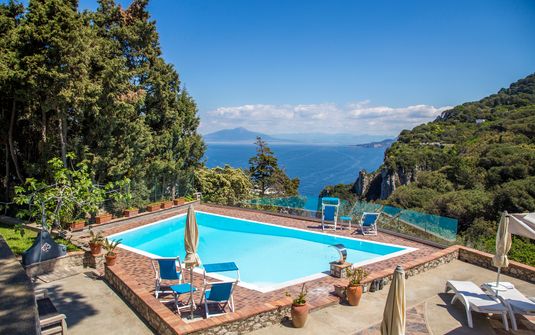
Planted grounds can give a Capri residence a strong sense of enclosure. Trees, walls and changes in level create a sequence between the house and its boundary, while a terrace or pergola defines a more architectural exterior space close to the main rooms. The most compelling composition allows those areas to differ in scale. A broad communal setting can coexist with a more intimate court or a quiet exterior threshold associated with a private suite, giving the property several degrees of privacy.
The relationship with the sea benefits from the same restraint. A framed outlook through planting can feel more closely connected to a room than an exposed panoramic platform. The garden gives the horizon a foreground and allows the house to retain its own identity. This balance is especially valuable in a setting whose scenery is already so emphatic, ensuring that the residence remains a comfortable domestic center rather than becoming secondary to the view beyond its terraces.
A Complete Private Island Residence
The arrangement of suites should provide personal space as convincingly as the communal rooms provide connection. Separate levels or wings can offer autonomy, while a closer grouping may suit a family that prefers proximity. The quality of the private accommodation should remain balanced throughout, with considered proportions, appropriate separation and outlooks that support the atmosphere of each room. A villa becomes genuinely generous when the whole household can occupy it comfortably, not only the guests in its most prominent suite.
Capri’s enduring residential appeal lies in the meeting of island architecture, planted enclosure and a landscape of exceptional physical character. A private home can hold those elements together at a human scale, giving the household a familiar setting within a distinctive Mediterranean place. The resulting stay is independent and deeply personal, with refinement expressed through the coherence of the residence, the privacy of its rooms and the particular relationship it establishes with the island around it.


