




Cap d’Antibes: A Peninsula of Private Gardens and Mediterranean Villas
Cap d’Antibes offers a particularly intimate reading of the French Riviera. The peninsula is defined by the proximity of the sea, established villa plots and a landscape in which garden walls and mature trees are as important as the distant horizon. Its residential character is not based on one continuous open view. It emerges through a sequence of enclosed properties, glimpses of water and houses whose grounds create a private atmosphere within a recognizable coastal setting.
Among the Mediterranean addresses of France, the Cap has a distinctive sense of scale. The sea remains close, yet the immediate surroundings can feel garden-led and sheltered. A villa may face the water directly, occupy a more inward-looking plot or rise just enough to reveal the coast above its planting. Each arrangement offers a different balance between outlook and discretion, allowing the residence to establish its own identity within the peninsula rather than simply borrowing the reputation of the address.
The Peninsula as a Residential Landscape
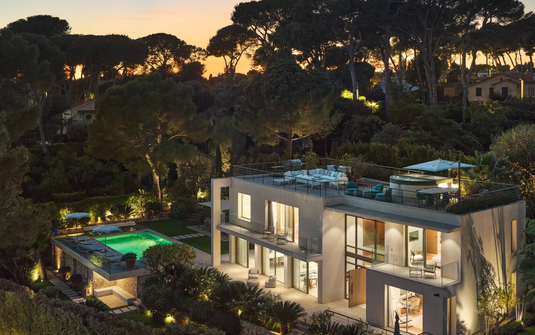
The geography encourages a close relationship between architecture and boundaries. Unlike a broad inland estate, a peninsula property often gains its privacy through the careful composition of its plot: the position of the main house, the depth of the planting and the orientation of terraces. These elements can make a residence feel remarkably separate from its surroundings. The impression is one of a private domain held within a larger coastal neighborhood, not necessarily of isolation or unlimited land.
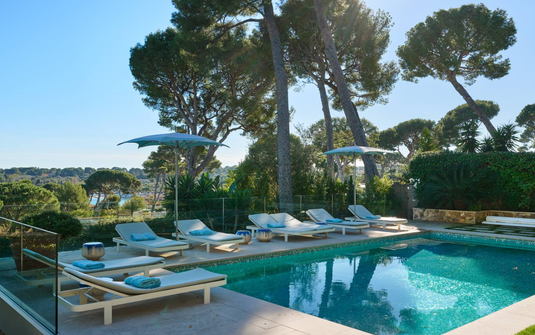
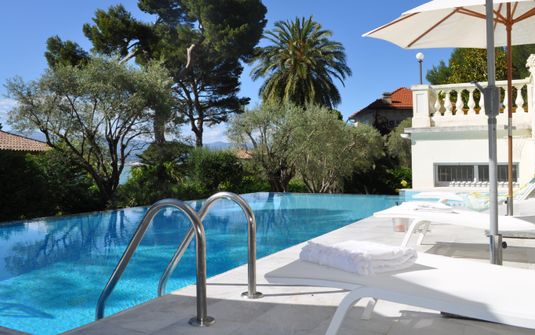
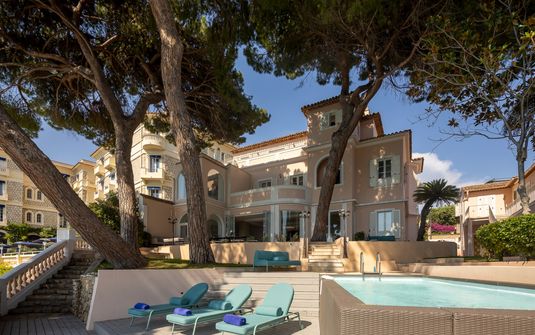
Mature trees introduce height and texture around the buildings. Pines, palms and other established planting can frame the sea, soften the outlines of a neighboring villa and create different degrees of enclosure across the garden. Their presence gives the property a sense of time that architecture alone cannot reproduce. Where the grounds are thoughtfully arranged, the household experiences several distinct exterior settings rather than a single terrace positioned in front of the most extensive view.
The Garden Wall and the Sea Beyond
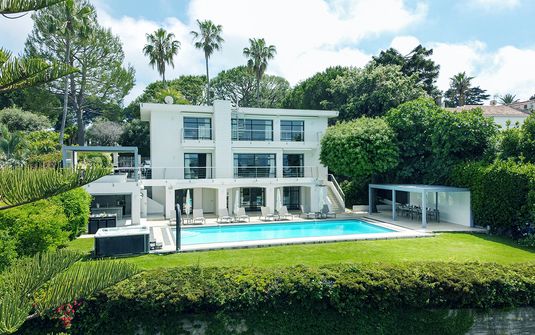
A garden wall can be an important architectural threshold, separating the everyday privacy of the residence from the wider peninsula. Behind it, paths, planted courts and sheltered lawns establish a sequence that leads gradually towards the house or the water. This progression gives the property depth even where the overall plot is contained. It also creates a distinction between the public face of the address and the more personal atmosphere experienced by the household within.
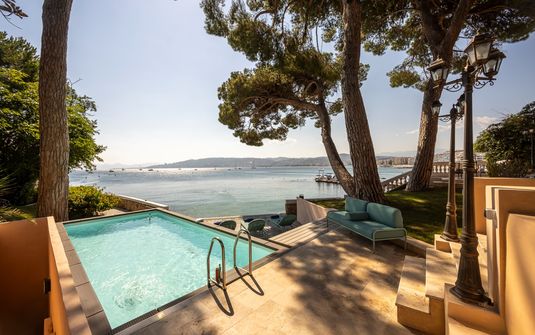
Sea-facing spaces benefit from the same attention to intimacy. An uninterrupted outlook is impressive, but a partially framed view can feel more closely connected to a room and its occupants. A deep terrace, a pergola or the canopy of a mature tree gives scale to the horizon and provides a more defined exterior room. Cap d’Antibes is especially compelling when the villa balances its coastal position with these quieter, more protective architectural gestures.
An Established Villa Tradition
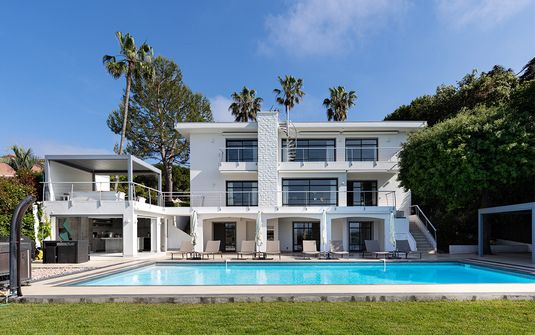
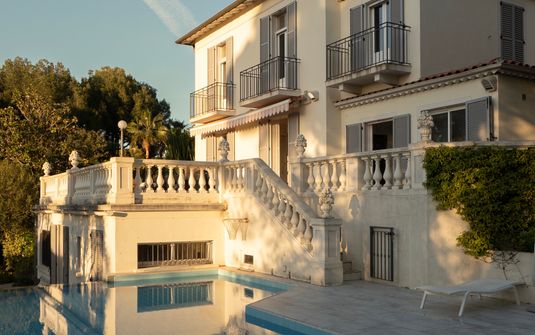
Older residences on the peninsula can convey an enduring Mediterranean elegance through tiled roofs, shutters, generous openings and a deliberate relationship with the garden. More formal houses may retain substantial reception rooms and carefully detailed façades. Contemporary properties offer a different interpretation, using clear volumes and larger glazed areas to connect interiors with the landscape. The strongest examples in either style respect the domestic scale of the setting rather than relying on excessive visual display.
Inside, the quality of a villa is often revealed through the transition between rooms. A formal salon can lead to a quieter sitting area, while a garden-facing lounge may provide a less ceremonial center for the household. Natural materials, considered furniture and artwork can establish individuality without making every interior equally emphatic. This variety allows a substantial home to feel personal, with different atmospheres that support a stay longer and more nuanced than a first architectural impression.
Discretion for the Whole Household
Private suites are most effective when their position gives them a clear degree of independence. A separate wing, an upper level or ancillary guest accommodation can create useful separation from the principal reception spaces. The relationship between these areas matters more than their mere number. A group of couples may value comparable suite proportions, while a family may prefer selected rooms to remain closer together. The residence should accommodate those preferences without losing a coherent domestic center.
The same principle applies to exterior privacy around bedrooms and individual terraces. A suite can have a memorable sea outlook yet feel exposed if neighboring windows face it directly. Conversely, a garden-facing room may offer exceptional calm and enclosure. The most satisfying private addresses give each part of the household an appropriate setting, allowing the principal view to remain one element of the experience rather than the only measure by which the whole property is judged.
A Quietly Distinctive Riviera Stay
Cap d’Antibes offers a form of coastal luxury rooted in residential continuity. The established gardens, contained plots and proximity of the Mediterranean create an atmosphere that can feel both distinguished and deeply domestic. A private villa allows the household to experience that character from within, through familiar rooms and protected exterior spaces, rather than encountering the peninsula only as an admired name or a sequence of views.
The enduring attraction is the balance between openness and enclosure. The sea provides breadth, while walls, planting and carefully composed rooms bring the scale back to the individual. A residence that resolves those relationships well can offer considerable privacy without feeling disconnected from its coastal setting. That is the particular promise of Cap d’Antibes: a personal Mediterranean address whose elegance is expressed through its garden, its architecture and the quiet coherence of the stay itself.


