




Limestone Bay: A Northern Cove with Distinctive Private Houses
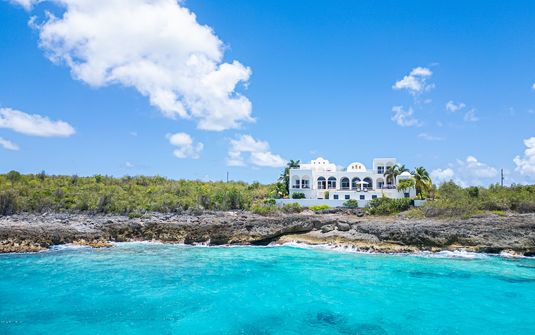
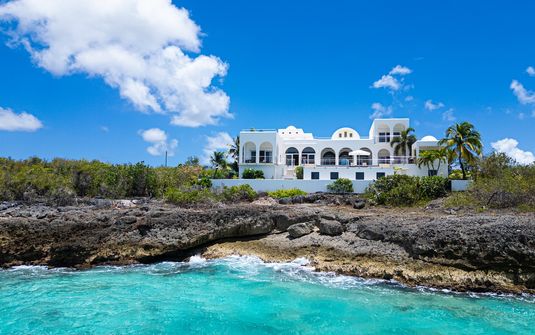
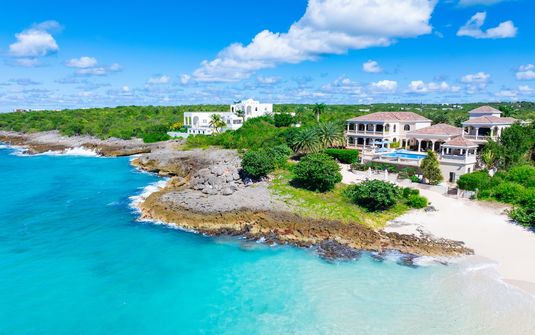
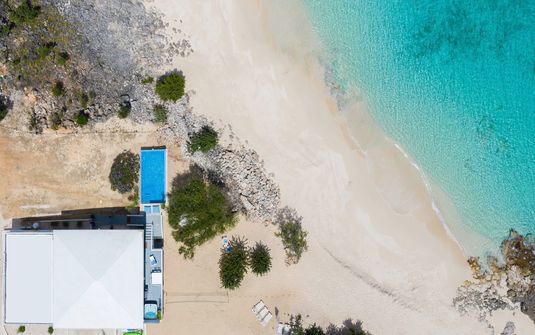
Limestone Bay offers a contained north-coast setting within Anguilla, where a small sandy bay and rocky coastal edges give the landscape an intimate scale. As part of Mid Isle, it belongs to the island’s varied collection of private residential addresses, yet its architectural character is notably individual. The houses associated with the bay range from substantial villa compositions to more immediate beach-house settings. A stay here is shaped by that combination of a recognisable cove and a residence with its own identity, rather than by the expectation of a single uniform style.
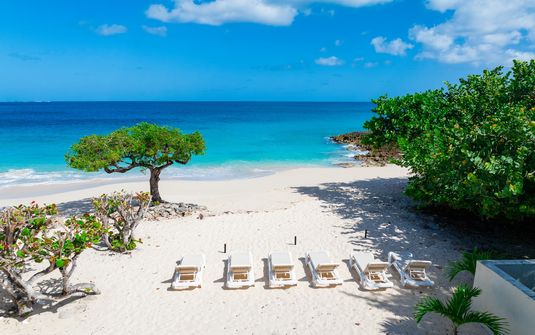
Among Caribbean coastal addresses, Limestone Bay is appealing for the proximity of its private houses to a landscape that remains legible as a small bay. The shoreline is not simply a distant background. From appropriately positioned rooms and terraces, its curve can become part of the domestic foreground, giving the residence a close relationship to the water. The effect differs from a broad resort-lined beach, with the individual property playing a greater role in defining the atmosphere. The house, its garden edges and its principal exterior rooms become the centre of the stay.
Several Architectural Expressions in One Setting
Sandcastle Villa and the Beach House
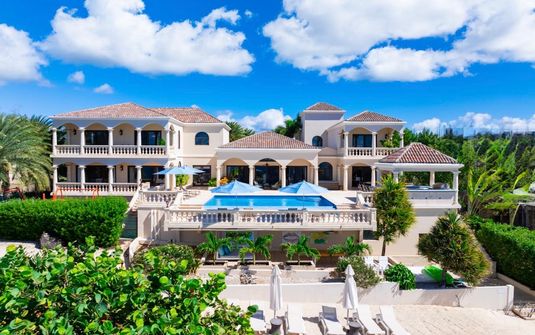
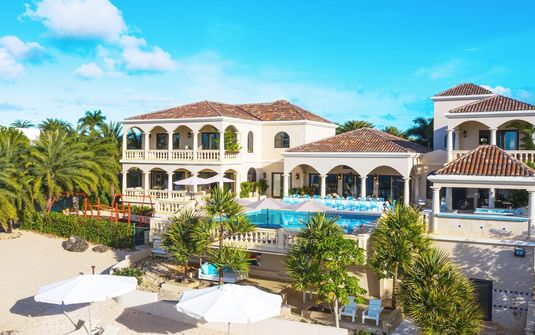
Sandcastle Villa provides one expression of a more substantial coastal home, with generous shared interiors, private bedroom accommodation and terraces arranged toward the bay. The relationship between the principal house and its outdoor spaces gives the residence an estate-like scale without removing the shoreline from view. A house of this type can accommodate a household across several settings, with principal rooms for gathering and more private spaces for time apart. Its appeal lies in the variety of those rooms and the way the surrounding grounds connect them to the coastal address.
The Beach House at the Sandcastle introduces a contrasting scale and architectural mood. A large vaulted main room and broad glazing place the sea prominently within the interior experience, while the building’s position close to the sand gives the house an immediate coastal character. This is a different way to inhabit the same bay: the residence feels more directly tied to the shoreline, with the principal room acting as a clear domestic centre. The distinction between the two houses adds variety to Limestone Bay, allowing the architecture to offer different interpretations of a shared setting.
Villa Azul and a More Expressive Interior Form
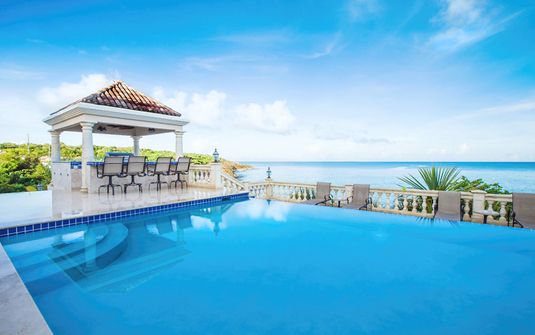
Villa Azul adds another architectural language, with Moroccan-inspired detailing and a vaulted dome above its principal living space. Its tiered pool composition and generous terraces create a strong relationship between house and coastal outlook, while separate guest accommodation introduces a further degree of privacy within the residence. The distinctive ceiling form gives the main interior a recognisable character even before the view is considered. It demonstrates that a coastal house can be expressive and individual without relying entirely on the surrounding landscape to establish its identity, bringing a different spatial quality to the bay’s residential collection.
Together, these different houses show why the individual residence matters as much as the destination name. A vaulted beach-house interior offers a different atmosphere from a larger villa with several distinct wings, and a more sculptural principal room creates another domestic experience again. The choice is architectural as well as spatial. Guests may prefer a clearly defined central room, several separate gathering areas or a suite that feels removed from shared life. Limestone Bay accommodates these different interpretations within one recognisable coastal context, giving the stay a personal character through the particular home.
The Bay as a Domestic Foreground
A small cove changes the way the sea is experienced from a residence. Rather than presenting an unbroken horizontal prospect, the shoreline gives the view a curve and a more immediate frame. Rocky edges and vegetation can introduce texture beside the pale sand, while the water provides a broader field beyond. A well-placed terrace allows those elements to remain distinct. The house does not need to make every room equally transparent; a selective opening can create an intimate coastal view, while a principal exterior space reveals the wider composition of the bay.
The transition between house and shore is therefore an important part of the architecture. A garden, pool edge or covered exterior room can introduce a deliberate private foreground before the landscape beyond. These spaces give the household places to occupy rather than simply places from which to look outward. A deeper terrace feels different from an open deck, and a planted corner provides another degree of enclosure. The residence becomes richer when these settings are allowed to vary, offering several ways to enjoy a close relationship to the coast within the same property.
Privacy at Several Scales
For a shared stay, meaningful privacy depends on more than the boundary of the estate. Separate suites, quieter wings and independent sitting areas give guests room to follow different daily rhythms. A larger home can feel intimate when its spaces are carefully scaled, while a more compact beach house can feel generous through the clarity of its main room and its connection to an exterior terrace. The plan determines how comfortably the household can be together or apart, with shared spaces that remain inviting without making every bedroom part of the principal gathering area.
Privacy in the grounds is equally specific to the residence. The direction of a terrace, the position of neighbouring buildings and the treatment of garden boundaries influence how secluded an exterior room feels. Planting can protect a quieter corner while leaving a principal outlook open, and walls can give a suite its own sense of enclosure. These details allow a house to remain closely connected to the bay while retaining private spaces within it. The most comfortable setting balances those needs through design rather than assuming that a small coastal address automatically makes every part of the property secluded.
A House with Character Beyond the View
Longer stays reveal the value of interiors that remain attractive independently of the panorama. A distinctive ceiling, timber joinery, comfortable seating and a considered material palette give the residence a domestic depth that is not captured by its shoreline position alone. Quieter rooms can introduce a different mood from the principal lounge, while a garden-facing corner offers an alternative to the main coastal terrace. These smaller settings give the household choices and make the house feel familiar over time, with architectural character that sustains the experience after the initial impact of the bay has settled.
Limestone Bay combines the intimacy of a northern cove with a notably varied collection of private residential forms. Its appeal can be expressed through a substantial villa, a more immediate beach house or a residence whose interior has a strongly individual architectural language. In each case, the quality of the stay depends on the coherence of house and site: rooms with distinct purposes, grounds that provide a private foreground and a clear relationship to the shore. The resulting luxury is personal and recognisable, with the bay giving the address continuity while each home retains a character of its own.


