




Cul de Sac: Private Houses and an Intimate Southern Coast
Cul de Sac offers a more intimate residential expression of southern Anguilla, with individual homes giving the coastal setting much of its character. Within Mid Isle, the enclave brings together houses of different scales, from smaller retreats for couples to residences arranged across a main house and guest building. The appeal is personal rather than uniform. A particular property may make the water its immediate foreground or establish a quieter garden-centred world behind the principal terrace, allowing the household to choose a home whose scale and atmosphere suit the way it wishes to live.
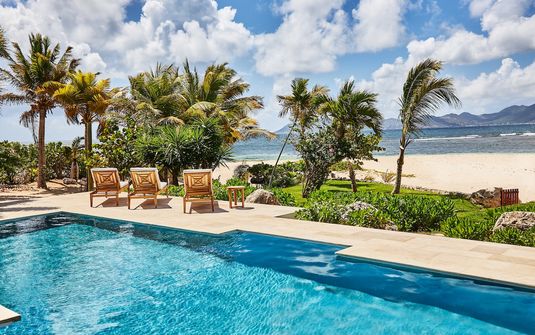
The southern outlook gives this Caribbean address a distinctive visual reference. Saint Martin’s hills rise beyond the channel, creating a layered composition of near shore, water and distant land. A house can acknowledge that setting through broad exterior rooms or more selective views from private interiors. Cul de Sac’s character is not dependent on one architectural formula: an established home with timber detailing can be as persuasive as a more contemporary coastal residence. What unites them is the opportunity to enjoy the sea from a setting that remains recognisably domestic and individual.
A Coast Experienced at the Scale of the House
The immediate relationship between building and shore differs from one property to another. A residence with lawn extending toward the sand creates a softer transition than a terrace positioned directly above the coastal edge. Both can offer a close visual connection to the water, but the experience within the grounds is distinct. The value of the site lies in how these conditions are resolved: the scale of the exterior rooms, the privacy of bedroom windows and the way the house establishes its own enclosure within the surrounding residential setting.
The distant island can become a constant point of reference without being the subject of every room. A principal lounge might frame Saint Martin broadly, while a bedroom looks toward a private planted court. A smaller veranda can create a more selective relationship to the channel, with the architecture bringing part of the view closer through a deep opening. These contrasts give the residence a richer sequence than a continuous transparent facade alone. Guests experience both the wider coastal setting and the more intimate spaces that make the house comfortable over time.
Two Distinct Scales of Private Residence
A Main House and Guest Accommodation
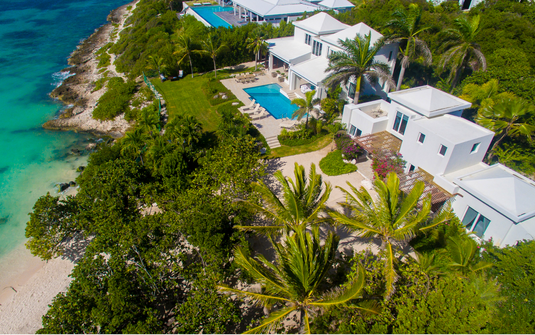
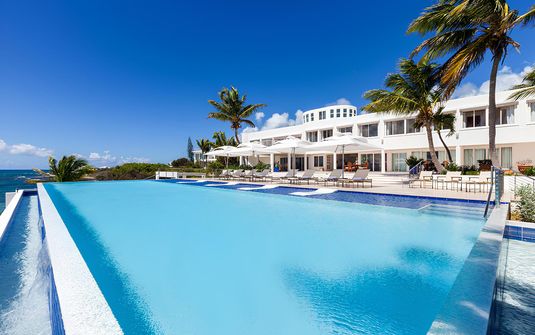
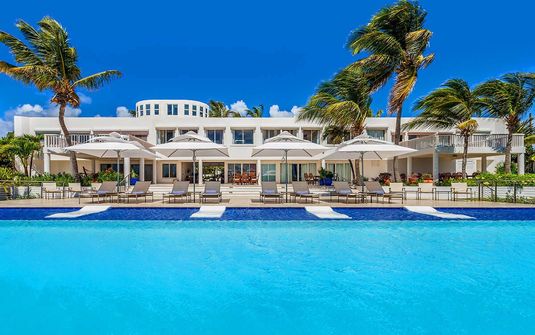
Beach Escape Villa illustrates a larger domestic arrangement represented in Cul de Sac, with a main house and a separate guest building. Its principal accommodation and independent guest suites create different degrees of privacy within one property, while the lawn, pool and shoreline form a shared coastal foreground. This type of plan can suit a household whose members appreciate time together but do not wish to occupy the same interior throughout the day. The distinction between buildings allows the residence to feel like a small private compound, with shared spaces that connect the guests while preserving the individuality of their suites.
The success of a multi-building home depends on more than distance between rooms. The relationship of the guest wing to the principal terrace, the clarity of the connecting routes and the character of the intervening garden all influence how coherent the property feels. A planted passage can make movement between buildings part of the architectural experience, while a shared exterior room gives the household an obvious centre. This approach brings the scale of a larger residence into smaller, more intimate components, allowing a substantial group to feel comfortably accommodated without every room belonging to one oversized volume.
A Smaller House with a Strong Individual Character
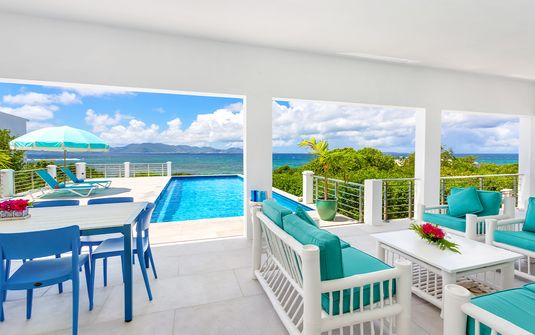
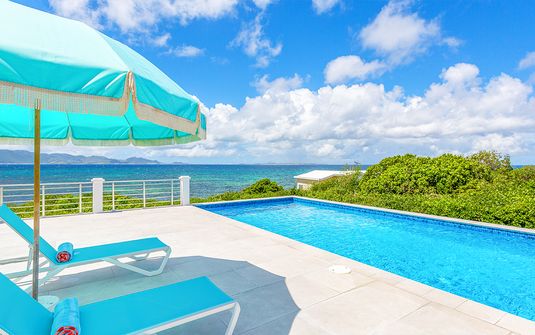
Peace & Happiness offers a contrasting residential scale, with two bedrooms and an ocean-facing setting. Whitewashed ceilings, timber floors and a terrace beside a long pool give the house a particular material and spatial identity. Its smaller format demonstrates that a private coastal stay need not depend on the size of an estate. For a couple or a small household, a well-composed residence can feel complete through the quality of its main room, the intimacy of its private interiors and the relationship between the terrace and the sea.
A more contained house can make its shared rooms feel immediately familiar. The principal lounge, covered exterior area and bedroom interiors remain close enough to form a coherent domestic whole, while careful orientation preserves different moods within that smaller footprint. The distinction between a garden-facing room and a sea-facing terrace introduces variety without requiring numerous separate wings. This scale has its own refinement: the residence can feel generous when only two guests occupy it, with comfortable spaces whose proportions suit ordinary private life as naturally as the broader pleasures of a coastal stay.
Texture, Enclosure and the Private Interior
Cul de Sac’s range of homes allows for both established Caribbean character and more contemporary architectural language. Timber doors, deep verandas and pitched ceilings can give an interior warmth and a sense of continuity with older residential forms. Simpler volumes and larger openings can create a clearer, more outward-looking composition. The strongest houses retain a degree of enclosure in either case. Bedrooms and quieter rooms should feel complete as interiors, with furnishings, lighting and proportions that make them appealing independently of their outlook, while the main terrace maintains a more open relationship to the coastal setting.
Planting can provide the link between those different degrees of openness. A garden at the edge of the terrace softens the foreground to the sea, while denser boundaries protect more intimate exterior spaces. A small court can bring greenery into the centre of the house without exposing private rooms to the wider setting. These details give the residence depth at close range, where guests spend much of their time. The grounds become part of the domestic experience, with attractive views from secondary rooms and a sense that the building belongs within its site rather than simply facing outward from it.
A Stay Shaped by the Household
The choice between a more compact home and a larger compound gives Cul de Sac particular flexibility for private living. Different households need different forms of separation: a couple may value an intimate main room and a complete private suite, while a larger family may benefit from independent accommodation and several gathering spaces. The most rewarding residence makes its own scale feel natural. Shared rooms remain inviting when only a few guests are present, and private spaces offer genuine retreat when the full household is together, allowing the stay to develop its own comfortable rhythm.
Cul de Sac combines a recognisable southern coastal context with the individuality of its houses. Its luxury can be expressed through a beachside compound, a smaller home with a distinctive interior or a carefully placed residence whose gardens frame the channel beyond. The common appeal is a personal relationship between household, architecture and place. A coherent home gives the sea a clear presence while retaining enough interior character and private space to sustain an extended stay, making the experience feel settled, intimate and distinctly Anguillan.


