




Philippines: Private Island Residences with a Palawan Perspective
The Philippines brings a broad archipelagic identity to the Asia collection, with private residences whose character depends on their particular island and coastal setting. Water can provide a long horizon, while planting, shoreline contours and the position of individual buildings establish a more intimate foreground. The appeal of a private home lies in the way these scales meet. A generous residence gives the household an independent domestic environment, allowing the surrounding landscape to become part of familiar rooms and exterior spaces rather than remaining a distant scenic backdrop.
A private-island setting offers a distinct version of that experience, with the residence understood through the relationship between its occupied grounds and the water around them. The house can feel expansive without relying on a monumental building, using several well-related rooms and garden spaces to create depth. Its refinement is expressed through comfortable proportions, carefully held personal accommodation and a clear architectural identity. The precise property arrangement remains important, giving the household a more meaningful sense of privacy than a general promise attached to the word island.
A Palawan Setting in the Sulu Sea
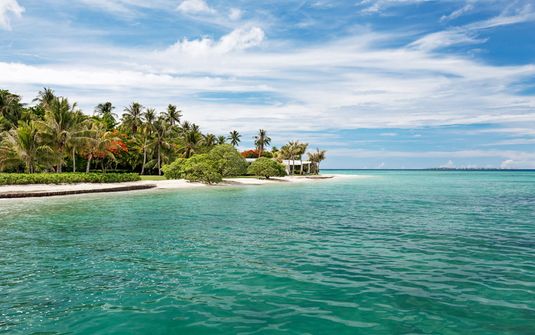
Banwa Private Island gives this residential perspective a specific geographic setting in the Palawan region and the Sulu Sea. Its island context provides a close relationship between the home, planted grounds and surrounding water, with the coastline forming an immediate point of reference. That scale differs from a large mainland estate: the island landscape is continually present around the residence, while the architecture creates more personal spaces within it. The result is a setting whose identity comes from the actual meeting of dwelling, garden and sea.
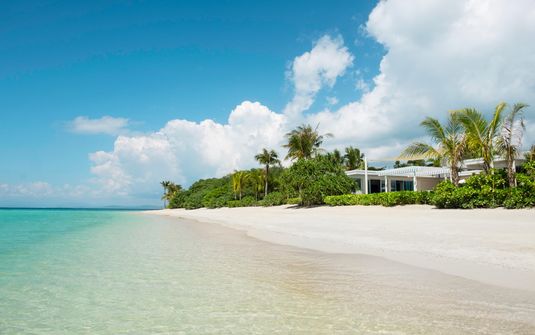
The beachfront-villa approach at Banwa combines substantial interiors with exterior terraces and gardens, giving the residence several degrees of openness. The occupied space extends beyond the enclosed rooms, allowing the immediate grounds to contribute to the home’s domestic character. Private pools form part of that particular property offering, while the wider island environment gives each residence a larger coastal context. These are specific qualities of an individual address, providing a concrete expression of private island living within the Philippines rather than a template to assume across the whole archipelago.
The Shoreline as a Domestic Foreground
A residence near the shore can establish a gradual relationship with the sea through a sequence of interior, covered exterior and garden spaces. A principal room may receive a broad water prospect, while a smaller sitting area looks through planting towards a quieter part of the grounds. These differences make the home more varied in use. The household experiences the coast through several frames, allowing the residence to retain an intimate interior life alongside its open setting rather than asking every room to provide the same panoramic experience.
Planting can give a coastal property depth and separation without creating a rigid visual barrier. Mature trees introduce scale around the building, while lower garden areas distinguish communal terraces from more personal accommodation. The spaces between occupied rooms become part of the architecture, offering quieter exterior settings and clear transitions through the grounds. A coherent residence uses these relationships to make a generous property feel comfortably inhabited at several scales, giving the household more than one way to spend time together within its private address.
An Island Home with Architectural Substance
The strongest island interiors remain comfortable and individual even when the surrounding view is their most immediate visual feature. Thoughtful proportions, tactile materials and considered furnishings give the rooms their own presence. Timber, stone and quieter contemporary finishes can establish continuity between shared spaces and suites without making every interior identical. A generous living room may remain more outward-facing, while a smaller room offers greater enclosure, allowing the house to support different atmospheres over a sustained stay.
Covered exterior rooms provide another domestic layer between the main building and its grounds. Their relationship with the occupied interiors determines how naturally the home extends towards the landscape. A substantial shared terrace can sit alongside smaller exterior areas near individual suites, giving the residence both a recognisable communal centre and quieter personal settings. The value lies in this range of well-related spaces, with the building and grounds forming one coherent environment instead of being presented as separate features around an attractive coastal position.
Personal Space within the Shared Residence
Several couples or different generations can share an island home comfortably when the accommodation provides meaningful independence. Separate suites or accommodation volumes offer one arrangement, while a more unified house creates closer internal connections. Consistent comfort across the residence matters in either case. A quieter room should feel considered through its proportions, orientation and relationship with the grounds, ensuring that the quality of the stay extends beyond the principal suite or the largest reception space.
Privacy remains specific to the actual property and its wider island arrangements. The position of neighbouring accommodation, the orientation of windows and the enclosure of exterior sitting areas influence how freely the household can occupy the home. A broad view and complete visual separation are distinct qualities. A well-resolved residence protects intimate rooms and personal outdoor spaces through its layout, giving discretion a practical expression within the architecture instead of inferring it solely from the distance between the island and a larger settled coastline.
A Private Stay with an Individual Island Character
Where discreet household support is included, thoughtful working areas help practical care integrate quietly with the home. The emphasis remains on preserving the personal atmosphere of the residence, with shared rooms and private accommodation available in a natural domestic rhythm. Smaller spaces become especially valuable over time: a garden-facing lounge or a protected exterior room can be as important to the household as the largest water prospect. This range gives a sustained stay substance, allowing the property to become familiar without losing its distinct coastal identity.
The lasting impression of a Philippine island residence is the coherence of the whole setting. A particular shoreline, the texture of a planted garden and the scale of a comfortable interior can bring the larger archipelago into a personal frame. Palawan’s island perspective provides a clear expression of that relationship, while the actual home determines its degree of openness, independence and privacy. A distinguished stay is grounded in those specific qualities, offering generous space and an individual architectural character closely connected to the land and water around the residence.


