




Indonesia: Private Villas with a Garden-Centred Architectural Character
Indonesia brings an archipelagic setting and a rich range of building traditions to the Asia collection. Its islands contain markedly different landscapes, so the character of a private residence depends on its particular location rather than a single national style. A garden compound, a house above the coast and a residence held within inland vegetation offer distinct experiences. Their common appeal is the opportunity to inhabit a complete home whose rooms and grounds create a personal relationship with the place immediately around it.
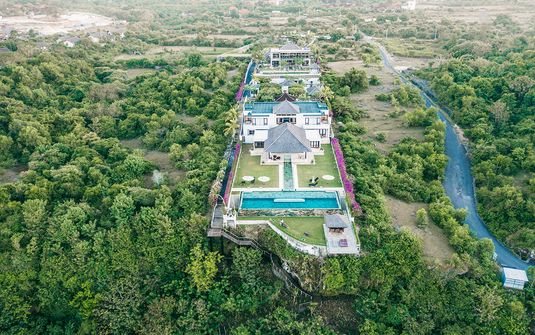
The residence can unfold through several buildings or form one more unified structure, with its architecture establishing how shared and personal spaces relate. Courts, covered transitions and planted edges give the property a sequence of domestic settings. This spatial richness allows a substantial home to feel intimate without becoming confined. A household can gather in generous communal rooms and retain quieter accommodation elsewhere, with the gardens providing continuity between the different parts of the residence and giving the surrounding landscape a comfortable personal scale.
Bali: A Distinct Residential Expression
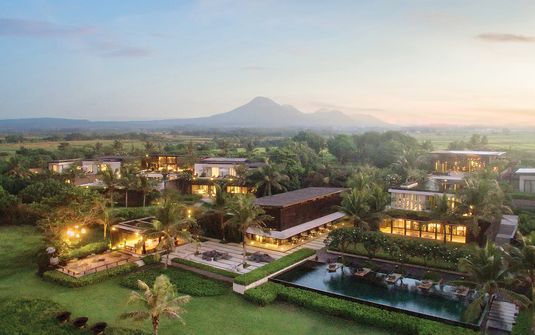
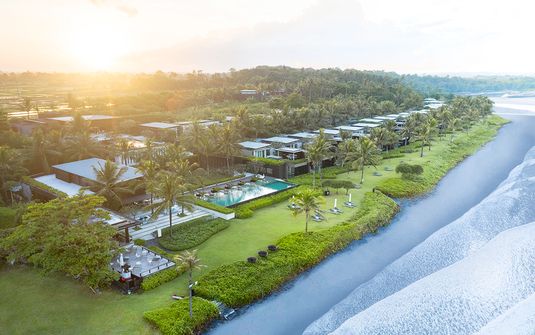
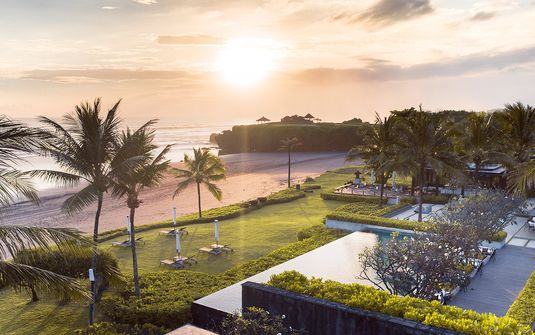
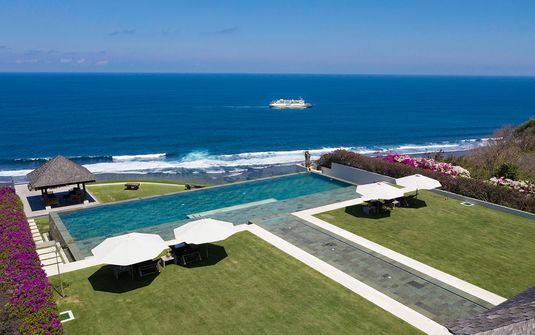
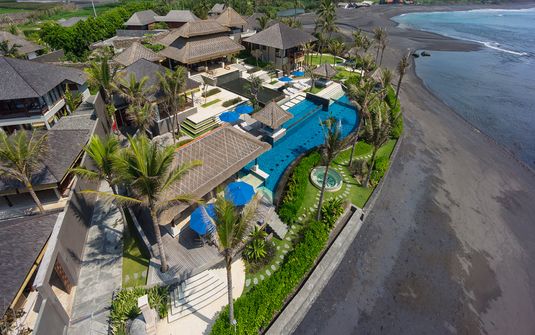
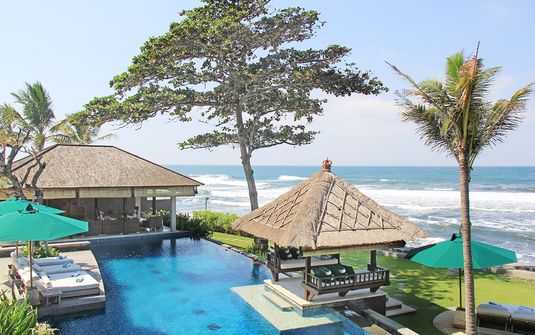
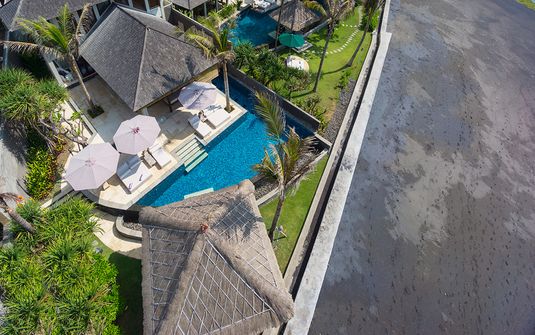
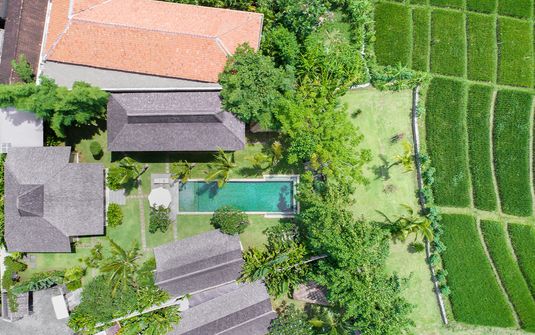
Bali gives the collection its clearest local perspective, with a strong relationship between pavilion architecture, garden space and the organisation of a private compound. The island’s different settings create meaningful variations in atmosphere. A coastal residence may receive a broad water prospect, while an inland house can draw its character from planted slopes, cultivated ground or a more enclosed green foreground. The precise address remains central to the stay, allowing the property to feel individual rather than treating every Balinese villa as the same version of a tropical retreat.
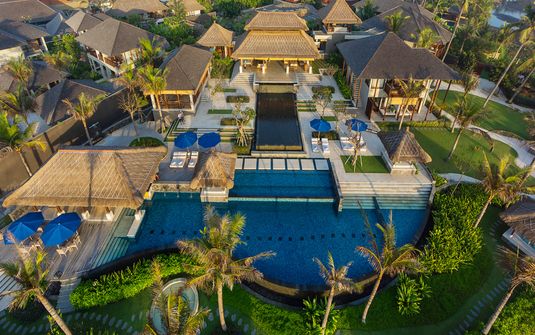
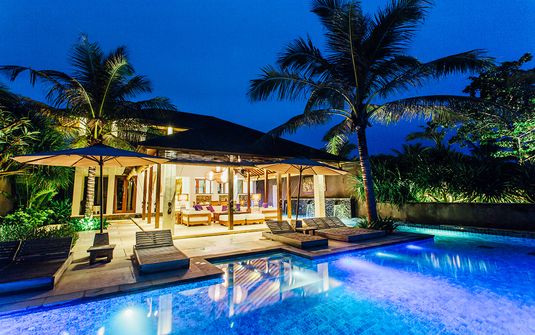
The architectural composition often matters as much as the outlook. A principal pavilion can establish the shared centre, with suites and quieter rooms arranged around courts or along the garden’s edges. Contemporary interpretations may simplify the building forms while preserving that underlying separation of spaces. The household experiences a complete residence through the connections between them, with a covered gallery, planted passage or exterior room providing a measured transition from one domestic setting to another. This gives the home depth beyond the scale of any single interior.
The Garden within the Compound
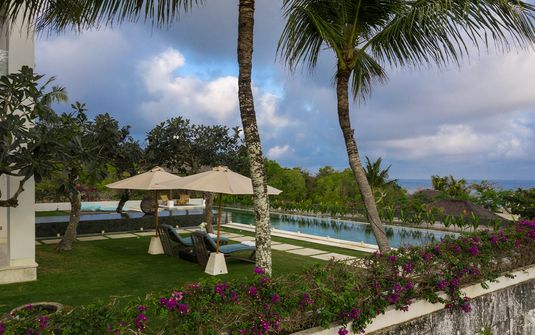
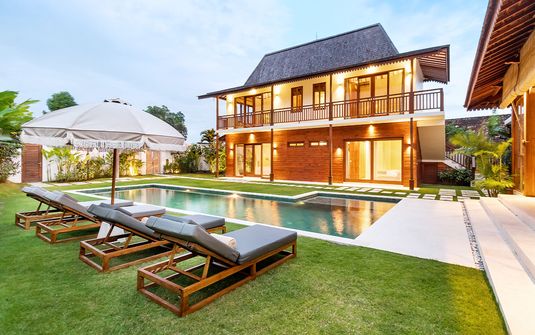
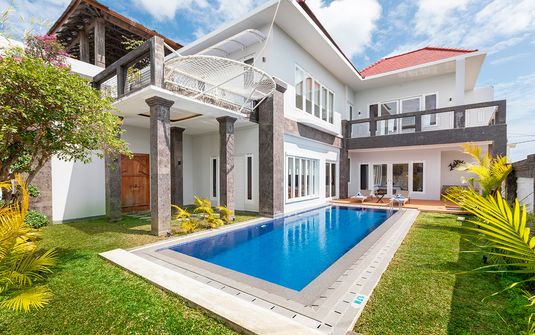
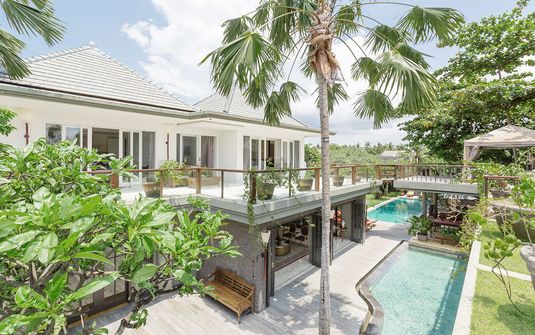
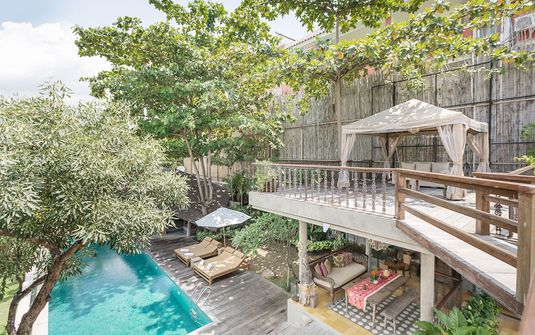
In a garden-centred residence, the spaces between buildings have an active architectural role. A planted court provides a protected foreground to neighbouring rooms, while a more open lawn or terrace creates another scale near the communal areas. Walls, water elements and established vegetation can reinforce these distinctions when they belong to the actual property. The garden becomes a sequence of inhabited places rather than a continuous decorative border, allowing the household to spend shared and quieter time in settings with clearly different relationships to the home.
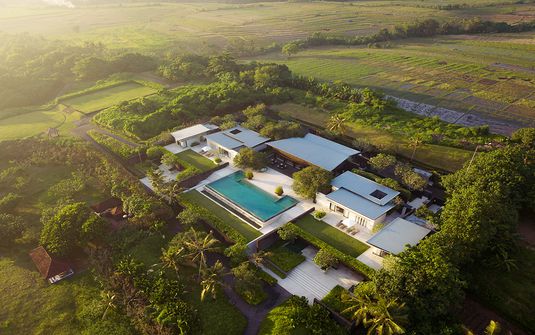
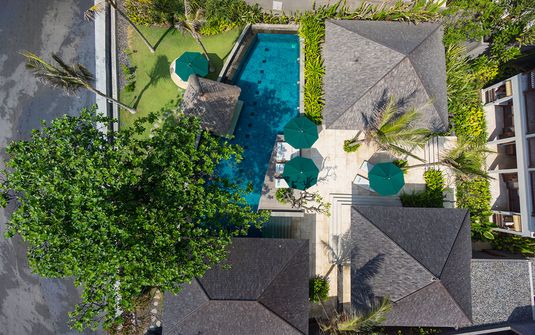
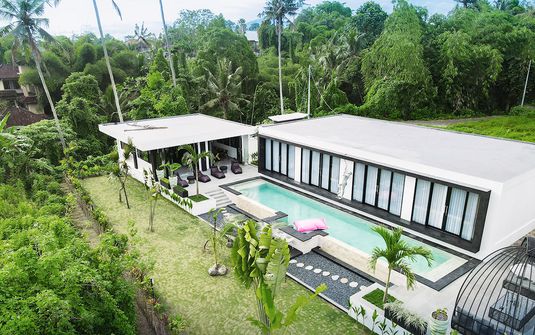
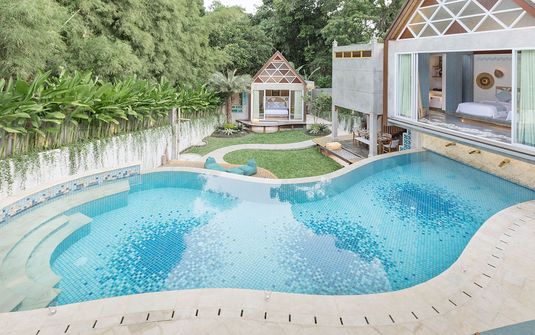
This organisation can create privacy within a generous compound without relying entirely on distance. The orientation of suites, the spacing of buildings and the enclosure of smaller exterior rooms all influence personal comfort. A private accommodation pavilion may feel independent while remaining naturally connected to the main living area through the grounds. Where a residence includes a pool, its position forms part of this composition, with the relationship to occupied rooms and garden edges contributing more to the household experience than treating the water as an isolated centrepiece.
Materials with Texture and Regional Presence
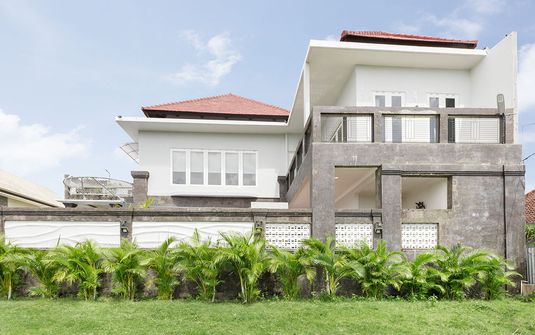
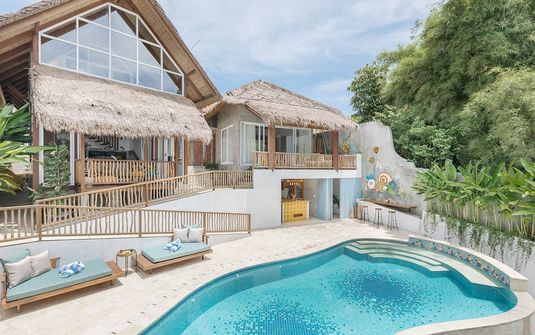
Timber and stone can give an Indonesian residence a strong material character, particularly when their texture remains legible at the scale of the room. Crafted doors, structural elements and selected details introduce individuality without requiring every surface to carry the same intensity of ornament. More restrained areas allow the architecture to remain clear, with the proportions of a pavilion or the depth of a covered exterior space providing much of its presence. Contemporary furnishings can then support comfortable occupation while respecting the underlying composition of the home.
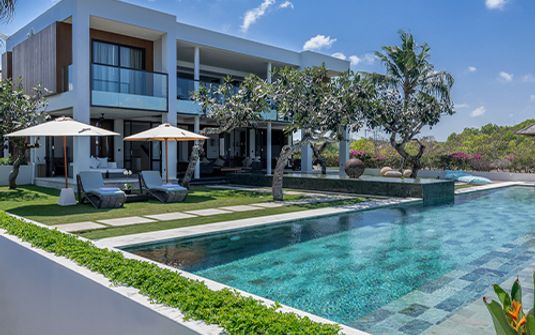
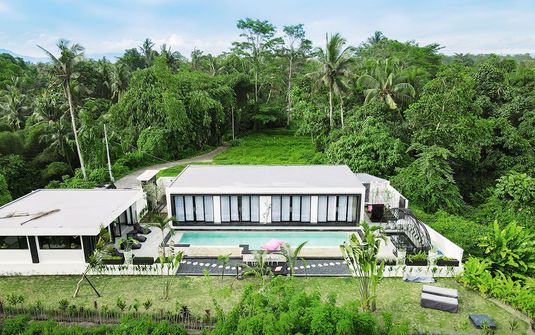
Newer houses may use simpler forms and broader openings towards the landscape, giving selected communal rooms a more outward-facing character. Their connection with place can still come through materials, planting and the way the building meets the ground. Smaller rooms offer a deliberate change of atmosphere, with closer garden views and more enclosed proportions. This range makes the residence richer over a sustained stay, ensuring that refinement extends into the quieter accommodation rather than remaining concentrated in the largest living space or the most prominent outlook.
Coastal Openness and Inland Enclosure
The relationship with the surrounding land varies substantially between addresses. A house near the coast can place water at the centre of its visual composition, while an inland residence may be defined more closely by vegetation and changes of level. Neither setting is fully described by a general promise of tropical seclusion. The immediate foreground determines much of the atmosphere: a terrace held by planting, a garden wall following the ground or a principal room opening towards a broad prospect gives the property its particular residential identity.
The actual pattern of neighbouring buildings also matters. A generous outlook can coexist with a settled local context, making window orientation and the enclosure of exterior spaces important parts of privacy. A well-resolved home provides protected personal areas alongside its more open rooms, allowing the household to occupy the grounds confidently. These qualities give discretion a practical expression within the architecture, grounding the experience in the real arrangement of the residence instead of inferring complete isolation from the island setting or the extent of its vegetation.
A Complete Home with a Personal Rhythm
Independent suites and a choice of communal spaces allow several couples or different generations to remain together without making every routine collective. A principal salon can anchor the household, while smaller sitting areas and protected exterior rooms provide alternatives for quieter time. Consistent comfort across the accommodation gives the whole property substance. Where discreet household support is included, considered working spaces help practical care integrate with private life, preserving the independent domestic atmosphere that makes a complete residence appealing over a longer stay.
The lasting character of an Indonesian villa often comes from the relationship between a building and the garden immediately around it. A covered room facing a planted court, a pavilion set along a quieter edge or a carefully framed coastal prospect can become the defining part of the stay. These qualities give familiar spaces continuing presence. The residence brings the destination into a personal frame through its materials, architecture and protected accommodation, offering a home whose individuality remains closely tied to its actual island setting.


