


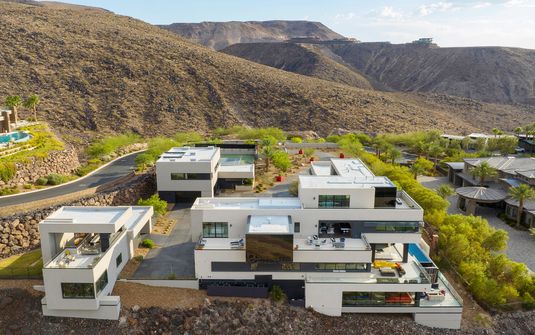
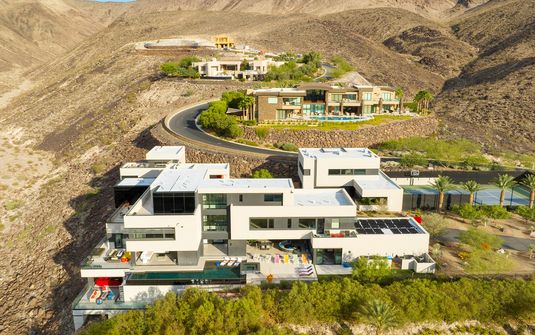


Henderson offers a residential interpretation of southern Nevada that is shaped by desert landforms, broad horizons and carefully composed private spaces. Set along the southeastern side of the Las Vegas Valley, it has an identity distinct from the more concentrated metropolitan image nearby. The appeal of a stay here lies in the relationship between an individual home and its surroundings: a distant ridgeline, a sheltered courtyard, an elevated outlook or a more enclosed garden setting. An exceptional residence uses those conditions deliberately, creating a private world that feels refined and self-contained without losing its connection to the scale and clarity of the desert.
Within Nevada, Henderson combines established residential areas with settings where the surrounding mountains remain strongly visible. Its character is not uniform, and a general address does not convey whether a home will feel elevated, inward-looking or closely integrated with neighbouring properties. The precise site matters. A residence can draw its atmosphere from a broad valley view, the immediate presence of rising ground or the architecture of its own exterior rooms. This range allows a private stay to be tailored around a particular sense of place rather than an assumption that every southern Nevada home offers the same desert panorama.
Desert Contours and Residential Space
The McCullough Range and the landforms associated with Black Mountain give Henderson a powerful geographic frame. These are not decorative background features; their scale and profile influence the way a residence relates to the horizon. From a lower position, the mountains may create a strong edge to the settled landscape, while an elevated house can reveal more of the valley's breadth. A carefully directed view can hold both near and distant ground, making the composition feel layered rather than simply wide. The most convincing home acknowledges its specific orientation, using the landforms that are genuinely present instead of relying on a generic desert image.
Elevation changes the atmosphere of a Henderson residence, but height alone is not a measure of quality. A hillside site may offer a broad visual field while creating more complex relationships with neighbouring ground. A lower property can feel quieter and more enclosed, particularly when its architecture establishes a clear internal landscape. The distinction is between a home that looks outward across the valley and one that creates much of its experience within its own boundaries. Both can be exceptional when the plan is coherent. The choice should reflect whether the stay is intended to feel panoramic and expansive or more protected, intimate and inwardly composed.
The desert foreground is especially important. Rock, sparse planting and the geometry of the ground can give a house a strong sense of belonging, while a more cultivated garden may establish a deliberate contrast with the wider setting. Neither approach needs to be elaborate. A restrained landscape can be deeply effective when it aligns with the building's forms and reveals rather than obscures the site's character. In Henderson, the immediate ground often determines whether contemporary architecture feels grounded or detached. The way a wall meets a slope, or a planted edge defines an entrance, can make the residence feel specific to this landscape.
Architecture That Creates Its Own Atmosphere
Contemporary residences can respond particularly well to Henderson's broad forms through horizontal lines, substantial walls and carefully placed openings. The strongest designs use the desert as a context for proportion rather than as an excuse for an oversized gesture. A low roof can reinforce the horizon, while a recessed façade may create depth and privacy within a simple volume. Glazing is most persuasive when it frames a deliberate composition, whether a mountain profile or a protected exterior room. A house gains architectural authority when its openings and solid surfaces work together, allowing the setting to remain present without making every interior equally exposed.
Courtyards offer a more inward expression of desert living. They can create a defined landscape within the residence, giving rooms a private outlook even where the wider surroundings are settled. Their success depends on scale and proportion: a courtyard should feel like a room in the overall plan, not merely an empty interval between building wings. Carefully chosen surfaces, planting and the placement of openings can make it a calm centre for the house. This approach is especially appealing for guests who value discretion, because the architecture provides its own sense of space rather than relying entirely on distant views or extensive separation from neighbouring homes.
More traditional or Mediterranean-influenced houses can also sit convincingly within Henderson when their proportions and material palette are well judged. Rendered walls, shaded recesses and articulated roof forms may create a softer silhouette than a purely linear contemporary residence. The quality lies in coherence rather than ornament. A restrained exterior can support a rich interior atmosphere through texture, craftsmanship and the sequence of rooms, without requiring every façade to become a display. The most assured homes adapt their architectural language to the site's scale, ensuring that the building feels comfortable in its setting rather than imposing a style without regard to the surrounding land.
Views, Boundaries and Discretion
Privacy in Henderson should be considered through actual sightlines. An elevated residence may see a great distance while also being visible from other positions, and a home within a closely arranged residential area may remain remarkably private through its orientation and enclosure. Gates or community boundaries, where present, do not describe the whole experience. The relevant questions concern the rooms and exterior spaces guests will occupy: what they face, how they relate to neighbouring buildings and whether the house provides protected alternatives to its most open outlooks. A well-designed residence resolves these relationships within its plan instead of depending on an abstract promise of exclusivity.
Lake Las Vegas introduces a different residential setting within Henderson, with water forming part of the visual composition in certain locations. That atmosphere should be distinguished from the desert foothills and from the broader valley rather than used as a description of the entire destination. A water-facing home, an elevated residence overlooking developed ground and a property with no water outlook offer different experiences. The precise relationship must remain property-specific, including any frontage or associated features. A considered choice recognises that this is one distinct setting among several, allowing the residence to be selected for the environment it genuinely provides rather than an assumed identity attached to Henderson as a whole.
The entrance sequence can reinforce a home's private character before its principal rooms are reached. A restrained approach, a defined threshold and a deliberate turn towards the main outlook can create a sense of calm that contrasts with the breadth of the exterior landscape. This need not involve a grand forecourt or conspicuous façade. In many desert residences, an understated street presence gives way to a much more generous internal world. That transition is part of the architectural pleasure: the house reveals its scale selectively, reserving its strongest views and most composed exterior spaces for the people within rather than presenting everything at the boundary.
Interior Refinement in a Desert Residence
The interior palette can draw on the surrounding landscape without reproducing it literally. Stone, timber and textured fabrics provide depth, while a measured range of tones allows the rooms to feel coherent rather than themed. A strong material presence is most effective when balanced with clear proportions and sufficient visual quiet. The aim is not to make every surface a feature, but to establish an atmosphere that remains comfortable over time. In Henderson, a refined residence can feel both substantial and relaxed when the architecture carries the main expression of place and the furnishing adds a more personal, residential layer.
A principal room with a broad outlook can be complemented by smaller spaces directed towards a courtyard or private garden. This variety is especially important in an outward-looking house, because it gives guests a choice between visual breadth and enclosure. The most satisfying plans do not make every room compete for the same panoramic view. Instead, they use different parts of the site to establish distinct atmospheres. A quieter study, an intimate sitting room or a bedroom wing with a protected outlook can give a substantial property a human scale, ensuring that the residence feels complete beyond the first impression of its largest shared interior.
Bedroom placement should be considered in relation to shared exterior spaces as well as the main living area. A suite may have a remarkable view yet feel less private if it faces a heavily used terrace, while a more inward room can provide an exceptional sense of retreat through its orientation and proportions. Separate wings can be valuable for some groups, but the best arrangement depends on how guests wish to share the house. The quality of a residence lies in its ability to support both companionship and independence, with circulation and room placement that make those choices feel natural rather than imposed by the architecture.
Exterior Rooms and a Composed Private World
Exterior space is most convincing when it has a clear architectural identity. A recessed terrace, a walled garden or a courtyard can create a defined setting within the wider desert landscape, while a more open platform may emphasise a distant horizon. Their value depends on the relationship with adjacent rooms and the privacy they actually provide, not simply on total area. Water features or pools, where genuinely part of a residence, should be understood as specific elements within that composition rather than assumed characteristics of every home. The strongest properties integrate their exterior spaces so thoroughly that they feel like part of one coherent residential plan.
The distinction between a panoramic house and an inward retreat should guide selection from the outset. The former draws much of its atmosphere from the valley and mountain outlook; the latter may provide a more self-contained experience through gardens, courtyards and protected rooms. A hybrid approach can also be highly successful when the transitions are well resolved. What matters is consistency. A residence should not offer an impressive principal view at the expense of privacy elsewhere, nor should enclosure make the house feel disconnected from its setting. The finest Henderson homes find a deliberate balance, allowing the desert to remain present in precisely the ways the architecture can support best.
A Distinctive Southern Nevada Address
Henderson offers a particular version of luxury within the United States of America: residential, spatially generous and strongly shaped by the desert's contours. Its appeal is not dependent on replicating the identity of the neighbouring metropolis. A private home can instead provide a composed setting in which architectural judgement, a specific outlook and well-protected spaces establish the experience. For discerning guests, this distinction is meaningful. The residence becomes a place with its own atmosphere, connected to southern Nevada through its landforms and materials while retaining the discretion and individuality that make a private stay more rewarding than an interchangeable luxury address.
Luxury Villas in Henderson
An exceptional Henderson villa translates its desert setting into a clear residential idea. It may frame a broad valley view, sit close to rising ground or organise itself around a private courtyard, but its architecture should make that choice feel deliberate. Generous shared rooms, thoughtfully separated private areas and exterior spaces with real definition create the foundation of a refined stay. The lasting impression comes from coherence rather than excess: a home whose materials, proportions and boundaries work together, offering both a strong sense of southern Nevada and a private world that feels calm, individual and beautifully resolved from the first threshold onwards.


