


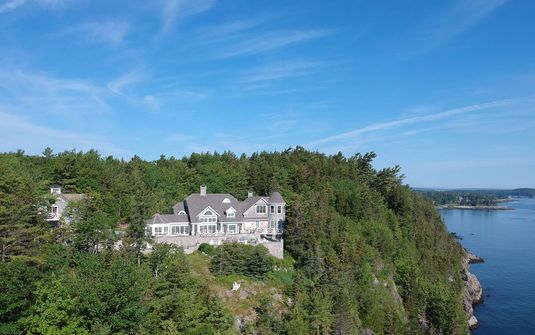
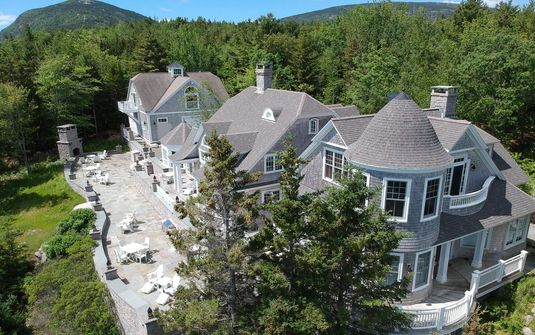


Bar Harbor brings the granite coast of Mount Desert Island into an unusually rich relationship with residential life. The harbour is part of the town's identity, but its character extends inland through wooded ground, established houses and the mountainous contours that distinguish this stretch of Maine from a gentler coastal landscape. A private stay here can feel both deeply maritime and quietly enclosed, depending on the position of the residence. The attraction is not simply an address beside the Atlantic. It is the close conjunction of rock, forest, water and an architectural heritage that has long treated the island as a place for exceptional homes.
Within Maine, Bar Harbor has a scale and setting that are particularly its own. Frenchman Bay opens beyond the settled waterfront, while the island's rising terrain creates a much more varied backdrop than a conventional seaside town. A house may look towards the bay, occupy a wooded pocket or sit within the established residential fabric, and each position gives the stay a different emphasis. This variety rewards careful selection. The finest residence is not necessarily the one with the widest horizon, but the one whose architecture, privacy and outlook form the most convincing expression of this distinctive island setting.
Granite, Woodland and Frenchman Bay
The coastline around Bar Harbor is defined by the meeting of hard rock and deeply coloured water. Granite edges, small changes in elevation and the presence of islands across the bay create compositions with considerable depth. From a residence, the immediate foreground can be as important as the distant view: a rocky edge framed by trees may convey more of the place than an uninterrupted expanse of water. This is a coast best appreciated through its specific forms rather than through a generic promise of ocean scenery. A carefully placed window can hold several layers of land and sea within a single, remarkably composed outlook.
Woodland contributes an equally important part of the island's atmosphere. Trees can soften the boundary between a substantial residence and the surrounding landscape, creating a feeling of retreat even where the wider area is settled. A wooded approach may gradually reveal the house, while garden clearings provide more deliberate views towards water or rising ground. The result can be a strong contrast between enclosure and openness, with the residence acting as the point where those qualities meet. For guests seeking discretion, this relationship may be more compelling than a conspicuous waterfront position with little visual protection from neighbouring properties.
Mount Desert Island's mountain forms add a sense of mass and distance to the coastal setting. They make the landscape feel layered rather than purely horizontal, and they help explain why Bar Harbor's residential identity differs from that of many Atlantic seaside communities. A house that acknowledges both the rising ground and the bay can offer several distinct visual experiences within the same stay. The most assured architecture does not attempt to capture everything in every room. It allows a water-facing space, a garden outlook and a more sheltered interior to contribute different dimensions to the overall sense of place.
The Architectural Legacy of an Island Retreat
Bar Harbor's history as an established retreat is reflected in a residential language that can be substantial without feeling urban. Shingled surfaces, generous roofs and carefully articulated façades belong naturally to the coastal New England setting. Their quality depends on proportion and execution rather than decorative abundance. A broad porch can mediate between house and garden, while bays and projecting rooms can create intimate interior positions within a larger building. These elements give a residence a more nuanced silhouette and allow guests to encounter the landscape from several angles, reinforcing the sense that the house has developed a specific relationship with its site.
A historic character does not require the interior to feel fixed in another era. Thoughtful updates can preserve the scale and individuality of older rooms while introducing a clearer, more comfortable residential experience. The most convincing combinations respect the building's original logic: distinctive joinery, well-shaped windows or a graceful sequence of rooms can remain central to the atmosphere without dictating every furnishing. In Bar Harbor, an interior with restraint often allows the architecture to speak more clearly. Natural materials, textured fabrics and a measured palette can support the coastal setting without relying on familiar nautical motifs or overly literal references to the sea.
Contemporary homes can express the same island character through different means. Low volumes, timber cladding and carefully directed glazing may establish a strong connection with the land without borrowing historic details. A building can be unmistakably modern and still feel at ease among granite and trees if its massing is sensitive to the site. The most successful designs avoid treating the landscape as a blank backdrop. They respond to rock outcrops, existing vegetation and changes in level, creating a residence whose individuality comes from the ground it occupies rather than from a form that could have been placed anywhere.
Privacy in a Coastal Community
A waterfront address and a private setting are not synonymous. The relationship between the house, neighbouring parcels and visible shoreline needs to be understood at the level of the individual property. Some residences may enjoy a secluded outlook while remaining part of an established neighbourhood; others may have expansive grounds but more open sightlines. Neither should be judged by description alone. For a discreet stay, the orientation of principal rooms and exterior spaces is particularly important, along with the way the approach reveals the building. A composed boundary can be more effective than a conspicuous entrance that draws attention to the residence.
The distinction between a water view and direct shoreline frontage is equally important. A house overlooking Frenchman Bay may offer a memorable panorama without occupying the water's edge, while a shoreline residence may experience the coast at a much closer and more intimate scale. These are different qualities, not interchangeable descriptions. Private access, ownership of adjoining ground and any shoreline structures must remain specific to the home being considered. The most accurate way to understand the setting is through its actual relationship to land and water, allowing the character of the stay to emerge from what the residence genuinely provides.
Within the house, privacy is created through the arrangement of spaces as much as through the size of the grounds. Bedroom wings, upper-level suites and smaller rooms away from the principal living area can give a group valuable independence. Older houses may offer a particularly rich sequence of distinct rooms, while newer residences can achieve similar variety through carefully articulated volumes. The aim is not separation for its own sake, but a comfortable balance between shared time and personal retreat. A home feels more complete when guests can choose a quieter setting without becoming entirely disconnected from the rest of the residence.
A More Personal Coastal Atmosphere
The most compelling Bar Harbor interiors feel connected to the island without performing a theme. A room may draw its atmosphere from the scale of its windows, the texture of timber or the presence of a stone wall rather than from decorative references to maritime life. Well-chosen objects and art can add individuality, especially when the home retains a sense of personal history. This gives the residence depth beyond its scenic position. Guests are not simply looking out at a coastal landscape; they are inhabiting a house with a particular character, where architecture and furnishing make the setting feel more immediate and more personal.
A generous principal room is often most effective when complemented by spaces of a smaller scale. An enclosed sitting room, a library or a windowed corner can create a more intimate relationship with the landscape than a single expansive volume. In Bar Harbor, where the view may contain islands, trees and changing contours, these smaller frames can be especially rewarding. They invite attention to a particular part of the setting rather than presenting every outlook as a panorama. The house gains variety through such differences, allowing its quieter spaces to feel as carefully considered as the rooms intended for a larger gathering.
Exterior areas also benefit from a sense of hierarchy. A broad terrace facing the bay can provide a strong connection with the wider landscape, while a garden-side porch or recessed outdoor room may offer greater enclosure. Their relationship to the interior matters: the best spaces feel like natural extensions of specific rooms rather than additions placed wherever ground was available. Materials should also belong to the setting, whether through stone paving, timber details or planted edges that soften the building's footprint. The result is a residence that meets the island with care, allowing its immediate surroundings to feel intentional without becoming overly formal.
Selecting a Residence With a Clear Identity
A house within Bar Harbor's established residential fabric can offer a strong sense of the town's architectural continuity. Rooflines, gardens and mature planting become part of the experience, with the coastal landscape remaining close at hand. A more withdrawn position may instead emphasise woodland, broad grounds or a particular bay outlook. Both can provide an exceptional stay, but they should be chosen for different reasons. The important question is whether the residence's immediate setting supports the atmosphere guests want to inhabit. A connected coastal home and a secluded island retreat are not simply different sizes of the same experience.
For larger parties, the clarity of the interior plan deserves careful attention. A substantial house may contain many rooms yet still concentrate all shared time in one space, while a more modest residence can feel generous through well-distributed sitting areas and a balanced bedroom arrangement. Circulation, changes of level and the relationship between suites and exterior spaces all shape the stay. In an older property, architectural individuality can be a considerable pleasure, provided the layout is understood rather than assumed. The best choice aligns the character of the house with the needs of the guests, preserving both comfort and the building's distinctive personality.
Bar Harbor's Place on the American Coast
Among coastal destinations in the United States of America, Bar Harbor stands apart through the density of its landscape. Mountain forms, woodland, granite and bay water exist in close proximity, giving even a quiet residential setting a strong sense of geographic character. The luxury of a private stay lies in being able to experience that richness from a home that feels composed and personal. It does not require a residence to dominate the site or accumulate conspicuous features. A sensitive relationship with the land, a well-resolved interior and genuine discretion can create a more enduring impression than scale alone.
Luxury Villas in Bar Harbor
A thoughtfully selected Bar Harbor villa makes the particular qualities of Mount Desert Island part of the house itself. Its outlook should be accurately understood, its architectural character should feel convincing and its spaces should offer both shared generosity and individual retreat. Whether the residence draws on the island's shingled heritage or presents a contemporary interpretation of coastal living, the strongest experience comes from coherence rather than excess. Granite, trees and the waters of Frenchman Bay provide a distinctive setting; an exceptional private home gives those elements a human scale, creating a stay that feels grounded in this singular corner of the Maine coast.


