




Ibiza: Private Villas With an Island's Architectural Soul
Ibiza offers a private residential world shaped by pale architecture, pine-covered ground, terraced countryside, and a Mediterranean coast with distinctly different orientations. Within Spain, the island has an unusually recognizable domestic vocabulary: simple white volumes, substantial walls, and exterior spaces that feel like natural extensions of the house. A stay can be defined by the intimacy of an inland finca or the more open perspective of a contemporary coastal villa. Both become compelling when the residence retains a close relationship with its site, allowing the island's landscape to shape the atmosphere of the home.
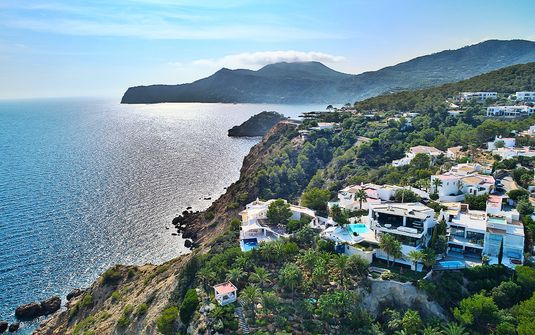
The island's scale encourages attention to the immediate setting. A property among trees can feel contained and quiet, while an elevated plot may take in several folds of land before reaching the sea. A house close to a cove has a more immediate coastal relationship, with the shape of the shoreline becoming part of its everyday outlook. These differences are more meaningful than a broad promise of an Ibiza address. The precise orientation of the building, the depth of its plot, and the character of the neighboring land determine the experience of the residence.
The Finca and Its Enduring Proportions
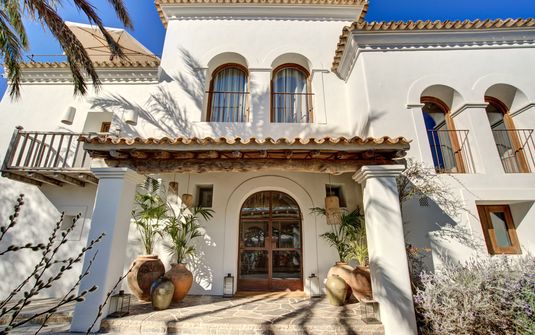
The traditional finca gives Ibiza much of its architectural identity. Its appeal comes from a clear composition of solid volumes, thick walls, and openings that feel deliberately held within the building. Rooms can have an intimate scale even where the overall property is substantial. The house reveals itself through a sequence of interiors and exterior thresholds rather than one continuous façade. A thoughtful adaptation preserves this character, allowing contemporary comfort to sit within the original proportions while leaving the building's material depth and gradual spatial rhythm visible.
White Walls With a Tactile Character
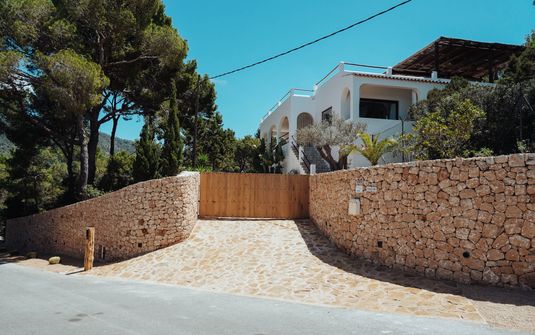
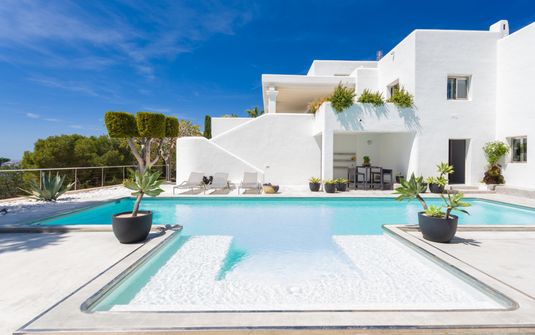
White plaster is expressive here because of its relationship with texture, timber, and the depth of an opening. A substantial wall can make a small window feel precise, while a timber door brings warmth to an otherwise restrained surface. These details give the house a sense of permanence without relying on decorative excess. Inside, an equally considered palette can reveal the architecture rather than compete with it. The most satisfying interiors make room for personal comfort through well-scaled furniture and tactile materials, allowing simplicity to feel complete rather than sparse.
An older house may have several connected volumes, each with a slightly different relationship to the garden or surrounding ground. That variation can become one of the residence's strongest qualities. A more enclosed room offers a quiet retreat, while a broader opening connects a principal living space to a terrace. The transition between them gives the house depth, making the private stay more nuanced than a sequence of similarly open rooms. The original architecture remains an active part of the experience, with its changes in scale supporting different ways of inhabiting the property.
Contemporary Villas and the Mediterranean View
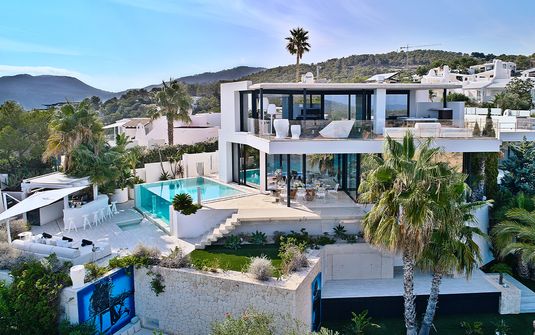
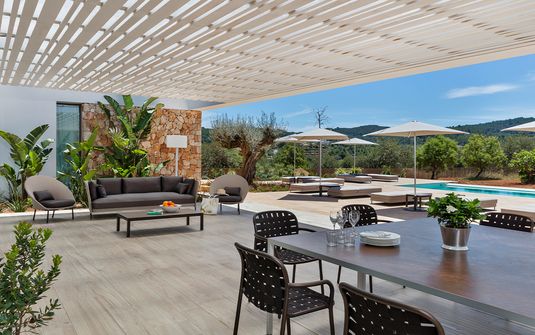
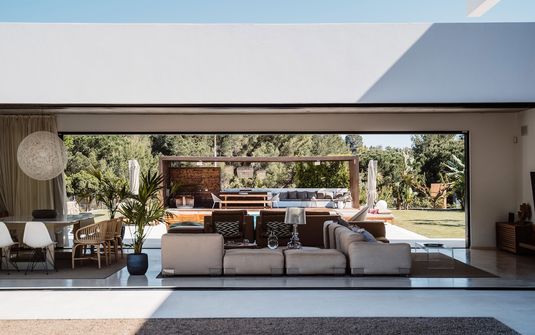
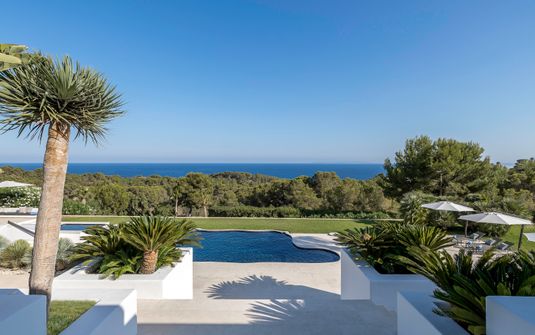
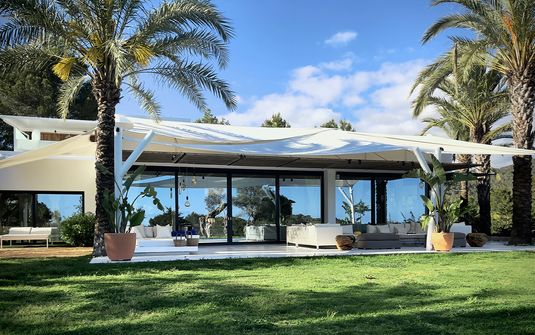
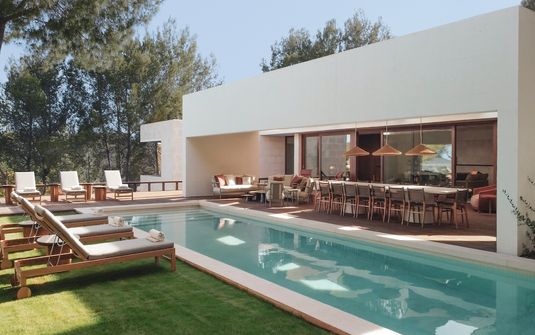
Contemporary residences often interpret the island through cleaner lines and larger openings, using the landscape as a central part of the interior composition. A long terrace can establish a broad relationship with the sea, while recessed areas retain a more personal scale close to the rooms. The strongest designs do not depend on openness alone. They provide quieter corners, carefully positioned walls, and enough material warmth for the house to remain comfortable beyond its principal panorama. Architectural clarity becomes persuasive when it serves the household as naturally as it frames the view.
Pine Trees and the Nearer Landscape
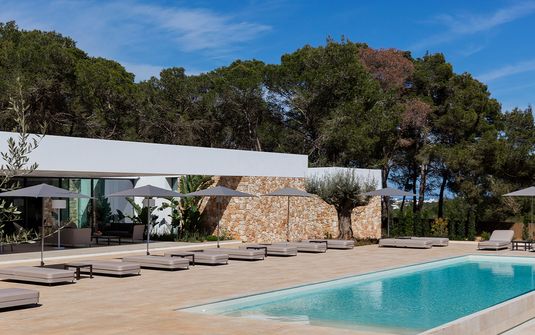
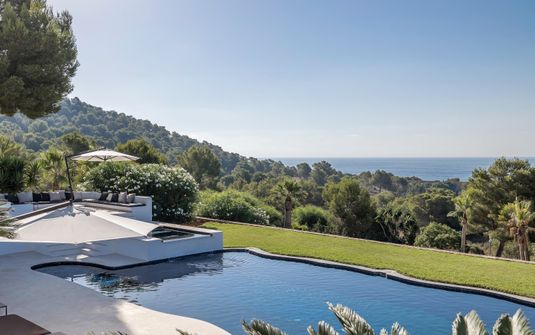
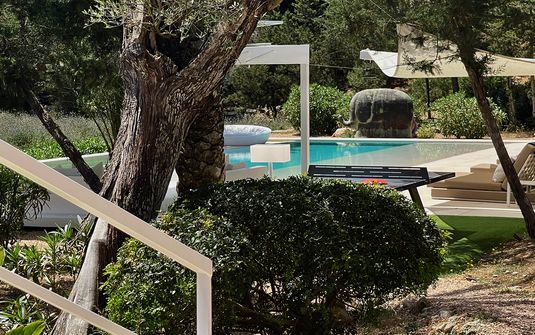
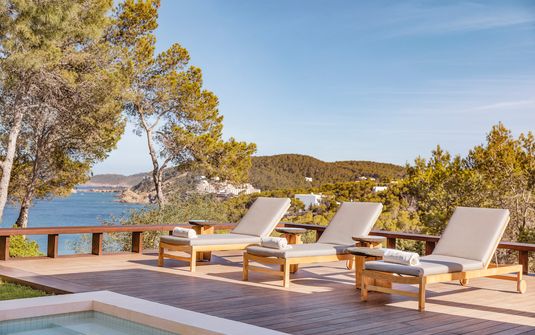
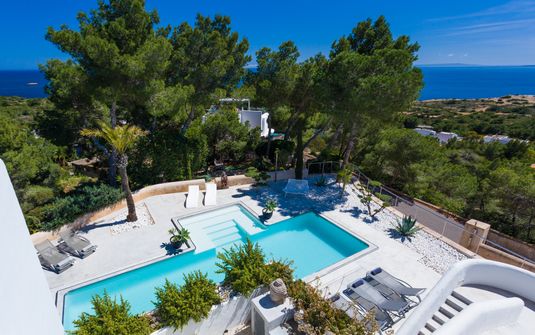
A planted plot brings another dimension to the island setting. Pine trunks create rhythm around low buildings, and the canopy can make a terrace feel held within a more intimate landscape. The view becomes layered, with nearer vegetation giving depth before the eye reaches a distant coastline or ridge. This is particularly valuable in a residence where the sea is not the immediate foreground. The house can still have a strong island identity through its relationship with trees, stone boundaries, and the contours of the surrounding ground, creating a private atmosphere rooted in the site itself.
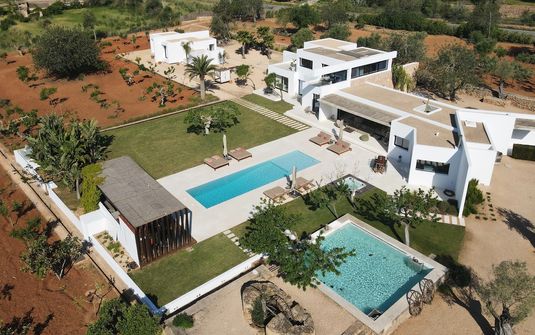
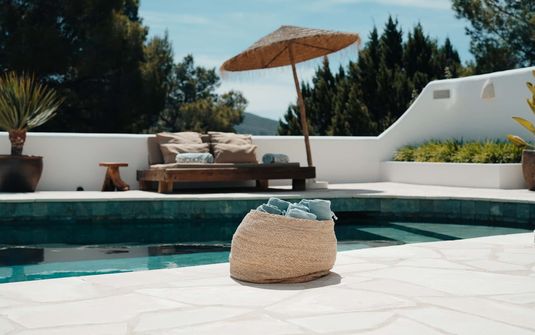
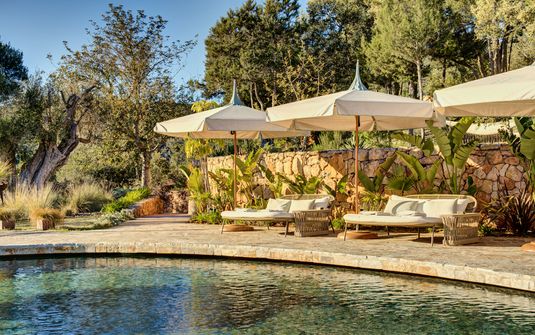
Terraced land and established stonework can give rural properties a further sense of continuity with their surroundings. A garden need not appear entirely separate from the countryside to feel considered. Existing walls, changes in level, and mature planting can organize exterior areas at several scales, giving the house a generous shared terrace and more protected personal settings elsewhere. Where a pool is present, its position should belong to this wider composition. Water, planting, and architecture feel most convincing when they form a coherent foreground rather than a collection of unrelated features competing for attention.
A House for a Private Party
Ibiza's villas can take several forms, from a more compact finca to an estate with separate guest accommodation. The difference affects how a group occupies the property. A detached suite offers a clearer personal threshold, while bedrooms within the principal house maintain closer contact with shared rooms. Neither arrangement is universally preferable. The most comfortable residence matches those relationships to the people staying together, giving families or friends enough independence while retaining a recognizable common center. Personal space becomes part of the property's generosity, not simply a consequence of its overall size.
Interior Comfort Beyond the Principal Room
A well-resolved private suite gives the island stay substance at a more intimate scale. Its outlook, bathroom arrangement, storage, and relationship with adjacent terraces matter as much as the appearance of the principal living room. Consistent attention across the accommodation allows every guest a satisfying personal setting. Smaller shared rooms can be equally valuable, offering a quieter alternative without requiring complete withdrawal from the household. These details make a residence feel like a complete home, with enough variation for different routines to coexist comfortably throughout a longer stay.
Discretion Through the Shape of the Site
Privacy on Ibiza depends on the individual plot and the orientation of its buildings. A distant outlook may feel expansive while remaining visually open to neighboring properties, whereas a smaller terrace framed by walls and trees can offer greater intimacy. The strongest houses understand that distinction and provide different degrees of retreat within the same property. A clear garden boundary, offset bedroom wings, and protected exterior spaces can work together without closing down the landscape entirely, preserving both the island's openness and the more personal comfort of a private residence.
Within Europe, Ibiza's enduring residential appeal lies in the coherence of its architectural language and the variety of its island settings. A restored finca, a low contemporary villa, and a planted estate can each express the place convincingly when their proportions and materials respond to the ground around them. The most memorable stay comes from inhabiting that particular relationship: a quiet room behind substantial walls, a terrace held by trees, or an opening that gives the Mediterranean a precise place within the home. These details make the residence feel individual and lasting.


