




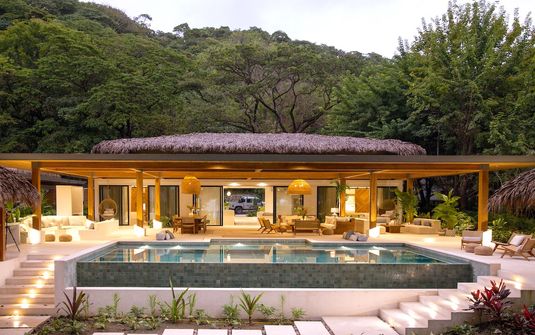
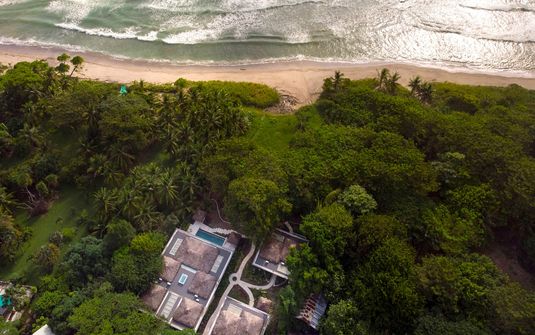
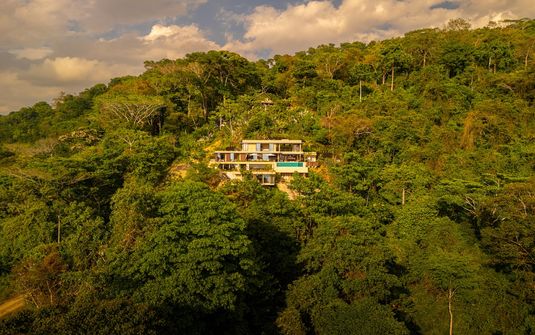
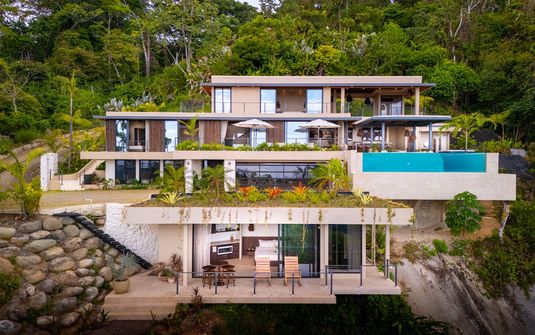
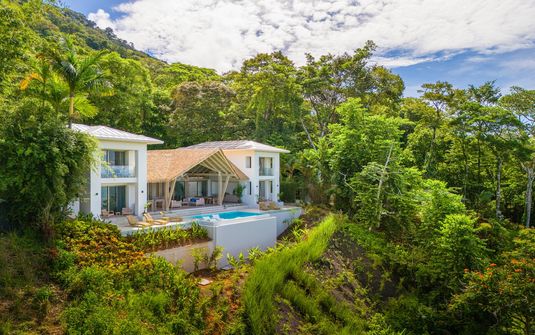
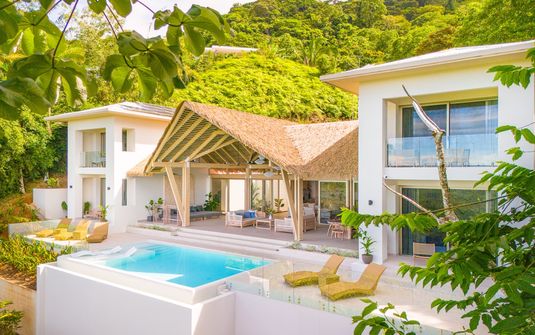
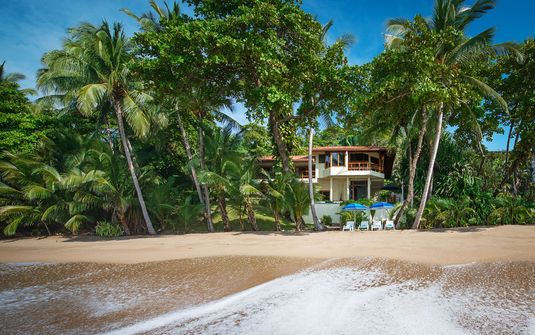
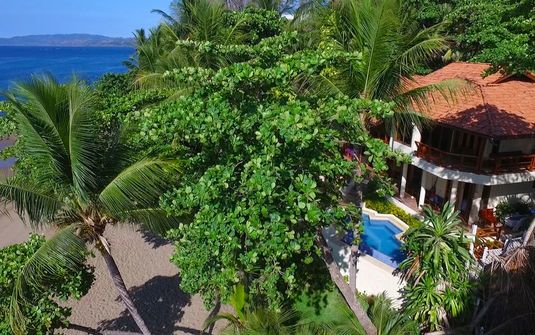
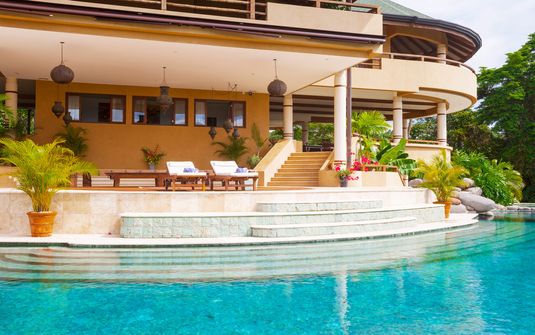
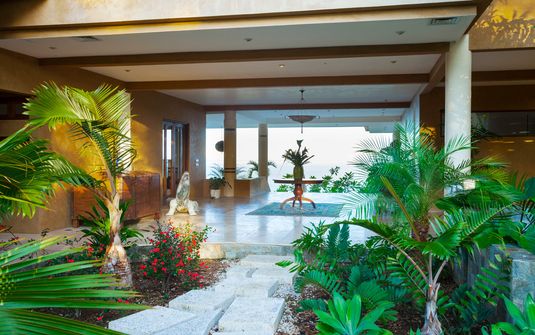
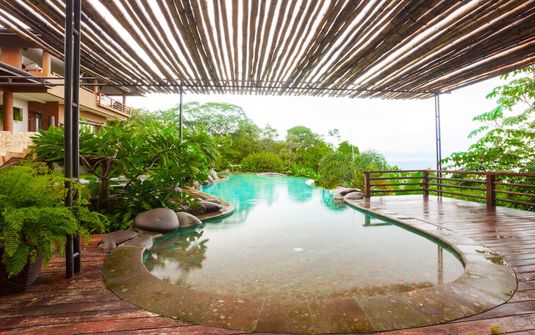
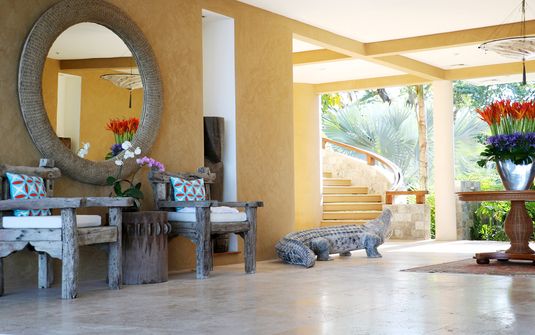
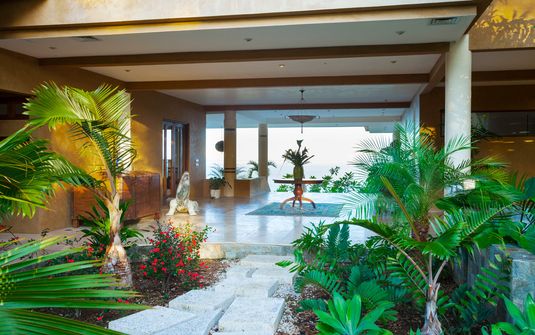
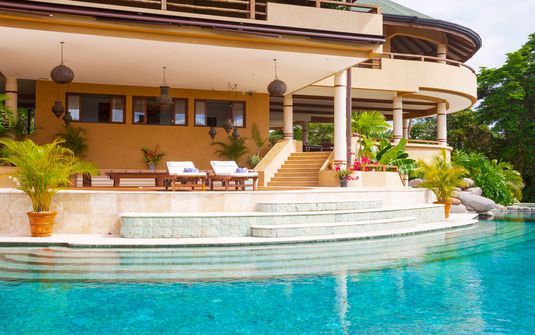
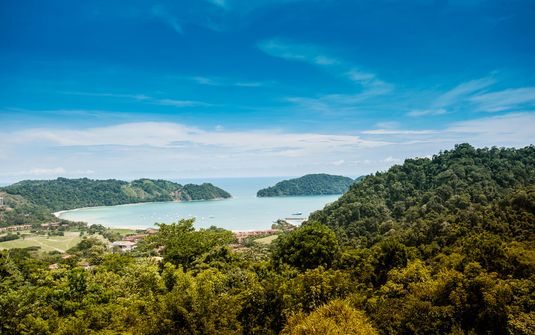
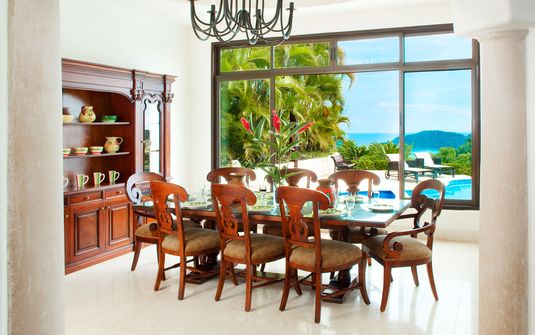
Puntarenas brings together several of the most contrasting Pacific landscapes in Costa Rica. The name belongs to a province as well as its coastal capital, and LaCure's destination collection reflects that broader geography. Sheltered bays, the southern Nicoya Peninsula and forested coastal hills all contribute to its residential character. A private stay here can therefore take many forms, from a gracious estate within an established maritime community to an independent house above a rugged shore. The common element is the Pacific itself, interpreted through very different relationships between land, architecture and the life of a private household.
Understanding this breadth is essential to choosing well. A residence on the Nicoya Peninsula does not share the same setting as one on the mainland coast, even when both sit within Puntarenas. Terrain, vegetation, settlement patterns and the scale of the shoreline vary considerably. The region's appeal lies in those differences rather than a uniform idea of tropical luxury. A discerning choice begins with the kind of landscape that feels right for the party, then considers how a specific property inhabits it. That sequence gives the destination clarity, turning a large geographical name into a precise and personal residential experience.
Three distinct residential landscapes
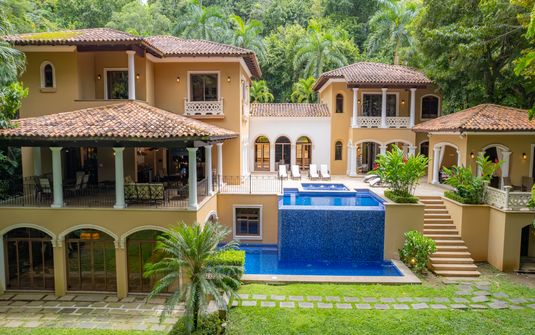
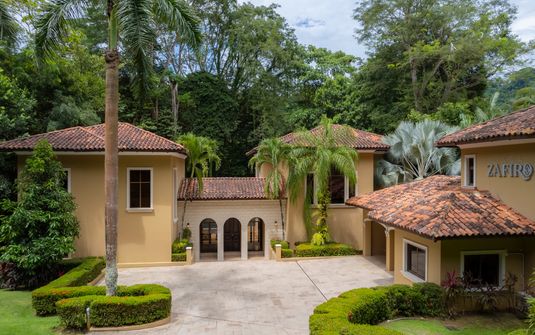
Los Suenos offers an established community around Herradura Bay, where the ordered maritime setting and green hills provide a composed backdrop for substantial private homes. Its architectural language often favors generous proportions, deep galleries and a strong sequence from entrance to shared rooms and terrace. The experience can feel gracious and settled, with the villa forming a private domain within a larger planned environment. Exact siting remains important. A house above the bay, one facing a wooded slope and another closer to the community's central landscape each offer different degrees of outlook and enclosure, even within the same destination.
At Malpaís, the coast takes on a more irregular and elemental character. Rocky edges, small coastal pockets and steep green ground give the southern peninsula a sense of withdrawal. A residence can feel closely embedded in the landscape, with trees near the rooms and open water beyond. Architecture is most persuasive when it respects that roughness, using simple pavilions, substantial shade and tactile materials rather than trying to formalize every boundary. The setting suits guests who appreciate an independent house with its own atmosphere, where the garden and shoreline retain a natural presence around even a highly refined interior.
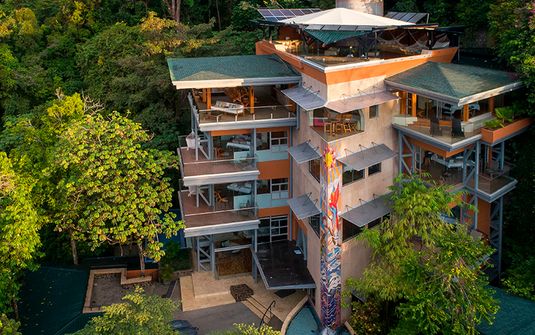
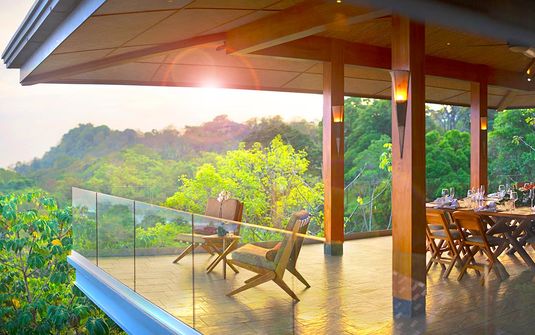
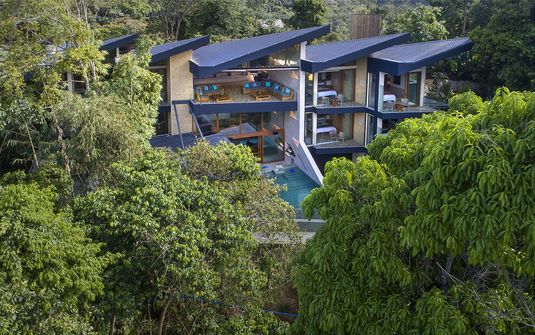
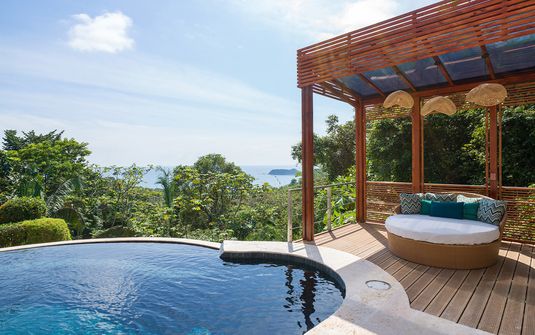
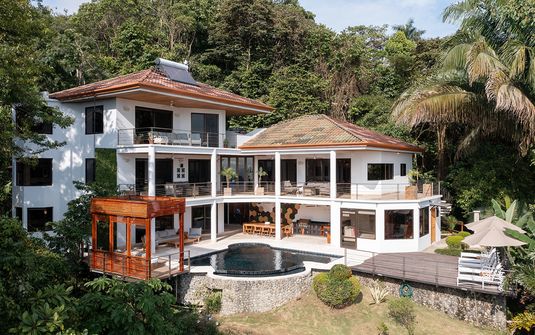
Manuel Antonio presents a different kind of intensity, with forested hills rising above a coast of headlands, coves and offshore forms. Elevated villas can occupy the canopy, framing ocean views through trees or opening broadly above them. The protected landscape around the national park gives the area a strong natural identity, though each private property has its own relationship to that wider setting. The most satisfying homes use the slope to create depth and separation, with private suites and shared pavilions positioned along different contours. Their appeal comes from the close coexistence of substantial residential comfort and a landscape that remains visually dominant.
Choosing a relationship to the Pacific
Across Puntarenas, an enclosed bay and an open ocean front produce very different atmospheres. A bay gives the view a defined shape, with surrounding landforms providing a sense of scale and protection. An open frontage emphasizes distance, the line of the horizon and the texture of the immediate shore. A house above a cove may combine both, using the coastline as a foreground before the view expands outward. These distinctions influence the architecture as much as the panorama. Room width, terrace depth and the placement of solid walls should respond to the setting, allowing the residence to feel comfortable within the landscape rather than merely directed toward it.
The amount of forest around a property is equally significant. A densely planted hillside can give a modern villa a remarkable sense of enclosure, even when the principal terrace is expansive. A more open parcel may rely on courtyards and garden walls to create intimacy. Neither is automatically more private. The direction of neighboring views, the height of adjoining land and the distribution of outdoor rooms determine how the house will actually feel. A thoughtful plan uses natural boundaries where they are available and architecture where they are needed, preserving a balance between the freedom of the view and the discretion of the home.
Lower garden properties offer another interpretation of Pacific living. Their strongest spaces may be broad verandas, planted courts and rooms that open directly onto a sequence of exterior salons. Here, the experience is grounded in proximity and texture rather than height. Trees, stonework and shaded thresholds make the transition toward the wider coast gradual and intimate. A substantial estate can feel particularly relaxed when its most useful rooms occupy one clear level, with guest wings arranged around the garden. The quality of these houses becomes apparent through circulation and proportion, as the household moves comfortably between shared spaces without the landscape feeling remote.
Architecture with a clear local response
Puntarenas supports both gracious traditional residences and contemporary tropical houses, but the strongest properties share a disciplined response to their site. On steep ground, separate pavilions can reduce the apparent mass of an estate and give guest quarters independent aspects. On a broader parcel, a courtyard plan can establish a private center and bring order to the garden. Long galleries provide a useful connection between rooms and exterior space in either arrangement. The architectural expression may vary, yet the essential decisions remain specific: where to enclose, where to open, how to create shade and how to let the terrain remain legible around the building.
Materials should reinforce that clarity. Timber ceilings and screens bring warmth to large openings, stone connects terraces to the ground, and pale plaster gives interiors a calm background. More formal houses may use arches and tiled rooflines, while modern villas can rely on simple columns and broad horizontal planes. In both cases, craftsmanship matters more than abundance. Consistent joints, substantial doors and carefully finished transitions make the house feel complete. A coherent palette also leaves room for individual art and furniture, allowing the residence to develop personality without overwhelming the particular coastline, garden or forest that gives it its setting.
The principal living room should feel generous without carrying every function of the household. Several seating areas can accommodate conversation, while a smaller salon or library gives the plan another register. In a villa with a dramatic view, these secondary rooms are especially valuable because they allow the residence to feel interesting away from its most photographed axis. A garden-facing room can be as memorable as an ocean-facing one when its proportions, light and materials are carefully considered. This depth creates a home that supports extended occupation, with guests finding preferred places rather than gathering automatically in a single central pavilion.
Comfort across the whole household
Guest accommodation should be assessed as a collection of private places, not simply a bedroom count. Comparable suites make a property comfortable for several couples, while connected rooms may better suit a family. A principal pavilion can have its own terrace without relegating the rest of the household to secondary outlooks. Garden aspects, framed views and quiet courts can give each room a distinct identity. The distribution of stairs and passages also matters on the region's steeper sites. A villa's sense of luxury becomes more convincing when independence and connection are both easy, allowing everyone to occupy the residence at their own pace.
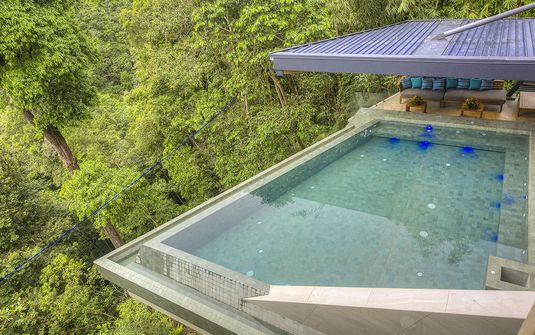
Outdoor space gains substance through variety. A broad terrace may provide the main gathering area, but a smaller courtyard, shaded gallery or separate garden pavilion gives guests another way to inhabit the property. The pool can connect these rooms visually without becoming their only focus. Changes in level should feel deliberate and well integrated, with planting and walls providing definition where the land falls away. The best exterior sequence creates several degrees of openness, from a close, sheltered corner to a panoramic edge. This makes a residence more flexible and gives the landscape a richer role than a single uninterrupted backdrop.
A private home also needs a sound domestic plan. Support spaces, laundry, storage and secondary access should be organized so that service remains discreet and the principal guest routes stay clear. On a dispersed estate, the connections between pavilions need to be intuitive for both guests and staff. In a compact house, careful separation prevents every practical movement from crossing the main room. These details contribute directly to the atmosphere of the stay. A residence feels unhurried when its operation has been considered in advance, allowing the household to enjoy the setting without encountering the machinery that supports the experience.
Reading the property beyond its first impression
The most useful questions concern how the house lives. Is the principal terrace comfortable for the full party? Do private suites have comparable proportions? Does the garden offer quiet places away from the central pool? Can different generations occupy the property without constantly crossing one another's routes? These considerations give meaning to the architectural photographs. A spectacular vista remains an asset, but it should form part of a coherent residence rather than compensate for an awkward plan. Puntarenas offers enough variety that a precise match is possible, provided the landscape and household needs are considered together from the beginning.
Privacy should also be tested against the surrounding terrain. A high site can be open to views from an adjacent ridge, while a lower house behind mature planting may feel exceptionally secluded. Within an established community, architectural screens and courts can provide a dependable sense of enclosure. On a more independent parcel, the continuity of the forest and the direction of neighboring development become important. The strongest properties resolve these relationships with their own massing and orientation. That creates a lasting quality of discretion, with the garden adding softness and depth rather than serving as the sole barrier between the home and its surroundings.
A Pacific province within Central America
Puntarenas illustrates how varied private living can be within Central America. Its different coastal environments invite different forms of architecture, from an established bay estate to a canopy-level pavilion house. The destination's value lies in retaining those distinctions. A refined residence should make its location more legible, allowing guests to recognize the character of the peninsula, the mainland hills or the sheltered coast through the property itself. This creates a richer experience than a generic collection of luxury features. The house provides comfort and autonomy, while the landscape gives it identity, scale and a connection to the wider country.
A private stay defined by its setting
The right Puntarenas residence begins with a clear sense of which Pacific landscape belongs to the household. A composed maritime community, a rugged peninsula shore and a forested coastal hillside each offer a distinct atmosphere. LaCure considers the architecture within that context, looking at how the property distributes privacy, views and shared space rather than relying on one dramatic feature. The aim is a home that remains comfortable and interesting throughout the stay, with generous rooms and thoughtful exterior spaces that make the setting part of daily life. That precision turns the breadth of Puntarenas into a deeply personal experience.


