




Malpaís occupies the quieter, more irregular edge of the southern Nicoya Peninsula, where rocky shoreline and wooded hills give the Pacific a rugged foreground. Within Puntarenas, its appeal is unusually intimate. The coast is not a continuous sweep of pale sand, and its residential character is not defined by a single formal enclave. Instead, individual houses find their own position among trees, slopes and small coastal openings. A discerning stay here begins with that independence: a private home whose atmosphere comes from its particular piece of land, with the sea close enough to shape the rooms and the landscape still visibly in command.
The name is often paired with nearby Santa Teresa, yet Malpaís retains a distinct identity. Its quieter coastal fabric and rougher shoreline create a more withdrawn setting, with residences that can feel separated by vegetation and the folds of the ground. That difference is part of its value. A villa here can be highly refined while remaining relaxed in its relationship to the surroundings. The best properties do not attempt to smooth away every irregular edge. They use careful architecture to create comfort within the setting, allowing rock, trees and the open ocean to retain the character that makes this end of the peninsula compelling.
The quiet edge of the southern peninsula
The coastline provides a sequence of changing compositions. Dark rock interrupts smaller sandy pockets, low vegetation meets taller trees, and the land projects into the water in uneven forms. From a residence, these details can be as memorable as the distant horizon. A terrace facing a rocky foreground has a different atmosphere from one above a broad beach, with more texture and a stronger sense of proximity. The architecture can frame that complexity selectively, giving each room a particular aspect rather than opening every wall indiscriminately. This makes the landscape feel close and legible, with the house offering a calm position from which to inhabit it.
Behind the shore, the ground rises into wooded slopes. A hillside property can therefore combine a broad Pacific outlook with a dense green foreground, placing the canopy near the principal rooms. This is one of Malpaís's most persuasive residential conditions: the view is expansive, but the building can remain enclosed by trees at its edges. The quality depends on how the site has been edited. Retaining vegetation around the house preserves depth and screens neighboring structures, while carefully placed openings allow the ocean to remain visible. Excessive clearing can weaken the sense of retreat, making a dramatic house feel less private and less connected to the land.
The southern peninsula's conservation landscape adds another dimension to the setting. The wooded terrain toward Cabo Blanco gives the area a strong natural frame, even when a private residence is not directly adjacent to protected land. That wider context is best appreciated through continuity: ridges extending beyond the parcel, trees carrying through the view and a coastline that remains larger than the built environment. A sophisticated villa can acknowledge this scale without making claims of isolation. Its garden and architecture establish a private world, while the surrounding landscape provides the depth and character that no estate could create within its own boundaries alone.
Architecture with an independent spirit
Malpaís suits houses that feel individual rather than standardized. A low pavilion behind a garden, a stone-based compound on a slope or a contemporary home arranged around a private court can each belong naturally to the setting. The strongest designs share a clear response to the ground. Buildings follow contours, rooflines provide substantial shade and walls establish quiet where the site needs enclosure. This gives the residence structure without overformalizing the landscape. A house can be ambitious in its proportions and finish while retaining a relaxed presence, allowing the roughness of the shore and the irregularity of the vegetation to remain part of the experience.
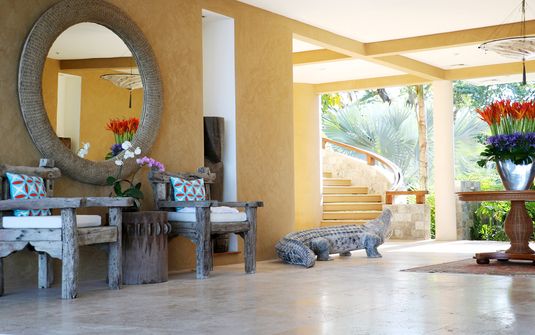
Materials are most convincing when they have weight and texture. Stone can connect retaining walls to exposed rock, timber brings warmth to sheltered ceilings, and plaster gives interiors a quieter surface against the complexity outside. Concrete can work well when its finish is restrained and its edges are carefully resolved. A few consistent materials create more depth than an elaborate collection of contrasting finishes. They also allow the house to feel comfortable at close range, where the hand meets a door, the floor continues onto a terrace or a garden wall catches the light. Quality becomes tangible through these everyday details rather than decorative display.
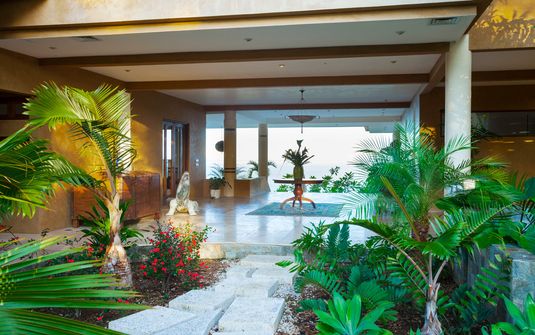
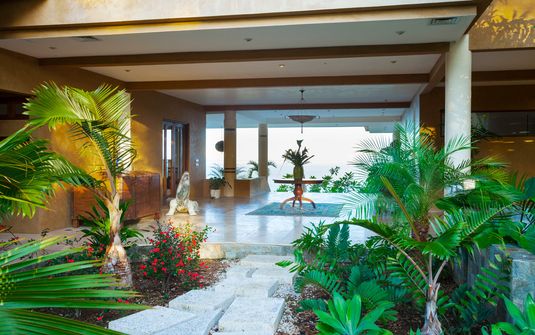
The entrance can preserve a sense of discovery. A house may first appear through planting, with the principal view withheld behind a wall or across a shaded court. Passing into the shared pavilion then reveals the ocean in a single clear composition. This sequence suits Malpaís because it allows the property to feel private before it becomes expansive. It also creates a practical distinction between arrival and the household's main living areas. Support access and parked vehicles should remain visually secondary, keeping the garden and architecture coherent. The residence feels independent and settled when its boundaries and thresholds are as carefully considered as its seaward elevation.
Rooms that remain close to the land
A Malpaís living room can be open and generous without losing intimacy. Broad openings toward the ocean work best when balanced by a more enclosed side, a textured wall or a garden aspect that gives the room depth. Furniture should support conversation rather than turn every seat into a viewing platform. A smaller salon can provide a quieter alternative to the central pavilion, especially in a house designed for several couples or generations. These secondary spaces give the residence substance over a longer stay, allowing guests to discover preferred corners and different moods within the property rather than relying on one dramatic terrace for every shared moment.
The bedroom arrangement can draw on the site's natural separation. Independent pavilions may sit along a contour, with trees and short passages creating privacy between them. A more compact house can achieve a similar result through separate wings around a planted court. Each suite should feel complete, with generous storage, a comfortable bathroom and an exterior aspect that is appealing in its own right. Ocean views are valuable, but a quiet room facing a mature garden can be equally persuasive. The best properties distribute comfort across the household, avoiding a sharp distinction between one exceptional principal suite and a collection of secondary accommodations.
Private exterior space is particularly rewarding in this setting. A small terrace beside a bedroom can offer a close view of trees, rock or the changing coastline, giving the suite a relationship to the land that differs from the main shared pavilion. Screening should be integrated into the architecture, using walls, roof depth and planting to establish discretion. Bathrooms can also borrow a garden aspect through a private court or carefully positioned opening. These spaces should feel sheltered and personal, providing a quieter counterpoint to the Pacific's larger scale. The residence gains richness when its private quarters offer their own experience rather than simply repeating the central view.
Outdoor rooms along a rugged coast
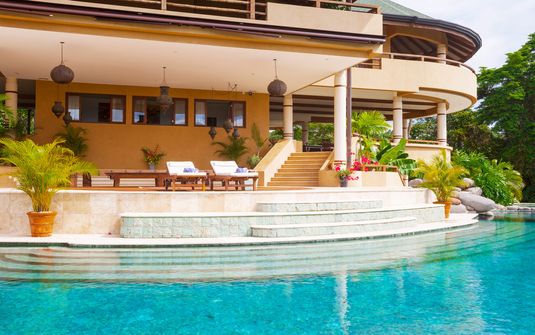
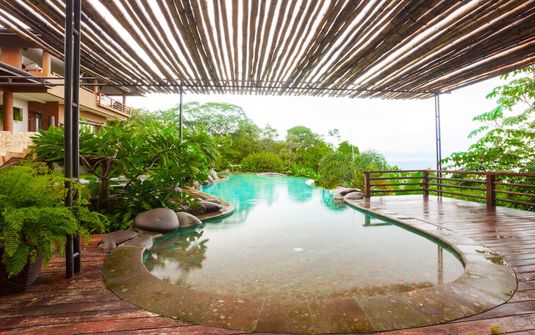
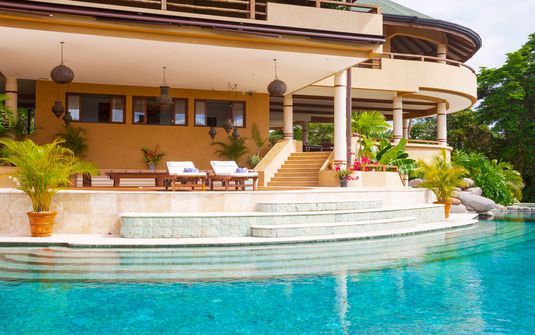
A pool terrace can establish a clear horizontal line against Malpaís's irregular terrain. Its strength lies in contrast: still water and a composed edge set beside the texture of rock, trees and ocean beyond. The surrounding spaces should offer more than a single exposed platform. A deep gallery, a planted court and a smaller sheltered lounge can create several degrees of enclosure. These distinctions allow the household to occupy the exterior comfortably in different ways. The pool becomes part of a larger sequence rather than the property's only focal point, and the architecture remains connected to the landscape at both panoramic and intimate scales.
The garden can retain a lightly edited character while still feeling deliberate. Existing trees may define the outer rooms, with restrained planting around steps, walls and terraces giving the immediate house a sense of order. Hard surfaces should be used where they create useful spaces, rather than extending uniformly across the parcel. This preserves a more natural transition into the surrounding terrain and gives the property depth. Lighting deserves similar restraint. Selective illumination can reveal a path or wall while leaving the trees in layers, allowing the coast's darker atmosphere to remain present beyond the home rather than disappearing beneath a brightly lit exterior scheme.
Privacy in Malpaís depends on the precise parcel, even where the setting feels withdrawn. Neighboring houses may occupy higher ground, and a broad view can expose a terrace as easily as it reveals the ocean. The best villas use orientation and massing to protect important spaces. A solid side wall, a recessed suite or a planted change in level can establish discretion without closing the main outlook. These architectural decisions give privacy consistency, allowing the garden to soften the result. Guests can then use the residence naturally, with the property providing a dependable sense of enclosure rather than relying on distance alone.
A house for an independent household
The arrangement of shared rooms should reflect the party's preferred rhythm. A central pavilion can bring everyone together, while separate lounges and private terraces allow smaller groups to withdraw. Families may appreciate connected bedroom wings, whereas several couples may favor more dispersed accommodation. On a hillside property, the distribution of stairs and passages should be considered carefully so that independence remains comfortable. A residence with many pavilions is not automatically more suitable than a compact home. The stronger choice is the one whose circulation feels clear and whose private and shared spaces remain equally appealing throughout the stay.
Support planning is part of that ease. Laundry, storage, staff work areas and secondary access should be discreetly positioned, particularly in a dispersed residence where practical routes can become complicated. The most effective plan keeps service close enough to function well while protecting the central living sequence and quiet bedroom edges. Mechanical elements should be absorbed into the architecture or garden rather than placed along a prominent view. These details make the house feel calm and self-contained. A refined property does not need to advertise its practical competence; guests experience it through the continuity of the rooms and the absence of unnecessary interruption.
A distinctive Pacific retreat in Costa Rica
Within Costa Rica and the wider setting of Central America, Malpaís offers a particular form of coastal withdrawal. Its character comes from an irregular shore, wooded terrain and residences with an independent relationship to the land. The most persuasive luxury here is therefore specific and restrained. A house should make the coastline more legible, using carefully placed rooms and terraces to reveal its different scales. The experience remains polished, but the setting retains its roughness and individuality. That balance gives a stay depth, allowing the property to feel like a private home within a real landscape rather than a self-contained image of tropical perfection.
A private home with the peninsula at its edges
A memorable Malpaís residence combines generous comfort with an honest response to its site. The sea may dominate one room, trees another and a sheltered court the most private wing. Together, these perspectives create a home with several moods and a clear connection to the southern peninsula. LaCure considers those qualities alongside the needs of the household, seeking a property whose privacy and architecture work across the whole plan. The ideal stay feels personal and unforced, with enough space to gather, enough quiet to withdraw and a landscape whose distinctive character remains present from the first arrival to the final view.


