




Santa Rosa places a private stay within Sonoma County's layered landscape of established neighborhoods, open valleys and oak-studded hills. Its character is more varied than a single pastoral image suggests. The city gives the destination a substantial residential context, while the surrounding country allows individual homes to feel closely connected to land, trees and a broad horizon. A carefully chosen residence can bring these scales together, offering the comfort of a personal home without losing the sense of a real place beyond its boundaries. The appeal lies in that balance, with architecture and gardens creating privacy within a setting that feels settled, inhabited and distinctly Northern Californian.
Within Northern California, Santa Rosa offers an alternative to both a coastal village and an isolated country estate. A home may draw its identity from a planted neighborhood, a garden-centered plot or rising ground with a broader outlook toward the surrounding landscape. The particular site determines the atmosphere. A quiet court can be as memorable as a wide view when the architecture gives it proportion and depth. This makes the residence central to the stay, allowing guests to experience the destination through rooms and exterior spaces that belong to a specific setting rather than a standardized version of Californian country living.
Luxury Private Homes in Santa Rosa
The region's residential variety gives architecture several possible directions. A traditional house can offer material warmth and a sequence of distinct rooms, while a contemporary residence may use simpler volumes and broad openings to connect the interior with the garden. Ranch-inspired forms can establish a particularly grounded relationship with the site, allowing shared spaces and private suites to occupy a comfortable horizontal plan. The quality of any approach lies in coherence. A home feels refined when its proportions, thresholds and materials work together, giving the household an intuitive understanding of the house and enough variety for different preferences to coexist within the same private setting.
A low-rise composition can bring the landscape close without relying on a dramatic panorama. Rooms opening toward trees or planted courts have a personal scale, and a generous terrace can extend the shared salon into a private exterior world. The arrangement feels most persuasive when the garden is part of the plan rather than an ornamental surround. Planting can distinguish a bedroom wing, frame an entrance or give a smaller sitting room its own outlook. These relationships make the property feel deeper and more individual, allowing a house with a measured footprint to offer a rich residential experience through the quality and variety of its connected spaces.
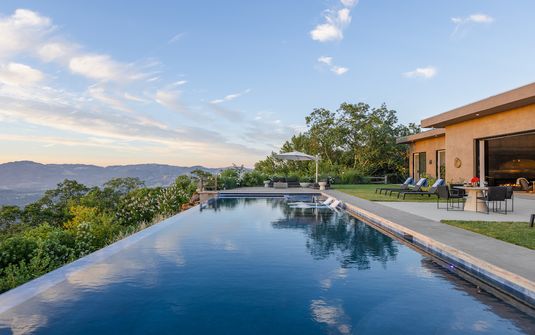
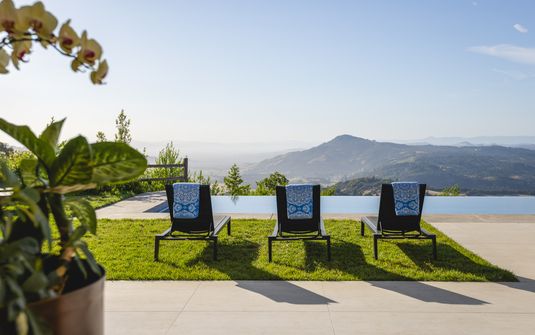
On a more elevated site, architecture can reveal the surrounding land in stages. An enclosed approach may lead toward a broad room with an outlook across trees and open country, while private suites retain quieter frames. Changes in level can create separation, provided the connections remain clear and comfortable. The house should feel like a coherent home rather than a collection of platforms arranged around a view. A well-proportioned stair, a useful landing or a planted passage gives the transitions their own character, turning the slope into a source of variety and allowing guests to understand the setting through several distinct architectural moments.
A City Held within Sonoma County’s Landscape
Santa Rosa's urban identity gives the private-home setting a particular depth. Established streets, mature trees and varied domestic architecture create a lived-in context that differs from a uniform planned enclave. A residence can acknowledge that surrounding texture while maintaining a clear personal boundary. A discreet frontage may conceal a generous garden, and an inward-facing room can provide privacy without detaching the house from the city. This relationship is part of the destination's appeal. Guests inhabit a real place through a home that feels individual, with the architecture selecting which aspects of the surroundings remain visible and which spaces turn toward a quieter private world.
The wider country gives Santa Rosa another register. Rolling contours, scattered oaks and cultivated land establish a broad landscape beyond the city's closer residential fabric. A well-positioned house can draw on this depth without requiring every room to face the same open view. A principal salon may reveal the larger setting, while a suite looks toward a tree or a sheltered part of the garden. The contrast creates a more complete experience. The household can move between breadth and intimacy, allowing the residence to offer several atmospheres while remaining grounded in the same recognizable Sonoma County landscape.
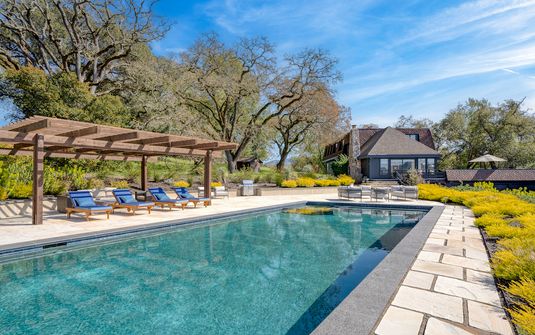
Oaks bring a particularly strong sense of scale and continuity to the land. An individual tree can become a defining feature of a private property, giving a terrace enclosure or providing several rooms with a shared point of reference. The close detail matters as much as the wider outlook. A house feels rooted when its architecture makes room for the immediate landscape, allowing trunks, canopy and planted edges to participate in the composition. These elements create personal places within a generous setting, giving guests a reason to appreciate the garden repeatedly rather than treating it only as the foreground to a more distant view.
Gardens with a Domestic Center
A garden-centered residence can feel especially accommodating because it offers a private landscape that belongs to the household. A court, a planted rear area or a sequence of smaller exterior rooms gives the house its own internal geography. Shared spaces can face a generous open section, while suites turn toward more intimate planting. The garden connects these different atmospheres without making them identical. Its strongest contribution is spatial. It establishes privacy, marks transitions and gives rooms outlooks that feel intentional, allowing the architecture to remain clear while the residence gains texture and depth through its relationship with the land immediately around it.
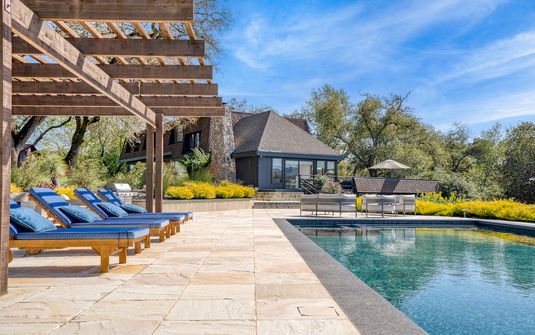
The principal terrace benefits from the same care as the salon. Comfortable furniture, sufficient depth and a sheltered section make the exterior a genuine room rather than an empty surface beside the house. A clear route between inside and outside allows the household to use both spaces naturally, while a planted side boundary can give the terrace a settled sense of enclosure. Smaller exterior areas provide a different scale, particularly beside a quieter room or private suite. Their value comes from contrast. A home with several thoughtfully defined places to settle feels generous through choice, supporting different preferences without fragmenting the shared experience of the residence.
Where a pool is included, its setting can introduce a calm organizing element within the grounds. A simple geometry may relate to the house's plan, while coherent paving and carefully arranged planting make the area feel integrated. The surrounding space is decisive. Generous circulation and comfortable furnishings give the feature everyday substance, ensuring that the terrace remains accommodating when the household is fully present. The pool should feel like one part of a complete exterior composition rather than an isolated statement. This allows architecture, water and garden to contribute together, giving the property a settled residential character that extends beyond its most immediately striking visual feature.
Interiors with Californian Warmth
The interior can take its character from materials and furnishings that feel comfortable at close range. Timber, stone and textured plaster provide a quiet framework, while selected artwork and crafted objects introduce individuality. A restrained composition gives these elements room to retain their presence, avoiding a continuous decorative theme that competes with the garden or view. The house feels personal when its furnishings appear chosen for the proportions of its rooms. This creates depth beyond the exterior setting. Guests can appreciate the comfort of a chair, the grain of a cabinet or the texture of a surface as part of a home whose quality remains engaging throughout the stay.
The main salon should support conversation as naturally as it supports the outlook. Seating grouped at a comfortable scale, substantial tables and clear passages give the room a settled center, while solid walls provide space for artwork or joinery. A broad opening toward the garden enriches the atmosphere without making the interior dependent on one visual direction. A smaller sitting room can offer another register, perhaps more enclosed or framed by a closer view of planting. Together these spaces make the residence accommodating, allowing the household to be together in different ways rather than requiring one oversized common room to serve every preference and every moment of the stay.
Bedrooms benefit from a quieter atmosphere and a clear sense of completeness. Generous storage, a comfortable seating area and a well-positioned bed make each suite a personal retreat, while an outlook toward trees or a protected court gives it a distinct relationship with the site. Consistent quality across the private rooms matters for a shared household. Differences in orientation can add character without creating a sharp hierarchy of comfort, allowing every guest a thoughtful place within the residence. The house feels more generous when its care is distributed throughout the plan rather than concentrated in one principal suite and a broad shared terrace.
Privacy and Everyday Ease
Bathrooms can continue the material language through restrained stone, precise timber joinery and softly finished walls. A clear layout, generous surfaces and intuitive lighting give the space daily comfort, while a protected opening toward planting can introduce a close exterior relationship. These quieter rooms make a lasting contribution because guests encounter them personally and repeatedly throughout the stay. Their quality reveals whether the residence has been considered as a complete home. When they share the care evident in the salon and garden, the property feels consistently resolved, supporting the private experience of each guest as thoughtfully as it supports the household gathered in its main shared spaces.
Privacy in Santa Rosa is shaped by the particular plot and plan. A substantial garden can create distance, while a neighborhood residence may rely more on walls, planting and inward-facing rooms. On a rising site, the orientation of terraces and bedroom openings can protect personal areas without closing them to the landscape. The aim is a house that feels natural to use. Guests can move between shared rooms and suites without passing through another person's retreat, and smaller exterior spaces can be occupied independently of the principal terrace. This clarity gives the stay a quiet sense of ease, allowing the destination to remain present while the household retains a personal world within it.
Santa Rosa within California’s Private-Home Settings
The residential landscapes of California offer many different forms of private stay, and Santa Rosa brings a particularly balanced relationship between city and surrounding country. Within the United States, it suits guests who value a house with a settled domestic character rather than an anonymous estate setting. The residence becomes the lens through which the destination is experienced, using gardens, materials and carefully framed outlooks to make the wider landscape personal. A thoughtful home can be refined without losing warmth, giving the stay a specific sense of place grounded in Sonoma County's varied and inhabited residential world.
A Private Stay with Sonoma County Depth
Santa Rosa is most rewarding when the house brings its different scales into balance. The city provides context, the surrounding land offers breadth and the garden creates an intimate foreground around the rooms. Thoughtful architecture makes those elements comfortable to inhabit, with privacy and material quality extending throughout the residence. LaCure's perspective centers on this complete domestic experience. The lasting impression is of a home with individuality and substance, where a quiet suite, a well-proportioned salon and a planted threshold can become as memorable as the broader landscape, giving the household a private stay whose character deepens as the residence becomes familiar.


