




Napa Valley has a landscape whose order is immediately legible. Long agricultural rows give the valley floor a measured rhythm, while wooded slopes and scattered oaks soften the contours above. The contrast between cultivated land and less regular hills creates an unusually rich setting for a private residence. A house can feel grounded in the valley through a low roofline, a planted court or a broad room that holds several layers of land in view. The experience is quietly expansive, offering the household a personal place within a recognizable Californian landscape rather than a residence whose identity depends only on size or a collection of conspicuous features.
Within Northern California, Napa Valley offers a distinct form of country living. Its atmosphere differs from the Pacific coast and the Sierra Nevada, with the land itself providing the principal visual subject. A residence may face the broad valley floor, occupy rising ground or create an intimate world around its own garden. These different positions give homes markedly different characters. The most rewarding stay makes the particular site feel clear, allowing guests to understand the destination through the orientation, materials and spaces of one carefully chosen house. Privacy and comfort become part of that relationship, giving the wider landscape a domestic scale without removing its sense of breadth.
Luxury Villas and Private Estates in Napa Valley
A valley estate benefits from architecture that gives the land room to remain expressive. Low volumes, substantial roof planes and well-defined exterior rooms can establish a calm foreground without competing with the hills. A central salon may open toward the broadest outlook, while quieter wings gather around courts or gardens. The arrangement gives the house depth, allowing a large property to feel personal in its smaller spaces. The best plans remain legible when the household is fully present. Shared rooms have a natural center, suites retain their privacy and the connections between them feel comfortable, making the residence generous through its usability as much as through its overall scale.
The region's rural architectural vocabulary can be interpreted with considerable restraint. Timber, stone, painted surfaces and simple roof forms give a house warmth and a sense of belonging, while precise detailing keeps the composition refined. A contemporary residence may use broader openings and quieter lines to frame the same landscape. Neither approach needs to become a theme. The strongest houses draw character from proportion and workmanship, allowing materials to carry depth at close range. Guests encounter a home with its own identity, where a substantial door, a well-resolved wall or a carefully furnished room contributes as meaningfully to the stay as the view across the valley beyond.
A court-centered plan can bring intimacy to an expansive site. The house creates a smaller landscape within its own architecture, with planting, stone and sky forming a private center for the surrounding rooms. This inward focus provides a valuable counterpart to a broad valley-facing terrace. Guests can choose between openness and enclosure without leaving the residence, and private suites can have a more selective outlook than the principal salon. The result is a house with several atmospheres rather than one repeated panoramic experience. Its architectural generosity lies in this range, giving each part of the household a comfortable place within a coherent private home.
A Landscape of Valley Floor and Rising Hills
The cultivated rows give Napa Valley a distinctive geometry. Seen from a residence, they can establish a patterned foreground that draws the eye through the land toward more irregular slopes beyond. This creates depth without requiring a distant water horizon. A broad opening may hold the larger composition, while a smaller window frames a particular section of rows, trees or hillside. The differences make the architecture more engaging. Each room can offer its own reading of the setting, allowing the household to experience the valley through a sequence of related but distinct views rather than one image repeated at every level and along every side of the house.
The hills provide the counterweight to this order. Their contours rise beyond the cultivated floor, giving the valley a contained and clearly shaped geography. Oaks and wooded areas introduce a looser texture, allowing the landscape to feel more varied than its agricultural pattern alone might suggest. A hillside residence can draw on this contrast directly, while a home lower in the valley may use it as a distant backdrop. Both relationships can have depth when the architecture frames them thoughtfully. The house feels rooted when its outlook includes a meaningful foreground and a clear relationship with the land immediately around it, not only a broad view selected for its scale.
Trees can give a private property a particularly personal sense of place. An established oak beside a terrace, a planted court near the entrance or a garden visible from several rooms becomes part of the home's internal geography. These close landscapes balance the wider setting and provide quieter outlooks for intimate spaces. The garden works best when it participates in the plan, connecting shared areas and protecting private suites through a coherent arrangement. It is not simply a decorative border around the estate. It gives the residence a series of personal places, allowing guests to appreciate the land at arm's length as well as across the broader valley.
Exterior Rooms with a Country-House Scale
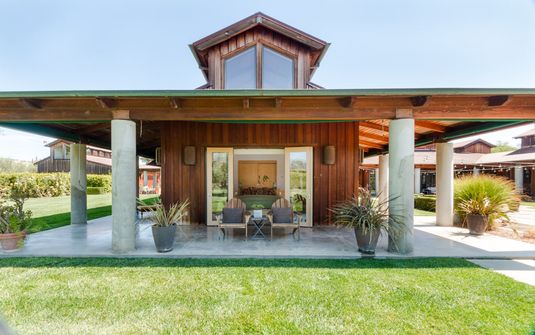
A generous terrace can feel like the estate's principal shared room when its proportions and furnishings are carefully resolved. Comfortable seating, a sheltered section and clear routes to the salon give the space everyday substance. The valley provides the larger frame, but the terrace needs its own material identity and sense of enclosure. A substantial wall, a roof edge or a planted boundary can make a broad outlook feel comfortably close. Smaller exterior areas can offer a different atmosphere, particularly beside a private wing or a garden-facing room. Their value comes from distinction, giving the household several ways to inhabit the setting without relying on one oversized common area.
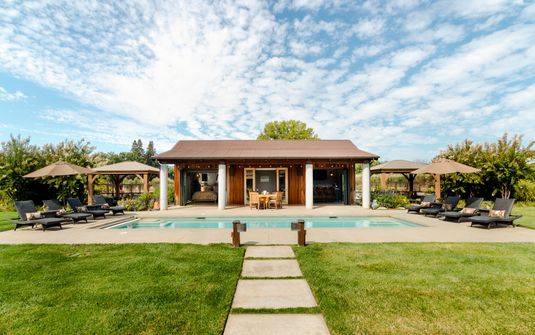
Where a pool forms part of the property, its geometry can provide a calm counterpart to the land beyond. A simple water surface may echo the order of the cultivated landscape without imitating it literally, while coherent paving and planting connect the setting to the house. The surrounding space matters as much as the pool itself. Generous circulation and comfortable furniture make the area usable as a genuine part of the residence. The strongest compositions integrate water, garden and architecture into one complete exterior, allowing the feature to contribute to the home's atmosphere without becoming the only point through which the estate's quality is understood.
Privacy in a valley estate depends on orientation as well as distance. A broad site can still require careful attention to neighboring sightlines, the position of suites and the relationship between shared circulation and personal rooms. Planted boundaries, offset wings and inward-facing courts can create discretion without making the house feel enclosed. These choices allow guests to use the residence naturally. The household can gather comfortably in its larger spaces while each person retains a private retreat, making the estate accommodating when fully occupied. The sense of ease comes from the whole plan working well rather than from a generalized assumption that open country automatically guarantees seclusion.
Interiors with Rural Warmth and Precision
The interior palette can draw on the valley's material character without reproducing the landscape literally. Timber brings warmth, stone gives substance and restrained plaster surfaces provide a calm background for furnishings and artwork. Textiles soften the larger architectural elements, while selected crafted pieces introduce individuality. The rooms feel most persuasive when they appear collected for the house itself, with enough space for each object and surface to retain its presence. This gives the residence depth beyond its outlook. Guests can appreciate the grain of a cabinet, the comfort of a chair or the proportions of a room as part of a personal home whose identity remains engaging throughout the stay.
The principal salon should make a substantial house feel comfortable at a human scale. Seating arranged for conversation, well-positioned tables and clear passages establish a natural center without relying on formal symmetry or dramatic dimensions. A broad opening toward the terrace can extend the sense of space, while solid walls allow the interior to retain its own focus. A quieter sitting room can provide an alternative with a closer garden outlook or a more intimate ceiling height. These different spaces give the household choice, allowing varied preferences to coexist naturally and making the property feel generous through its range of comfortable places rather than through scale alone.
Bedrooms can offer a more intimate relationship with the estate. A suite facing trees or a private court has a different atmosphere from one looking across the valley, yet both can feel complete when their proportions and furnishings are carefully resolved. Generous storage, a comfortable seating area and well-positioned lighting support a settled stay. Consistent quality across the rooms matters for a shared household. Differences in outlook can add character without creating a sharp hierarchy of comfort, giving every guest a thoughtful private place within the home rather than requiring everyone to rely on the principal terrace for the full experience of the setting.
Private Spaces That Complete the Estate
Bathrooms continue the residence's quieter material language through precise joinery, substantial surfaces and clear planning. Stone and timber can create depth without elaborate ornament, while a protected opening toward planting gives the room a close relationship with the garden. Everyday usability is an essential part of refinement. Generous space and intuitive lighting make the room comfortable repeatedly throughout the stay, supporting the private rhythm of each guest. These spaces reveal whether the care apparent in the main salon and exterior rooms extends throughout the house, ensuring that the residence feels consistently considered rather than organized around only its most visible architectural and landscape impressions.
The approach can establish the estate's atmosphere through a gradual sequence of thresholds. A planted forecourt, a substantial entrance and a framed first glimpse of the valley give arrival a personal scale. The house need not reveal everything immediately. A quiet court or a carefully proportioned passage allows the architecture to establish its own character before the broadest outlook appears. These transitional spaces become familiar during a longer stay and contribute to the home's identity. When they receive the same care as the principal rooms, a generous property feels coherent and easy to understand, turning a collection of substantial spaces into a complete private residence.
Napa Valley within California’s Private-Home Landscape
Among the residential settings of California, Napa Valley offers a particularly clear relationship between house and cultivated country. Within the United States, its appeal lies in the combination of broad landward views, intimate garden spaces and architecture that can be substantial without becoming monumental. The individual home determines how the destination is experienced. Its site, materials and private quarters give the stay a specific character, allowing guests to inhabit the valley through a personal residence rather than an interchangeable image of country luxury. This is a setting where the depth of the house can matter as much as the breadth of the landscape beyond it.
A Private Estate Rooted in the Valley
Napa Valley is most rewarding when the residence brings the landscape's contrasting qualities into balance. Cultivated rows provide order, the hills give depth and gardens create a more intimate foreground around the rooms. Thoughtful architecture turns these elements into a comfortable home, with privacy and everyday ease supporting the household throughout the property. LaCure's perspective centers on that complete residential experience. The lasting impression is of a stay with character and substance, where the valley remains unmistakably present but the materials, proportions and personal spaces of the house make the setting feel natural to inhabit.


