


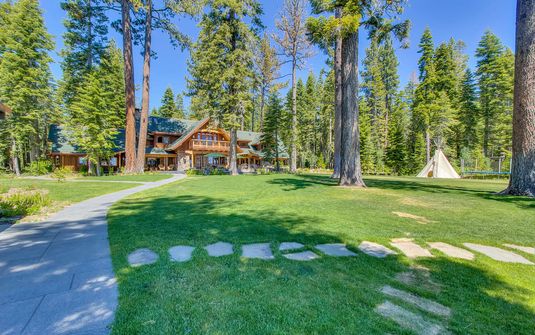
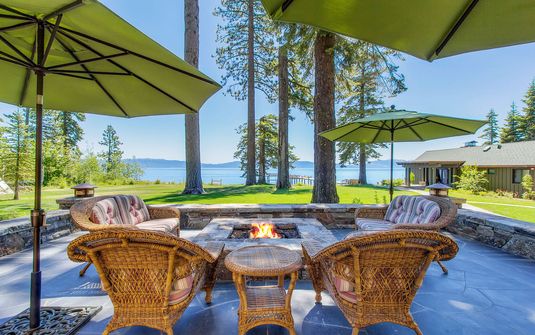


Lake Tahoe is defined by a striking contrast between the breadth of its water and the close texture of the mountains around it. Conifer forests descend toward the shore, granite gives the land a substantial architectural presence and the surrounding ridges hold the lake within a clearly shaped alpine setting. A private residence can interpret this landscape at several scales, from a generous room facing open water to an intimate suite framed by trees. The appeal is more than a panorama. It is the opportunity to inhabit a home whose materials and proportions make the mountain setting comfortable, personal and consistently present throughout the stay.
Within Northern California, Lake Tahoe offers a residential atmosphere unlike the region's coastal villages or inland valleys. The lake spans the California and Nevada boundary, but the experience of an individual home is shaped more closely by its particular shore, elevation and relationship with the forest. A residence near the water has a different visual rhythm from one set among trees on rising ground. Both can offer a refined stay when the architecture responds clearly to its site, allowing the household to experience the destination through a specific house rather than a repeated mountain-residence formula applied equally to every part of the landscape.
Luxury Private Homes at Lake Tahoe
Mountain architecture gains authority from a convincing relationship between structure and setting. Substantial timber, stone and clearly expressed roof forms can give a house the same sense of grounded presence as the land around it, while generous openings prevent the interior from feeling closed to the lake and forest. The balance is essential. A room needs enough enclosure to feel comfortable and enough openness to acknowledge the scale of the surroundings. The strongest residences resolve these qualities through proportion, using substantial surfaces and deep thresholds to create a personal foreground rather than relying on decorative rustic references to establish their mountain character.
A contemporary interpretation can be equally compelling. Clean volumes and broad glazing allow the lake's geometry to become a clear visual subject, while timber and textured stone provide warmth at close range. The house does not need to imitate a traditional lodge to belong to the setting. Its roofline, orientation and material palette can establish that relationship more quietly. A well-composed residence feels settled within the site, with larger shared spaces balanced by intimate rooms and protected exterior areas. This gives the home depth, ensuring that the architecture remains comfortable to inhabit once the initial impact of a broad mountain view has become part of daily life.
Traditional mountain houses can offer a more layered interior atmosphere, with timber ceilings, substantial hearths and rooms that unfold through changes in height and enclosure. Their appeal lies in the way these elements create distinct places within a generous home. A broad salon may gather the household, while a smaller room or sheltered landing provides a quieter setting. The house feels most convincing when its material richness is balanced by clear furnishings and comfortable circulation. Rustic character alone does not create refinement. The quality comes from how naturally the rooms work together, allowing the residence to retain warmth and individuality without becoming visually heavy or difficult to inhabit.
The Lake as a Distinctive Mountain Landscape
The water gives Tahoe a scale different from a valley or a narrow mountain lake. From a broad outlook, the surface can feel expansive, yet the surrounding ridges remain visible enough to give it a clear geographical frame. This combination allows a residence to offer both breadth and definition. A principal room may hold the full relationship between water and mountains, while a private suite frames a more selective section of shore. The differences are valuable. They give the house several ways to interpret the setting, keeping the experience visually engaging rather than repeating one identical panorama from every room and terrace.
Granite introduces a strong material character along the shore and through the surrounding mountains. Its substantial forms provide a textured counterpart to the lake's broad surface, giving the landscape interest at close range as well as across the horizon. A house can acknowledge this relationship through stonework, a carefully positioned opening or a terrace that allows the immediate land to remain visible. The effect is strongest when the architecture does not compete with the natural forms. Simple lines and clear proportions give the rock and water room to register, making the residence feel connected to a particular site rather than suspended in front of a generic alpine view.
The forest creates a quieter world around many Tahoe homes. Trunks establish a vertical rhythm, and the canopy gives rooms a more intimate scale than the open lake-facing terrace. A suite looking into trees can feel deeply connected to the destination even without a broad water outlook. This is part of the setting's residential richness. The house can offer enclosure and openness in different places, allowing guests to choose between several atmospheres within the same property. Forest, shore and mountain ridges become complementary landscapes, each contributing to the experience rather than every room depending on the same distant view to establish its character.
Rooms Framed by Timber and Stone
The principal salon benefits from an arrangement that gives the household a comfortable center within the scale of the architecture. Deep seating grouped for conversation, substantial tables and a clear route toward the exterior make the room feel settled. A broad opening may frame the lake, while a strong wall, a hearth or carefully chosen artwork provides another point of attention. This balance allows the room to remain complete when guests turn away from the view. The interior has its own material depth and domestic ease, supporting a stay in which the quality of the house matters as much as the extraordinary landscape visible beyond it.
Timber can bring warmth without requiring every surface to carry the same finish. A substantial ceiling, selected joinery or a carefully chosen piece of furniture may be enough to establish continuity with the mountain setting. Stone can provide weight in a more concentrated way, while textiles soften the larger architectural elements. Restraint allows each material to retain its presence. The result is a residence whose interiors feel considered rather than themed, with enough texture to remain engaging over time. Guests can appreciate the grain of a surface or the proportions of a room as part of a personal home, not simply as familiar symbols of mountain luxury.
A second sitting room can give the house another scale. Positioned toward the forest or enclosed within the plan, it offers a quieter alternative to the principal lake-facing salon. These spaces become particularly valuable during a longer stay, when different preferences emerge within the household. A smaller room does not need to compete with the broadest panorama to feel exceptional. Its appeal may come from comfortable furniture, a close view of trees or a more intimate ceiling height. A thoughtful residence gives such rooms their own purpose, allowing the home to be inhabited in several ways without losing the coherence of one shared private setting.
Private Suites with an Alpine Sense of Retreat
Bedrooms can provide a more personal relationship with Tahoe's landscape. A view toward water offers one atmosphere, while a frame of trunks and foliage gives another suite a quieter character. Consistent care across the rooms keeps these differences balanced. Generous storage, a comfortable place to sit and a well-positioned bed make each suite feel complete, allowing every guest a thoughtful retreat within the house. The residence feels more generous when its quality is distributed throughout the private quarters rather than concentrated in one principal room. This evenness supports a shared stay in which individuality and equal comfort can coexist naturally.
The arrangement of suites also shapes privacy. A quiet wing or a clear change in the plan can separate personal rooms from the main shared level, while comfortable circulation keeps them connected to the house. A multilevel residence can use the slope to create independence, provided stairs and landings remain well considered and the route between spaces is legible. The aim is a home that feels easy to use when fully occupied. Guests can move between sociability and retreat without passing through another person's private area, allowing the household to find its own rhythm within a property whose architecture supports both togetherness and personal ease.
Bathrooms can continue the mountain material language in a quieter register. Stone, timber and restrained fittings create substance when the proportions are clear and the surfaces are carefully detailed. A protected opening toward the forest can introduce a close relationship with the setting, distinct from the broad view of the main rooms. Everyday usability matters as much as visual effect. Generous surfaces and intuitive lighting make the room comfortable repeatedly throughout the stay. These spaces reveal the depth of the residence's design, showing whether the care evident in the salon and terrace extends into the private rooms that guests inhabit most personally.
Exterior Spaces with a Clear Relationship to the Site
A terrace should feel like a complete architectural room rather than an empty platform at the edge of a view. Comfortable furniture, a sheltered section and sufficient depth for clear circulation make the exterior a natural part of the residence. A lake-facing terrace can emphasize breadth, while a smaller forest-side space offers a more intimate atmosphere. Their distinction gives the household choice. The exterior does not need one continuous treatment to feel coherent. Its different places can respond to the site individually, allowing the house to offer several comfortable relationships with the lake, trees and mountain setting while retaining a consistent material language.
Privacy requires attention to neighboring homes and the orientation of exterior spaces, even where the natural setting feels expansive. A planted boundary, a substantial side wall or an offset terrace can protect personal areas without closing the residence to the landscape. The entrance can establish a similar sense of discretion through a gradual transition from the surrounding site to the interior. A substantial threshold and a carefully framed first outlook make arrival personal, while preserving the quieter rooms beyond. These details give a generous property depth, ensuring that its openness is supported by a clear private world rather than relying on the scale of the landscape alone to imply seclusion.
Lake Tahoe within California’s Private-Home Settings
The residences of California encompass many different landscapes, and Tahoe brings an especially strong alpine expression to that range. Within the United States, it appeals to guests who value the relationship between a substantial private home and a setting of lake, granite and forest. The individual residence remains decisive. Its orientation, material character and private spaces determine how the destination is experienced from within, allowing the stay to feel specific to a particular shore or wooded site. A thoughtful house gives the landscape a comfortable scale, making architectural depth and everyday ease as important as the broadest water view.
A Private Stay with the Lake and Forest in Balance
Lake Tahoe is most rewarding when a residence brings its contrasting landscapes into a coherent whole. The water provides breadth, granite gives substance and the forest creates a quieter sense of enclosure. Rooms and terraces can each interpret a different part of that setting, offering the household variety without losing the intimacy of one home. LaCure's perspective centers on this complete residential experience, where privacy and comfort support the architecture throughout the property. The lasting impression is of a stay with depth and individuality, shaped equally by the alpine landscape and by the carefully resolved house that makes it feel natural to inhabit.


