




Siena: Private Residences in a Landscape of Brick and Earth
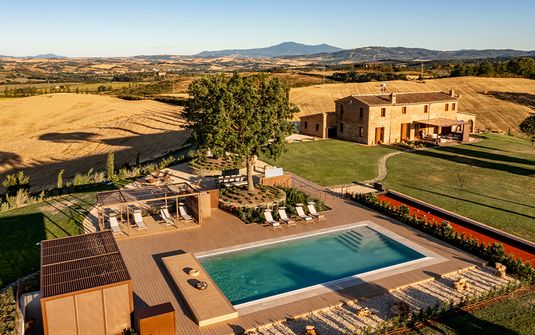
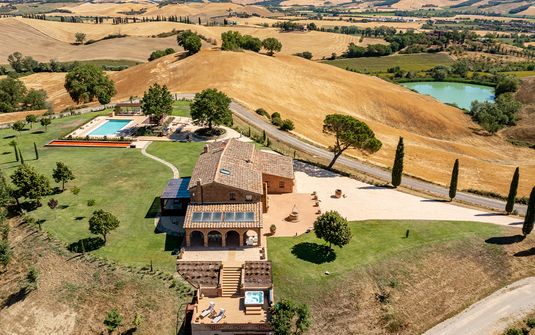
Siena gives the Tuscany collection a distinctive architectural centre: a city shaped by warm brick, steeply falling streets and a skyline that gathers above the surrounding hills. Its residential appeal extends beyond that compact historic fabric into a countryside of cultivated slopes, wooded folds and isolated farm buildings. A private villa can hold the city at a measured distance, allowing its silhouette to become part of the outlook while the house retains an independent setting and a more expansive domestic scale.
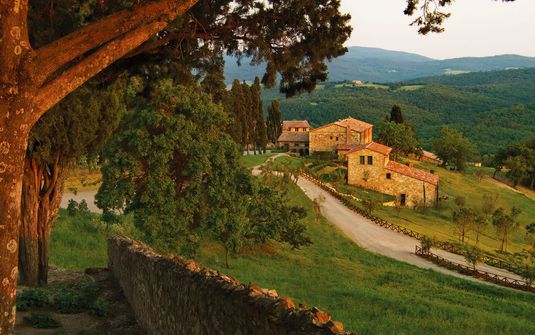
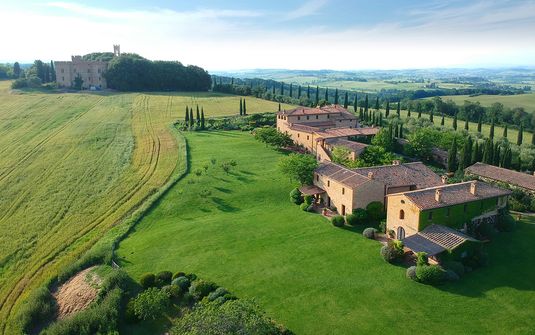
Within Italy, the Sienese landscape has an unusually clear relationship between settlement and land. Buildings often occupy elevated ground, with roofs and masonry appearing as part of the hill rather than standing apart from it. That relationship lends substance to a private stay: the residence is not simply accommodation with an attractive view, but an address whose proportions, materials and boundaries belong to a recognisable place. The precise setting matters, from sheltered country gardens to more open properties with extensive rural prospects.
A City with a Strong Architectural Identity
Siena’s historic centre is characterised by the close relationship between brick façades, narrow streets and larger civic spaces. Its architectural drama comes from changes of scale: enclosed passages give way to broad openings, while taller public buildings establish a hierarchy above the roofline. A residence within or close to this urban setting can draw its character from substantial walls, carefully framed windows and rooms whose proportions reflect an older domestic tradition. The appeal lies in inhabiting a coherent cityscape rather than relying on a catalogue of decorative motifs.
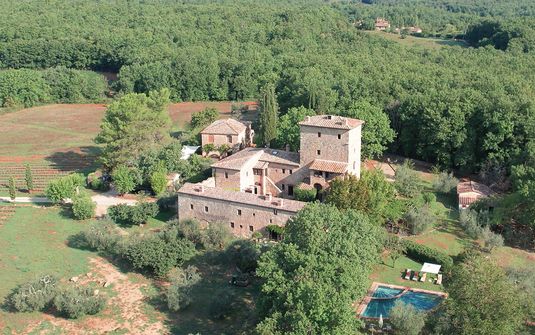
Beyond the walls, the setting changes gradually into a more dispersed pattern of houses and estates. A villa may face cultivated ground, a small group of rural buildings or a wooded slope rather than the city itself. These differences give individual addresses their identity. A house with a distant urban silhouette provides a visual connection to Siena, while another may feel entirely absorbed by its grounds. Neither experience should be assumed from the destination name; the relationship between the actual residence and its immediate surroundings defines the stay.
The Countryside around the Residence
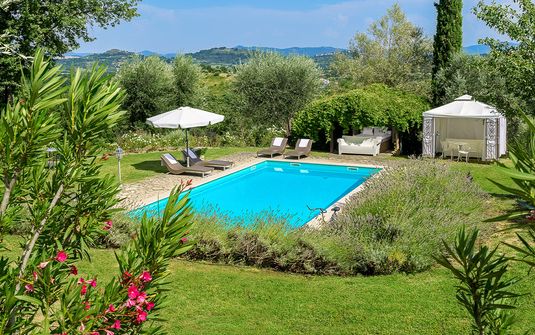
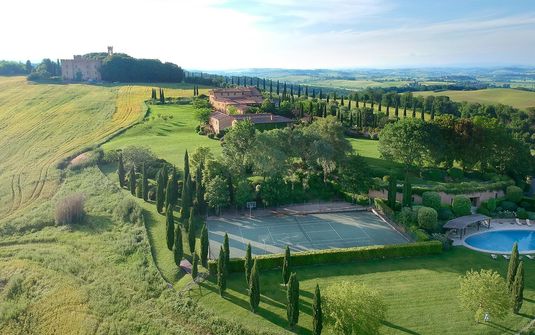
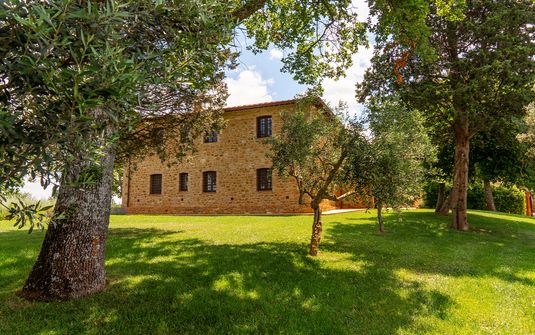
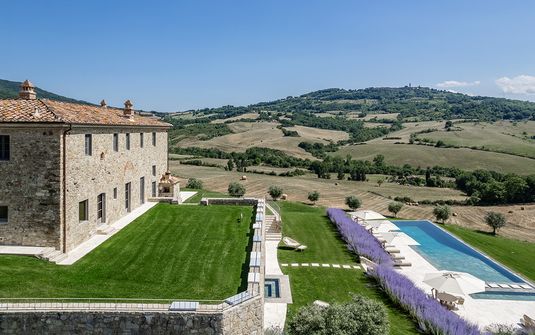
The surrounding hills offer varied degrees of openness. Exposed ridges can provide long views and a strong sense of the land’s contours, while lower positions and planted estates create a more contained atmosphere. The most convincing gardens mediate between these scales through walls, mature trees, terraces and changes of level. A broad prospect then has an intimate foreground, giving the household a place to settle within the landscape rather than leaving every exterior space directed towards the same distant horizon.
Agricultural patterns contribute to the setting through texture and structure: orderly cultivation, irregular woodland and the geometry of access avenues can all shape what the house sees. They provide context without requiring the property to reproduce a staged version of rural life. A restrained garden near the main rooms can be as effective as a more formal composition, particularly when its scale respects the building. The strongest residences make the transition from interior to grounds feel deliberate, with usable exterior rooms and clear distinctions between shared and quieter areas.
Architectural Character within the Private Estate
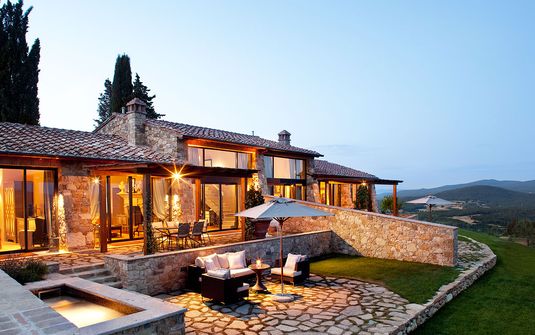
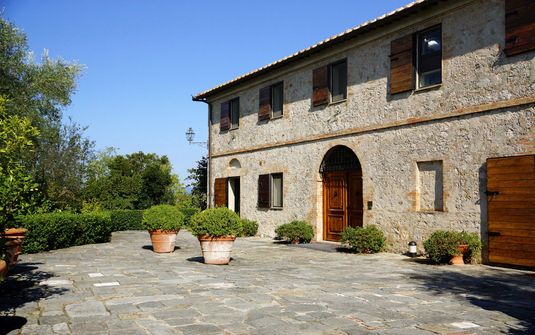
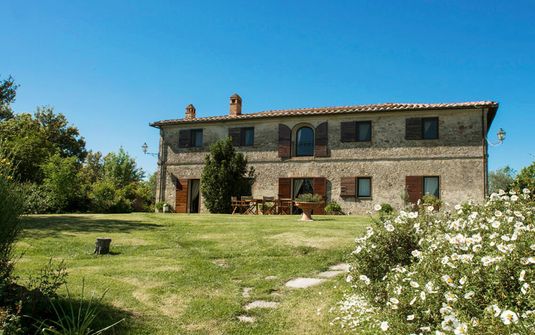
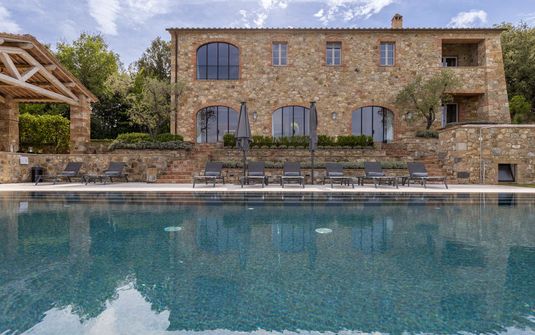
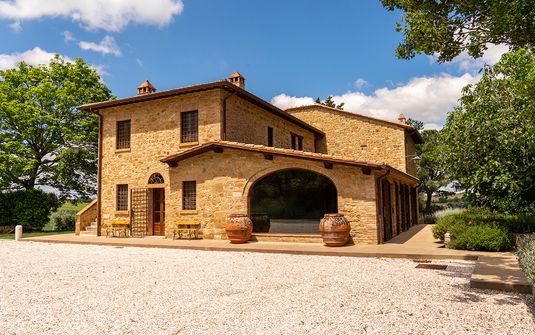
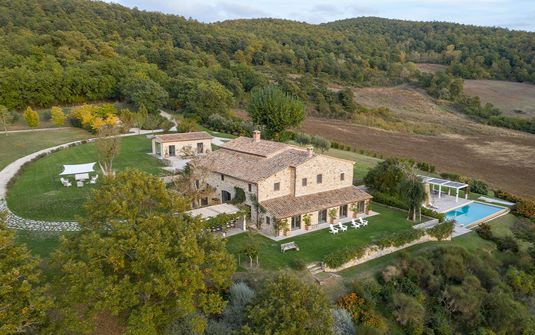
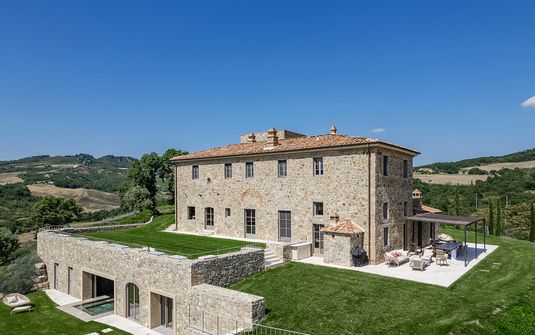
An older Sienese country house may retain tiled roofs, deep masonry openings and a composition of principal and secondary volumes accumulated over time. Restoration is most persuasive when those relationships remain legible. Exposed beams, stone and brick can provide warmth without making every room equally rustic, while carefully chosen contemporary furnishings introduce comfort through proportion and material quality. The result should feel like a residence with a history and a present-day domestic purpose, rather than an architectural shell treated solely as a scenic backdrop.
More formal villas establish a different rhythm through balanced façades, clearer circulation and reception rooms with greater height or symmetry. Contemporary houses can engage with the same landscape through simpler forms and broader glazed openings. Each approach benefits from retaining some contrast between open communal spaces and enclosed interiors. A smaller sitting room or a quiet garden-facing study can give a substantial house depth, allowing a long stay to unfold across several atmospheres instead of concentrating all domestic life in one impressive principal room.
Privacy and the Shape of a Shared Stay
For households travelling together, suite arrangement can matter as much as the exterior architecture. Bedrooms grouped in the main house support a closer domestic pattern, while separate wings or guest buildings can provide greater independence. The right arrangement depends on the people staying, but considered circulation should protect personal space without making secondary accommodation feel detached from the whole. Consistent comfort, appropriate separation and well-resolved shared rooms give a residence a calm internal structure that remains valuable beyond its initial visual impression.
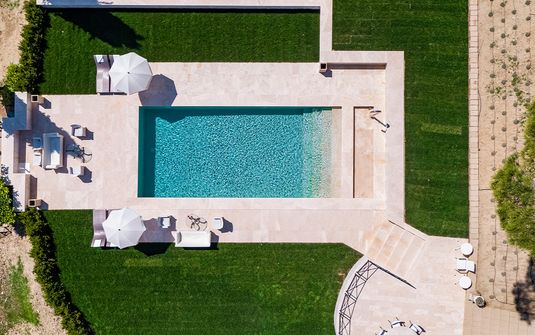
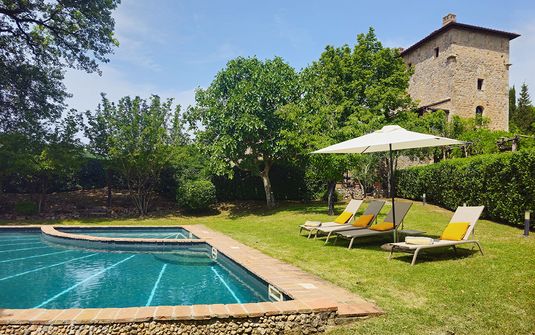
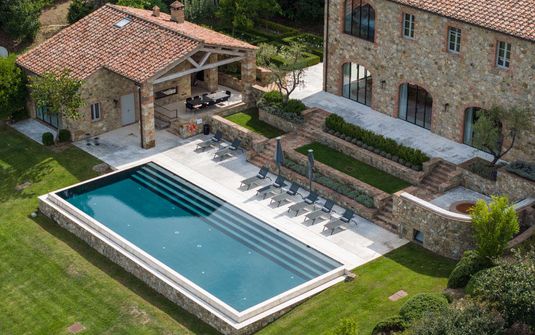
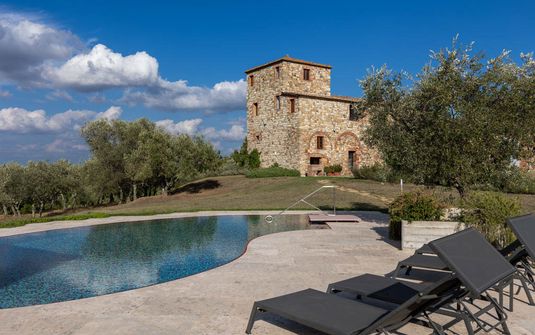
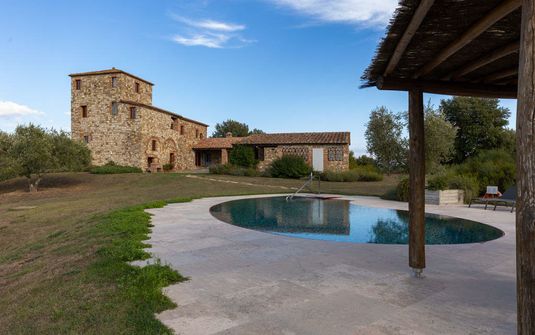
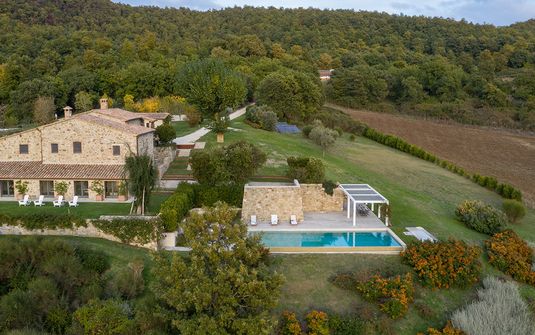
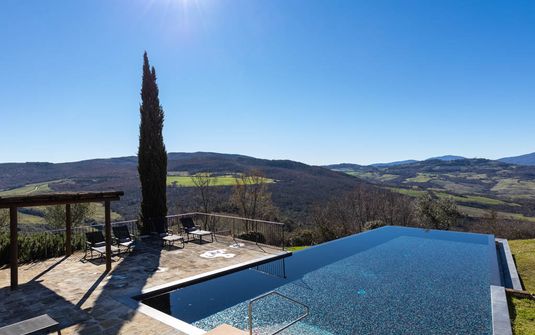
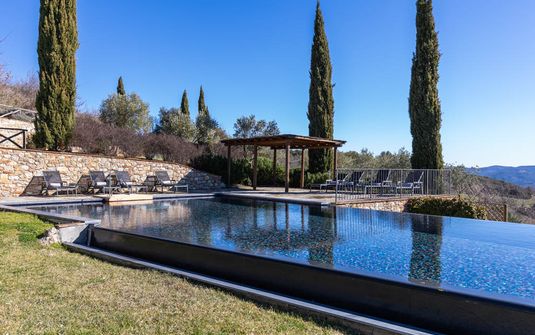
Privacy is equally specific to the grounds. A large rural plot can contain terraces overlooked by another building, while a smaller walled garden may feel thoroughly secluded. The orientation of windows, the position of neighbouring houses and the maturity of planting all influence how freely the residence can be occupied. Where a property includes a pool or separate exterior sitting areas, their relationship with suites and communal rooms deserves the same attention as their appearance. Discretion should be evident in the arrangement of the home itself.
An Address with a Distinct Sienese Perspective
Siena suits guests who appreciate architecture with weight and continuity, accompanied by a countryside whose beauty comes from its underlying structure. The private residence brings those qualities into a personal frame: a room held within substantial walls, an enclosed garden near the house and a longer view across the surrounding hills. These elements offer different scales of experience within one address, creating a setting that remains interesting through everyday occupation rather than depending on constant changes of scene.
The most compelling stay preserves the distinction between the historic city and the independent life of the villa. Siena supplies the architectural reference and a powerful sense of place, while the house establishes its own balance of shared rooms, private suites and outdoor space. Whether the residence is a restored rural estate or a more contemporary interpretation, its refinement rests on that coherence. The lasting impression is a home whose character belongs to the Sienese landscape and whose comfort supports the household throughout its stay.


