


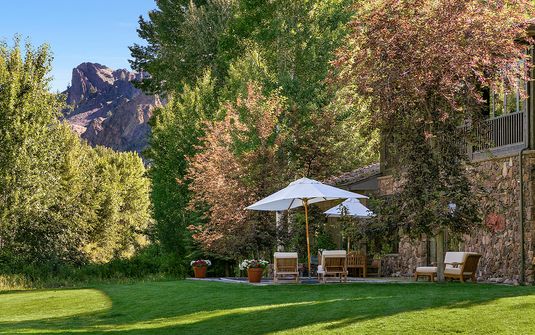
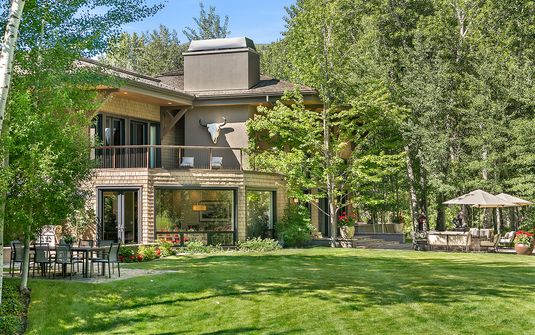


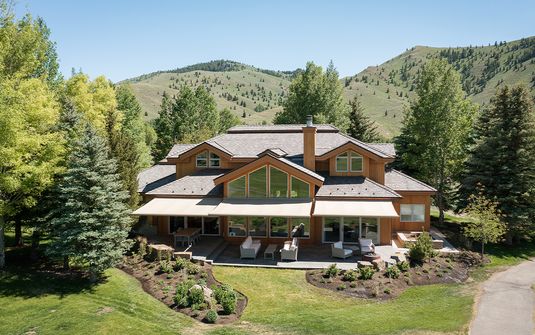
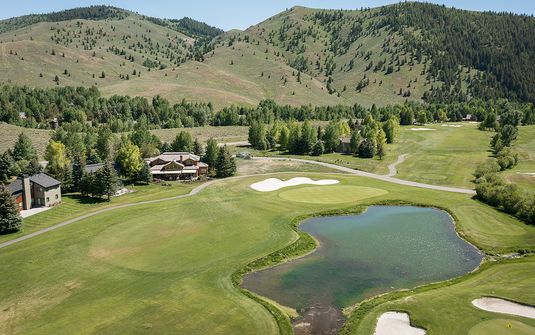
Sun Valley has an identity that extends beyond the familiar image of an American mountain retreat. Its resort heritage, open valley setting and distinctive relationship with the surrounding slopes give it a composed, established character. Here, a private residence can combine the visual scale of the Idaho mountains with a more ordered residential atmosphere, where architecture and landscape appear deliberately held in balance. For guests drawn to discretion, the attraction is not simply a dramatic panorama. It is the possibility of inhabiting a beautifully resolved home within a place whose mountain identity feels confident, recognisable and deeply embedded in its history.
The destination occupies the Wood River Valley in Idaho, where broad mountain forms rise above comparatively open stretches of settled ground. Sun Valley is closely associated with neighbouring Ketchum, yet its residential character deserves to be understood on its own terms. The distinction is apparent in the arrangement of buildings, the sense of planned space and the prominence of resort-influenced architecture. A stay here can feel expansive without being remote, particularly in a house whose position allows the eye to move from a carefully composed foreground to the larger contours beyond. That layered relationship is central to the destination's appeal.
The Landscape and Identity of Sun Valley
Dollar Mountain and Bald Mountain provide different visual anchors within the wider setting. One introduces a more rounded, immediately legible form, while the other creates a much larger mountain presence across the valley. Their influence on a residence depends on its precise orientation and location; a general Sun Valley address does not guarantee the same outlook from every house. The most compelling properties turn that specificity into an advantage, framing a particular slope, ridge or sequence of open ground. The result is a sense of attachment to one identifiable part of the valley rather than an interchangeable view labelled simply as mountain scenery.
Open foregrounds can make Sun Valley feel especially generous. Where the eye has room to travel before meeting the rising slopes, a house gains a different atmosphere from one closely enclosed by trees. This openness should not be confused with a lack of intimacy. Architectural recesses, garden walls and carefully placed planting can create protected spaces within a larger visual field. A residence may therefore feel broad and panoramic from its principal room while offering smaller, more enclosed settings elsewhere. The contrast allows guests to enjoy the scale of the valley without making every moment of the stay equally exposed to it.
Sun Valley's established resort character has also shaped its architectural vocabulary. Alpine references, timber detailing and roofs designed to sit comfortably against mountainous contours form part of its recognisable visual language. The finest interpretations are neither literal stage sets nor purely metropolitan houses placed in a scenic location. They adapt proportion, texture and material to the scale of the site. A substantial roof can give a home a reassuring silhouette, while a carefully detailed entrance can establish warmth and discretion. These qualities help the building belong to Sun Valley without requiring an overt display of rustic ornament or grandiose mountain motifs.
A Residential Interpretation of Mountain Luxury
The destination's history as a purpose-created mountain resort lends it a particular sense of continuity. Its identity was not assembled solely through scattered private houses; shared architectural references and an enduring resort image have contributed to a more cohesive setting. A contemporary villa can engage with that heritage through restrained materials and clear massing, even when its interiors are distinctly modern. For a guest, the pleasure lies in the dialogue between the residence and its surroundings. The house feels part of a larger place with an established character, while remaining individual enough to offer the privacy and personality expected of a private home.
Timber is most effective here when its use feels structural and tactile rather than decorative by default. Exposed beams can define the proportions of a room, cabinetry can introduce warmth at a smaller scale, and carefully finished surfaces can provide depth without darkening the entire interior. Stone contributes another kind of permanence, especially where it connects a building to the ground or articulates a principal wall. The relationship between these materials matters more than the quantity of either. A sophisticated Sun Valley house allows them to complement one another, leaving sufficient visual quiet for the valley itself to remain a strong presence.
A more contemporary residence may rely on the precision of its openings and the organisation of its volumes. Long views can be framed by horizontal windows, while taller glazing may capture a particular mountain profile. The most successful designs recognise that transparency needs limits: selected walls, recessed bedrooms and screened transitions can protect the domestic atmosphere of the house. This approach produces a home that is open to the landscape without feeling like a glass pavilion on display. It also gives different rooms distinct identities, allowing the setting to unfold through a sequence of experiences rather than one repeated panoramic gesture.
Space, Separation and Quiet
A generous residence should offer more than a large central room. In Sun Valley, the most persuasive interiors combine a shared sense of occasion with quieter places where guests can spend time independently. A library, den or smaller sitting area may be modest in size yet important to the overall experience. These spaces make the house feel fully residential, particularly during an extended stay or when several generations share the same address. Their relationship to the principal living area should be clear without being intrusive, creating a balance between companionship and retreat that is more valuable than sheer floor area.
Bedroom arrangements shape that balance in a particularly direct way. Separate wings can provide independence, while a more compact grouping may suit a family that values proximity. Neither configuration should be treated as an automatic marker of luxury. The quality lies in how well the plan serves the guests and how convincingly each room maintains its own sense of calm. A bedroom opening towards a private stretch of garden may be as appealing as one facing a broad mountain view, especially if the latter also overlooks a shared exterior area. Privacy must be evaluated through actual sightlines, not inferred from the destination's reputation.
The setting beyond the boundary contributes just as much to discretion. Mountain landscapes can create long lines of visibility between properties, and a house with substantial grounds may still be overlooked from higher ground. Conversely, mature planting and a carefully angled plan can give a more compact site a remarkably secluded atmosphere. A thoughtful choice considers neighbouring buildings, the approach and the orientation of exterior rooms together. In Sun Valley, the ideal is often a residence that feels visually connected to the valley while keeping its most personal spaces protected from the wider residential setting surrounding it.
The Character of a Sun Valley Stay
Sun Valley can support a style of stay that feels polished without becoming formal. The surrounding mountain forms provide a powerful sense of occasion, while a well-designed home brings the experience back to a human scale. Interiors with comfortable seating, clear circulation and well-proportioned rooms allow guests to settle naturally rather than adjust themselves to an architectural spectacle. This ease is particularly important in a substantial property. The finest residences make their scale feel generous rather than demanding, offering several ways to inhabit the house without obliging everyone to share the same space or follow the same rhythm.
Views acquire greater depth when they are encountered from different positions within the residence. A living room may hold the widest composition, while an upper landing catches a more distant ridge and a smaller room looks into a sheltered garden. Such variation prevents the landscape from becoming a single repeated feature. It also creates a more intimate connection with the site, revealing how the house sits among its immediate surroundings. Sun Valley's combination of open ground, settled areas and mountain forms lends itself to this layered approach, in which the near landscape matters as much as the far horizon.
An exterior terrace should be understood as part of the architecture rather than a detached amenity. Its proportions, degree of enclosure and relationship to the main rooms determine whether it feels naturally integrated into the stay. A broad open platform may suit a panoramic site, while a recessed outdoor room can provide a more private setting within a residential area. The strongest designs often include both an expansive outlook and a protected corner, allowing the scale of the valley to be enjoyed without giving up a sense of shelter. The precise features remain property-specific and should be considered accordingly.
Individual Homes Within an Established Setting
Sun Valley is not best approached as a collection of interchangeable mountain houses. Some residences emphasise their relationship with an established resort landscape, while others place greater weight on the individuality of their site and architecture. The first may offer a particularly coherent sense of destination; the second can feel more inward and personal. Both can be exceptional when their proportions and privacy are well resolved. Choosing between them involves identifying what should define the stay: the recognisable character of Sun Valley around the house, or the experience of a highly individual home framed by the valley's broader geography.
Interior refinement is often found in the parts of a residence that do not command the first photograph. Thoughtful storage, well-considered thresholds and a clear separation between practical and principal spaces contribute to a sense of order. Equally, the acoustic relationship between rooms can affect the experience of a large group, particularly where dramatic open volumes form the centre of the house. These are not glamorous attributes in isolation, but they support the ease that guests expect from an accomplished private residence. In a destination as visually assured as Sun Valley, that quieter level of architectural judgement is especially valuable.
Sun Valley in the Mountain West
Among mountain destinations in the United States of America, Sun Valley retains a distinct personality through the combination of resort heritage, residential scale and Idaho landscape. Its appeal does not depend on imitating the atmosphere of a European alpine village or the density of a large American resort town. Instead, it offers a more spacious visual language, in which buildings have room to relate to the land around them. A private villa can draw on that quality to create an experience that feels both established and individual, with sufficient architectural presence to be memorable and sufficient restraint to remain restful.
Luxury Villas in Sun Valley
A beautifully chosen Sun Valley residence brings together a precise setting, a coherent architectural language and a plan that respects the independence of its guests. The strongest homes do not rely on a mountain view alone: they use that view intelligently, combine shared rooms with genuine retreat and maintain a convincing relationship with the destination's established character. Whether the emphasis is on a timber-and-stone interior or a more contemporary interpretation of valley living, the experience should feel grounded in this particular place. Sun Valley's enduring attraction lies in that balance of mountain scale, residential composure and discreet, deeply considered comfort.


