




Umbria: Stone Houses and Private Estates in an Inland Landscape
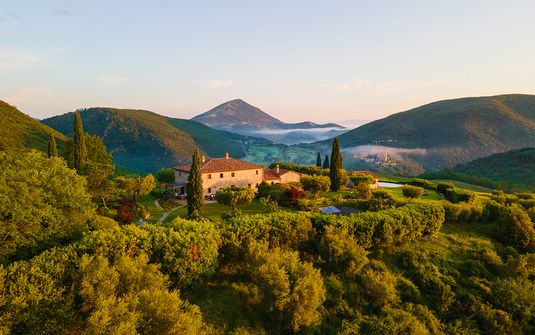
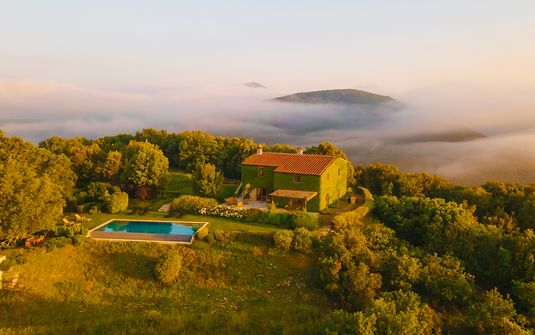
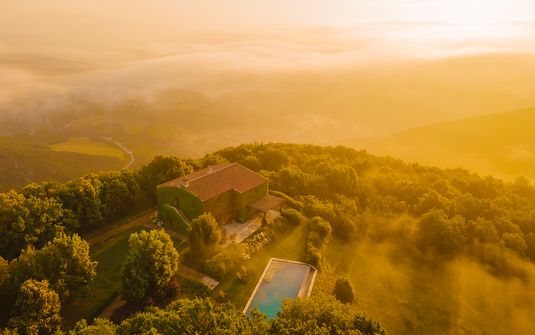
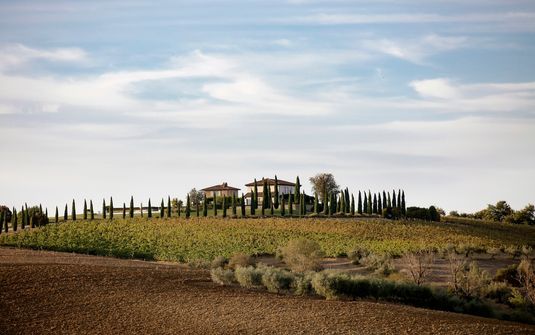
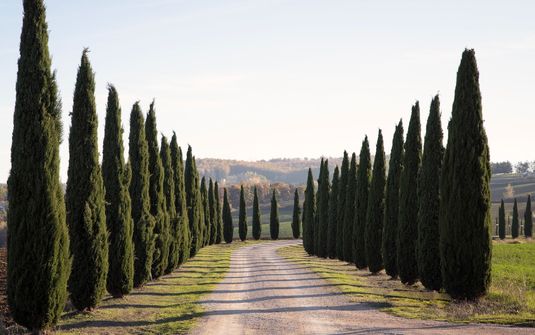
Umbria offers an inward-looking perspective on Italy, with wooded hills, cultivated valleys and compact settlements that remain closely tied to the contours of the land. Its private residences can occupy markedly different settings: an elevated estate with distant prospects, a restored rural building set among mature trees, or a house within the quieter edge of an old village. The region’s appeal rests on that particular relationship between architecture and landscape, giving each address a character more precise than a general image of the Italian countryside.
The sense of retreat often comes from layers rather than sheer distance. A ridge separates one valley from another; a walled garden establishes a smaller world within an estate; a deep window reveals only part of a broader view. These transitions give a substantial residence intimacy and make a sustained stay feel grounded. For a household seeking privacy with architectural substance, Umbria offers an environment in which old masonry, sheltered grounds and carefully considered interiors can carry as much presence as the surrounding panorama.
Hills, Valleys and the Texture of the Ground
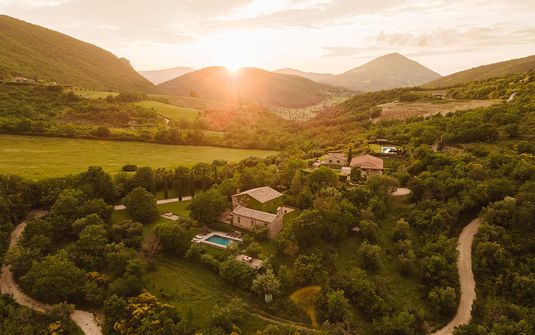
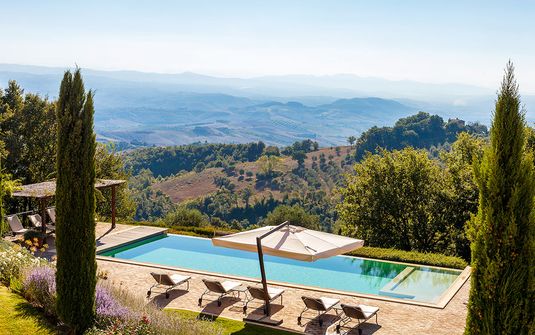
Much of the region’s visual richness comes from the contrast between open cultivation and dense woodland. The land can appear gently folded in one setting and more enclosed or steeply defined in another. A residence positioned above a valley may receive a broad, layered outlook, while a lower house feels more directly connected to its garden and nearby trees. The distinction affects the atmosphere of every principal room, making the actual orientation of the property more meaningful than a simple promise of countryside views.
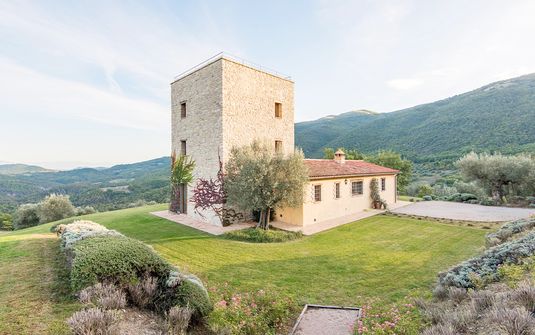
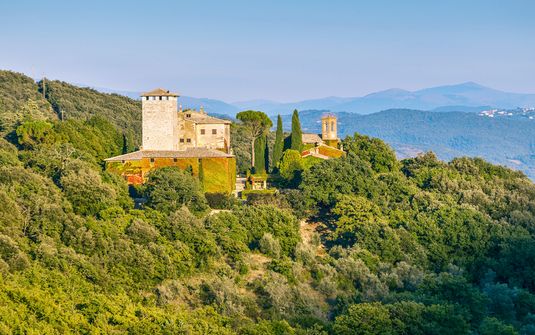
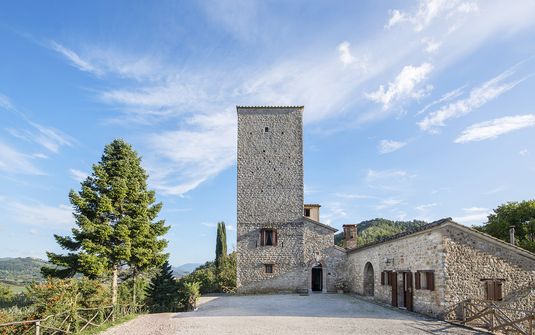
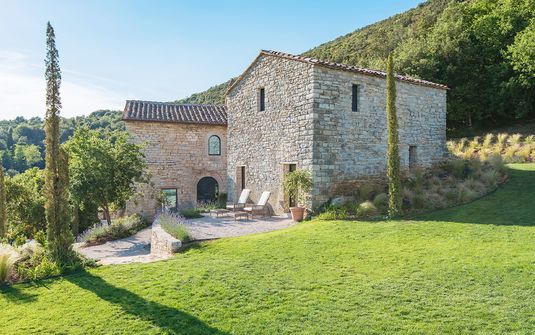
Stone settlements create another scale within that landscape. Their compact forms and close rooflines provide an architectural counterpoint to the more scattered pattern of rural estates. The pale and warmer tones of local masonry, tiled roofs and narrow openings can lend a house a strong sense of belonging without elaborate ornament. A private residence near an established settlement may draw character from those neighbouring forms, while an independent country estate can establish its own architectural composition through the relationship between the principal house, courts and ancillary buildings.
Gardens with an Intimate Foreground
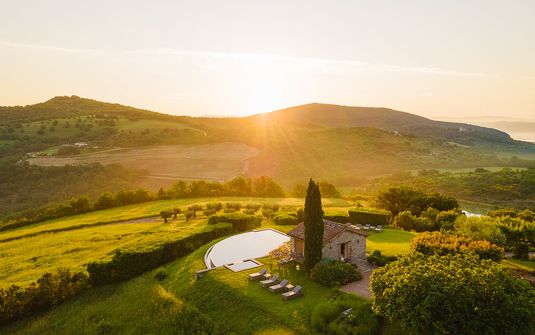
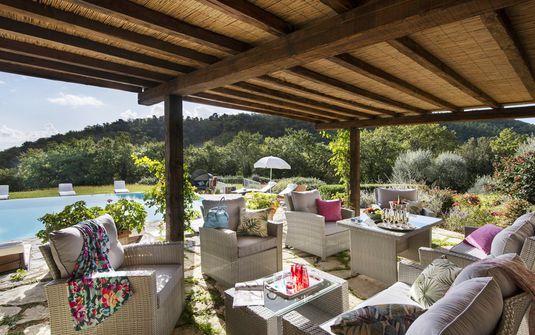
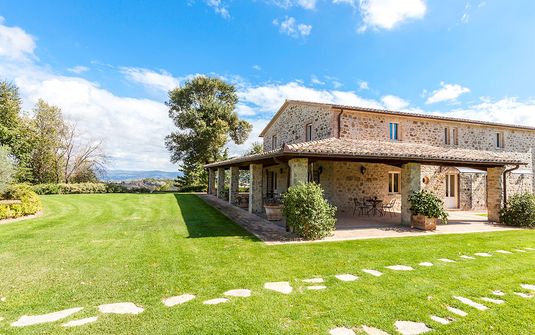
Umbrian gardens are most persuasive when they work with the terrain. Terraced ground can divide an extensive estate into usable exterior rooms, while a level court near the house provides a more contained setting for shared time. Mature trees and substantial walls create definition without requiring every boundary to be visually emphatic. The resulting grounds offer more than a single scenic platform: a household can occupy a broad terrace together while retaining smaller places whose enclosure and relationship with the building produce a quieter atmosphere.
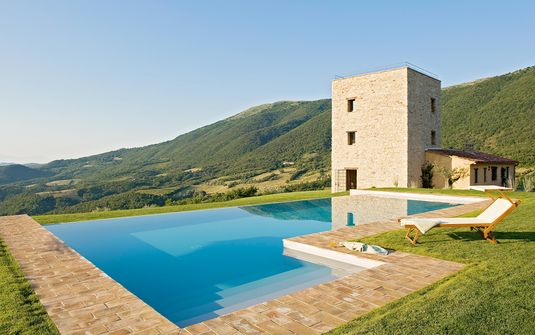
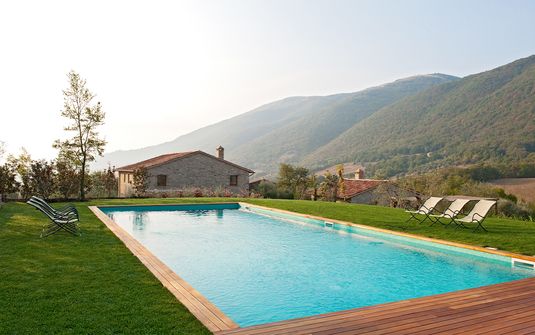
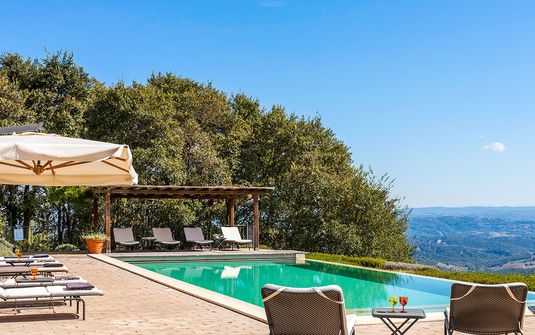
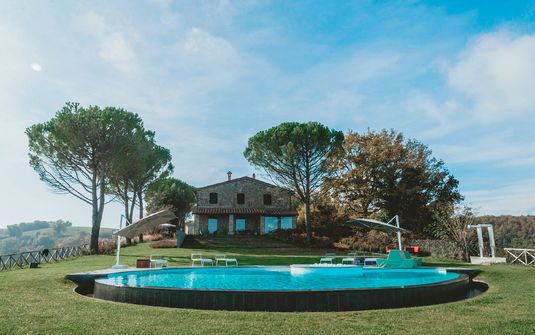
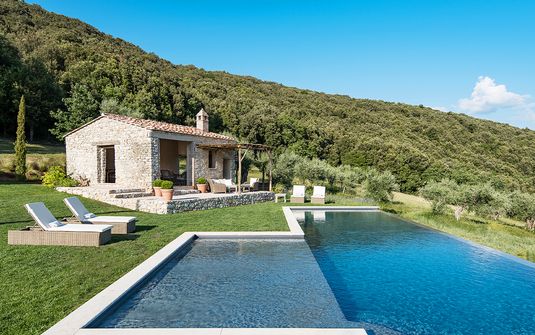
A property associated with the wider lake landscape can possess a different visual openness from one set deeper among wooded hills. That context should remain specific to the address, with the immediate garden providing continuity between house and outlook. Where a pool forms part of the residence, its position is most effective when integrated into this composition rather than treated as an isolated feature. The same care applies to secondary terraces and guest buildings, which should feel connected to the estate without reducing the privacy of its main rooms.
The Enduring Character of Umbrian Architecture
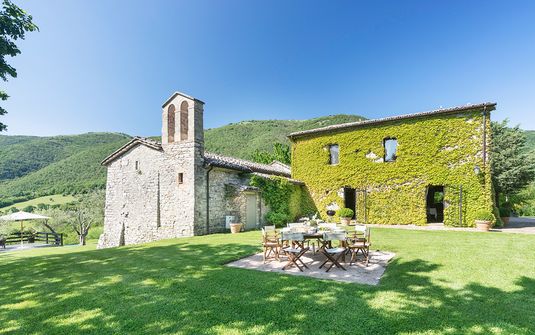
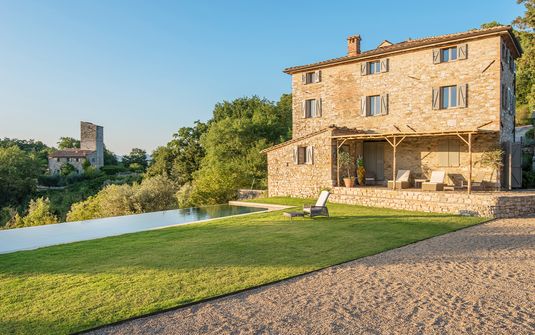
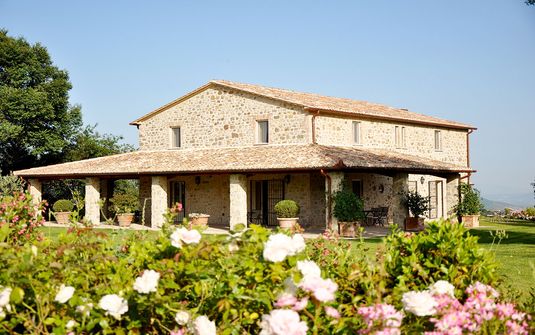
Restored farmhouses can preserve the solidity of an agricultural building through deep walls, irregular volumes and the visible structure of timber roofs. Their refinement depends on how comfortably those inherited forms support present-day occupation. A successful interior allows original materials to establish texture while using furniture, lighting and discreetly integrated systems to create a more composed domestic environment. Not every room needs exposed masonry or rustic detail; differences in finish and scale can make the house feel richer and more comfortable over a longer stay.
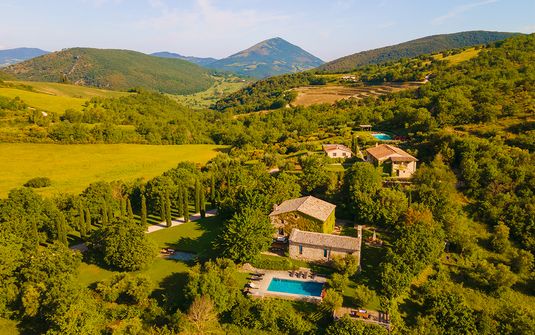
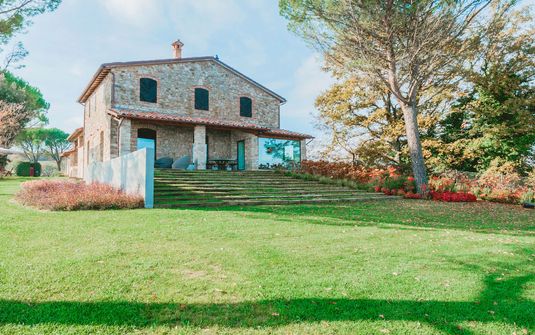
Larger estates may include a more formal principal residence or a collection of buildings gathered around a court. That arrangement can create a strong sense of arrival and a useful distinction between communal accommodation and more independent suites. Contemporary interpretations take another approach, simplifying the architectural envelope and giving selected rooms broader openings towards the grounds. In either case, the quality lies in the coherence of the whole property: the main house, secondary volumes and exterior spaces should share a clear relationship with the actual site.
A Residence That Accommodates the Whole Household
The balance between togetherness and autonomy is particularly important in a substantial country estate. A generous communal room can anchor the stay, but smaller sitting areas give the household more ways to use the home without withdrawing entirely into bedrooms. Suites arranged across different levels or buildings should retain comparable comfort and considered circulation. The strongest residence makes those differences feel intentional, providing privacy for couples or generations while preserving a natural connection to the shared spaces at the heart of the property.
Seclusion should be understood through the position of windows, boundaries and neighbouring buildings. A large plot may still have an exposed terrace; a more compact house with a well-enclosed garden can offer considerable discretion. Mature planting, changes of level and the orientation of private rooms all contribute to the experience. A convincing Umbrian retreat lets the household settle into its interiors and grounds with confidence, making privacy an everyday quality of the architecture rather than relying on remoteness or an impressive description of acreage.
A Private Stay with Regional Depth
Umbria’s atmosphere is often most clearly expressed through the smaller relationships within a residence: a stone passage opening into a court, the thickness of a window reveal, or a garden wall that follows the fall of the land. These details give a house continuity with its setting and reward unhurried occupation. They also allow refinement to remain restrained. Material quality, balanced rooms and well-resolved grounds can establish a distinguished address without requiring conspicuous scale or a uniform decorative treatment throughout the home.
The region suits a household that values the house as an essential part of the destination. Its landscape provides depth and variation, while the residence creates a personal environment within that larger setting. An older farmhouse, a formal estate or a contemporary villa can each offer a compelling interpretation when its architecture and privacy are thoughtfully resolved. The enduring quality of an Umbrian stay comes from that fit between place and dwelling, giving the household an independent home whose character remains rooted in the land around it.


