




Grosseto: Private Estates in the Broader Maremma Landscape
Grosseto brings a more open southern landscape to the Tuscany collection. The wider Maremma setting combines agricultural plains, wooded areas, rising inland ground and a coastal dimension, offering a different residential atmosphere from the region’s most tightly composed hill views. A private house can place greater emphasis on the breadth of its grounds, the relationship between building and garden, and a sense of space that is established through the land immediately around the residence.
Within Italy, this offers a particularly compelling country-house perspective for guests who value a property with a clear landscape identity. An older estate, a restored rural residence and a more contemporary villa can each provide an independent domestic setting, but their experiences are not identical. The quality of the stay depends on the precise address and the house’s actual relationship with the surrounding country, rather than on assuming that every property associated with Grosseto must occupy the same coastal or agricultural setting.
The Scale of the Land
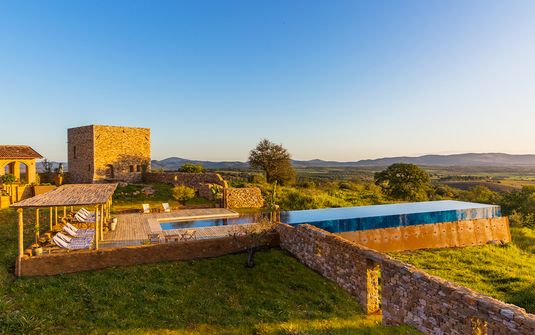
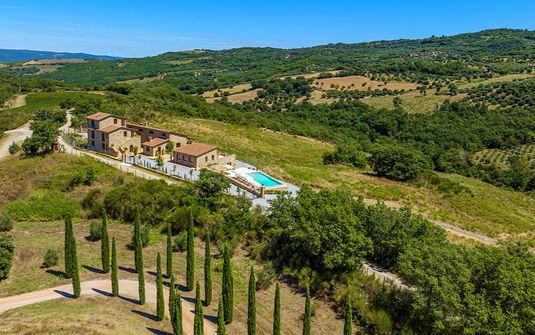
The broader landscape can give a residence long visual lines, with fields, trees and more distant contours creating depth beyond the immediate garden. The house benefits from an architectural foreground that brings those views back to a personal scale. A terrace, a contained court or a group of mature trees can establish intimacy without suppressing the openness that makes the setting distinctive. The property feels most coherent when building and grounds work together instead of presenting acreage and accommodation as separate features.
More enclosed plots offer another experience through woodland, planting and the position of neighboring buildings. The outlook may be less extensive, yet the residence can possess considerable character through the texture of its immediate surroundings. A principal room facing a quiet garden has a different role from a space directed towards a broad agricultural prospect. Preserving these differences gives the household a range of atmospheres, making a sustained private stay richer than a sequence of rooms arranged around the same distant view.
The Coast as Part of a Wider Regional Context
The Maremma’s coastal dimension adds another register to the collection without defining every house within it. A residence associated more directly with the shore may use planted grounds and sheltered exterior rooms to give a broader horizon a domestic frame. An inland property can remain entirely focused on the surrounding land. Both settings can be convincing when their character is described through the actual site, allowing the household to choose a home with a clear identity rather than an interchangeable image of Tuscan scenery.
The most successful exterior spaces provide several degrees of enclosure. A communal terrace near the principal rooms can remain open to the wider landscape, while a smaller planted court or protected garden edge creates a quieter retreat. The value lies in the range of settings, not simply in their number or scale. A complete residence allows members of the household to remain together while retaining exterior places that support individual routines without withdrawing entirely into enclosed private accommodation.
A Country House with a Legible Architectural Character
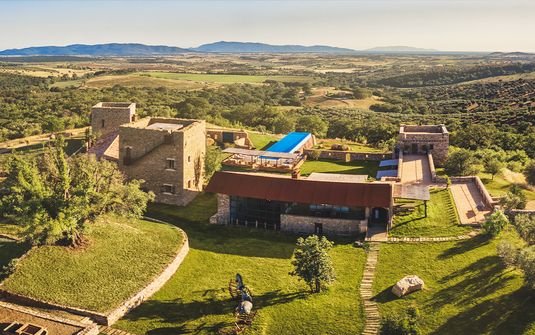
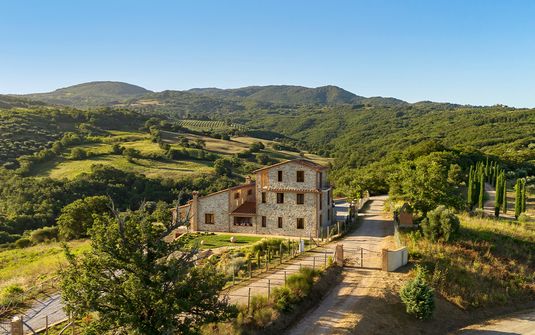
Traditional rural buildings can retain substantial walls, tiled roofs and a gradual relationship between the main house and ancillary volumes. Their appeal is strongest when restoration preserves that underlying composition while making the interiors comfortable for present-day occupation. Original masonry and timber can provide enough texture without a heavily rustic decorative treatment. The house then feels rooted through its proportions and arrangement, allowing contemporary furniture and discreetly integrated comfort to sit naturally within an older architectural shell.
A more formal estate may establish a clearer façade and a more deliberate approach, while contemporary residences use simpler forms and broader openings to engage with the grounds. These are different architectural experiences, but all benefit from balancing open communal spaces with quieter interiors. A library-like room, a smaller sitting area or a garden-facing retreat can give a larger home depth, allowing the household to occupy it in several ways rather than relying entirely on its most visually impressive reception room.
The Estate as a Shared Private Environment
Suite distribution should support the people staying together. Bedrooms within a main building create a closer household pattern, while separate wings or guest accommodation can provide autonomy for couples or different generations. The appropriate balance depends on the group, but the quality of private rooms should remain consistent throughout. A distinguished property gives secondary suites considered proportions and clear circulation, ensuring that personal comfort is part of the whole residence rather than concentrated in one principal bedroom or isolated guest building.
Privacy also depends on the exact relationship between boundaries, neighboring properties and the home’s most-used areas. An open rural plot can contain exposed terraces, while a carefully enclosed court may provide greater intimacy. Mature trees, walls and the orientation of rooms can create meaningful protection. The strongest residence allows the household to occupy its interiors and grounds comfortably in practice, making discretion a spatial quality of the property rather than an impression inferred from acreage, distance or an imposing entrance alone.
A Southern Tuscan Stay with Breadth and Substance
Grosseto suits guests who appreciate the relationship between a substantial residence and a landscape with several scales. The broad country setting provides openness, while the house and its gardens establish a more intimate domestic environment. Familiar details can become the defining parts of the stay: a sheltered exterior room, a quiet suite and the view across planted grounds. These qualities give the address depth without requiring every part of the property to be formal or conspicuously grand.
The enduring appeal is the coherence of the whole setting. An older estate and a contemporary home can each offer refinement when architecture, privacy and land are thoughtfully considered together. Within the Grosseto collection, that balance creates an independent Maremma residence with a clear southern Tuscan identity, giving the household comfortable shared rooms, protected personal space and a setting whose character remains rooted in the actual landscape around the home.


