




Saint-Jean-Cap-Ferrat: The Privacy of an Established Mediterranean Estate
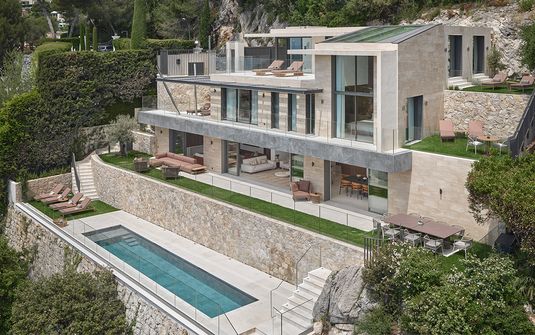
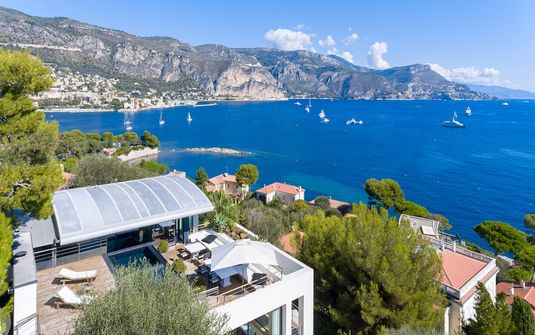
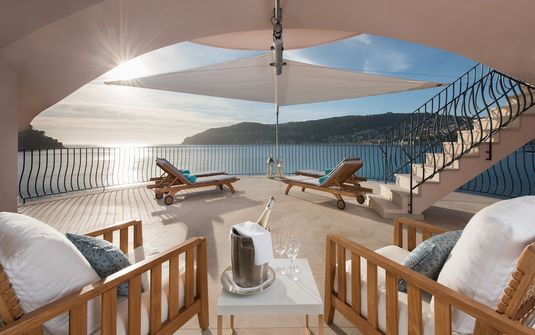
Saint-Jean-Cap-Ferrat has a residential identity shaped by its peninsula, mature grounds and long tradition of substantial private houses. The sea is never simply a distant backdrop; it forms part of the setting’s structure, appearing beyond garden canopies, around the edge of a terrace or across a sheltered bay. Within the French Riviera, the Cap offers a particularly concentrated expression of coastal residence, where the scale of the estate can remain intimate despite the distinction of the address.
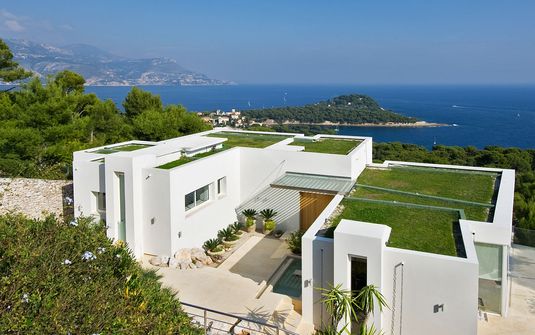
The peninsula belongs to the Mediterranean landscape of France, but its atmosphere is not reducible to a conventional seafront setting. Established planting, enclosed properties and the varied contours of the land give individual villas their own relationship with the coast. Some homes reveal the water through a layered garden, while others place the principal rooms more directly above it. The choice of property determines how openness and protection are held in balance throughout the stay.
A Peninsula Composed of Private Domains
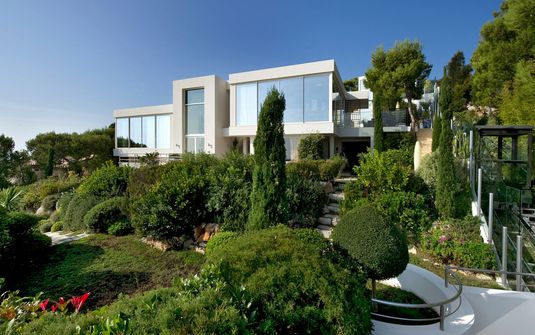
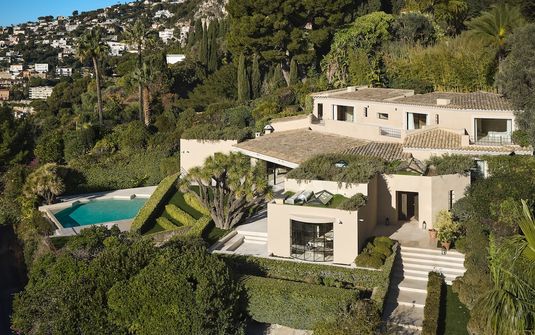
The sense of place is often established by what lies between the house and the boundary. Trees, walls, planted approaches and changes in level can create a gradual passage into the private grounds. This depth gives the residence an atmosphere distinct from the surrounding streets without requiring the estate to appear conspicuous from outside. Much of the Cap’s residential elegance lies in that contrast between an understated public threshold and a more expansive interior world.
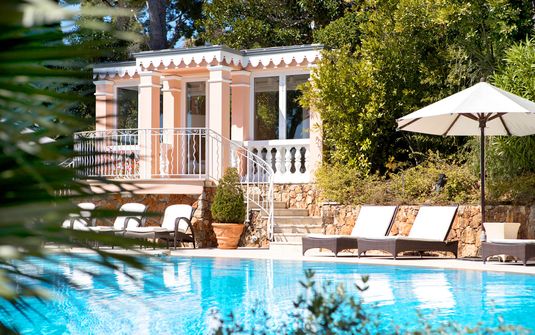
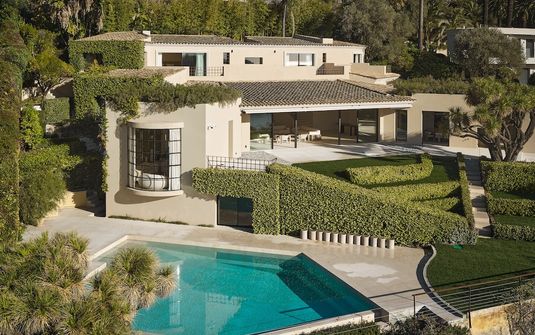
The land itself introduces variety within the property. A terrace may command a broad sea outlook, while a lower garden feels more enclosed and closely related to the planting. A quieter court can provide another scale altogether. These differences make the grounds more than a frame around the villa. They create several exterior environments, each with its own degree of intimacy, allowing the household to occupy the estate without every shared or private space depending on the same panoramic view.
The Maturity of the Garden
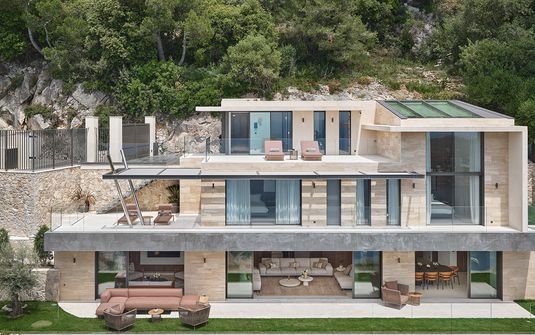
An established Mediterranean garden contributes a particular kind of richness. Tree canopies give height, older paths acquire a natural relationship with the buildings, and planted boundaries can soften the presence of neighboring properties. The result is a setting whose character has developed over time. In a distinguished villa, that maturity often provides the visual calm that allows a substantial façade or a generous reception terrace to feel integrated rather than imposed upon the peninsula.
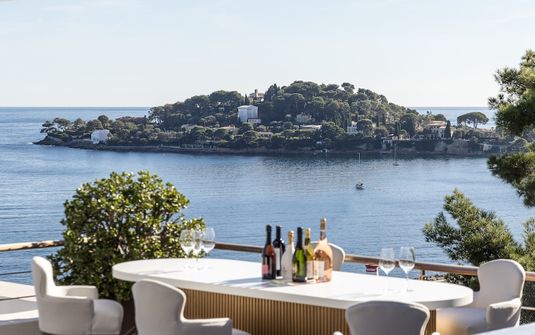
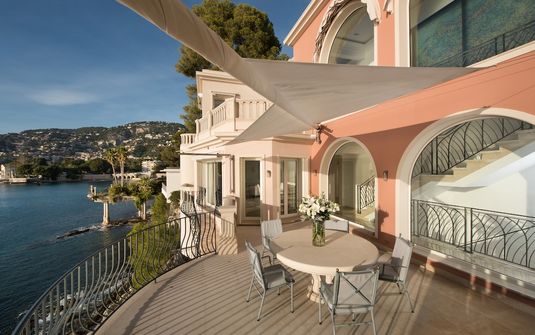
Gardens also mediate the relationship with the water. A framed view through branches can feel more personal than an entirely open horizon, while a planted foreground gives scale to a broad bay. This is especially valuable in the principal rooms, where the landscape should support a comfortable interior rather than continually overwhelm it. The strongest compositions allow sea, garden and architecture to be read together, with no single element required to carry the entire experience.
The Villa as an Architectural Sequence
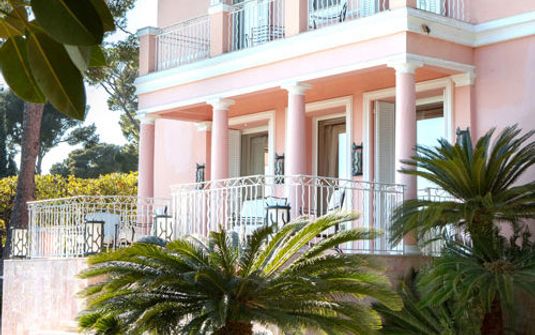
Historic houses on the Cap can retain an assured sense of proportion through their entrance halls, staircases and connected reception rooms. Terraces and garden-facing openings extend that sequence beyond the façade, making the exterior part of the home’s formal composition. Contemporary residences may reinterpret the same principle through clearer volumes and broader glazed surfaces. In both cases, the architectural quality lies in how the rooms unfold and how naturally they relate to the setting.
A private interior can be grand without feeling ceremonial throughout. A substantial salon may establish the scale of the house, while a smaller library, an informal sitting room or a quieter garden-facing space gives the household a more intimate center. The distinction between these rooms is important during a longer stay. It allows the villa to support different routines and moods instead of presenting the same degree of formality at every turn.
Privacy Expressed Through the Plan
Separate suite areas give the residence another layer of enclosure. Bedrooms grouped around a private landing create a different household arrangement from independent wings or detached guest accommodation. Each can work well when the circulation is clear and the relationship with the communal rooms is considered. A substantial estate should provide personal space with the same care that it gives to its principal interiors, so that privacy is experienced by the whole group rather than concentrated in one exceptional suite.
The orientation of those suites matters as much as their internal scale. A room facing into the garden may feel especially protected, while a sea-facing balcony can offer a more expansive but potentially more exposed setting. Where neighboring buildings are present, planting and architectural screens can help preserve discretion. These are precise qualities of the individual residence. They should be assessed as part of the home’s composition rather than assumed from the reputation of the peninsula alone.
An Estate Experience at a Human Scale
The particular attraction of Saint-Jean-Cap-Ferrat is its ability to combine distinction with domestic intimacy. The household can occupy a residence with a strong architectural presence while remaining sheltered by mature grounds and a carefully composed plan. The experience becomes personal through recurring details: the view from a familiar room, the transition to a protected terrace and the quiet established beyond the property’s boundary. These are the elements that give a private stay its lasting character.
For guests who value an address with continuity and substance, the Cap offers a compelling setting. Its best residences do not depend solely on a prestigious name or an extensive sea panorama. Their appeal comes from the coherence of house, garden and coastline, brought together in a way that feels both generous and private. A stay here can therefore be deeply residential, with the Mediterranean present throughout an environment that remains distinctly the household’s own.


