




Republic of Maldives: Private Residences in a Coral-Island Landscape
The Republic of Maldives gives the Indian Ocean collection a particularly direct relationship between dwelling and water. Low coral-island settings and surrounding lagoons create a landscape with little vertical interruption, allowing the horizon to remain a strong point of reference. A private residence gains its character through the way it establishes a more intimate foreground within that openness. A planted shoreline, a covered deck or the proportions of a principal room can give the larger scene a comfortable domestic scale without diminishing the presence of the surrounding water.
Within the wider Asia selection, the Maldivian residence offers a distinct alternative to a house whose identity depends on mountain contours or an extensive inland estate. Here, the architecture, the immediate island ground and the lagoon carry much of the setting. The household experience varies with the precise address and configuration. A shoreline home and an overwater residence provide different forms of enclosure, with the arrangement of rooms and exterior areas determining how private, connected or outward-facing the stay feels in practice.
The Intimacy of a Shoreline Residence
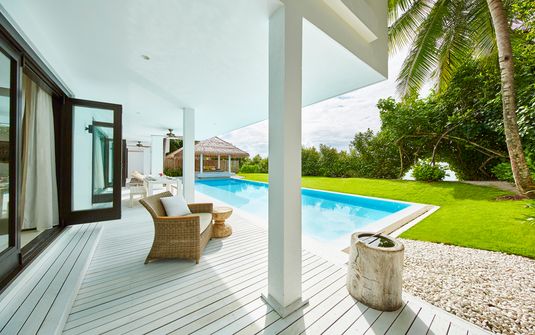
On an island site, palms and other established planting can give the home a more enclosed domestic setting close to the water. A veranda or covered exterior room creates a gradual transition from interior to garden, with a more open lagoon prospect beyond. The foreground becomes important to the atmosphere of the occupied rooms. A suite looking into planting has a different character from a principal salon facing the broader water, allowing the residence to offer more than one scale of experience within the same property.
A substantial shoreline residence can also be organised around a clearer garden centre, with private accommodation placed along quieter edges. Separate pavilions, where included, introduce greater autonomy while retaining a shared focus near the main living rooms. The arrangement is most convincing when the connections between buildings belong naturally to the grounds. The household then occupies one complete home rather than a collection of unrelated rooms, with the island setting providing continuity between communal spaces, quieter accommodation and exterior areas.
An Overwater Home and Its Exterior Rooms
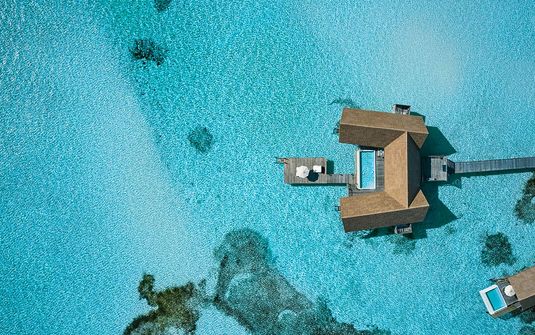
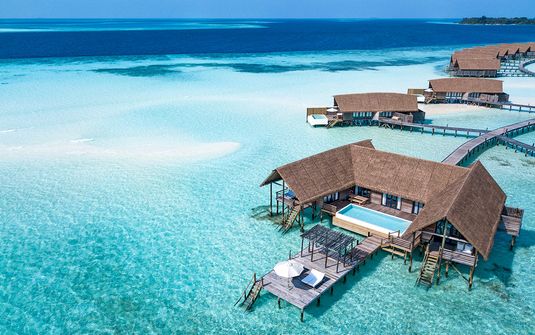
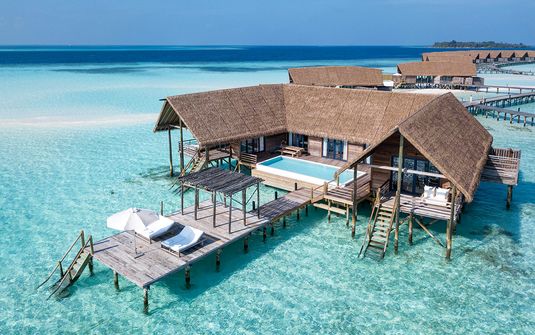
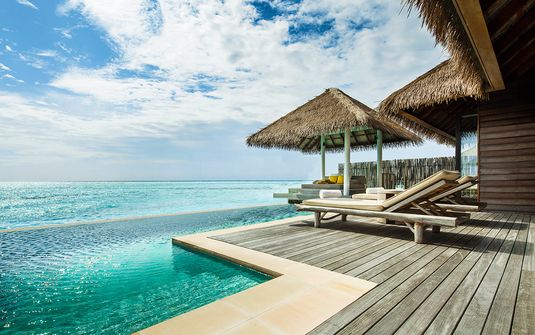
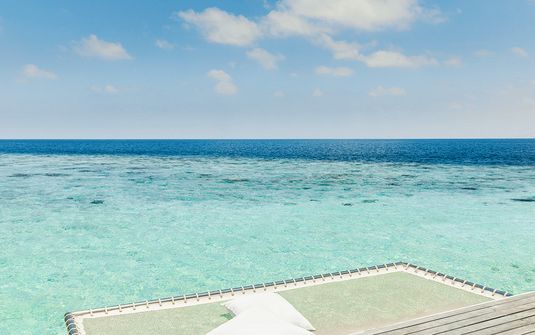
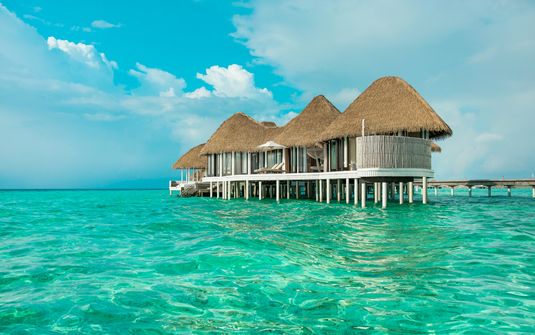
An overwater configuration places the building in a different relationship with the lagoon. The deck becomes a particularly important part of the residence, extending the occupied space around rooms whose outlook can feel open on several sides. Covered areas and more protected corners give that exterior environment a domestic range. A broad communal deck can provide the shared centre, while a smaller exterior area near a suite establishes a quieter register, allowing the household to experience the water without requiring every part of the home to feel equally exposed.
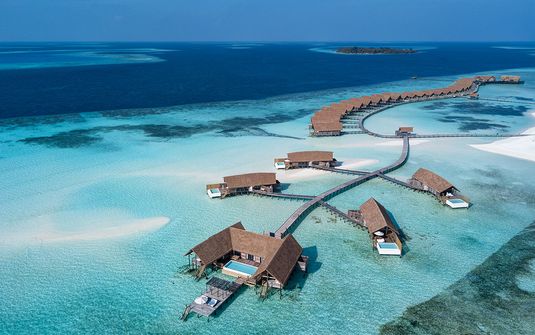
The position of neighbouring accommodation and any shared access route remains essential to privacy. A lagoon view does not automatically mean that the entire setting is isolated or exclusively occupied by one household. The orientation of windows, the separation between decks and the enclosure of quieter rooms influence how comfortably the residence can be used. A distinguished address makes these relationships clear through its layout, allowing an open-water setting to retain personal spaces whose intimacy is a real architectural quality rather than a general promise attached to the destination.
Materials and Proportions beside the Water
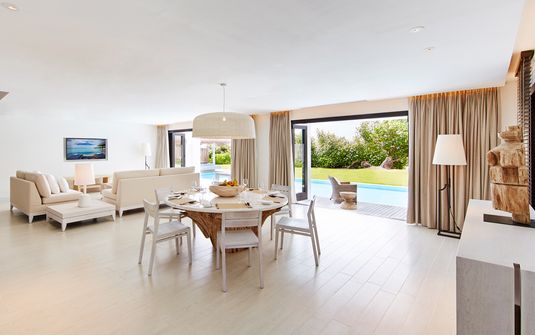
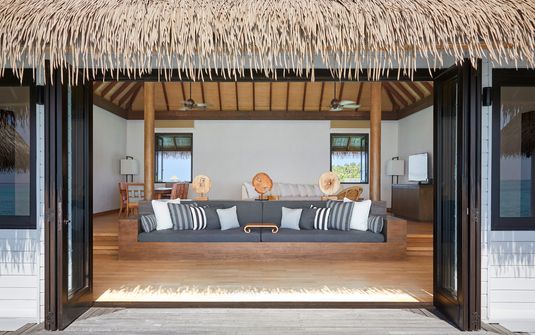
Timber, stone and woven textures can introduce warmth within a setting dominated by broad planes of water and sky. The roof and covered exterior spaces give the building a more personal outline, while carefully framed openings determine how the lagoon enters each room. The most convincing interior remains comfortable in its own right. Generous furniture, considered proportions and a restrained material palette allow the outlook to remain prominent without making the room feel like a temporary platform for viewing the landscape beyond it.
Smaller interiors can provide a deliberate counterpoint to the principal salon. A quieter sitting room or suite may have more tactile finishes and a closer relationship with its exterior area, giving the residence greater depth over a sustained stay. Consistent comfort across these rooms matters as much as the scale of the largest shared space. The household experiences a complete domestic environment, with refinement extending through the private accommodation instead of being concentrated entirely around one expansive opening or the broadest available water prospect.
A Shared Residence with Personal Space
For families and groups of couples, independent suites can make the distinction between shared time and personal routines more comfortable. Accommodation arranged across separate volumes offers one pattern, while a more unified residence creates closer internal connections. The appropriate configuration depends on the actual property and the people staying. A well-composed home preserves a clear communal centre while giving every part of the accommodation considered proportions and a protected orientation, ensuring that personal privacy remains part of the residence rather than an incidental benefit of its island position.
Exterior space should support the same range of domestic experiences. A principal terrace or deck can connect directly with the shared living rooms, while smaller spaces provide a more intimate relationship with the setting. Where a pool forms part of the residence, its position belongs to this overall composition and should be understood in relation to neighbouring suites and occupied areas. The value comes from how comfortably these elements work together, allowing the property to feel varied without losing the clarity of one complete private home.
A Personal Rhythm within the Island Setting
Where discreet household support is included, considered working areas help practical care integrate quietly with the residence. The emphasis remains on preserving the independent atmosphere of the home, with private rooms and exterior spaces protected from unnecessary interruption. This domestic clarity gives a sustained stay substance beyond the initial attraction of the lagoon. The household can become familiar with different rooms, views and degrees of enclosure, allowing the residence to develop its own comfortable rhythm within the larger water-defined landscape.
The lasting impression of the Maldives often comes from the relationship between an intimate architectural detail and a broad surrounding scene: a covered exterior room beside the lagoon, a suite held within island planting or a deck that gives water a personal foreground. These qualities make the setting specific to the home. A distinguished private stay brings them together with coherent shared spaces and protected accommodation, offering comfort and discretion through the actual composition of the residence rather than a universal claim of complete island separation.


