




Oceania: Private Residences with a Pacific Island Perspective
Oceania offers a wide Pacific perspective on private living, with island landforms and coastal settings creating very different relationships between a residence and its surroundings. Within the broader Indian Ocean selection, this is a geographically distinct residential expression. A house may be held within a planted island site or positioned close to lagoon waters, with the architecture giving those landscapes a personal scale. The particular address matters, allowing the home to retain a clear identity rather than presenting the region as one uniform experience of remoteness.
Its place within the Asia collection is most compelling when those distinctions remain legible. An island residence can offer generous space and discretion while still belonging to a real pattern of land, water and neighbouring accommodation. Its refinement comes through the composition of the home: comfortable shared rooms, protected suites and exterior areas with different degrees of openness. These qualities make a sustained stay substantial, giving the household an independent domestic environment whose character is closely tied to its actual Pacific setting.
Bora Bora: Lagoon and Volcanic Landforms
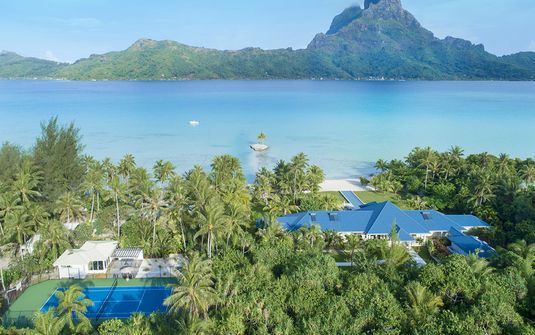
Bora Bora gives the selection a particularly recognisable island landscape. A central volcanic landform and the surrounding lagoon create a strong contrast between vertical contours and broad water planes. A residence may engage with one or both, depending on its precise position. The outlook can feel expansive while retaining a clearly defined geographic focus, giving principal rooms and exterior decks a distinctive frame. This is an individual residential setting, whose appeal rests on the relationship between the actual home, the water and the island forms around it.
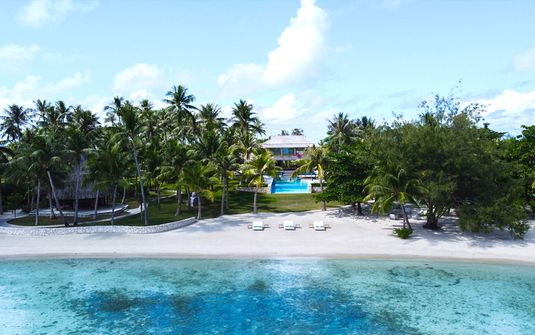
A shoreline house and an overwater residence provide different ways of inhabiting that landscape. One can use planting and an established island foreground to create enclosure, while the other places occupied rooms in a more open relationship with the lagoon. The household experience depends on the particular configuration, including the position of suites, exterior spaces and surrounding buildings. A distinguished address preserves comfortable personal areas alongside its larger prospect, allowing the home to offer several atmospheres rather than repeating the same panoramic experience throughout every room.
The Importance of the Immediate Island Setting
The foreground gives a broad island outlook depth. Vegetation, the edge of a terrace or the structure of a covered exterior room can make the surrounding water feel part of a domestic composition. A quieter suite may have a closer relationship with planting, while the principal salon looks towards a more open prospect. These differences allow the residence to feel rooted in its site. The house becomes a comfortable inhabited environment rather than a viewing platform whose identity depends entirely on the scale of the scene beyond it.
The degree of separation also varies between addresses. A broad horizon can coexist with neighbouring accommodation, while a more enclosed garden setting may offer a stronger sense of visual privacy. The spacing of buildings, the orientation of windows and the arrangement of decks or terraces all influence how freely a residence can be occupied. These details give discretion a practical meaning, grounding the stay in the actual property instead of assuming that every Pacific island home occupies an entirely isolated or exclusively controlled landscape.
Architecture Connected to Land and Water
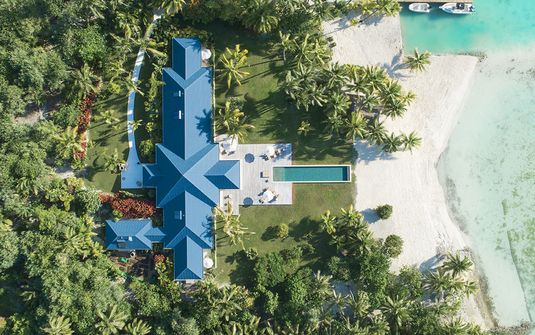
A pavilion arrangement can give an island residence several distinct parts while preserving a clear communal centre. Independent suites may sit within planted grounds or occupy different positions along a coastal setting, with covered transitions connecting them to the principal rooms. A more unified house offers another domestic pattern through closer internal relationships. Both can be convincing when the architecture responds to the actual site, allowing the landscape and the household’s need for personal space to shape the residence together.
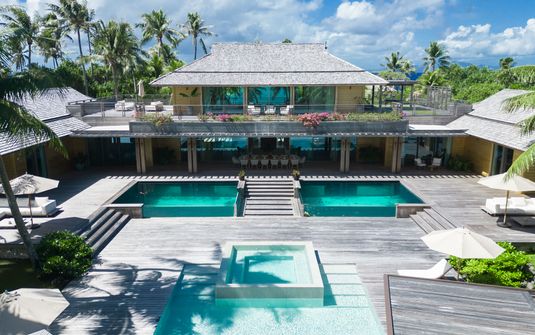
Timber, stone and restrained contemporary finishes can create continuity with the surroundings without reproducing them literally. Material texture gives the interior warmth, while carefully proportioned openings allow selected rooms to receive the landscape. Smaller spaces can remain more enclosed, offering a quieter register than the main salon. The consistency of comfort across these different rooms gives the home depth over a longer stay, making refinement apparent in everyday occupation rather than concentrating it around a single prominent view or an oversized communal volume.
Exterior Rooms with a Domestic Purpose
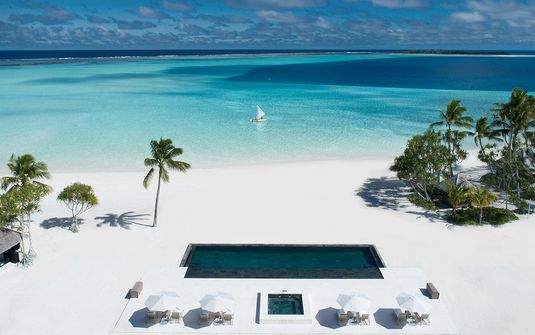
A covered terrace or deck can extend the home towards the water while retaining an intimate foreground near the principal rooms. Other exterior spaces may have a more protected orientation, allowing the household to use the property in several ways. Where a pool belongs to the residence, its position should be understood as part of the overall composition. The relationship with suites, communal rooms and the boundary of the property determines how comfortably it contributes to private life, giving exterior space a coherent purpose within the home.
This variety is particularly valuable for families or several couples. A generous shared exterior area can provide a clear gathering point, while smaller terraces and quieter interiors allow personal routines to coexist. Independent accommodation gains value when it remains naturally connected to the communal centre. The most complete residence makes these differences feel intentional, with a consistent quality across the suites and shared rooms so that no part of the household feels secondary to the property’s most impressive principal space.
A Private Stay with a Specific Island Identity
Where discreet household support is included, thoughtful working areas help practical care integrate with the independent life of the residence. The emphasis remains on preserving the atmosphere of a home, with personal rooms and exterior spaces protected from unnecessary interruption. This domestic clarity matters as much as the breadth of the outlook. An island address feels most accomplished when its architecture, accommodation and supporting spaces work together, allowing the household to settle into a comfortable rhythm within a setting whose larger landscape remains continually present.
Oceania’s island perspective is most valuable through the individuality of a particular residence. A room framed by volcanic landforms, a deck close to the lagoon or a quieter garden setting can each become the defining element of the stay. These qualities give familiar spaces continuing presence, linking the home closely to its Pacific context. The result is a private residence whose distinction rests on the coherence of its actual setting, architecture and personal accommodation, offering space and discretion with a clear sense of place.


