




Seychelles: Private Residences within an Indian Ocean Archipelago
Seychelles brings an island setting of considerable visual depth to the Africa collection. Water, tropical vegetation and granite landforms create several overlapping scales, from the broad ocean horizon to the immediate enclosure of a planted terrace. A residence can sit above the coast, within a garden or closer to the shore, with each position offering a different relationship between openness and privacy. The archipelago’s character is best understood through these individual settings, rather than through a single image of an isolated beachfront house.
A private villa makes that landscape personal through its architecture. A principal room may frame water beyond a layered foreground of trees, while an independent suite looks towards a quieter garden. The distinction gives the home several atmospheres within one address. For a household seeking space and discretion, the most compelling residence is one whose form belongs to its actual site, allowing materials, planting and changes of level to establish an island identity that remains present throughout a sustained stay.
Distinct Islands within the Collection
Mahé: Mountain Contours and Coastal Perspectives
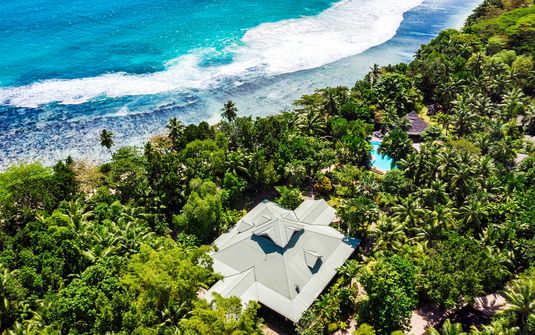
Mahé offers a particularly strong relationship between the island’s elevated interior and its coastline. Mountain contours and densely vegetated slopes can give a residence a substantial inland backdrop, even where its principal rooms face the sea. An elevated address may receive a layered coastal view, while a lower property feels more closely connected to its immediate garden. These differences influence the scale and atmosphere of the home, making the precise site more important than a general description of an ocean-facing position.
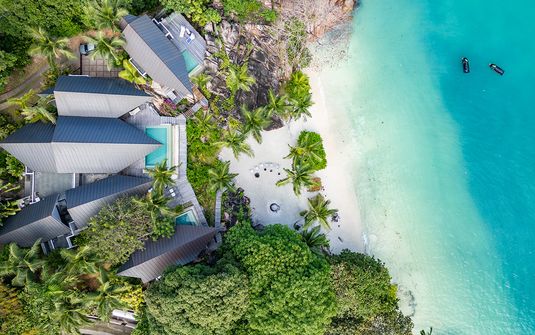
Architecture on sloping ground can create a sequence of levels, with communal rooms, terraces and private accommodation occupying different parts of the site. When thoughtfully resolved, that arrangement provides autonomy without losing a clear household centre. A more compact garden residence can offer another kind of intimacy through planting and enclosure. Both perspectives belong to Mahé, giving the collection a range of homes whose character depends on their actual relationship with the island’s terrain and the surrounding pattern of settlement.
Praslin: Palm-Rich Interiors and a More Intimate Island Scale
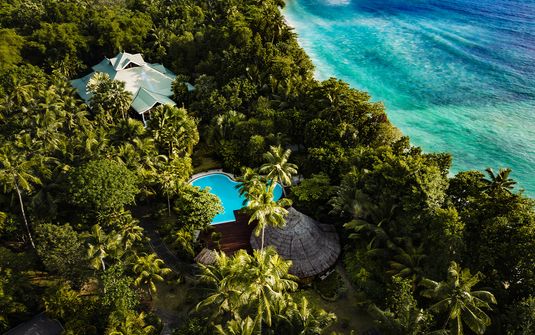
Praslin has a distinctive inland character associated with dense palm vegetation, set against a coastline whose granite forms and water outlooks create a different sense of openness. A residence can draw atmosphere from either or both. Garden-facing rooms may feel absorbed by the immediate planting, while a principal terrace establishes a broader coastal reference. That contrast allows the home to retain intimacy even where the outlook is expansive, with the landscape experienced through a sequence of carefully framed spaces rather than one uninterrupted panorama.
A villa within this setting benefits from a measured relationship between building and vegetation. Separate accommodation volumes can sit naturally within planted grounds, while a more unified house may establish a stronger internal connection between suites and shared rooms. The most convincing design preserves the legibility of the site, allowing its existing contours and material character to remain apparent. Praslin then offers a private residence with an individual island atmosphere, whose refinement comes through the coherence of the dwelling and its immediate surroundings.
Fregate Island: A More Contained Island Setting
Fregate Island introduces a smaller island context, where the relationship between vegetation, granite ground and surrounding water can feel particularly concentrated. The residence occupies a setting with a clear geographic identity, rather than a generic coastal address. Its outlook may be broad, but the foreground remains important: trees, rock and the position of exterior rooms bring the scale back to the household. This balance gives an island home depth, allowing the surrounding landscape to be experienced from both generous communal spaces and quieter private accommodation.
The quality of the residence rests on how comfortably its individual parts belong to that environment. A principal living pavilion can provide a clear shared centre, while independent rooms or smaller terraces establish a more personal relationship with the site. Any sense of exclusivity should come from the actual property arrangement and its degree of separation, rather than an assumption that the whole island belongs to one household. The appeal is a precisely situated private stay within a compact and strongly defined Indian Ocean landscape.
Architecture That Works with the Ground
Across the islands, a residence can use the land’s contours to create privacy and spatial variety. Terraces at different levels establish distinct exterior rooms, while carefully placed openings allow selected interiors to engage with the coast. Timber, stone and quieter contemporary surfaces can provide a material connection without competing with the setting. The strongest houses avoid treating every façade as an equally open viewing platform, balancing expansive communal rooms with suites whose orientation and enclosure offer a more protected domestic atmosphere.
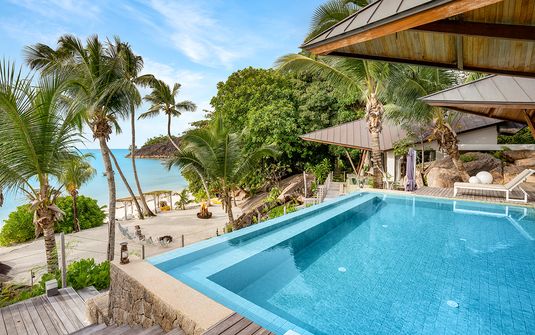
Interior refinement comes through that same balance. A generous salon may rely on the landscape for much of its character, with restrained furnishings giving the view room to remain prominent. Smaller spaces can introduce more tactile materials and closer garden relationships. Where a property includes a pool, its position should support the overall composition and preserve the comfort of nearby rooms. These elements are individual attributes of particular residences, and their value lies in their thoughtful integration rather than in a standard list of island-villa features.
Personal Space within a Shared Island Home
Independent suites can give couples or generations greater autonomy, especially where accommodation is distributed across separate volumes. Their relationship with the principal rooms should remain clear, allowing the household to gather naturally without diminishing personal privacy. Consistent comfort across the residence matters as much as the scale of the main living area. A well-resolved home provides several places for shared and quieter time, making the property feel generous in use rather than relying entirely on one spectacular outlook or a single imposing reception space.
Seclusion should also be understood at the level of the actual address. Vegetation, changes of level and the position of neighbouring buildings can provide meaningful separation, but an expansive water view does not automatically imply complete privacy. The orientation of windows and terraces determines how comfortably the grounds can be occupied. Where household support is included in a property’s arrangements, considered working spaces help preserve an independent domestic rhythm, allowing practical care to integrate discreetly with the privacy of the residence.
A Stay with a Clear Island Identity
Seychelles is most compelling when the particular island remains legible within the home. A mountain-backed residence on Mahé, a palm-rich garden setting on Praslin and a more contained island environment on Fregate offer different forms of retreat. The architecture brings each into a personal frame through its rooms, materials and grounds. Their common appeal lies in the opportunity to inhabit an independent residence with space for the household, while preserving the specific character that makes the individual address distinctive.
The lasting impression often comes from the smaller relationships within that setting: water seen beyond a planted foreground, a terrace following the fall of the land, or a quiet suite held within mature vegetation. These qualities give familiar spaces continuing presence. A distinguished Seychelles stay brings them together without allowing a broad promise of island seclusion to replace the details of the actual home, creating a residence whose comfort, discretion and architectural character are closely tied to its place within the archipelago.


