


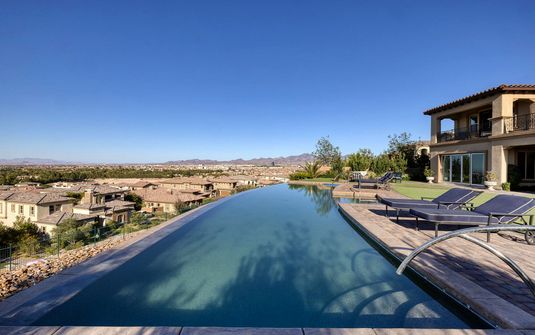
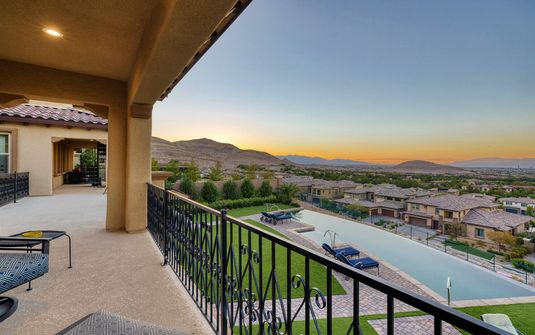


Las Vegas has a private residential character that is easily obscured by its public image. Beyond the concentrated skyline, the valley opens into established neighbourhoods, elevated sites and contemporary homes whose identity comes from desert space rather than spectacle. A discerning stay can be shaped around that quieter world: a residence with its own architectural presence, a carefully framed horizon and interiors designed for genuine privacy. The appeal is not simply the contrast with the city outside. It is the opportunity to inhabit a distinctive southern Nevada home, where the scale of the landscape and the precision of the design establish an atmosphere entirely its own.
Within Nevada, the Las Vegas Valley is a broad basin framed by mountain ranges. That geography gives residential settings a powerful context, but it does not make every property feel alike. An elevated house may look across the metropolitan landscape, while another residence may turn inward around a courtyard or garden. A mountain-facing position can create a different sense of place from a skyline outlook, even within the same wider valley. The most rewarding choice begins with these distinctions, allowing the home's actual site and orientation to define the experience rather than relying on a general image of Las Vegas luxury.
The Valley Beyond the Skyline
The mountains create a strong visual boundary around Las Vegas, giving even an urban residential setting a sense of its desert location. Their profiles can appear as distant layers beyond settled ground or as a more immediate presence near the valley's edges. A residence that acknowledges this geography can feel grounded in place without needing an uninterrupted panorama. A carefully composed view may include nearby planting, architecture and a specific ridge, creating greater depth than a broad opening directed indiscriminately towards the horizon. The quality of the outlook lies in its composition and its relationship with the room, not simply in how much of the valley is visible.
The western side of the valley has a particular relationship with the Spring Mountains and the red-rock landscape beyond the settled areas. This context can influence the atmosphere of nearby residential settings, where desert landforms remain a strong part of the visual identity. Yet a general western address does not guarantee a direct view or a secluded position. The precise relationship between the house, its neighbouring ground and the larger landscape needs to be understood individually. A well-chosen residence makes the most of what is genuinely present, whether that is an open mountain composition or a more protected environment shaped by its own grounds and architecture.
An elevated skyline view offers another interpretation of Las Vegas. Here, the residence may occupy a position from which the scale and geometry of the city become part of a broader desert composition. This can be striking, but the house should provide more than a viewing platform. Interior proportion, privacy and the quality of exterior rooms remain essential to the stay. A panoramic setting is most satisfying when it is balanced by more enclosed spaces, giving guests the freedom to enjoy the metropolitan outlook without requiring every room or every moment within the residence to be directed towards the same distant scene.
Contemporary Architecture With Desert Clarity
Las Vegas can provide a compelling setting for contemporary residential architecture. Broad horizontal forms, substantial walls and carefully recessed openings respond naturally to the valley's scale. The finest houses use these elements with precision rather than simply multiplying dramatic features. A low roofline may establish a calm silhouette, while a courtyard can bring an intimate landscape into the centre of a large plan. The architecture gains authority when its major decisions support one coherent idea. Instead of presenting a sequence of unrelated statements, the residence feels complete, with its approach, principal rooms and private areas all contributing to the same carefully considered atmosphere.
Material choices can give that architecture depth. Stone may establish permanence, timber can add warmth at a more intimate scale and smooth rendered surfaces can provide a quiet background for both. The way materials meet is often more revealing than the number of finishes used. Carefully aligned joints, well-proportioned openings and a restrained palette can create a sense of refinement that remains persuasive beyond the first impression. In a Las Vegas residence, this restraint can be especially powerful. The house does not need to repeat the visual intensity associated with the city; it can establish its distinction through clarity, craftsmanship and a confident relationship with its site.
More traditional houses offer a different but equally valid residential language when their proportions and interior planning are well resolved. Articulated rooflines, enclosed courtyards and textured walls may create a softer atmosphere than a linear contemporary building. The important distinction is between a coherent architectural vocabulary and decorative excess. A substantial residence can feel welcoming and private when its scale is broken into well-defined parts, allowing principal rooms and bedroom areas to retain individual identities. The finest experience comes from a house that feels convincing as a home, rather than from an accumulation of features selected primarily for their immediate visual impact.
Privacy as an Architectural Quality
Discretion in Las Vegas depends on more than the presence of a boundary or the reputation of a residential area. The actual orientation of the house determines whether its principal spaces feel protected. A home can have a broad view and still preserve private rooms through angled wings, screened openings or inward-facing gardens. Conversely, a large property may feel exposed if its main terrace and bedrooms address neighbouring ground without an intermediate layer. The relevant assessment is therefore specific: what guests will see from the spaces they use, and what can be seen of those spaces from outside the property.
Courtyard planning can create a particularly complete private world. Rooms may address an internal garden or a defined exterior space, making the house feel generous without depending entirely on distant scenery. This can be valuable in a settled residential setting, where a more outward-looking plan might sacrifice discretion. A courtyard is most successful when it has a clear place within the overall composition, with proportions that suit the rooms around it and materials that connect it to the interior. It becomes an organising element of the home, not simply an empty space enclosed by building wings or a decorative feature viewed from a single room.
The entrance sequence also shapes the experience of privacy. An understated façade can give way to a remarkably open interior, allowing the residence to reveal itself gradually rather than exposing its principal spaces at the street edge. A defined threshold, a carefully directed passage and a well-timed view can create a strong sense of arrival without monumental scale. This contrast between a restrained exterior and a generous private interior is particularly persuasive in a desert city. The house feels self-contained and assured, reserving its most rewarding spaces for those within rather than using them as a statement to the wider surroundings.
The Interior Life of a Private Residence
A large shared room can establish the social centre of the house, but a complete residential experience requires variety. Smaller sitting rooms, a quiet study or a more intimate space away from the principal outlook can make the property comfortable at different levels of occupation. This matters particularly when several households share a residence. Guests should be able to spend time together without having to occupy the same room continuously, and to withdraw without feeling isolated from the whole. The most accomplished Las Vegas homes use their scale to create choice, balancing broad volumes with spaces that retain a more personal and domestic atmosphere.
Bedroom arrangements deserve the same level of attention as the principal living area. A suite's size and view are only part of its character; its position relative to shared rooms, circulation routes and exterior spaces can be more important to the actual stay. Separate wings may offer independence, while a more connected grouping can suit families who prefer proximity. The best arrangement depends on the guests rather than on a universal idea of luxury. A well-resolved plan makes each room feel properly considered, ensuring that privacy and comfort are distributed throughout the residence instead of being concentrated in one exceptional suite.
Interior furnishing can establish a distinctive identity without becoming theatrical. Well-scaled pieces, tactile fabrics and a measured use of colour allow the architecture to remain clear while making the rooms genuinely inviting. Art and personal objects may add individuality where they belong to the home, but they should contribute to a coherent atmosphere rather than compete for attention. A refined Las Vegas residence can feel remarkably calm when materials and proportions carry the design. This quieter approach does not diminish its sophistication; it allows the quality of the space and the particular character of the house to become more apparent over the course of a stay.
Exterior Spaces With a Residential Purpose
An exterior room should feel connected to the house in both plan and atmosphere. A recessed terrace can extend a principal interior while maintaining a sense of enclosure, whereas an open platform may emphasise the valley or skyline. A more protected garden can offer another scale entirely. The strongest residences provide these differences deliberately, allowing guests to choose between openness and privacy. Pools and other water elements, where genuinely present, should be understood as specific parts of the property rather than assumed features of every Las Vegas home. Their design is most persuasive when it supports the overall architectural composition instead of acting as an unrelated centrepiece.
The immediate landscape helps determine whether a residence feels grounded in the desert. Restrained planting, stone surfaces and carefully handled changes in level can create a clear transition between building and site. A more cultivated garden may establish a deliberate contrast, but it should still feel related to the house's proportions and materials. The quality often lies in small decisions: the alignment of a wall, the width of a threshold or the way an exterior surface meets planted ground. These details make the property feel complete, turning a visually impressive building into a residence whose refinement is evident at every scale of occupation.
A Private Address With Its Own Identity
Among destinations in the United States of America, Las Vegas offers an unusually strong contrast between public image and private residential possibility. A stay can be defined by a composed architectural setting, broad desert views and a house that feels entirely removed in atmosphere from the city's most recognisable skyline. The distinction is not about denying the destination, but understanding it more fully. The valley provides a substantial geographic context, while individual homes can offer a precise and personal interpretation of that setting. For discerning guests, this combination makes architectural coherence and genuine discretion more meaningful than a list of conspicuous attributes.
Luxury Villas in Las Vegas
An exceptional Las Vegas villa creates a clear private world within the scale of the valley. Its views should be deliberately framed, its boundaries and room placement should support discretion, and its interiors should offer both shared generosity and individual retreat. Contemporary and more traditional residences can achieve this when their architecture and site relationship are convincing. The lasting impression comes from a home that feels coherent rather than excessive: a specific place in southern Nevada where desert contours, considered materials and carefully organised space combine to offer a refined residential stay with an identity that is distinctly its own.


