


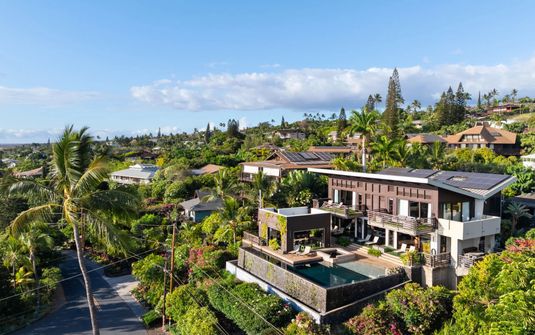


Maui has a landscape organized around two substantial mountain masses and the lower land between them, giving the island a remarkable range of coastal and landward perspectives. The Pacific provides breadth, while ridges, valleys and planted residential grounds create more intimate frames close to a private home. A residence can feel open in its shared rooms and quietly enclosed in its suites, allowing the household to inhabit several moods within the same property. The appeal is not one uniform tropical image. It is a house whose architecture makes a particular part of the island personal, with materials and proportions that remain as engaging as the setting beyond its boundaries.
Within Hawaii, Maui offers a private-stay experience shaped by the actual coast, elevation and site of the residence. A home with a broad ocean relationship has a different atmosphere from one directed toward a garden or a more layered mountain frame. Those distinctions give the destination depth. The quality of a stay comes from how clearly the house responds to its surroundings, with comfortable shared rooms, carefully protected suites and exterior spaces that feel integrated with the architecture. Guests inhabit a particular home rather than a generalized island interior, allowing the wider landscape to become personal through the residence itself.
Luxury Villas and Private Homes on Maui
Low-rise architecture can give a coastal home a grounded relationship with the land. Broad roof planes, substantial thresholds and carefully placed openings create a balance between shelter and openness, allowing shared rooms to feel generous without losing their human scale. Timber, stone and textured surfaces bring warmth close to the household, while solid walls provide a quiet background for artwork and furnishings. The interior feels most convincing when it has a center of its own. Guests can appreciate the materials and proportions of a room as part of a complete home, not simply as a foreground arranged to display the widest possible ocean view.
Pavilion-like plans can give a substantial property several distinct centers of life. A principal salon occupies the shared heart of the residence, while suites and smaller sitting areas relate to gardens, courts or more selective outlooks. Covered passages and planted transitions connect the different parts, giving the spaces between rooms their own character. This arrangement can offer meaningful privacy without making the household feel scattered. The architecture remains comfortable when its connections are legible and its scale supports everyday use, allowing guests to move naturally between togetherness and personal retreat within a house whose identity comes from the relationship between its parts as much as from any single room.
Contemporary residences can express the same principles through restrained lines and precise detailing. Broad openings frame the setting, while substantial walls create enclosure where quiet comfort matters. A more traditionally inflected house may use deeper roof forms and a gradual sequence of sheltered spaces, giving arrival and movement through the property a more intimate rhythm. Neither approach needs to become a decorative theme. The strongest home responds to its site with clarity, allowing ocean, garden and landward outlooks to contribute differently to the plan. The residence gains depth through those distinctions, making a longer stay comfortable beyond the first broad impression of the island landscape.
Mountains, Central Valley and the Pacific
Haleakala gives the island's eastern landmass a powerful sense of scale, while the West Maui Mountains provide another substantial geographical frame. The lower central land connects these different forms, creating a landscape whose character changes with the position of the residence. A well-positioned room may reveal a broader composition, while a smaller opening selects one section as an intimate frame. These differences enrich the house over time. Guests encounter the destination through several architectural moments, allowing each space its own balance of openness and enclosure rather than requiring every room to face the same horizon or participate in one uninterrupted display of the setting.
The coastal landscape has its own variety, with broad water views, more articulated shore forms and rising ground giving individual homes different relationships with the Pacific. A residence may hold a long horizon from its principal terrace, while private rooms have more selective frames of planting or land. The architecture benefits from that range. The house becomes richer when the ocean contributes to several atmospheres rather than serving as the only source of identity for every room. The particular site remains central, ensuring that the setting is described through the actual relationship between residence and coast rather than applied as one generalized beachfront promise to every property on the island.
Planted and landward settings offer another form of intimacy. Trees, layered grounds and mountain contours can become the principal landscape around the rooms, giving a home a personal world distinct from an open coastal outlook. These residences should not be treated as secondary to a broad water panorama. A thoughtfully framed garden or ridge-facing room can have great presence when the architecture is carefully resolved. Maui's private-home richness comes from these differences, allowing the particular house to determine the atmosphere of the stay rather than applying the same coastal formula indiscriminately to every site and residential setting.
Gardens within a Broad Island Setting
A garden can give a Maui residence close detail alongside the larger landscape. A substantial tree beside the salon, a planted court at the entrance or a layered boundary near a suite creates a setting encountered repeatedly during the stay and at a human distance. These elements work best when they participate in the plan, connecting shared spaces and protecting quieter quarters through a coherent arrangement. The garden becomes an organizing part of the architecture rather than a decorative surround. It gives rooms distinct outlooks and creates transitions between them, allowing the household to experience several atmospheres within a property whose landscape feels personal and closely related to the home.
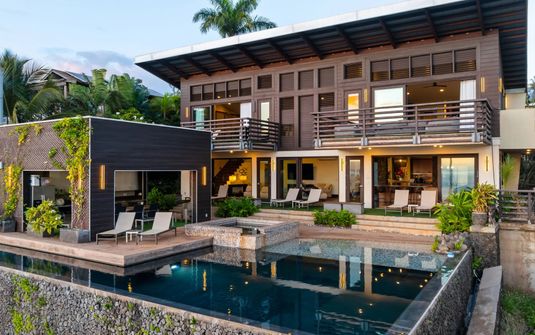
The principal terrace can become a comfortable shared room when its proportions and furnishings are carefully resolved. Well-arranged seating, a sheltered section and clear circulation back to the salon give the exterior everyday substance, while a substantial side boundary or planted edge makes an open outlook feel settled rather than exposed. Smaller exterior areas can provide greater intimacy beside suites or quieter sitting rooms, giving guests choices within the same private setting. Their distinction makes the residence accommodating when fully occupied, allowing varied preferences without requiring one broad platform to serve every part of the stay at the same degree of openness.
Where a pool is included, its water can form a composed surface within the garden or broader coastal landscape. Simple geometry and coherent materials allow the feature to relate naturally to the house, while planting and well-spaced furniture make the surrounding area complete. Generous passages and comfortable thresholds back to shared rooms give the setting practical substance beyond its appearance. A refined exterior allows water, greenery and built surfaces to support one another, making the pool one element in a complete residential composition rather than the only feature through which the quality or identity of the home is understood.
Interiors with Material Warmth and Island Character
The interior can feel connected to Maui through material and proportion rather than an overt decorative theme. Timber brings warmth, stone gives substance and woven textures soften the larger architectural surfaces, while selected artwork and furnishings introduce a personal voice. The rooms feel collected when objects respond to their particular scale and atmosphere, leaving enough space for the architecture and outlook to remain legible. A comfortable chair or a well-crafted cabinet can become a lasting part of the experience because it is encountered at close range throughout the stay. This gives the residence an identity that remains engaging after the first impression of the setting has become familiar.
The main salon should support conversation naturally. Seating grouped at comfortable distances, substantial tables and unobstructed routes to adjoining rooms or the terrace give the space an intuitive center. Solid walls offer another focus through artwork, books or joinery, balancing the open ocean-facing or garden-facing side. A second sitting room provides a different scale, perhaps more enclosed or directed toward a quieter planted area. These choices make a longer stay accommodating because they allow varied preferences within the household, giving guests several places to settle while preserving the sense of one shared private home with a coherent material language and clear domestic rhythm.
Private suites can have distinct atmospheres through their outlooks and positions within the plan while maintaining consistent comfort. A room facing broad water offers one kind of retreat, while a planted court or quieter mountain frame gives another suite greater intimacy. Generous storage, a comfortable seating corner and well-positioned lighting make each room complete. This evenness matters for a shared household. Differences should add character without creating a sharp hierarchy of quality, allowing every guest a thoughtful personal place within the residence and ensuring that the care evident in the principal salon continues throughout the quieter rooms used privately and repeatedly during the stay.
Privacy throughout the Island Home
Discretion depends on the particular site and the orientation of rooms, not only on the extent of the grounds. A broad coastal outlook can coexist with neighboring residences, making side-facing terraces and bedroom openings important design considerations. Planted boundaries, walls and inward-facing spaces can protect intimate areas while preserving selected connections with the landscape. The internal plan deserves equal care. Guests should be able to reach their suites without passing through another person's retreat, allowing the household to move comfortably between sociability and personal time. These decisions make openness a considered quality rather than an exposure applied indiscriminately to every room and exterior space within the property.
Bathrooms and thresholds complete this private experience. A bathroom with clear proportions, generous surfaces and intuitive lighting supports everyday ease, while restrained materials create continuity with the rest of the house. A protected opening toward greenery can introduce a close exterior relationship distinct from the broader outlook of the shared rooms. Entrance courts, passages and landings deserve the same attention because they become familiar parts of daily life in the residence. When these quieter spaces are carefully resolved, the home feels coherent and personal throughout, revealing a depth of quality beyond its strongest first architectural impression and supporting the repeated private experience of every guest.
Maui within the United States
Among the private-home settings of the United States, Maui offers a distinctive relationship between substantial mountain forms, a varied coastal edge and intimate planted residential space. Its appeal lies in how a particular house makes those qualities personal, whether through a broad outlook or a quieter garden-centered plan. The individual residence remains decisive. Its site, materials and private quarters determine how the destination is experienced from within, giving the stay a specific character rather than a standardized tropical identity. A thoughtful home balances the island's breadth with domestic warmth, allowing the household to appreciate the setting while remaining equally comfortable in the personal world created by the house itself.
A Private Stay with Maui’s Landscape in Balance
Maui is most rewarding when the residence brings its particular setting into a complete domestic experience. The broader coast and mountains provide context, the garden creates intimacy and the architecture offers the household a comfortable private world within it. A generous salon, quieter sitting rooms and well-protected suites allow several atmospheres to coexist naturally. LaCure's perspective centers on that complete residential quality. The lasting appeal comes from a stay with individuality and substance, where the materials, proportions and carefully framed outlooks of the home remain as memorable as the island beyond its boundaries, making the destination personal through the residence itself.


