


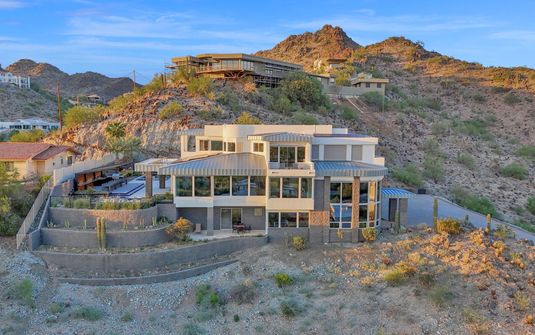
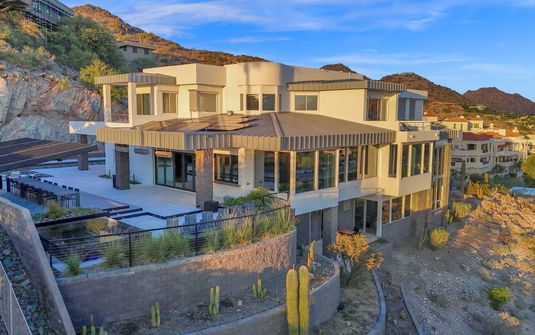


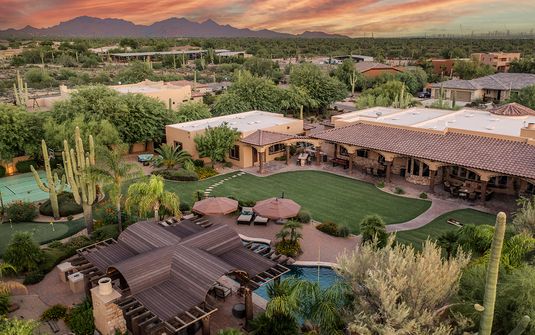
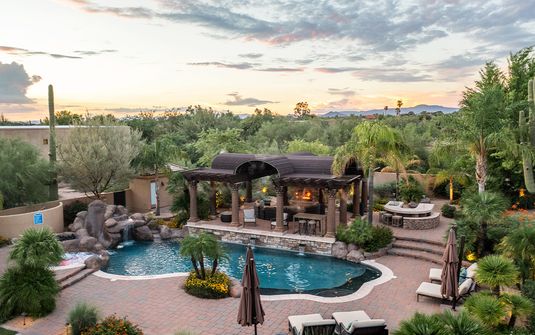
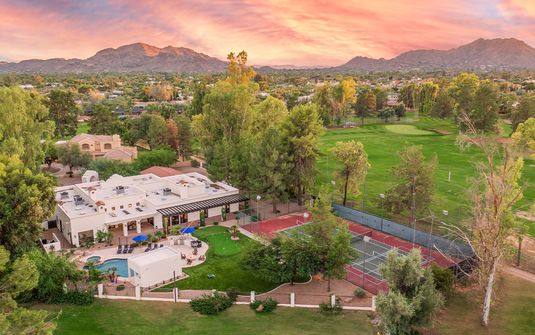
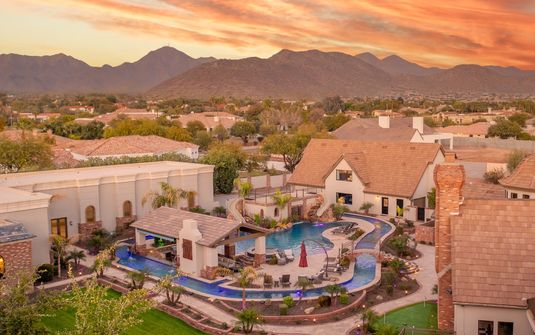
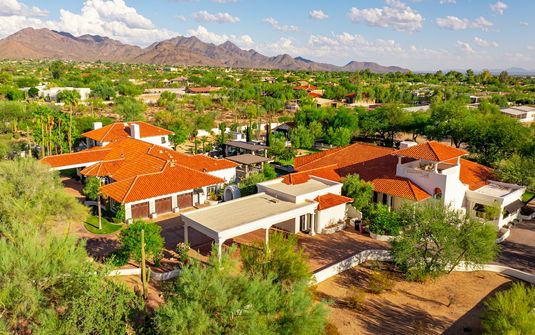
Scottsdale gives the private desert residence a particularly clear sense of place. The Sonoran landscape is open but never empty: upright saguaros, branching trees and low desert vegetation establish a finely spaced foreground, while the McDowell Mountains give the horizon its structure. Houses can occupy this setting with remarkable calm, using low rooflines, substantial walls and carefully protected courts to create an intimate world within a broad landscape. The appeal of a stay here lies in that contrast. A generous estate can feel expansive in its shared rooms and quietly enclosed in its private quarters, with the desert present as texture, scale and atmosphere throughout the architecture.
Within Arizona, Scottsdale offers a residential experience shaped by both the natural desert and a developed city with an established architectural identity. The particular location of a house matters. A property with a close mountain backdrop has a different character from a garden-centered residence within a more urban setting, and neither should be reduced to a single destination-wide formula. The finest private stays make those distinctions legible. Guests inhabit a specific home, with its own orientation, materials and sense of enclosure, rather than a generic interior that could be placed unchanged against any desert view.
Luxury Villas and Desert Estates in Scottsdale
Desert architecture gains much of its presence from the relationship between horizontal built form and the taller natural elements around it. A low wall can anchor a broad view, while a deep roof gives an open room a reassuring sense of shelter. Courtyards allow the house to create landscapes of its own within the larger setting, bringing stone, planting and sky into a more intimate composition. These are not merely visual devices. They give a residence different degrees of openness, allowing the household to move between a generous shared salon, a protected exterior room and a quieter suite without losing the coherence of one private home.
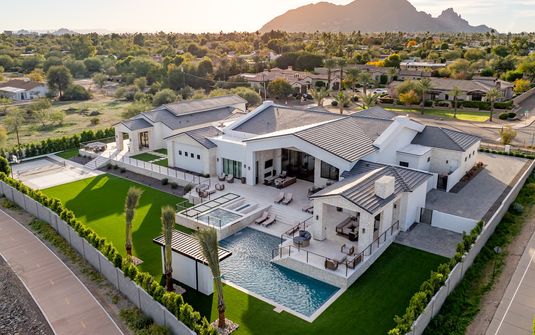
Scottsdale's contemporary residences often find a strong expression through clean geometry and a restrained palette. Stone, textured plaster, timber and carefully detailed metalwork can give a house substance without making it visually heavy. The desert already has a distinctive pattern of forms, so the building need not compete through constant architectural gestures. A broad opening framed by a substantial wall can be enough. Its effect depends on proportion, the quality of the materials and the way the room is furnished at a human scale. The most convincing interiors feel comfortable at close range as well as impressive when seen against the mountains beyond.
A more traditional estate can offer equal depth through a different vocabulary. Planted entrance courts, tiled surfaces, generous verandas and warm wall finishes create a domestic atmosphere with a strong sense of arrival. The residence may unfold around an inward-looking center before opening toward the broader desert. This progression gives the house privacy and variety. Guests encounter a sequence of rooms whose character changes gradually, rather than a single large open floor in which every space has the same exposure. Traditional references feel most persuasive when they support this spatial logic, allowing the architecture to feel settled and personal rather than decorated around a fixed idea of southwestern style.
The Sonoran Landscape at Several Scales
The saguaro gives the desert a distinctive vertical rhythm. Seen from a residence, its sculptural form can bring scale to a mountain view or become the principal subject of a smaller window. The landscape is most engaging when these near details remain visible. A house that looks only toward the far horizon misses the richness of the ground close to it, where stone, trunks and scattered planting create a finely textured composition. A carefully framed room can hold both scales together, allowing guests to appreciate the breadth of the setting while remaining aware of the individual forms that make the Sonoran Desert recognizable.
The McDowell Mountains provide a more substantial backdrop, giving the Scottsdale landscape direction and depth. Their contours can be experienced as a broad panorama from a shared terrace or as a selective frame from a private room. The architecture benefits from this variety. Different outlooks prevent the house from repeating the same visual experience everywhere, allowing each room to have a distinct relationship with the setting. A garden-facing suite may feel intimate and protected, while a principal salon has a more expansive atmosphere. Together they create a complete residential experience in which the mountains remain a unifying presence without dominating every part of the home.
The ground plane is equally expressive. Gravel, exposed stone and carefully spaced vegetation establish a landscape with a different density from a lush coastal garden. A residence can acknowledge this character through selective planting and clearly defined exterior spaces, allowing the desert's openness to remain legible. The result need not feel sparse. A single substantial tree in a court, a planted boundary beside a suite or a stone wall with a precise relationship to the land can create considerable depth. The strongest compositions give each element room to register, making the private grounds feel intentional rather than filling every available area with decorative vegetation.
Courtyards as Private Desert Rooms
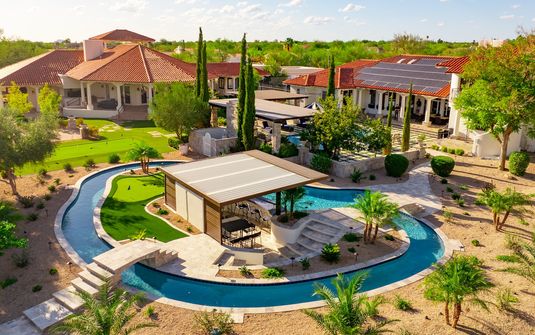
A courtyard offers a more intimate way to experience the desert setting. Enclosed by the house, it can hold a tree, a carefully finished surface or a quiet water element within a composition that feels entirely personal. Rooms opening toward it share a private center without depending on exposure to the surrounding neighborhood. This creates continuity through the plan and gives the residence an internal landscape of its own. The court can also mark the transition between shared and private areas, making the house feel deeper and more varied while preserving clear circulation. Its value comes from proportion and atmosphere rather than from the number of features it contains.
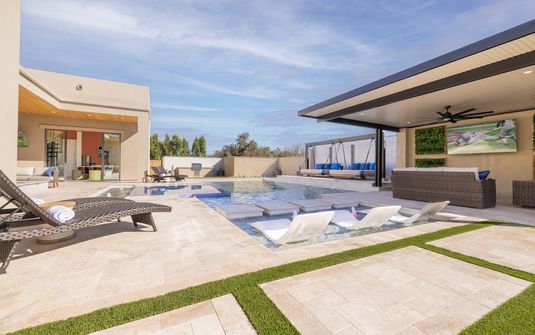
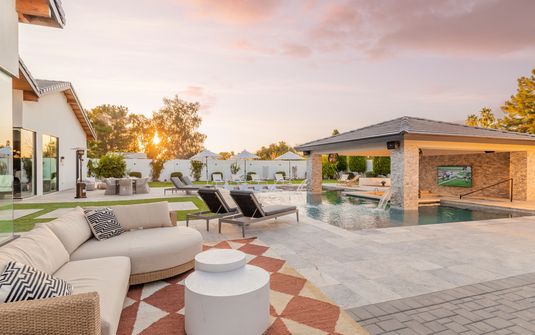
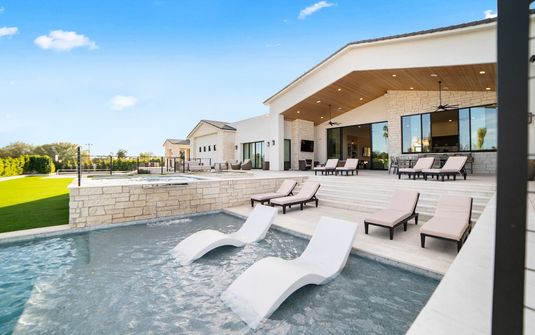
The principal terrace can offer the opposite register, opening the residence toward the broader landscape. Its comfort depends on a generous sheltered section, well-arranged furniture and clear passages between interior and exterior. A long outlook becomes more personal when the foreground has architectural definition. A substantial roof edge, a carefully positioned wall or a planted side boundary gives the household a settled place within the view. Smaller terraces beside suites can provide a quieter alternative, allowing guests to experience the setting independently without relying on the main shared level. These distinctions make the exterior a range of inhabitable rooms rather than one continuous open platform.
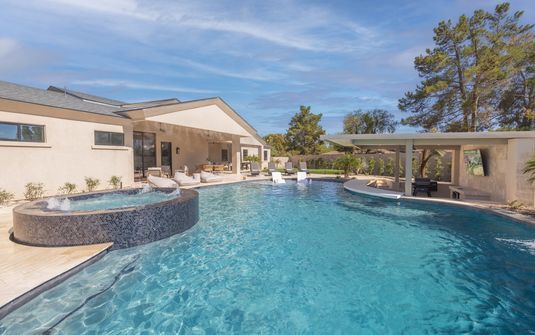
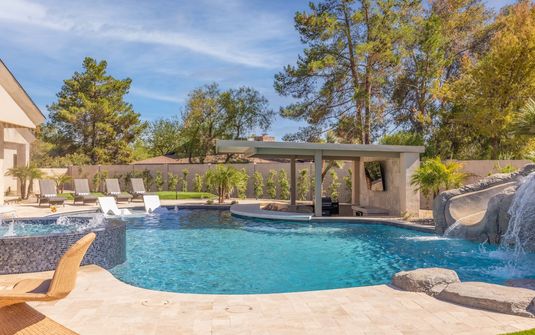
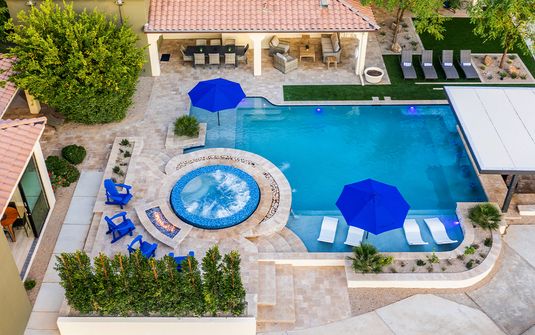
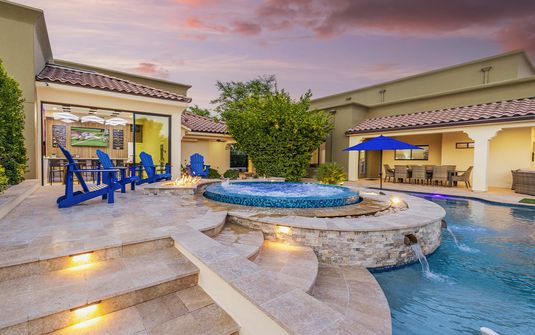
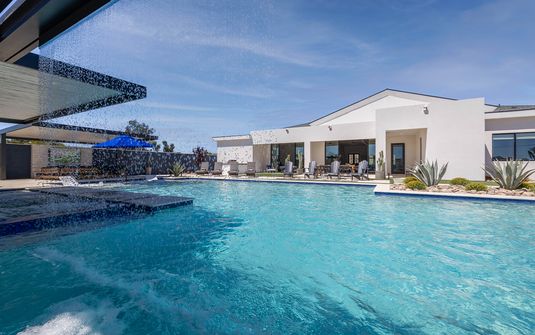
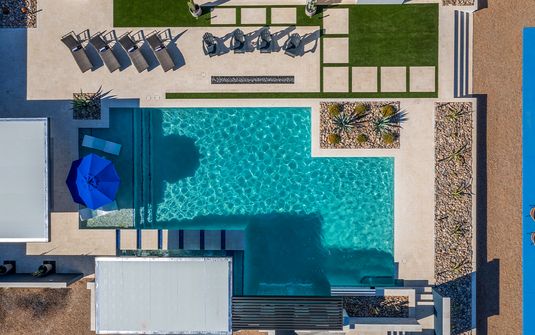
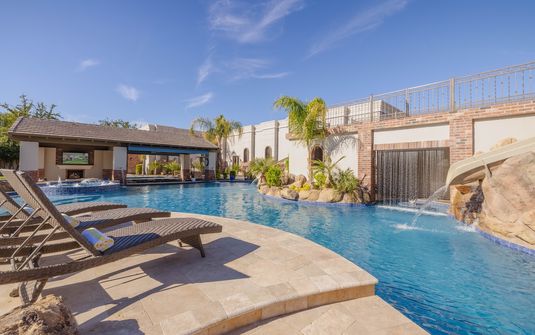
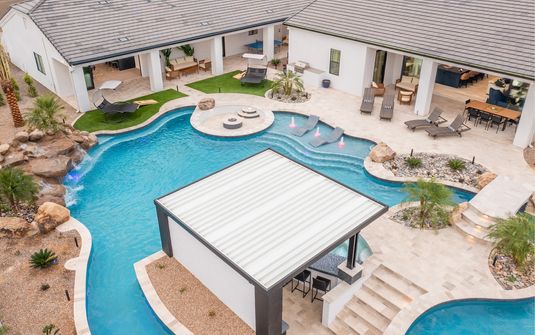
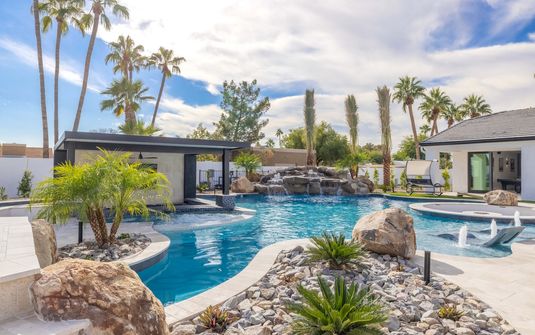
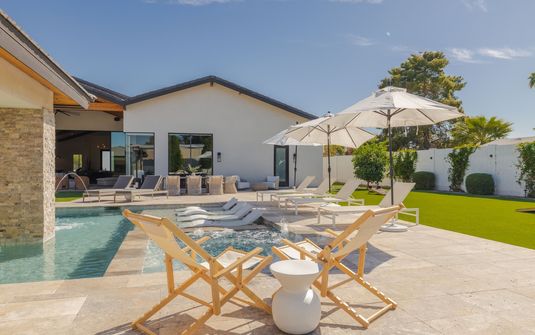
Where a pool forms part of the estate, its water can introduce a composed surface against the desert's textured ground. Simple geometry often allows the surrounding landscape to remain the stronger subject, while coherent paving and well-spaced furnishings connect the area to the house. The quality lies in the complete setting. Generous circulation and a comfortable relationship with the salon give the pool terrace everyday substance, preventing it from feeling like an isolated feature placed in front of a view. A thoughtfully integrated exterior supports the household as naturally as the interior rooms, with privacy and material continuity considered throughout the composition.
Interiors with Warmth and Architectural Clarity
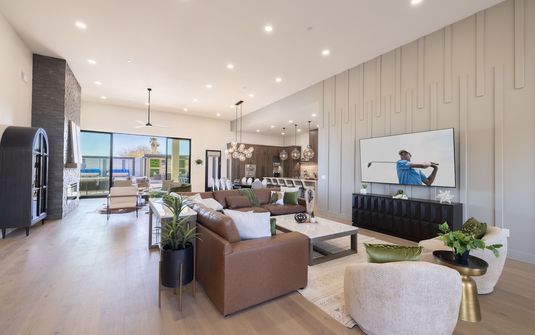
The desert palette can be interpreted through quiet tonal depth rather than literal imitation. Warm stone, textured plaster and timber give rooms substance, while textiles soften the larger surfaces and selected artwork introduces individuality. A restrained arrangement allows these materials to retain their presence. The house feels collected when its furnishings respond to the proportions of each room, with enough open space for the architecture to register clearly. This gives Scottsdale interiors a lasting appeal beyond their outlook. Guests can appreciate the quality of a chair, the texture of a wall or the precision of joinery as part of a personal home, not simply as a neutral foreground to the desert.
A generous shared salon should remain comfortable when the full household is present. Furniture grouped for conversation, substantial tables and unobstructed routes to the terrace give the room a natural center. A smaller sitting area can offer another scale within the same architectural setting, allowing different preferences to coexist without making the house feel fragmented. These practical relationships are part of the residence's refinement. The room does not depend on dramatic dimensions alone to convey generosity. It feels accommodating through the ease with which guests can settle, move and be together, with the desert view enriching an interior that is complete in its own right.
Private suites can offer a quieter expression of the same material language. Generous storage, a comfortable seating corner and a well-positioned bed give each room a sense of completeness, while a selective view of planting or mountains adds a personal relationship with the site. Consistent quality across the suites is important in a shared estate. Different outlooks can provide variety without creating a sharp hierarchy of comfort. Bathrooms extend that care through clear proportions, restrained finishes and intuitive lighting, supporting the private parts of the stay as thoughtfully as the principal salon and terrace support the household's shared experience.
Privacy beyond the Size of the Grounds
A substantial desert plot can provide distance, but privacy still depends on the architecture. Bedroom orientations, the position of neighboring homes and the route between shared rooms all influence personal ease. A planted court or an offset wall can protect a suite without closing it to the landscape, while separate wings can give guests independence within the same home. The best arrangements make discretion feel natural. The household can use rooms and terraces comfortably without negotiating constantly between exposure and retreat, allowing the openness of the setting to remain a pleasure rather than a demand placed on every part of the property.
The approach to the residence can establish this private atmosphere before the main view appears. A substantial gate, a planted forecourt and a carefully proportioned entrance create a gradual transition from the surrounding landscape to the home's interior world. The sequence feels more personal when it does not reveal everything immediately. A framed glimpse of mountains or a quiet court can introduce the setting while preserving the privacy of the rooms beyond. These thresholds deserve the same care as the broadest terrace because they become part of daily life within the house, giving a generous estate a coherent rhythm and an identity that remains engaging throughout the stay.
Scottsdale within the United States
Among the private-residence settings of the United States, Scottsdale offers a particularly strong relationship between architectural form and desert landscape. Its appeal comes from the ability of a house to be generous and sheltered at once, creating a personal world without losing the breadth of the Sonoran setting. The individual residence remains decisive. Its orientation, materials and private spaces shape how the destination is experienced from within, giving the stay a specific character rather than a standardized image of desert luxury. Guests who value both design and domestic comfort can find depth in that balance, with the house itself becoming an enduring part of the sense of place.
A Private Stay Rooted in the Desert
Scottsdale is most rewarding when the residence gives its broad landscape a comfortable human scale. Mountains and sculptural vegetation provide the larger impression, while courts, terraces and carefully resolved rooms create the personal setting in which the household settles. A memorable stay depends on those elements supporting one another, with privacy and material quality extending throughout the home. LaCure's perspective centers on this complete residential experience. The lasting impression is of a house with clarity and depth, where the desert remains unmistakably present but the comfort, individuality and thoughtful proportions of the residence make it feel natural to inhabit.


