


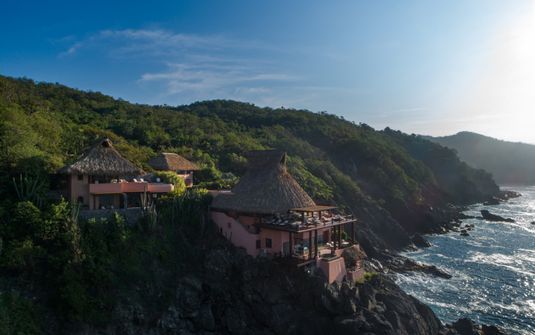



Ixtapa-Zihuatanejo brings two distinct coastal identities into one destination on the Pacific shore of Guerrero. Ixtapa has a more planned residential landscape, while Zihuatanejo gathers around a defined bay and a more layered settlement pattern. The surrounding coast adds further variations in shoreline, elevation and vegetation. A private stay can therefore feel gracious and ordered, closely connected to a harbor landscape or more withdrawn above the sea. The strongest residence makes its own setting clear, combining generous rooms and thoughtful boundaries with an outlook that belongs to a specific part of this varied coastline.
The two names should not be treated as interchangeable descriptions of the same atmosphere. A home near a broad Ixtapa frontage will have a different relationship to the land from a villa above Zihuatanejo's enclosed water. The density of neighboring buildings, the amount of garden and the direction of the main view all influence privacy and comfort. A discerning choice begins with the actual parcel, allowing the household's preferences to guide the balance between connection and retreat. The destination provides range, but the property itself determines how naturally that range can be translated into a personal residential experience.
Two coastal characters and a wider shoreline
Ixtapa's planned setting can give a residence a clear architectural context, with broader parcels and a more ordered relationship between buildings and planted ground in some areas. A private house can draw on that structure while establishing its own calm through courtyards, gardens and carefully oriented rooms. The quality lies in the exact plan rather than the destination name alone. A generous salon, quiet accommodation and several appealing exterior spaces can create a home that feels complete within the wider community, allowing guests to enjoy a composed setting without the residence becoming merely an extension of its surroundings.
Zihuatanejo's bay offers a more contained visual composition. The shore curves around the water, with surrounding hills and established buildings giving the view a clear middle distance before it opens toward the Pacific. A villa on rising ground can use this geometry to organize its rooms, placing a principal terrace along the outlook while private wings turn toward quieter aspects. A lower garden residence may feel more intimate and grounded in the coastal fabric. Both can be compelling when their boundaries and circulation are resolved well, preserving comfort at the scale of the household rather than relying solely on the drama of the bay.
Punta Ixtapa adds another residential perspective, where the exact relationship between coastal ground, open water and the property's own garden becomes central to the stay. The strongest house responds to its aspect rather than applying one standard formula to every sea-facing parcel. A broad view benefits from sheltered exterior rooms and a close foreground, while a more enclosed outlook can be made generous through careful openings and clear spatial alignments. The aim is a residence with several ways to inhabit the setting, allowing the household to choose between panoramic openness and quieter places where architecture or planting provides a stronger sense of refuge.
Different settings along the Guerrero coast
Barra de Potosi introduces the distinctive meeting of coastal water, low ground and a lagoon landscape. Its character should be understood through the property's exact position, because a house's relationship to the open sea can differ from its relationship to more enclosed water or planted terrain. A thoughtful residence makes these distinctions legible, framing a particular outlook while creating private rooms that feel sheltered and complete. The setting invites a measured architectural response, with generous shade and a calm material palette allowing the landscape to remain prominent rather than being replaced by an elaborate constructed image of tropical luxury.
La Barrita provides another point of reference within the wider destination. For a household comparing addresses along this coast, the decisive questions concern the actual home: the orientation of its principal rooms, the degree of enclosure around its terraces and the comfort of its private quarters. A destination name alone cannot establish how secluded a property will feel. Neighboring structures, shared boundaries and the amount of useful garden all matter. The strongest choice aligns those conditions with the party's preferences, giving guests a residence whose character remains comfortable and convincing throughout the stay rather than depending on one impressive first view.
Across the destination, architecture can be gracious and traditional in proportion or more contemporary in its structural clarity. Deep galleries, substantial rooflines and planted courts can suit either approach, providing shade and a gradual transition between interior and coast. On sloping ground, separate wings can follow the contour and give suites independent aspects. A broader parcel may support a more compact courtyard plan. The essential quality is coherence: walls, openings and exterior rooms should respond to the land and boundaries, making the house feel specific to its address rather than an interchangeable coastal villa.
Materials and rooms with a domestic scale
Timber brings warmth to ceilings and fine joinery, stone anchors terraces and garden walls, and plaster offers calm surfaces for art. Mineral-toned floors can connect shared rooms to sheltered exterior spaces, with subtle changes in finish marking the transition. A limited palette gives the home unity without making every room identical. Furniture and crafted objects can provide individuality, while the architecture retains enough visual space to remain legible. Quality is apparent in everyday details, from a substantial door to a neatly aligned threshold, balancing the larger appeal of the Pacific view with the tactile comfort expected of a refined private residence.
The principal salon should accommodate the household while preserving places for smaller conversations. Several seating groups can work within a generous room if circulation and important outlooks remain clear. A quieter study or garden room gives the plan another mood, particularly valuable where the main pavilion opens broadly toward the coast. These secondary spaces deserve the same attention as the largest room, with their own aspect and a complete furnishing arrangement. The residence becomes more rewarding over time when guests can find preferred corners, allowing shared life to unfold across several appealing rooms rather than concentrate continually on one panoramic terrace.
Suites can have different perspectives while remaining comparable in comfort. A sea-facing bedroom may be balanced by another opening toward a planted court or quieter part of the grounds. Generous bathrooms, useful wardrobe space and a private exterior threshold give each room completeness beyond its view. The arrangement should suit the household, with closer connections for a family or greater independence for several couples. On a multi-level property, stairs and distances deserve attention alongside the panorama. The strongest plan makes autonomy comfortable while preserving an intuitive connection between personal quarters and the shared spaces that hold the residence together.
Outdoor rooms with several degrees of enclosure
A deep gallery can be the most useful room in a coastal house. Its roof establishes definition and shade, while the open edge keeps garden and water present. The depth should allow comfortable furniture and clear passage between interior and exterior rather than reduce the space to a furnished corridor. A broader terrace can hold the principal outlook, with smaller courts or garden seats providing quieter alternatives. This sequence gives the household flexibility, allowing guests to gather or separate naturally within the property without every shared moment being directed toward the same exposed frontage.
Where a pool forms part of the residence, its placement should reinforce the larger composition. A clear alignment toward the sea can be effective, but surrounding circulation, planting and useful shaded areas need equal care. On a slope, structural elements should be absorbed into masonry and vegetation so that the building remains grounded. A lower garden property may use walls and trees to establish a close foreground before the water appears beyond. Both approaches can feel refined when the exterior provides several useful places, with architectural attention extending across the whole plan rather than concentrating on one conspicuous feature.
The garden should preserve depth around the house. Existing trees and carefully edited planting can screen boundaries, soften retaining walls and bring the larger coastal setting into a human scale. More deliberate landscape elements belong near useful exterior rooms, while outer edges can remain quieter and more continuous with the surrounding ground. Lighting should reinforce that hierarchy after dark, revealing entrances and circulation selectively rather than illuminating every tree and wall uniformly. This creates a settled atmosphere, with the architecture remaining legible while the wider landscape retains its own presence beyond the home's immediate domestic spaces.
Privacy and the practical life of the home
Discretion should be assessed through actual sightlines and boundaries. A high terrace can provide a wide panorama while remaining visible from adjoining ground, and a lower garden house may feel exceptionally enclosed through careful orientation. Upper windows, neighboring balconies and shared access all influence the experience. Architecture can protect important spaces through solid side walls, recessed exterior rooms and the placement of private wings. Planting then reinforces a plan that already provides privacy. Guests can inhabit the residence naturally, with the degree of retreat arising from the property itself rather than a broad description of an elevated or exclusive coastal address.
Domestic organization sustains that ease. Laundry, storage, staff work areas and secondary access should occupy logical positions away from private quarters and the principal guest sequence. A house spread across several levels needs clear connections so that practical movement does not dominate the central salon or terrace. In a more compact residence, careful separation prevents every route from crossing the same shared room. These details shape comfort over time even when they remain unseen. The strongest homes feel relaxed because their everyday operation has been anticipated, allowing the household to appreciate the architecture and setting without avoidable interruptions.
A varied Pacific destination in Mexico
Within Mexico, Ixtapa-Zihuatanejo offers a particularly useful range of residential atmospheres, from planned coastal settings to an enclosed bay and quieter stretches of shoreline. A private home can make one of those landscapes intimate without claiming to represent them all. The experience is strongest when the architecture acknowledges its precise location through proportion, materials and a clear response to the land. Generous rooms and thoughtful boundaries provide comfort, while the setting supplies identity at a larger scale. This gives the stay substance beyond a collection of features, allowing the residence to feel personal and connected to its particular address.
A private home with a clear Pacific perspective
The lasting appeal of an Ixtapa-Zihuatanejo residence lies in the coherence of its rooms, grounds and outlooks. A central pavilion, a quiet suite and a shaded garden threshold should feel like parts of one considered home, each offering a different degree of openness and retreat. LaCure looks at those qualities alongside the household's needs, seeking comfort that extends beyond the most dramatic view. The ideal stay feels generous and discreet, with architecture that brings the bay, planted ground or wider Pacific horizon into daily life. Its refinement comes from measured details and a precise relationship to the actual coastal setting.


