




Catalonia: Private Houses With Stone, Woodland, and Mediterranean Depth
Catalonia offers a broad residential landscape in northeastern Spain, extending from a deeply articulated Mediterranean coast to rural interiors and mountain terrain. That variety gives a private stay several possible identities. A stone country house can feel closely enclosed by its gardens and neighboring fields, while a coastal villa may direct its principal rooms toward a more open prospect. The most convincing residences preserve the character of their particular setting, allowing materials, proportions, and the immediate landscape to establish an atmosphere that feels specific to the address rather than simply regional in name.
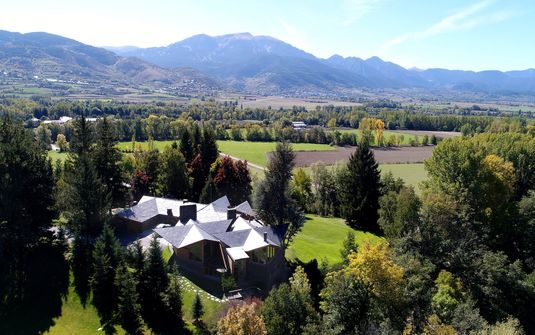
The coast is only one part of that composition. Inland, villages, cultivated ground, and wooded slopes create a more layered relationship between buildings and land. A house can sit within a compact settlement, belong to a larger rural estate, or occupy a more independent plot at the edge of established development. These differences influence the experience of privacy as well as the view. The surrounding landscape may feel broad, yet the most intimate spaces are often those where the architecture establishes a clear threshold around a court, a terrace, or a quiet part of the garden.
The Country House as a Residential Center
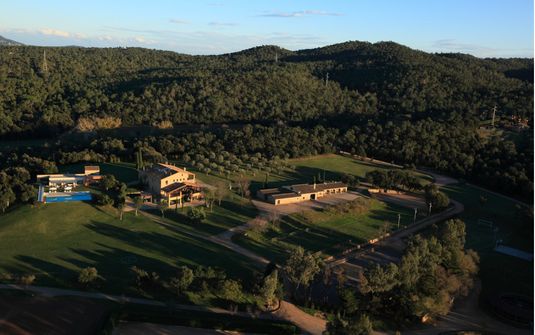
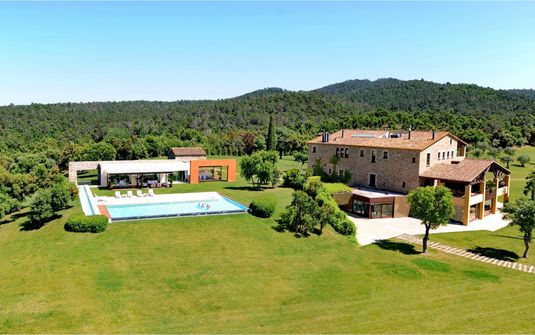
The Catalan masia provides a recognizable model of a substantial rural home, with masonry walls, tiled roofs, and a strong relationship to the working landscape around it. Its appeal lies in the coherence of the building as a whole. A broad façade, a measured rhythm of openings, and a clearly defined entrance can give the house considerable presence without elaborate ornament. When adapted thoughtfully as a private residence, such a property retains the weight of its original structure while introducing the comfort and clarity required for a household occupying it together.
Stone With Texture and Scale
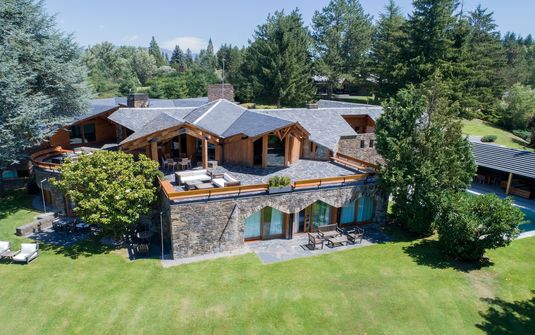
Stone architecture gains much of its character from the relationship between solid wall and opening. A deep doorway or a window set within substantial masonry gives a room a different atmosphere from a continuous glazed frontage. The view becomes framed, with the building remaining visibly present around it. Contemporary interiors can work particularly well in this context when they leave those proportions legible. The resulting house feels materially rich without needing every surface to be decorative, allowing the original architecture to provide depth while furnishings establish a more personal domestic scale.
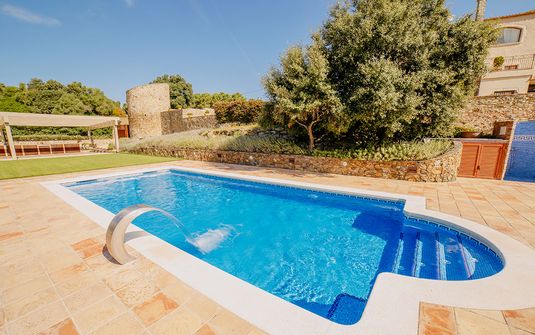
The spaces around a rural house often extend its architectural logic. A courtyard may be enclosed by several buildings, while a garden terrace establishes a nearer boundary against a wider stretch of land. These areas create useful changes in atmosphere within one estate. A party can remain connected to the same residence while occupying more open or more sheltered settings according to preference. The quality comes from the way the parts relate, giving the property a clear center without requiring every room and exterior area to address the same view or share the same degree of exposure.
Coastal Houses With a Different Emphasis
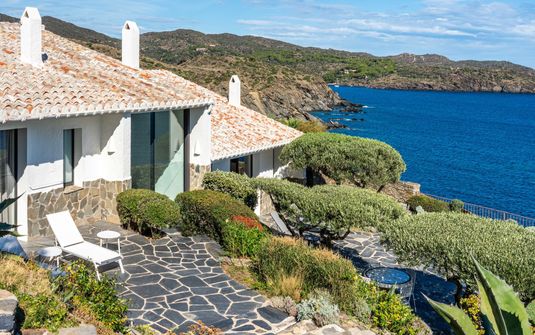
Along the coast, headlands, coves, and wooded slopes can give villas a more varied foreground than an uninterrupted shoreline. The position of a house determines whether the principal outlook is expansive or closely framed by land. A terrace above a cove has another character from one facing a more distant horizon, and a planted plot may feel intimate even where the coast is nearby. These distinctions are important to the residence's identity. The most satisfying coastal homes use their particular site to create a clear relationship between personal space and the wider Mediterranean setting.
Modern Architecture in a Wooded Setting
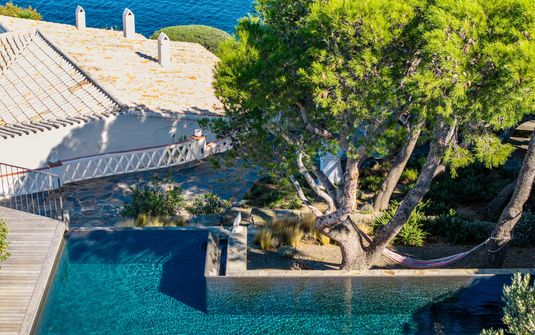
Contemporary villas can respond to coastal terrain through low volumes, larger openings, and carefully positioned exterior rooms. Where trees remain close to the building, they provide a more intimate foreground and a visual counterpoint to the broader sea view. A house benefits from that balance. The architecture can feel open without leaving every interior exposed, and a recessed terrace can establish a more protected domestic setting within an otherwise expansive plan. The strength of the design lies in how naturally it handles the ground, the planting, and the different scales of outlook available from the property.
Interior continuity is especially important in such a house. A long living space needs clearly defined places to settle, with materials and furniture providing enough warmth to balance the openness of the architecture. Timber, natural stone, textured plaster, and substantial fabrics can give a restrained scheme depth without competing with the landscape. Bedrooms should be resolved with equal care, including their relationship with exterior terraces and neighboring rooms. A residence becomes more persuasive when its private accommodation feels as complete as its most visually striking shared interior.
Gardens and Personal Territory
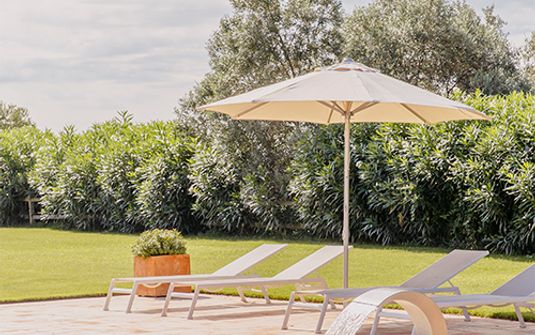
A mature garden can make a country estate or coastal villa feel settled within its surroundings. Trees establish a larger frame, lower planting defines particular exterior spaces, and a considered boundary creates privacy without necessarily closing down the outlook. The garden's role is therefore architectural as well as visual. It connects rooms with the land at a human scale, providing nearer settings that remain engaging beyond the widest panorama. A quieter planted corner can become as important to the character of a stay as the principal terrace or the most extensive view.
Space for Several Generations
Large rural houses often offer a varied arrangement of wings, floors, and ancillary buildings. That variety can give a private party useful independence when the accommodation is matched thoughtfully to the people staying together. A separate suite may provide greater withdrawal, while rooms closer to the principal living area retain a stronger connection with the household. The best plan supports both conditions, making personal territory clear without fragmenting the residence. Bathrooms, storage, and the quality of individual outlooks all contribute to a balanced home in which comfort extends across the property.
A Specific Address Within a Varied Region
Within Europe, Catalonia offers a particularly rich dialogue between historic rural architecture and contemporary coastal design. The two need not compete for a single definition of luxury. A stone estate can feel generous through material depth and a sequence of enclosed spaces; a modern villa may express its quality through clarity, proportion, and a precise relationship with the terrain. What unites the strongest residences is coherence. Their architecture, gardens, and private rooms work together, giving the household a distinct home within the broader landscape rather than an interchangeable property with a regional label.
The lasting pleasure of a Catalan residence comes from the particular way it holds its surroundings: a masonry opening framing a field, a courtyard enclosed by established buildings, or a terrace with trees between the house and the sea. These relationships reward familiarity, giving the stay substance beyond its first impression. Catalonia provides the range for guests to choose a setting that feels naturally their own, with architecture and personal space carrying the experience and the landscape remaining a visible, meaningful part of everyday life within the home.


