




Castile-La Mancha: Private Country Estates With an Expansive Outlook
Castile-La Mancha offers a substantial inland perspective on Spain, with open agricultural landscapes, wooded ground, hills, and estates whose scale can extend well beyond the immediate garden of a house. A private residence here gains its character from its relationship with the land. The setting may feel broad and visually open, while the architecture creates a more intimate center within it. For guests who value a complete country home, the appeal lies in that balance between territorial breadth and domestic warmth, with the residence providing a clearly defined place inside a much larger rural composition.
The region should not be understood through one repeated image of an empty plain. Its terrain includes valleys and elevated ground as well as more open horizons, giving individual estates markedly different outlooks. A hilltop house can take in several layers of land, while a more sheltered property may feel closely framed by trees or the contours around it. These distinctions make the precise site central to the experience of a stay. The view acquires meaning through the relationship between the house, its immediate grounds, and the landscape that continues beyond the property.
Estate Nava and the Scale of the Land
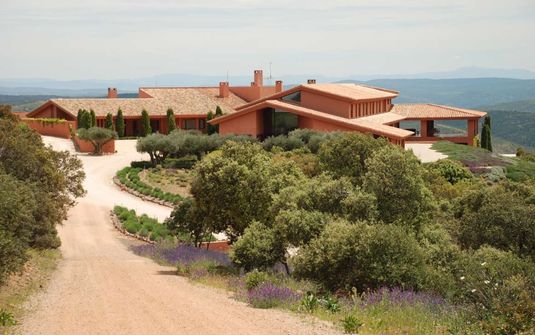
Estate Nava, represented in LaCure's collection, illustrates the region's capacity for a private setting with considerable geographical depth. The house occupies a hill within an estate extending across thousands of hectares, with lakes, valleys, mountains, and olive groves contributing to the wider landscape. Its distinction comes from this varied composition rather than from scale as an abstract claim. The elevated position allows the residence to relate to several different landforms, giving the outlook a sense of structure and placing the domestic setting within a visibly substantial stretch of countryside.
A House With a Personal Interior
The property's interiors retain the atmosphere of a private home, including a living room with family photographs. That detail matters in a substantial estate: it brings the scale back to the people occupying the rooms. A residence can offer considerable accommodation while still feeling personal if its furnishings, proportions, and smaller shared spaces have a clear domestic character. The most convincing country houses allow that intimacy to remain visible alongside their more generous dimensions, giving guests a place that feels inhabited rather than an architectural setting arranged solely for formal presentation.
Fourteen bedrooms with their own bathrooms give Estate Nava substantial accommodation, with some rooms also opening to smaller terraces. The distribution of personal space is an important part of the property's residential identity. A group can share the same house while individual guests retain a more defined retreat. The terraces add another degree of independence where present, creating a personal threshold between a bedroom and the surrounding landscape. These differences should be appreciated room by room, allowing the arrangement of accommodation to reflect the character of the household rather than relying on total capacity alone.
Several Shared Rooms Within One Residence
A library and separate television lounges give the estate more than one communal atmosphere. Distinct rooms can make a large property feel more comfortable because they allow different members of a party to settle independently without leaving the main domestic setting. A quieter interior and a more open shared room need not compete for attention. Each serves a different scale of occupation, giving the house depth through its sequence of spaces. This variety is particularly valuable during an extended stay, when the household benefits from familiar corners as well as its principal gathering place.
Architecture That Defines a Domestic Center
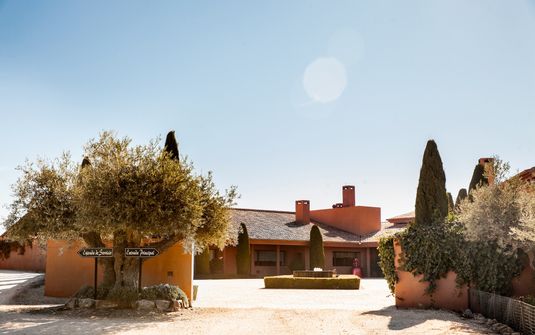
Within an expansive estate, the house needs a clear relationship with its immediate grounds. Terraces, garden edges, and the arrangement of wings can establish a more personal boundary before the view opens toward the wider land. This intermediate scale is essential. Without it, a residence may feel visually exposed despite the privacy of the estate as a whole. The strongest composition gives the household a recognizable domestic center, allowing the larger landscape to remain present while keeping rooms and exterior areas comfortable at the scale of everyday occupation.
Materials help reinforce that sense of permanence. Stone, timber, plaster, and tactile fabrics can give a country interior warmth without requiring elaborate decoration. The way a doorway is set into a wall or a room opens toward the grounds often contributes more to the atmosphere than an isolated decorative feature. In a substantial house, consistent attention to these details matters across the property. Bedrooms, secondary lounges, and quieter corridors should feel as considered as the principal salon, allowing the quality of the residence to remain apparent beyond its most immediately impressive spaces.
The Landscape as Part of the Interior
A rural view becomes particularly compelling when the architecture gives it a precise place within a room. An opening toward a valley has a different effect from a broad terrace addressing several distant ridges. One feels framed and personal; the other establishes a larger relationship with the surrounding land. Both can contribute to the same house when their roles are clear. The immediate foreground matters as well, with planting or a garden boundary providing visual depth before the eye reaches the wider countryside. This layered composition gives the residence a more settled relationship with its site.
Privacy Across a Substantial Property
The extent of an estate establishes one level of separation, but the comfort of individual guests depends on smaller boundaries within the residence. A bedroom close to a shared lounge offers a different experience from a suite set farther along a quieter wing. Personal terraces, bathroom arrangements, and the direction of windows all influence that distinction. A well-matched property allows several households to remain part of one private stay while retaining personal territory, ensuring that the generosity of the land is reflected in the way the interior supports both connection and retreat.
An Inland European Residence With Substance
Within Europe, Castile-La Mancha offers a residential setting distinguished by the scale of its countryside and the possibility of a house with a strongly independent identity. An estate can feel generous through its land, but its lasting quality comes from the relationship between that landscape and the rooms guests inhabit. The contrast between a distant view and a personal interior is particularly persuasive here. It gives a stay depth without requiring excess, allowing architecture, material warmth, and a considered domestic arrangement to establish the character of the experience.
The most memorable country residence is one whose scale remains coherent from the widest outlook to the quietest room. A library with a personal atmosphere, a bedroom terrace facing the land, and a clearly defined garden foreground can make a substantial estate feel comfortably one's own. Castile-La Mancha provides the geographical breadth for such a setting, while an individual house gives it focus. Together they offer a private stay rooted in the land, with enough architectural and domestic substance for the residence itself to become a lasting part of its appeal.


