




Puglia: Private Estates in a Landscape of Limestone and Olive Trees
Puglia offers a particularly clear relationship between architecture and land in southern Italy. Pale masonry, dry-stone boundaries and established olive groves give the region a strong material identity, while its Adriatic and Ionian coastlines introduce a separate maritime scale. A private residence can belong to either setting, but its atmosphere is most convincing when the house, immediate grounds and surrounding landscape feel part of the same composition rather than interchangeable elements of a generic Mediterranean villa.
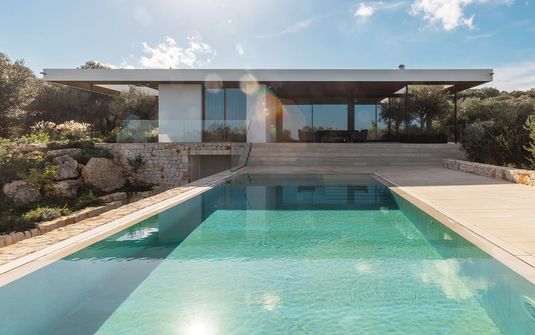
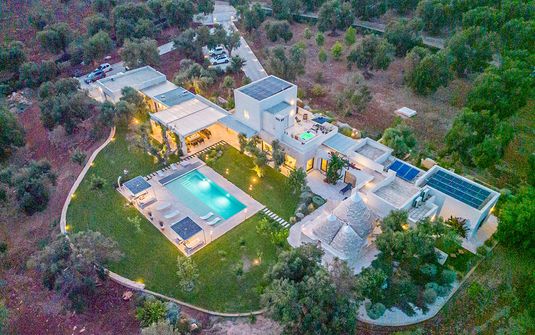
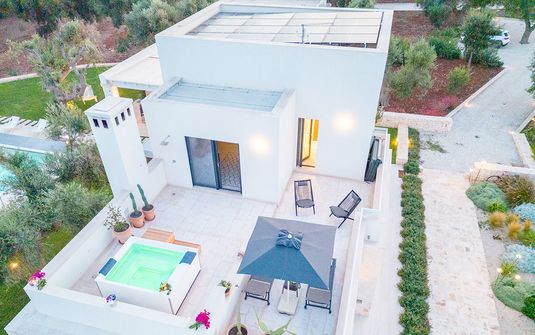
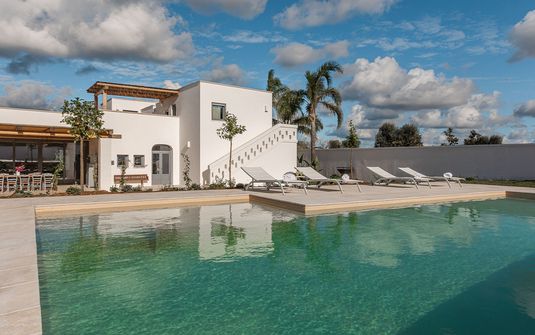
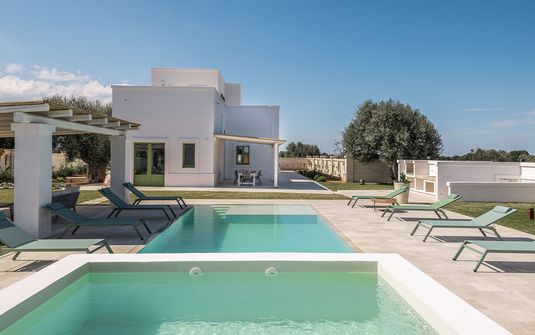
The range of residential forms is part of the region’s appeal. A restored masseria can create a substantial private domain around enclosed courts, while a more contained rural house offers another degree of intimacy. Contemporary properties may interpret the same landscape through simpler volumes and larger openings. The distinction is not between authentic and modern comfort. It is whether the residence preserves a clear sense of place while giving the household generous rooms, protected private areas and a natural relationship with the exterior.
A Landscape Defined Close to the Ground
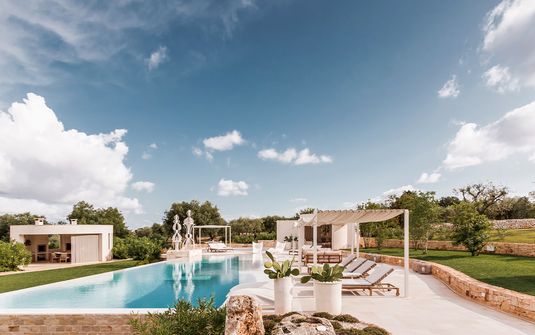
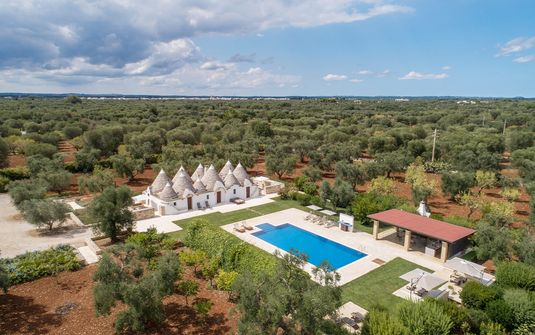
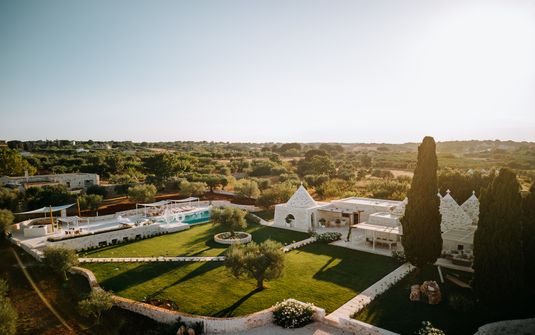
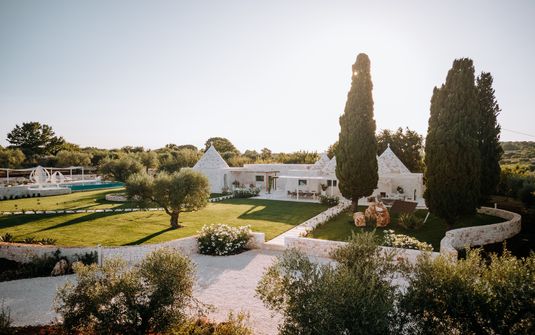
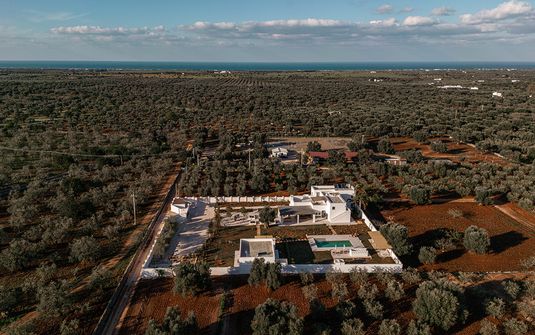
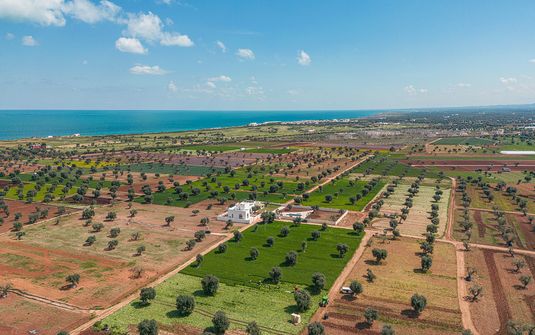
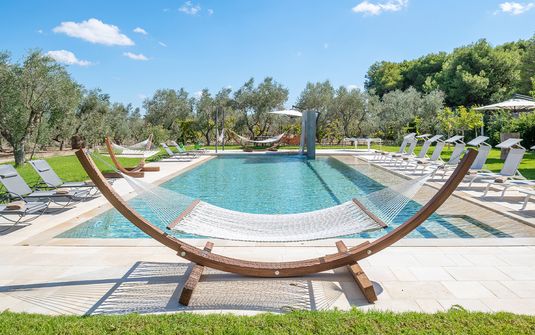
Much of Puglia’s visual character lies in its foreground: the trunks of mature trees, the texture of stone walls and the repetition of planted land. These elements can give a property considerable depth without a dramatic mountain panorama. A house surrounded by such a setting often benefits from restrained exterior design, allowing the underlying landscape to remain legible. Defined terraces and courts provide domestic order near the rooms, while a softer boundary preserves the connection with the country beyond.
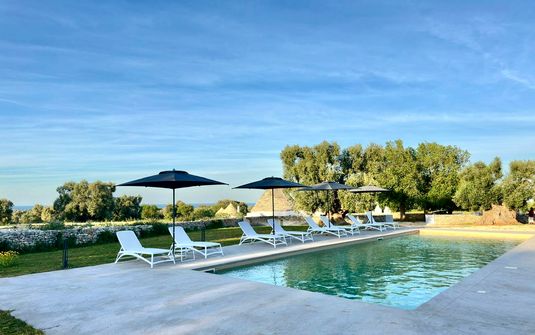
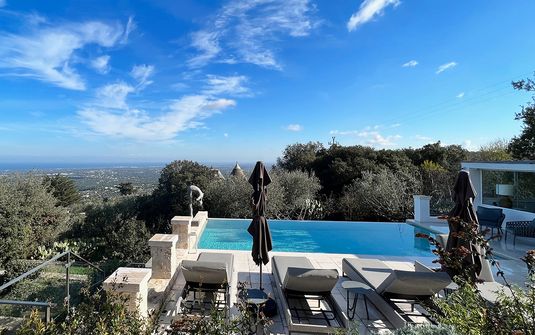
Coastal residences offer a different relationship with openness. A broad horizon can give the principal spaces an expansive atmosphere, but the immediate plot still determines privacy and architectural character. A sea-facing villa becomes more comfortable when the view is supported by planted grounds, a sheltered terrace or a well-defined exterior room. The landscape then has several scales, allowing the household to experience both the breadth of the coast and the intimacy of a complete private home.
The Masseria and the Enclosed Court
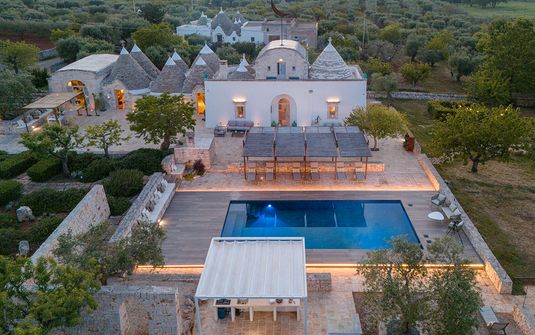
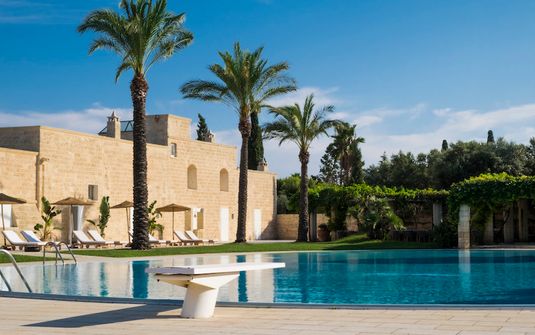
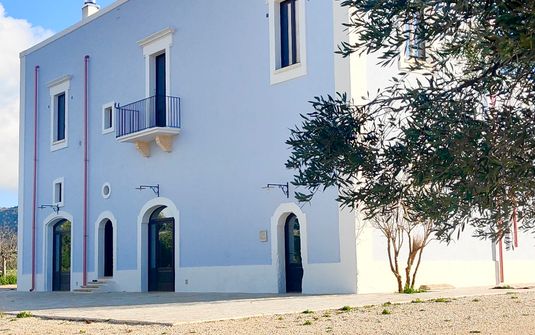
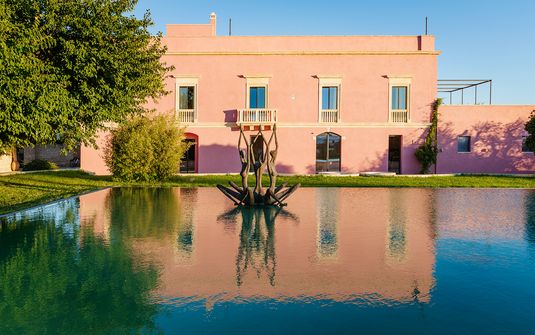
The masseria tradition provides a compelling reference for substantial rural residence. Its agricultural origins can remain visible in the relationship between the main building, ancillary volumes and the protected exterior spaces that connect them. Where a property retains this form, the court is more than an entrance feature. It gives the house an internal center and a scale distinct from the surrounding open land, allowing a larger estate to feel coherent and intimate without concealing its architectural substance.
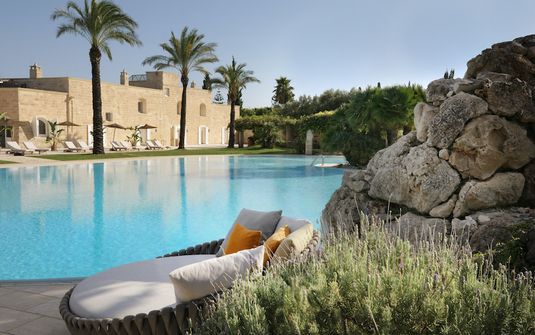
Restoration is strongest when it respects those spatial relationships. Original masonry, vaulted interiors and contained openings can give rooms character, while contemporary comfort is introduced without turning the residence into a formal historical display. A generous communal space may occupy one substantial volume, with smaller rooms offering quieter retreats elsewhere. The result is a home with architectural variety, allowing the household to inhabit several different atmospheres rather than repeating one decorative theme through every part of the building.
Stone, White Surfaces and Distinctive Building Forms
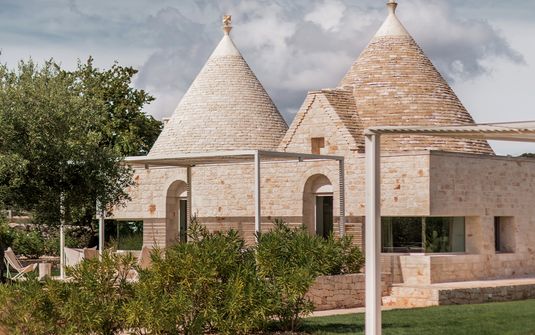
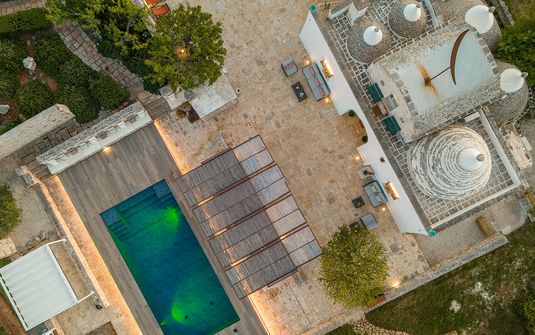
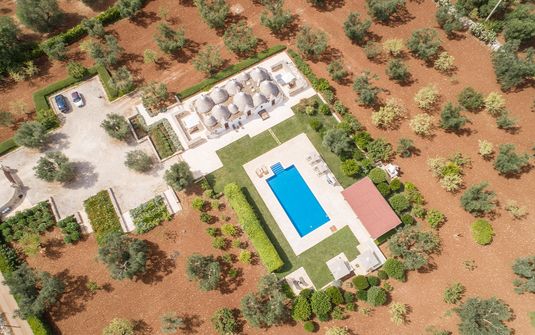
Puglia’s architectural landscape includes forms that are highly specific to the region, among them the conical-roofed trullo and the more expansive masseria. These traditions should not be treated as features of every property, but they give the wider setting a recognizable identity. A private residence can engage with that context through material quality and proportion without reproducing its most familiar silhouette. The most persuasive design belongs to its particular site and building, rather than relying on a collection of regional motifs applied as decoration.
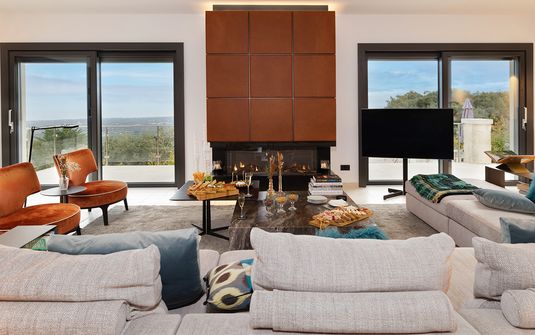
Interiors can use limestone, plaster, timber and tactile fabrics to create warmth within a restrained palette. The quality of light through a deep opening or beneath a vault can give a room enough character without elaborate ornament. Contemporary furnishings often work well when they preserve the clarity of those forms. The home feels refined through its proportions and material relationships, while remaining comfortable enough for a longer household stay rather than an environment designed mainly for an immediate visual impression.
A Private Estate with Several Domestic Scales
A substantial property can offer independence through separate wings, connected volumes or guest accommodation arranged around the grounds. The effectiveness of that plan depends on how naturally it relates to the main communal rooms. Couples or different generations may appreciate greater autonomy, while a family can prefer selected suites to remain closer together. The residence should make either pattern feel coherent, with balanced private rooms and clear circulation that supports the whole household rather than privileging one exceptional suite.
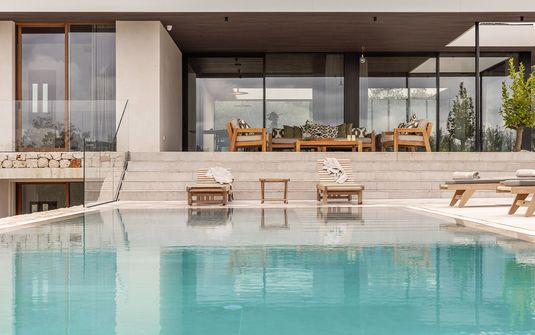
Exterior privacy is equally precise. A walled court can create considerable enclosure, while a broader garden may rely on planting and the orientation of the building to protect its most-used spaces. A generous parcel of land does not automatically give every terrace the same degree of discretion. The strongest homes provide several settings, allowing a communal exterior area to coexist with quieter courts or garden edges where individuals can withdraw without leaving the private environment of the estate.
A Southern Italian Home with Material Clarity
Puglia suits guests who appreciate a residence whose distinction comes from the substance of its setting. The texture of masonry, the geometry of a courtyard and the presence of mature trees can remain meaningful throughout the stay, giving the home a personal identity beyond its most conspicuous features. The region’s architecture provides a strong foundation for that experience, allowing a private property to feel both deeply rooted and comfortably contemporary in the way it is inhabited.
The enduring appeal is the coherence of land, building and household life. A restored estate, a quieter rural residence or a coastal villa can each offer refinement when its rooms and grounds are thoughtfully resolved. In Puglia, that balance creates an independent private stay with a clear southern Italian character, bringing generous space and discretion into a landscape whose pale stone, planted boundaries and distinctive architectural forms remain unmistakably its own.


