




Praiano: A Private Residence Along the Contours of the Coast
Praiano offers a residential setting in which houses, planted terraces and the slope of the land remain closely interwoven. Within the Amalfi Coast collection, its appeal lies in the particular relationship between a private home and the coastal terrain around it. A residence can feel outward-looking through a broad sea prospect while retaining intimate rooms and protected exterior spaces, allowing the household to remain connected to the landscape without surrendering the domestic scale of the stay.
This part of southern Italy is best understood through the precise position of the house. Changes in level, neighboring buildings and the direction of the outlook can produce markedly different experiences within the same coastal setting. A villa may emphasize the long line of the coast, a more contained view across roofs and planting, or a quieter inward relationship with its own terrace and rooms. The quality is specific to the property rather than guaranteed by the destination name alone.
A House Following the Land
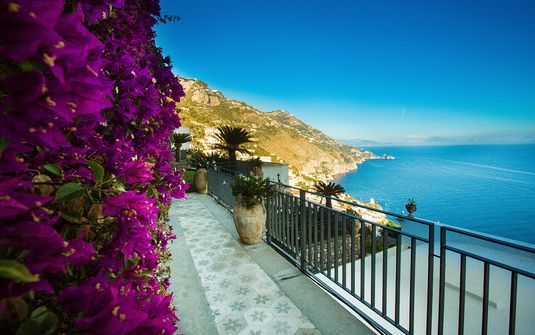
The topography can give a Praiano residence a gradual rather than immediately legible form. Rooms and exterior areas may occupy several levels, with the building adapting to the slope through connected volumes or stepped terraces. This arrangement can create useful distinctions between communal and private spaces. It is most successful when the plan remains clear, allowing the household to understand the home naturally instead of encountering a sequence whose complexity is justified only by the drama of the site.
Different levels can reveal different aspects of the setting. An upper room may offer a more expansive horizon, while a lower terrace feels closer to the texture of neighboring buildings, garden walls and planting. These perspectives can give the residence depth when each space is treated according to its own character. The house does not need to repeat the same sea-facing arrangement everywhere. A quiet interior with a more enclosed outlook can provide an equally meaningful atmosphere within the private home.
Exterior Spaces with a Defined Scale
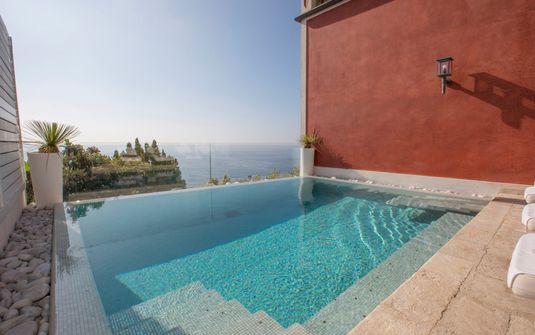
A terrace becomes more comfortable when it is conceived as part of the architecture rather than as a platform added in front of a view. Its depth, the presence of overhead structure and the protection of its boundaries determine how intimate it feels. In a steep coastal setting, those qualities are especially important. The landscape already supplies breadth, so the residence benefits from exterior rooms that bring the scale back to the household and provide a more protected foreground.
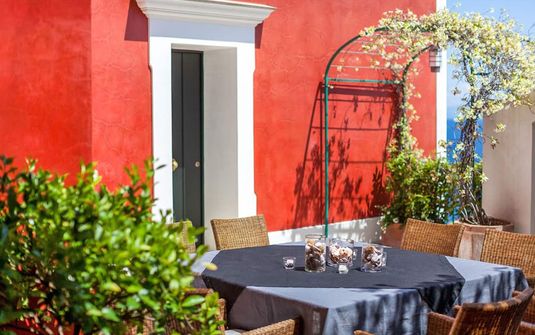
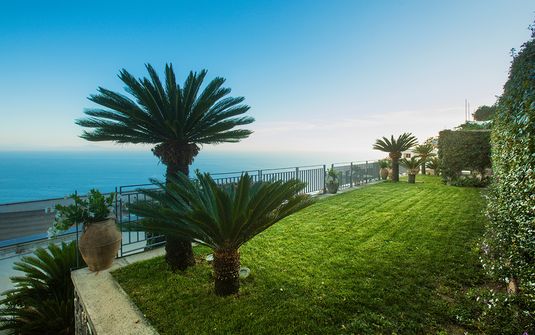
Planting can reinforce that relationship through trees, garden edges and smaller planted courts. These elements soften masonry and create differences between shared and private exterior areas. A communal terrace beside the lounge has a different role from a quieter threshold near a suite. The value lies in the choice of setting, allowing guests to remain within one coherent property while maintaining personal space. A residence feels richer when the exterior supports several domestic routines rather than one repeated panoramic experience.
Architecture with Material Depth
Traditional houses can express their character through vaulted forms, substantial walls and tiled surfaces, giving the interiors a recognizable southern Italian identity. The most persuasive restoration allows these features to remain legible without turning every room into a decorative statement. Restrained furniture, tactile fabrics and carefully placed artwork can bring warmth and clarity, allowing the architecture to provide substance while the home remains comfortable enough for sustained private occupation rather than a brief visual impression.
Contemporary interpretations may introduce broader openings and more fluid connections between rooms and terraces. They benefit from retaining a balance between open and enclosed space. A smaller sitting room, a protected court or a garden-facing suite gives the residence another atmosphere alongside its principal communal area. This variety is important over time, allowing different members of the household to occupy the home naturally without requiring every conversation or quiet moment to happen in the same large room.
Discretion Within a Connected Coastal Setting
Privacy depends on the relationship between the residence and the buildings around it. A broad sea view does not necessarily prevent a terrace from being visible from higher ground, and a detached house may still share close sightlines with neighboring properties. Thoughtful orientation, walls and the depth of exterior spaces can create meaningful protection. The relevant question is how privately the household can use its principal rooms and terraces, not simply whether the address appears elevated or set apart on a map.
The distribution of suites creates another level of independence. Bedrooms on separate floors or within different wings can provide autonomy, while a closer arrangement may better suit a family. The quality of the private accommodation should remain balanced throughout the home, with clear circulation and appropriate separation from communal areas. A distinguished residence feels generous when every guest has a comfortable place of their own, rather than when one exceptional suite accounts for most of the property’s residential appeal.
A Coastal Home with an Individual Rhythm
Praiano is particularly compelling when the chosen house allows the details of the setting to become familiar. The texture of an old wall, the view through a carefully placed opening and the enclosure of a planted terrace can give the stay a personal identity. These qualities make the residence more than a vantage point. It becomes a complete private environment in which the household can settle, with the wider coastal landscape remaining present but not dominating every aspect of domestic life.
The lasting value lies in the coherence of the whole property. Rooms, terraces and suite areas should work with the terrain and with one another, providing both connection and independence for the group. A residence that resolves those relationships thoughtfully can offer a refined southern Italian stay with depth and discretion. In Praiano, that experience is grounded in the close meeting of architecture, planted slopes and sea, giving the household an address that feels distinctly its own.


