




Santorini: Private Residences in a Volcanic Architectural Landscape
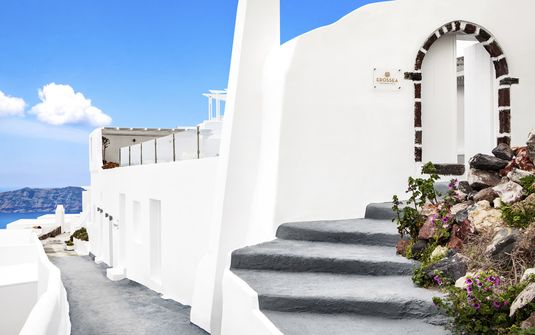
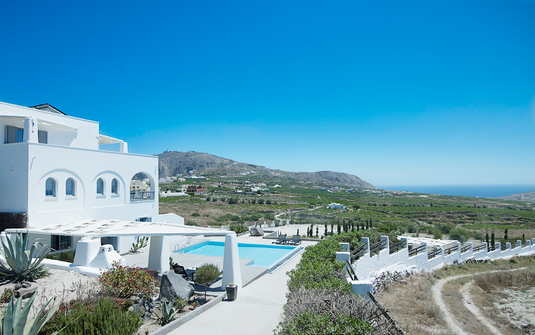
Santorini offers one of the most distinctive relationships between architecture and terrain in Greece. Whitewashed forms, vaulted interiors and buildings gathered along pronounced changes in level create a setting in which the land is inseparable from the house. The island’s volcanic character gives the landscape considerable visual force, while a private residence can introduce a more intimate scale through contained rooms, protected courts and carefully framed views.
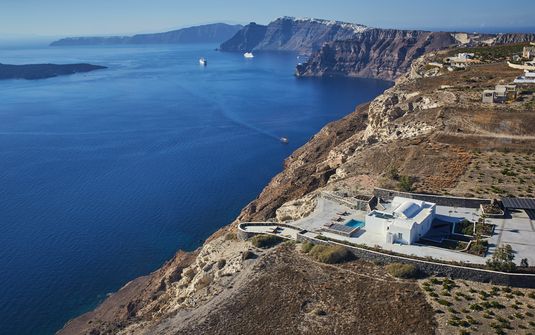
Not every address has the same relationship with the caldera, the open sea or the surrounding settlement. Some residences are defined by an expansive cliffside outlook, while others derive their character from a quieter village setting or a more independent plot. These distinctions matter because Santorini’s privacy and domestic atmosphere are highly site-specific. The strongest choice is a home whose actual arrangement supports the household, rather than one selected solely through a generalized image of the island’s most familiar panorama.
Architecture Shaped by the Ground
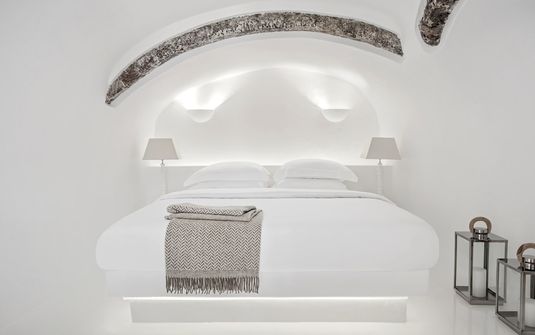
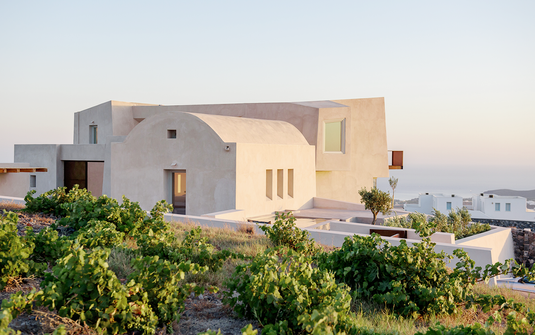
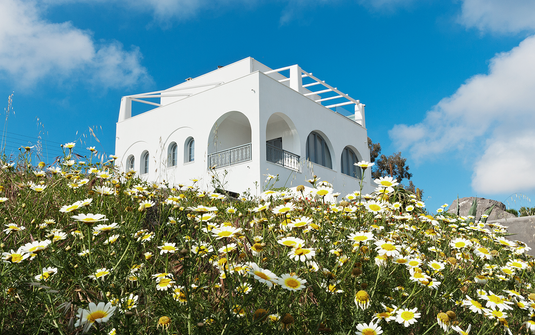
Traditional forms can express the topography through curved ceilings, substantial walls and rooms whose proportions follow the depth of the site. Where a residence incorporates cave-like or vaulted spaces, the interior may possess a sense of enclosure quite different from a conventional coastal villa. That character is most persuasive when it remains comfortable and legible. Carefully introduced furnishings and discreet contemporary details allow the architecture to retain its individuality without requiring the household to inhabit a purely picturesque historical shell.
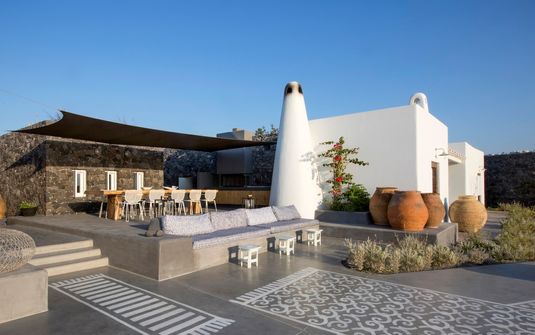
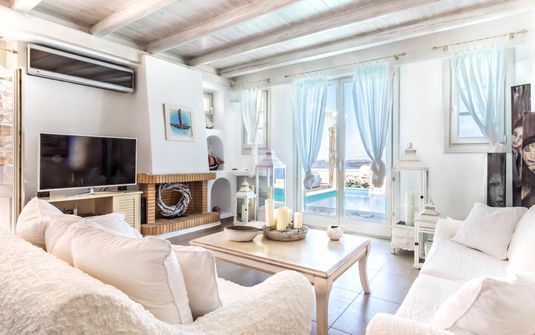
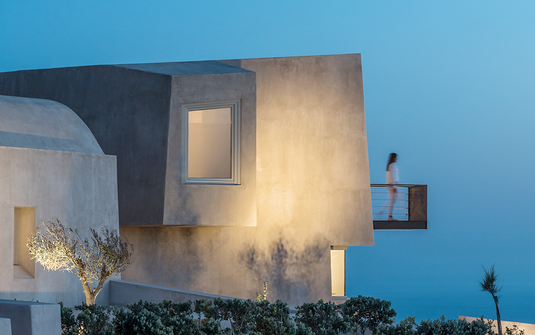
Other homes offer a more outward-looking interpretation through separate volumes, terraces and broader openings. The contrast between these forms is part of the island’s residential richness. A contained room can feel deeply private, while a more open reception space establishes a direct relationship with the wider landscape. A well-composed residence allows both experiences to coexist, giving the household several atmospheres within the same home rather than repeating one exposed sea-facing arrangement throughout every part of the property.
The Terrace and the View
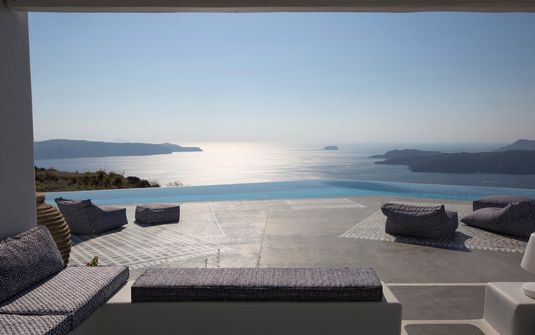
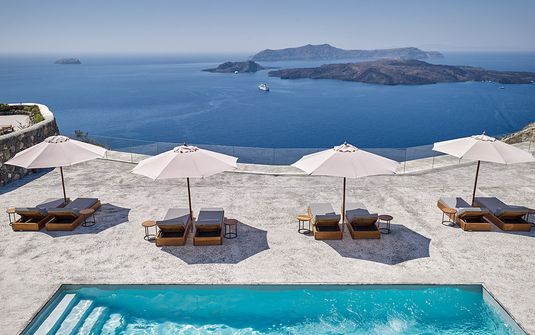
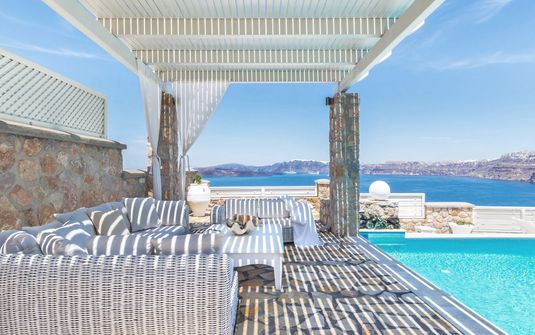
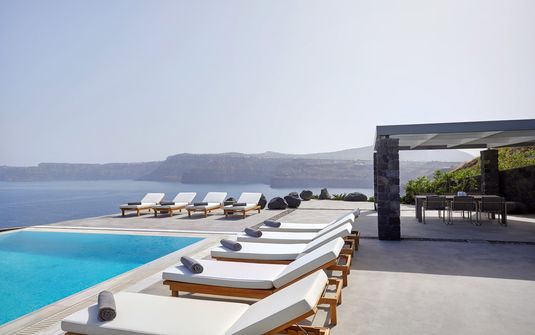
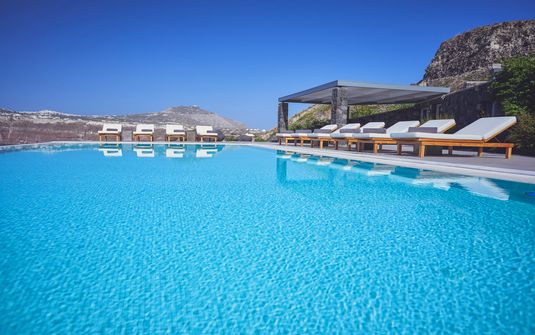
A terrace on Santorini should be understood as a specific architectural space, not simply as an extension of the panorama. Its depth, boundaries and relationship with neighboring buildings determine how comfortably it can be occupied. A contained exterior area can offer greater intimacy than a larger platform with more exposed sightlines. The strongest arrangement gives the household a protected foreground, allowing the volcanic landscape and sea to remain present without overwhelming the domestic scale of the residence.
The outlook itself can have several layers. A caldera-facing setting may include the curve of the land and the built fabric along its edge, while another coastal position offers a different relationship with the horizon. A village address can bring the focus closer through rooflines, walls and the texture of neighboring buildings. None should be treated as a lesser version of one standard view. Each offers a distinct experience when the house gives it an appropriate architectural frame.
A Restrained Interior Within a Strong Landscape
Santorini’s visual identity is powerful enough that an interior often benefits from restraint. Pale surfaces, tactile fabrics and carefully considered furniture can bring warmth without competing with the underlying forms. A vaulted ceiling or deep opening already supplies considerable character. The rooms feel more personal when their decoration responds to those qualities rather than relying on a repeated theme, allowing the architecture to remain legible while providing the comfort expected of a distinguished private home.
The progression between rooms is equally important. Changes in level and the depth of the plan can create a sense of discovery, but circulation should remain clear and practical for the household. A principal living area may open towards the exterior, while a quieter sitting space provides a more enclosed retreat. These differences give the residence depth over time, making a sustained stay more comfortable than an arrangement organized entirely around the visual impact of its largest terrace or most prominent suite.
Privacy in a Closely Composed Setting
The island’s compact building patterns make privacy a precise architectural question. A residence can possess an exceptional view while still sharing sightlines with adjacent terraces, paths or upper rooms. Walls, changes in level and carefully oriented openings can create meaningful protection, but they should be assessed from the spaces used by the household. A private stay feels genuinely discreet when its principal rooms and exterior areas provide enclosure in practice, rather than relying on the reputation of the address alone.
Suite distribution also shapes the experience. Bedrooms within one connected plan create a different household pattern from separate rooms or volumes with independent exterior thresholds. The appropriate balance depends on the guests, but the private accommodation should feel considered throughout. A residence becomes more generous when secondary suites have their own comfortable identity and appropriate separation, allowing a group to remain together without requiring every member to share the same view, circulation route or daily rhythm.
An Island Home with a Particular Identity
Santorini suits travelers who appreciate the expressive relationship between built form and landscape. Its architecture can provide intimacy as convincingly as its outlooks provide breadth, creating a private environment with a strong sense of place. The most memorable details may be the curve of a ceiling, the depth of a doorway or the quiet of a protected court. These qualities allow the residence to become a personal center rather than merely a platform directed towards an iconic scene.
A thoughtfully resolved home brings those different scales into balance. The volcanic setting supplies drama, while rooms, materials and carefully defined exterior spaces give the household comfort and independence. Whether the address is cliffside, coastal or village-led, the quality of the stay lies in the coherence of the property itself. Santorini then offers a refined residential experience whose distinction is grounded in architecture, privacy and the unmistakable character of the island’s terrain.


