





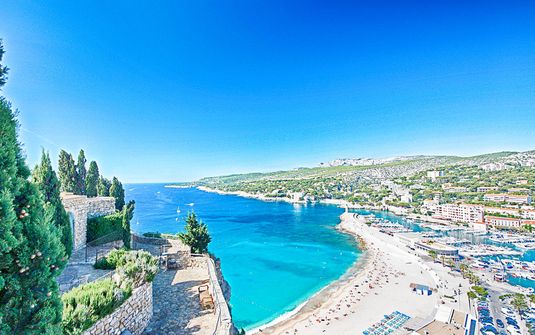
The West Mediterranean Coast: Private Villas in a Provençal Coastal Landscape
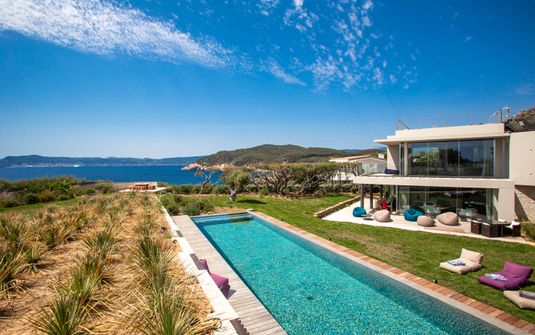
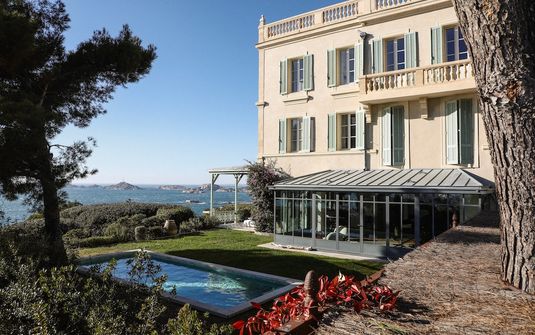
The West Mediterranean Coast collection brings together a coastal expression of southern France in which limestone contours, sheltered bays and established settlements give private residences a strong sense of context. The landscape is not one continuous seafront. It is a sequence of headlands, planted slopes and more enclosed coastal settings, allowing a villa to occupy a precise position within the land rather than simply face an undifferentiated horizon.
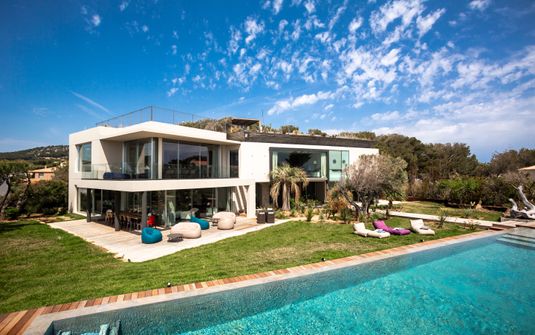
A private stay here can combine the openness of the Mediterranean with the more intimate scale of a garden, courtyard or protected terrace. The architecture may draw on a Provençal vocabulary of tiled roofs and masonry or interpret the site through a more contemporary plan. In either case, the quality of the experience depends on how the house negotiates its surroundings. A residence should provide a comfortable domestic center while allowing the particular character of the coast to remain visible.
A Coastline with Several Residential Scales
Some settings feel closely related to an established coastal town, with neighboring façades, rooflines and port architecture contributing to the outlook. Others are more garden-led, using planting and the contours of the land to create greater separation. These conditions produce different kinds of privacy rather than a simple distinction between desirable and less desirable addresses. A house can feel exceptionally personal within a settled environment when its principal rooms and exterior spaces are thoughtfully oriented.
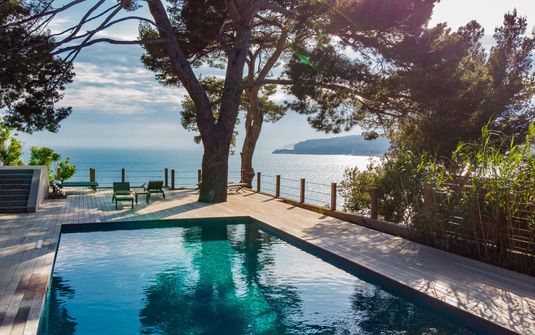
The terrain can give even a contained property considerable visual depth. A terrace may look across a bay, while an upper room reveals the relationship between the water and a limestone headland. Closer to the house, trees and stone boundaries establish a more intimate foreground. This layered composition is often more persuasive than an entirely exposed panoramic position, because it allows the household to experience the landscape without losing the protective scale of a private residence.
Stone, Planting and the Mediterranean Edge
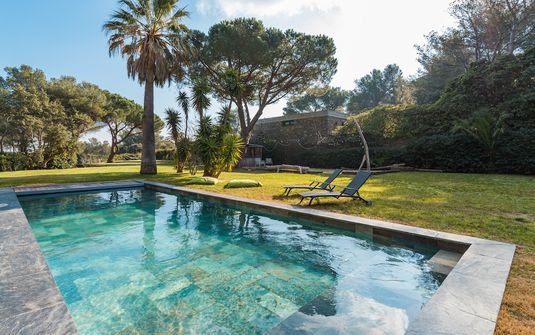
The regional material palette can create a natural continuity between building and site. Pale masonry, rendered surfaces and restrained roof forms sit convincingly against rock, pines and lower vegetation. A garden need not be elaborate to feel distinguished when its structure responds to the land. Defined terraces and planted boundaries can provide order near the rooms, while a softer exterior edge preserves the connection with the broader coastal setting rather than replacing it with an unrelated ornamental scene.
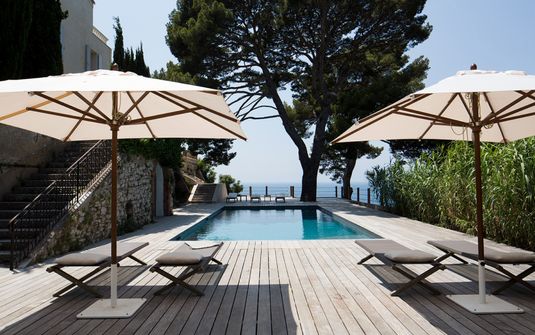
A protected exterior room is particularly valuable where the outlook is broad. A deep terrace, a pergola or a court enclosed by the building gives the horizon a domestic frame, allowing the sea to remain present without making the household feel continually exposed. These spaces also introduce variety. A communal area beside the principal lounge can coexist with quieter exterior corners, giving the residence a richer rhythm than a single continuous platform directed towards the same view.
Architecture That Connects Interior and Coast
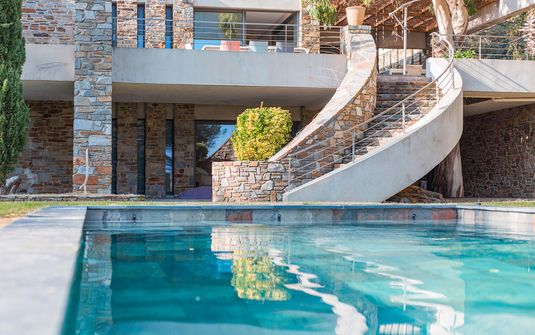
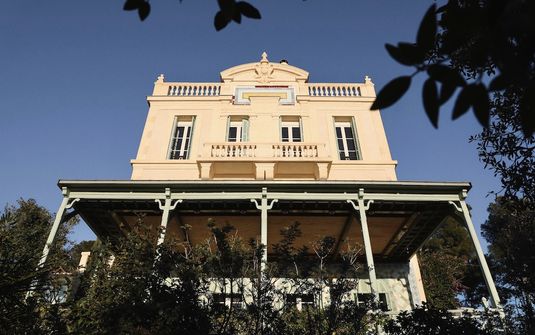
Traditional coastal houses may retain a sequence of more contained rooms, with shutters and substantial walls creating a sense of shelter. Their character is strongest when restoration preserves the depth and proportions of the original building while introducing present-day comfort discreetly. Contemporary villas offer another approach, using larger openings and connected volumes to establish a more fluid relationship with the grounds. Both can feel appropriate when their form responds to the plot and the scale of neighboring properties.
The interior should have enough identity to stand alongside the landscape. Tactile materials, considered furnishings and a clear distinction between communal and private spaces give the home substance beyond its outlook. A generous lounge can provide the main point of connection, while a smaller room or quieter sitting area offers another atmosphere. This variety is important during an extended stay, allowing the household to inhabit the residence naturally rather than relying entirely on its most visually impressive space.
A Private Plan for a Shared Stay
Suite distribution affects the experience as much as architectural style. Bedrooms within one main building create a closer household arrangement, while separate wings or guest accommodation can provide greater autonomy. The most suitable plan depends on the group, but each arrangement should offer clear circulation and a balanced quality of private rooms. A villa feels genuinely generous when the comfort of the secondary suites is considered with the same care as the principal reception areas.
Discretion also depends on the relationship between the house and its boundaries. Neighboring windows, upper terraces and access routes can influence how freely the exterior is occupied. Mature planting and changes in level may offer protection, but their effect should be understood from the rooms and spaces actually used by the household. A residence provides meaningful privacy when its architecture and landscape work together, creating protected settings rather than merely suggesting seclusion through a coastal address or a large plot.
An Independent Home on the French Mediterranean
The collection is especially appealing to guests who want a private residence with a clear relationship to the coastal landscape. Its character can be found in the contrast between a sheltered room and an open bay, or between the texture of a stone wall and the broader line of the sea. A home that brings those elements into balance offers a more substantial experience than one dependent solely on a prominent location or an extensive list of features.
The lasting value of a stay is the coherence of the residence itself. Architecture, grounds and outlook should support one another, giving the household space to remain connected while preserving individual privacy. Along the West Mediterranean Coast, that balance creates a refined southern French setting with depth and independence. The sea remains an essential presence, but the private home gives it a personal scale, turning a broad coastal landscape into a comfortable and distinctly residential experience.


