




Aix-en-Provence: The Measured Elegance of a Private Bastide
Aix-en-Provence gives a private country stay a particular architectural register. The setting is associated with ordered façades, generous proportions and a cultivated relationship between house and garden, offering a more measured expression of Provence than the region’s rougher stone farmhouses or more emphatic ridge landscapes. A residence here can feel formal in its composition yet relaxed in the way its rooms and grounds support everyday domestic life.
Within southern France, this balance is especially appealing to guests who value a house with a clear sense of order. The atmosphere may be established by a symmetrical façade, a planted approach or a garden whose main axis continues the line of the principal rooms. These are not merely decorative effects. They give the property a legible structure, allowing the household to understand the residence intuitively and inhabit it with a sense of ease that can be more persuasive than conspicuous grandeur.
The Country House as a Composed Whole
The bastide tradition provides an important reference for the residential character of the area. A substantial main volume, carefully spaced openings and a more deliberate distinction between floors can give the building a quiet authority. The house is often experienced as a complete composition rather than as a picturesque accumulation of additions. Its appeal lies in proportion and continuity, with the garden and entrance sequence reinforcing the architecture instead of acting as unrelated exterior features.
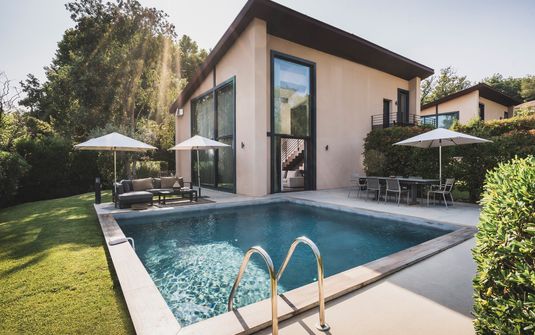
Other private houses offer a more informal interpretation of the same landscape. Stone walls, tiled roofs and a gradual arrangement of rooms can create intimacy without the symmetry of a formal country residence. Contemporary properties may introduce broader openings and more fluid communal areas. These differences give the collection range, but the most convincing homes retain a relationship with their immediate setting, allowing the building to feel rooted in its grounds rather than placed upon them as an isolated object.
The Approach and the First Private Threshold
An avenue of trees, a contained entrance court or a planted forecourt can establish the scale of the property before the main rooms are reached. The progression gives a sense of arrival without requiring the façade to reveal every aspect of the house at once. This is particularly effective in a substantial residence, where a clear distinction between approach, reception spaces and private suites allows the architecture to feel generous while preserving the household’s more intimate areas.
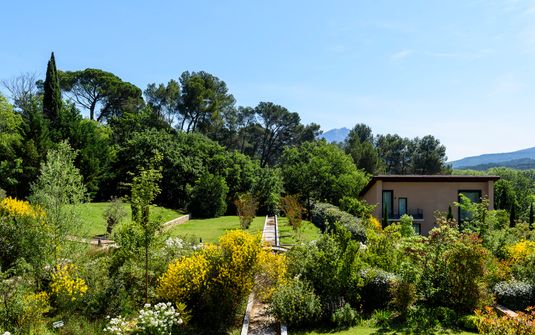
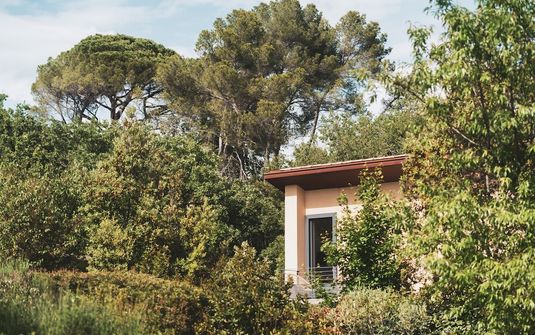
The surrounding land determines how far that sense of enclosure continues. A property may open towards cultivated fields or remain more fully within mature gardens. Both can provide a compelling setting when the principal rooms have an appropriate relationship with the view. A long outlook benefits from a carefully resolved foreground, while an enclosed garden gains depth through changes in planting and level. The house becomes more comfortable when it offers several scales of space rather than one continuous exterior scene.
Interiors with Proportion and Restraint
A well-restored country house can retain high ceilings, deep openings and original structural detail while accommodating a more contemporary domestic rhythm. The interior need not imitate a historical period to respect the building. Carefully chosen furnishings, natural fabrics and a restrained palette can reveal the proportions more clearly than a heavily themed decorative scheme. The quality lies in the precision of the rooms and their relationship with one another, not simply in the quantity of decorative objects they contain.
A principal salon may provide an elegant communal center, but the quieter rooms often determine how well the residence supports a longer stay. A study, a smaller sitting room or a space facing a protected garden introduces variety and personal scale. These distinctions allow members of the household to maintain different routines while remaining within a coherent home. The residence feels lived in and complete, rather than organized solely around the visual impact of its largest reception area.
A Garden with Several Residential Roles
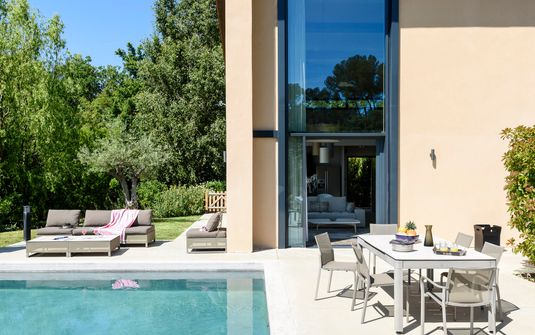
Formal planting close to the house can establish architectural clarity, while lawns and mature trees create a softer setting beyond it. A sheltered terrace may connect directly with the principal rooms, and a more contained court can offer another degree of intimacy. Such a garden is valuable because it gives the household alternatives. It can accommodate shared time and quieter withdrawal without requiring every exterior space to have the same scale, outlook or relationship with the main façade.
The arrangement of private suites should offer comparable thoughtfulness. Bedrooms within the main house create a different sense of connection from an independent wing or separate guest accommodation. The most suitable arrangement depends on the group, but the quality of the private areas should remain balanced throughout. A residence feels genuinely generous when its secondary rooms, circulation and protected exterior corners support the whole household, not only the occupants of the most prominent suite.
A Refined Provençal Address
The Aix-en-Provence setting is particularly suited to guests who appreciate architectural composure and a country house with an established domestic identity. Privacy can be expressed through the sequence of rooms and grounds rather than through remoteness alone. A well-positioned house, mature planting and clear separation between communal and private areas can create a setting that feels personal and protected while remaining connected to the wider landscape around it.
The lasting impression is one of proportion: the scale of a façade against its garden, the height of a room and the relationship between a formal entrance and a quieter interior retreat. These details give a private stay its substance. In the Aix-en-Provence collection, a residence that brings them into balance can offer a distinctive southern French experience, combining architectural depth, generous comfort and an unforced sense of domestic elegance.


