




Occitanie: Private Estates Across a Varied Southern Landscape
Occitanie offers a broad and richly varied setting for a private country residence in southern France. Stone villages, cultivated plains, wooded uplands and a Mediterranean edge give the region several distinct architectural and landscape identities. Its appeal lies in that range rather than in a single defining panorama. A house can belong to an open agricultural setting, a more enclosed valley or a coastal environment, with each producing a different atmosphere of privacy and domestic life.
The scale of the region makes precision important. A historic estate with mature grounds provides a different experience from a village house whose character is concentrated behind a stone façade. Contemporary villas introduce another interpretation through clearer volumes and more direct connections with the exterior. The most persuasive residence is one that responds to its particular location, allowing the materials, outlooks and arrangement of the property to convey a recognizable sense of place within the wider southern landscape.
Southern Character Without a Uniform Backdrop
In more open country, fields and cultivated slopes give the outlook long horizontal lines. A residence can become the center of a substantial landscape, with the approach, outbuildings and gardens forming part of the same composition. Elsewhere, wooded contours and more compact settlements create a stronger sense of enclosure. These distinctions affect how the house is experienced from within: whether rooms look outward across a broad prospect or towards a sequence of closer, more intimate views.
The region’s village architecture introduces another scale. Narrower building patterns, substantial masonry and shared rooflines can give a house a strong external context while leaving its private life largely hidden behind the façade. A courtyard or rear garden then becomes especially valuable, establishing an exterior setting that belongs to the household. The contrast between the compact public face and a more expansive private interior can be one of the most distinctive qualities of a well-restored village residence.
The Ground Around the House
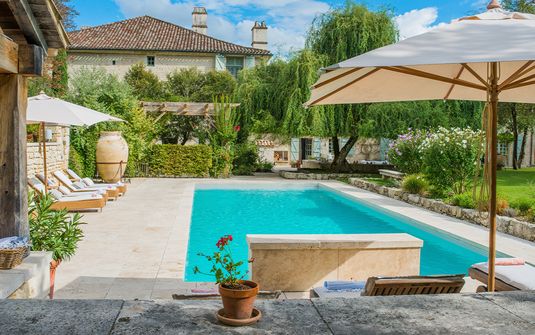
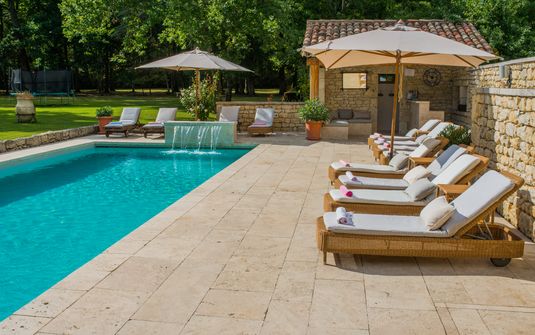
A country property gains depth through the different ways its grounds are organized. An entrance court may establish a formal relationship with the main building, while lawns, planted terraces and more natural boundaries offer a quieter progression beyond it. Mature trees bring shade, height and a sense of continuity to the composition. These elements make the exterior feel like part of the residence, rather than simply an area surrounding a house whose principal attraction lies entirely indoors.
Where the landscape is more open, architectural enclosure becomes particularly important. A walled garden, a protected terrace or a courtyard framed by ancillary buildings can provide intimacy within a broad rural setting. This balance allows the household to remain connected to the surrounding land without feeling exposed to it. The most comfortable estate is not necessarily the one with the largest uninterrupted outlook, but one that gives different rooms and exterior spaces appropriately varied degrees of openness.
Masonry, Texture and the Architecture of a Private Estate
Occitanie’s residences can express considerable material diversity. Stone walls, rendered façades, tiled roofs and local brick traditions appear in different parts of the region, giving buildings an identity closely tied to their immediate context. Historic properties may retain thick walls, exposed structural elements and a gradual sequence of rooms. Contemporary restoration works best when it preserves those distinctions while introducing comfort discreetly, allowing the house to remain legible as an individual building rather than as a generic country interior.
A substantial estate may bring several architectural periods into one setting. An older main house, agricultural outbuildings and a more recent addition can each contribute a different scale of space. Their relationship is most convincing when the plan gives them clear roles. A generous communal room can occupy a larger volume, while smaller original rooms offer more intimate retreats. That variety creates a richer domestic experience than a uniform treatment applied indiscriminately across every part of the property.
Room for a Larger Household
Independent suite areas can make a country stay feel especially comfortable for a multigenerational group. A separate wing or guest building provides a different degree of autonomy from bedrooms arranged along one principal corridor. The appropriate balance depends on the household’s preferences, but every arrangement benefits from clear circulation and a natural shared center. The residence should allow guests to come together easily while preserving private rooms that feel complete and considered in their own right.
Interior atmosphere also benefits from a distinction between communal and quieter spaces. A formal reception room can establish the character of the house, while a library-like room or a garden-facing lounge supports a more relaxed routine. Carefully chosen furniture, tactile fabrics and restrained decoration can connect these different interiors without making them identical. The result is a home with enough variety to accommodate an extended stay, rather than a sequence of spaces dependent on the same visual effect.
An Individual Address in Southern France
Occitanie is well suited to guests who want a private residence with architectural substance and a setting that retains local character. The experience may be defined by a courtyard, a mature garden or the long view from an upper room across the surrounding land. These are quiet qualities, but they give the stay a depth that cannot be reproduced through scale or decoration alone. The house becomes an independent domestic environment rooted in its own landscape.
The region’s breadth allows for several expressions of that experience, from a contained village residence to a more expansive rural estate. What makes the stay coherent is the relationship between building, grounds and the people occupying them. A property that resolves those elements with care can offer generous privacy and comfort without feeling detached from its surroundings, creating a distinctive southern French address whose character remains evident throughout the household’s time there.


