




London: The Intimacy of a Private City Residence
London’s most distinctive private addresses reveal a residential city behind its monumental public face. Terraces, garden squares and discreet side streets offer an experience shaped by neighborhood scale rather than by the size of the capital. Within England, London is unusual in bringing so many architectural periods into close proximity, allowing a stay to feel rooted in a particular street while remaining part of a much larger urban landscape.
The choice of residence establishes that relationship from the outset. A townhouse provides a vertical sequence of rooms and the independence of a separate entrance, while a substantial apartment can concentrate the household on one carefully composed level. Contemporary homes offer another interpretation, often using glazing and open volumes to introduce light into compact urban sites. Each creates a different balance between the energy outside and the atmosphere maintained within the private interior.
A City Read Through Its Residential Architecture
Georgian proportions remain one of London’s enduring residential signatures. Tall windows, measured façades and a clear hierarchy between floors can give older houses a sense of order that survives extensive interior renewal. Victorian buildings introduce a different richness through bay windows, deeper plans and more varied decorative detail. Where original features remain, the distinction lies in their integration with modern comfort, not in the simple accumulation of period elements or the reproduction of a historical style.
The street setting gives these buildings much of their identity. A house overlooking a square has a different outlook from a mews residence enclosed within a quieter lane, and a river-facing apartment belongs to another urban composition altogether. Rooflines, trees, neighboring façades and the width of the street influence the light and degree of visual connection. These are lasting characteristics of an address, and they often matter more to the experience than a broad district designation.
The Value of a Discreet Threshold
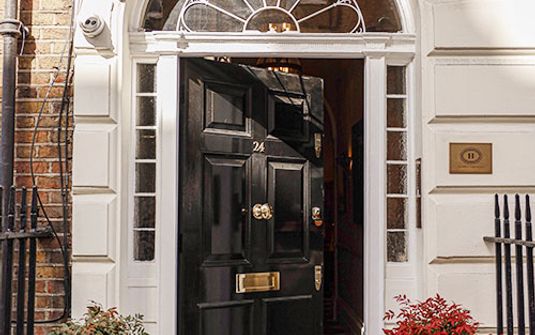
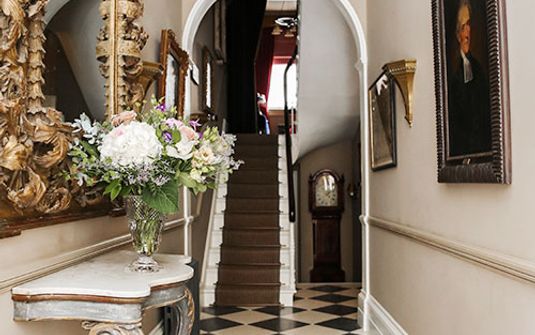
An understated entrance can create a remarkably strong transition between public and private space. In a traditional townhouse, a modest hall may lead to reception rooms of unexpected height and depth; elsewhere, a private lobby establishes separation before the principal living area is reached. The best residential experience makes this transition feel natural. It allows the household to retain a sense of arrival and ownership without requiring a conspicuous exterior or a setting detached from the surrounding city.
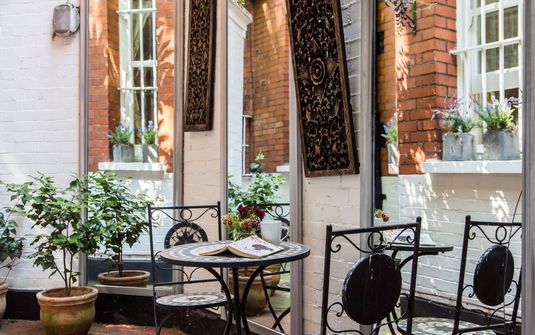
Urban privacy is a matter of arrangement rather than assumption. The relationship between windows, neighboring buildings and exterior terraces determines which parts of a home feel genuinely secluded. Upper floors can bring broader views, while a carefully enclosed courtyard can provide greater intimacy at ground level. London’s architectural density makes these distinctions particularly relevant, and a well-composed residence uses its site intelligently instead of relying on scale alone to create an impression of exclusivity.
Interiors with a Distinctly London Character
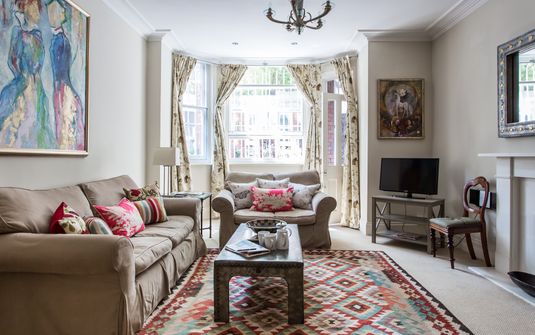
The city accommodates both richly layered decoration and disciplined contemporary design. A period room may be animated by artwork, books and carefully chosen furniture, while a modern interior can use a quieter material palette to emphasize proportion and light. Neither approach needs to become theatrical. The most persuasive private homes retain the individuality of a residence, with rooms that feel considered for sustained use rather than assembled around a single visual effect.
London houses also possess a characteristic relationship between levels. Principal reception rooms may occupy an upper floor, bedrooms may be distributed across several storeys, and secondary living areas can sit closer to a garden or courtyard. This vertical organization can provide excellent separation for a household, but it creates a different experience from an expansive single-level apartment. The suitability of the arrangement depends on the group, and the architecture should support its everyday comfort as well as its privacy.
Space for an Independent Household
For an extended stay, the ability to occupy several rooms independently becomes especially valuable. A quiet study, a secondary sitting room or a separate bedroom floor allows different routines to coexist within one address. Couples traveling together may prefer equally substantial suites, while a family may place greater value on the proximity of particular rooms. Thoughtful residential planning makes these differences easy to accommodate without requiring the entire group to share one continuous living space.
Private outdoor space adds another dimension when it forms part of the property. A terrace framed by neighboring rooflines offers a distinctly metropolitan outlook, whereas a rear garden can feel surprisingly sheltered from the street. These spaces should be understood as part of the home’s composition, not as interchangeable amenities. Their proportions, access from the interior and relationship with surrounding buildings determine whether they function as a natural extension of the residence.
A Personal Address Within the Capital
A London residence offers the freedom to experience the capital from a settled domestic perspective. The recurring view from a window, the particular proportions of a drawing room and the quiet beyond the front door can become defining parts of the stay. This is an understated form of urban luxury, grounded in independence and architectural character. It gives the household a place to return to that feels specific, composed and separate from shared accommodation.
The strongest choice is therefore an address with a convincing internal identity and a clear relationship to its neighborhood. Grandeur can be expressed through generous ceiling heights and exceptional detailing, but also through restraint, privacy and the ease with which rooms work together. For discerning guests, London’s appeal lies in this range of residential possibilities: historic or contemporary, expansive or intimate, yet always capable of creating a personal setting within one of the world’s most layered cities.


