


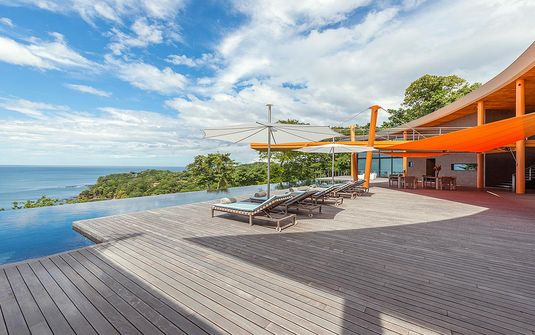
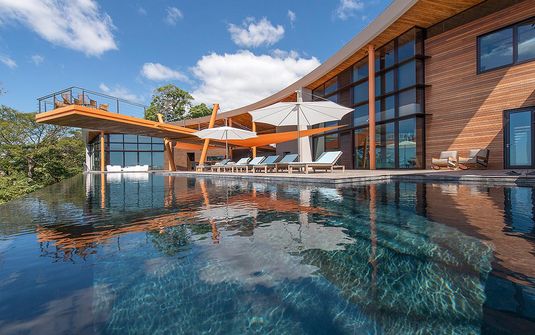


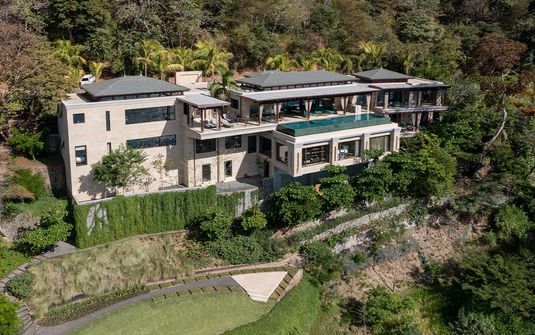
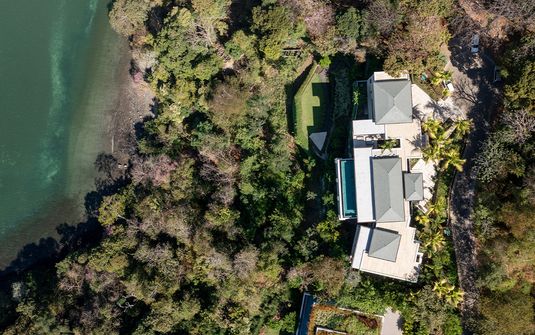
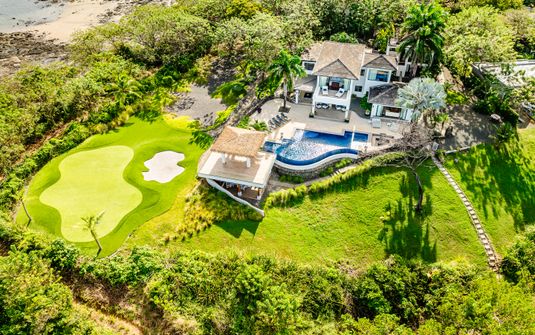
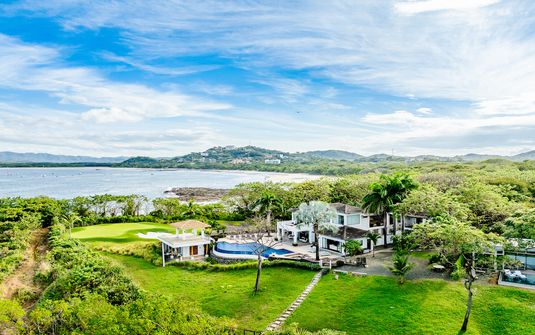
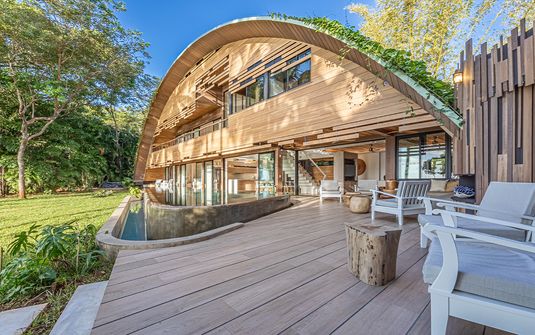
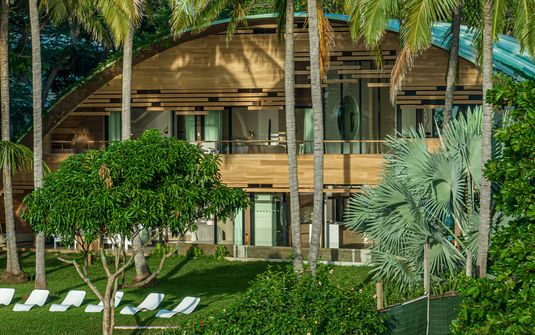
Guanacaste brings a broad, open character to the Pacific side of Costa Rica. Its landscapes range from sheltered coastal inlets and wooded headlands to inland plains, volcanic silhouettes and stretches of tropical dry forest. This variety gives the region more than one expression of private luxury. A villa can occupy a discreet peninsula setting, a mature garden near the shore or a high parcel with a wide seaward perspective. The defining choice is how a household wishes to relate to the land: closely enclosed by it, elevated above it, or placed along a carefully composed boundary between architecture and ocean.
The region should be understood as a collection of distinct coastal environments rather than a single continuous resort. Bays differ in scale, settlement patterns vary, and the relationship between the shore and the hills changes from one address to another. Some residences belong to planned communities with a strong architectural identity; others sit within more independent parcels where the garden establishes the atmosphere. These differences shape privacy, outlook and the proportions of the house. For discerning guests, Guanacaste's breadth is most valuable when it is translated into a precise residential choice, with the character of the particular site taking precedence over a generic image of the province.
Six perspectives on the Guanacaste coast
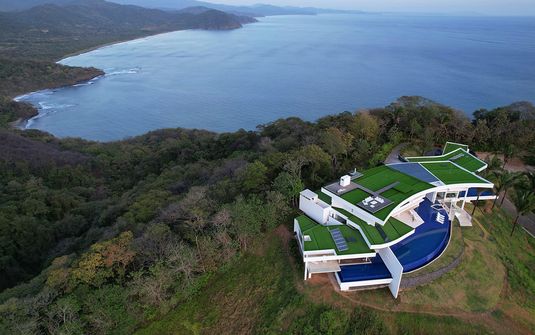
Papagayo offers a headland-and-bay landscape in which the coast repeatedly folds around itself. A residence positioned above one inlet may look across several layers of green peninsula and blue water, creating a more contained panorama than a straight ocean front. This geometry gives architecture a useful range of orientations. One wing can face the broad view while another opens toward trees or an enclosed court. The most compelling villas maintain that contrast, letting the natural contours establish separation between private quarters and shared pavilions. Their sense of exclusivity comes as much from careful siting as from the scale of the property.
At Playa Conchal, the pale, shell-rich shoreline contributes a distinctive luminosity to the coastal setting. The visual character is softer and more open, with a broad bay that suits residences organized around gardens, terraces and long horizontal views. A property near this landscape can feel gracious rather than dramatic, allowing the architecture to work through proportion and material detail. Deep galleries, shaded glass and restrained planting help bring the brightness into balance. The strongest interiors avoid competing with the coastal palette, using warm timber and tactile surfaces to give rooms substance while leaving the broader seascape visually clear.
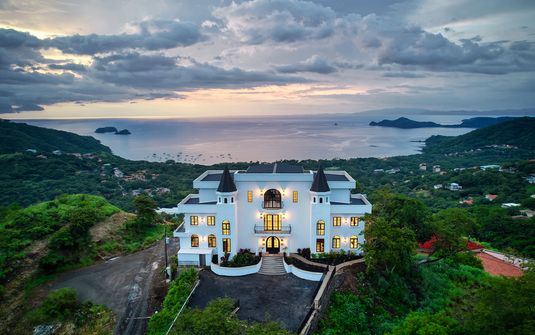
Playa Hermosa presents the quieter geometry of an enclosed Guanacaste bay, framed by green hills and a more intimate coastal arc. Its residential appeal often lies in the relationship between elevated parcels and the water below. A hillside house can use the curve of the bay as a natural organizing axis, with terraces set parallel to the outlook and private wings turned toward more secluded aspects. The setting favors measured architecture: substantial enough to feel permanent on the slope, but sufficiently restrained to let the surrounding landforms remain the principal presence. Exact elevation and neighboring sightlines distinguish one address from another.
From broad beaches to a more layered peninsula
The atmosphere around Tamarindo is more cosmopolitan, with an established coastal settlement and a broad ocean frontage giving the area a recognizable social character. A private residence can retain that sense of connection while creating its own calm through gardens, boundaries and well-oriented rooms. Here, discretion depends on the parcel rather than the destination name alone. An enclosed courtyard, a setback from the surrounding neighborhood or a shifted upper terrace can make a substantial difference. Villas with a clear internal sequence allow guests to appreciate the area's energy while returning to a home whose shared and private spaces remain composed.
Langosta Beach adds a more residential coastal perspective, where stretches of sand and rocky shoreline give individual parcels their own relationship to the ocean. Low garden houses and more contemporary villas can both suit the setting, provided the transition between interior, terrace and planting feels carefully resolved. A deep veranda can make a lower property feel intimate and settled, while a higher pavilion may offer a broader view along the coast. The distinction is not simply one of scale. The quality of privacy, the amount of usable exterior space and the way neighboring buildings are screened are central to the experience.
The Nicoya Peninsula widens the frame beyond a single coastal address. Its landmass separates the open Pacific from the Gulf of Nicoya and contains many different residential landscapes, so the name signals breadth rather than a uniform type of stay. Within Guanacaste's destination collection, it provides a useful regional perspective on the relationship between inland terrain, long shorelines and more isolated coastal pockets. A villa should still be selected according to its exact location. The peninsula's larger identity gives context, while the property's own aspect, architecture and boundaries determine how the household will actually inhabit that context.
Architecture shaped by an open landscape
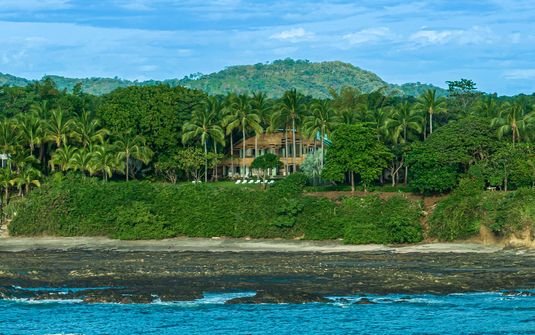
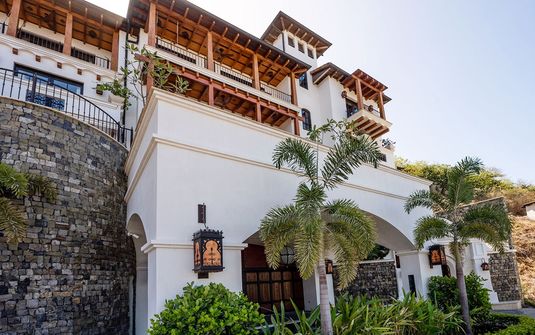
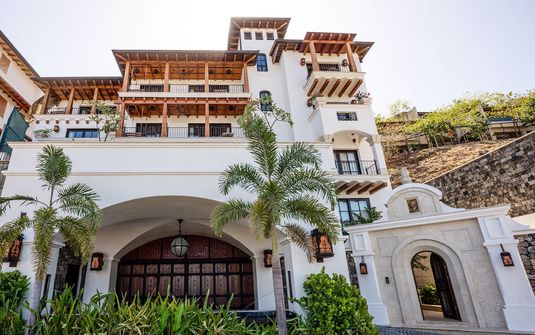
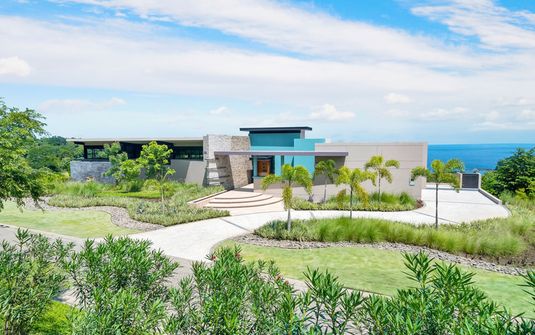
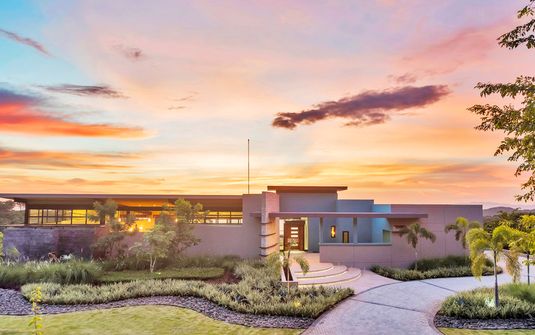
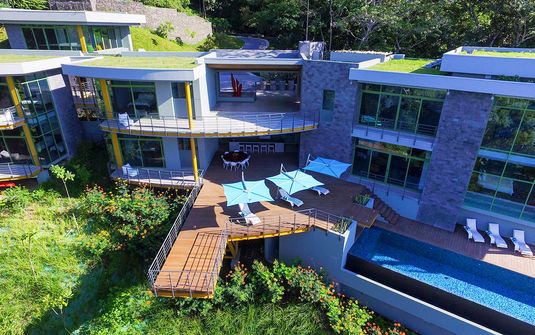
Across Guanacaste, the most persuasive residences establish a clear response to their particular terrain. A pavilion compound can follow a headland, giving each wing an independent view, while a courtyard house can create a private center within a more settled coastal neighborhood. Long roof planes and deep galleries provide visual order against open water or irregular vegetation. Substantial walls can turn away from neighboring parcels, leaving the principal rooms free to open toward the landscape. These are fundamental spatial decisions rather than decorative effects. When they are handled well, even a large estate can feel relaxed and appropriately scaled to its surroundings.
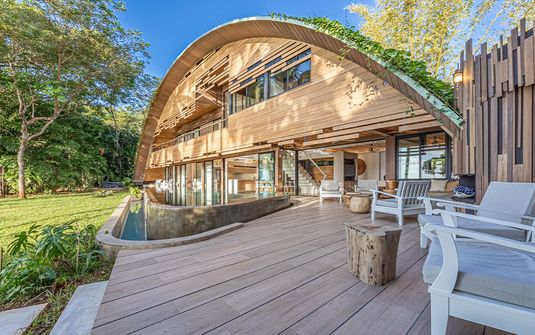
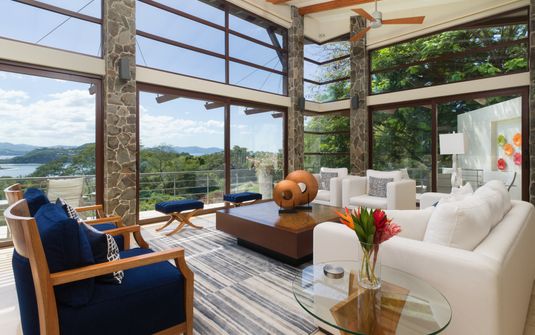
A restrained palette allows the landscape to carry much of the visual richness. Local stone can anchor terraces and garden walls, timber adds warmth to broad ceilings, and plaster provides a calm background for art and furniture. Large openings are most successful when their frames and shading form part of the architecture, rather than appearing as an uninterrupted sheet of glass. Fine joinery and careful floor transitions reward close attention without demanding it. The resulting atmosphere is tactile and assured, particularly when interiors include a few distinctive crafted pieces instead of repeating a familiar decorative theme throughout every room of the residence.
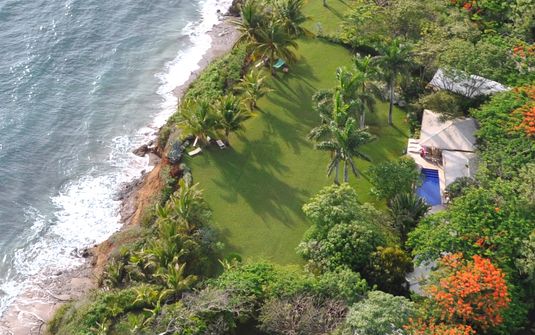
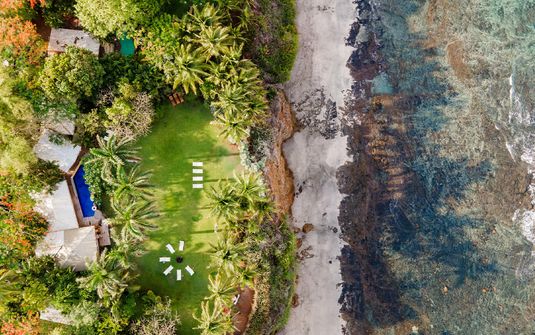
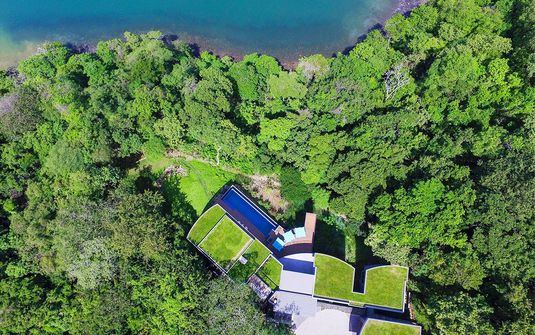
The garden should respond to the site's own character. On an open coastal parcel, mature trees and layered planting can provide enclosure at a human scale. On a steep headland, retaining existing vegetation helps the residence recede into the land and preserves the depth of its view. Formal planting may suit an established estate, while a more lightly edited landscape can support a modern pavilion plan. In either case, the garden works best when it frames usable outdoor rooms. A carefully placed tree or wall can give a terrace privacy and definition without erasing the broader setting that makes the address compelling.
A private home with several ways to be together
A generous central room can bring the household together, but the quality of a Guanacaste villa also depends on the spaces around it. A smaller salon, a quiet study or a sheltered courtyard provides alternatives to the main ocean-facing pavilion. These places allow guests to find different degrees of company while remaining part of the same residence. For a larger party, this flexibility matters more than a single impressive volume. The plan should maintain a clear social center without forcing every conversation into it, creating a house that feels equally comfortable when fully occupied or inhabited by only a few people.
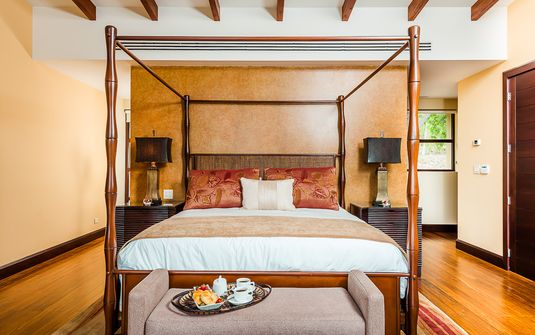
Private accommodation deserves the same precision. A principal suite can command the broadest outlook, yet guest rooms should remain comparable in comfort and finish. Separate pavilions offer independence for several couples, while connected wings may be more appropriate for a family. Terraces, storage and bathroom proportions contribute to the quality of each suite beyond its view. On hillside estates, the distribution of stairs and changes in level should fit the household's preferences. Architecture creates privacy most successfully when its transitions feel intuitive, giving guests a sense of autonomy without making the residence fragmented or difficult to inhabit.
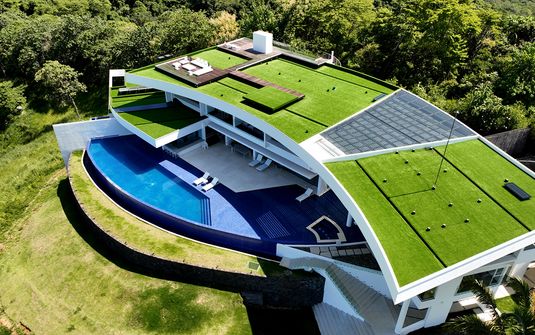
Outdoor rooms can provide a sequence of distinct settings. A broad terrace may address the bay, a shaded gallery can support the household's shared life, and a smaller planted court can become a private refuge. The pool should belong to this composition rather than dominate it. Its relationship to the living room, guest wings and garden edges determines whether the exterior feels coherent. Carefully judged lighting preserves depth after dark, allowing trees and distant landforms to remain visible as silhouettes. This gives the property an atmosphere of quiet continuity, with the architecture still legible but the wider landscape retaining its own presence.
Choosing the right Guanacaste address
Privacy should be assessed through actual sightlines and boundaries. A high terrace may be visible from a neighboring ridge, while a lower garden residence can feel remarkably enclosed. Planned communities and independent estates offer different residential contexts, and neither automatically guarantees the more discreet experience. The orientation of suites, the placement of support areas and the position of the principal terrace all matter. A well-designed property uses its massing to resolve these relationships, leaving planting to soften the result. That approach gives privacy permanence, ensuring that the villa's most appealing rooms remain comfortable throughout a longer stay.
The practical plan is another measure of quality. Guest arrival, staff circulation, laundry and storage should each have a logical place within the residence, with support functions kept away from the principal view and shared rooms. A dispersed estate needs especially clear connections between its pavilions. A compact house needs enough separation to avoid concentrating every movement in one corridor. These considerations are less conspicuous than an ocean panorama, but they shape daily comfort. The right villa combines the visual appeal of its address with a household plan that works naturally, making a substantial property feel easy to occupy rather than ceremonious or overcomplicated.
Guanacaste within the wider region
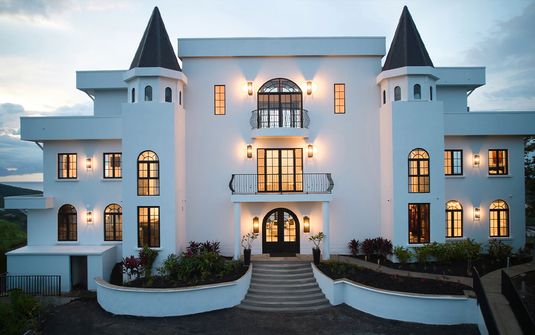
Within Central America, Guanacaste offers an unusually varied collection of Pacific residential settings, from enclosed bays to broad beaches and extensive peninsula landscapes. Its distinction lies in that range rather than a single architectural formula. A refined house can be traditional in proportion, contemporary in structure or a thoughtful combination of both, provided it understands the land around it. The destination's strongest private homes share a sense of restraint: the setting remains recognizable, interiors feel personal and the household has ample space to gather or withdraw. That balance allows luxury to feel connected to place instead of detached from it.
A precise expression of Pacific living
The most rewarding Guanacaste stay begins with a clear choice of landscape. A headland, an enclosed bay, a pale shoreline or an established residential garden each suggests a different kind of home. LaCure considers those distinctions alongside the composition of the household, looking at how the property distributes views, privacy and shared space across the whole plan. The aim is a residence whose character remains compelling beyond the first panorama. Generous rooms, careful materials and a thoughtful garden can then bring the region into focus, creating a private setting that feels polished, personal and unmistakably part of Guanacaste.


