


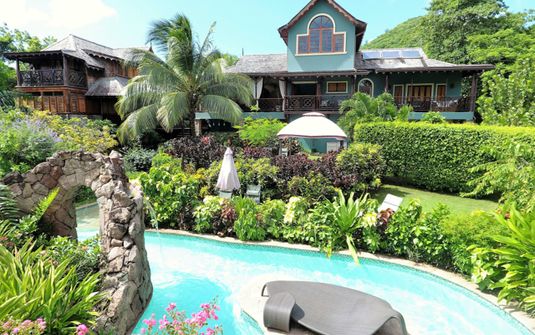







The Distinctive Character of Rodney Bay
Rodney Bay occupies a broad northwestern St. Lucia district shaped by a sheltered bay, marina basin and surrounding hills. Within St. Lucia, it stands apart through a combination of cosmopolitan ease translated into confident private residences with a strong relationship to water. The destination is not defined by spectacle alone; its character emerges from the way land, water and residential scale are held in balance. Villas here feel grounded in their immediate surroundings, with outlooks shaped by the exact angle of a hillside, cove or harbor edge. For discerning guests, that specificity matters because it gives every stay a coherent visual identity rather than a generic tropical backdrop. The strongest homes respond to the district itself, allowing the setting to determine proportion, orientation and the pace of private life.
level waterfront parcels merge with gently ascending residential areas, supporting both garden villas and elevated homes. This physical structure influences more than the view: it determines how a residence meets the land, how its different levels relate, and where privacy can be created without artificial barriers. gated forecourts establish a private address before interiors extend toward water or hillside views. The change from enclosure to openness is especially important in Rodney Bay, where a carefully controlled reveal can make the surrounding landscape feel more expansive. Terraces, garden walls and secondary pavilions therefore work as parts of one composition. Instead of treating the site as a platform for a detached object, accomplished villas use contour and vegetation to create rooms that belong convincingly to this particular place.
The bay’s wide arc and protected inner water create a composed, almost architectural coastal geometry. That coastal presence affects the atmosphere inside the villa even when the residence is set well above or behind the water. Window placement, ceiling height and the depth of a covered terrace can sharpen one element of the scene while quieting another. In Rodney Bay, the most satisfying interiors resist the temptation to make every surface transparent. Solid walls, shaded openings and framed vistas introduce rhythm, letting the eye rest before it returns to the horizon. This approach gives the architecture greater substance and keeps the sea from becoming a decorative backdrop; it remains a spatial force that organizes the entire home.
Architecture Shaped by the Setting
Rodney Bay has a residential texture of its own, formed by the relationship between individual parcels and the wider district. courtyard plans, screened gardens and upper-level suites create discretion within a more connected district. These conditions make it possible for a villa to feel open internally while remaining protected from the outside. Bedrooms can face private garden pockets, main rooms can extend toward long views, and circulation can pass through quieter zones without crossing the social core. The distinction is subtle but consequential for longer stays, when privacy depends less on closed doors than on a plan that naturally separates different modes of use. Good architecture turns the local fabric into an asset, using it to give the residence calm, legibility and a persuasive sense of independence.
The visual language of Rodney Bay is strongest when it draws from light limestone, warm timber, smooth stucco and crisp metal detailing. These materials provide texture and permanence without competing with the landscape. Stone can anchor lower levels to the terrain, timber can soften broad architectural planes, and restrained plaster tones can carry reflected light deep into the interior. Detailing is most convincing when transitions are precise: a shadow gap between wall and roof, a flush threshold onto a terrace, or joinery aligned with a framed view. Such decisions may register quietly, yet together they determine whether a villa feels merely impressive or genuinely resolved. In a destination with this degree of natural character, restraint often communicates more confidence than ornament.
Atmosphere in Rodney Bay changes across a residence rather than remaining uniform. The principal salon may be broad and outward-looking, while a library, media room or smaller sitting area offers denser materials and a more contained mood. Covered galleries create intermediate spaces that temper the transition between enclosed rooms and open terraces. Landscaping can then be used architecturally, not as surface decoration, but to establish screens, courts and visual pauses. This layering helps a large villa feel intimate at different scales. Guests can gather without occupying every room at once, and the house retains a composed identity even when several generations or families follow distinct rhythms throughout the day.
The most appropriate architectural response in Rodney Bay is often contemporary waterfront villas, refined town residences and hillside compounds with generous terraces. These types succeed because they acknowledge the site rather than impose a single international formula upon it. Roof lines can follow the horizontal emphasis of the water, stepped pavilions can absorb a slope, and courtyards can provide shelter where exposure would otherwise diminish comfort. Equally important is the silhouette: a residence viewed from across a bay or neighboring ridge should remain integrated with its surroundings. This does not require nostalgia. Contemporary architecture can be decisive and sculptural while still respecting scale, topography and local material weight, producing a home that feels current without becoming visually transient.
How Exceptional Villas Organize Daily Life
Inside, a disciplined palette based on light limestone, warm timber, smooth stucco and crisp metal detailing allows architecture, furniture and art to coexist without visual strain. Tactile finishes give large rooms warmth, while quieter surfaces preserve clarity around major sightlines. Built-in elements can conceal storage and technology, leaving the principal spaces calm and useful rather than theatrically minimal. Lighting should reinforce material depth, with indirect sources defining stone, timber and textured walls after daylight recedes. In Rodney Bay, this degree of interior control is especially valuable because exterior scenery already carries strong visual information. A refined villa does not compete with that scenery; it creates a grounded domestic counterpoint, rich enough to feel complete even when attention turns inward.
Spatial planning becomes the true measure of a villa once guests settle in. families and groups seeking flexible gathering rooms, independent bedrooms and a polished northern-island setting. A successful plan gives the principal gathering room clear authority but does not force every interaction into the same setting. Secondary lounges, shaded terraces and smaller garden rooms allow conversations to divide naturally. Circulation should be intuitive, with guest suites reached without crossing service areas or disturbing the principal bedroom. When these relationships are resolved, a large house remains easy to inhabit and a compact one feels unexpectedly generous. In Rodney Bay, where views can encourage outward-facing design, equal care must be given to the internal connections that make the residence function gracefully from morning through evening.
Transitions That Shape the Experience
gated forecourts establish a private address before interiors extend toward water or hillside views. This sequence establishes the emotional register of the house before its largest room is reached. A restrained entrance can provide shade, acoustic calm and a sense of protection; a framed opening can then direct attention toward one decisive element of the landscape. Beyond it, terraces should feel like complete rooms, with deliberate edges, comfortable depth and a clear relationship to adjoining interiors. In Rodney Bay, outdoor space is most luxurious when it has architectural definition rather than simply generous area. Colonnades, pergolas, low walls and planted courts can create distinct places for conversation, reading or quiet observation while preserving the unity of the overall composition.
The principal suite deserves particular care because it carries a different rhythm from the rest of the villa. In Rodney Bay, the finest examples use orientation, layered thresholds and material restraint to create a genuine private domain. A vestibule may screen the sleeping room from the main circulation, while a secluded terrace extends the suite without exposing it to shared spaces. Dressing and bathing rooms should feel integral to the architecture rather than appended for scale. Long views are valuable, but so are close details: a stone wall catching soft light, a planted court visible from within, or timber joinery that gives the room warmth. Together, these elements make privacy tangible rather than merely promised.
Guest accommodation should be equally considered, even when it occupies separate pavilions or a lower terrace. Suites work best when each has a meaningful outlook, adequate separation and a clear route to the communal rooms. Repetition is rarely desirable; subtle differences in orientation, garden context or material treatment can give every bedroom its own identity without fragmenting the design. For families and groups seeking flexible gathering rooms, independent bedrooms and a polished northern-island setting, this autonomy is central to a comfortable stay. Family members and friends can withdraw fully, then rejoin the group without navigating awkward passages or overly formal spaces. The result is a house that supports different schedules and temperaments while maintaining the order expected of an exceptional private residence.
Choosing the Right Rodney Bay Residence
Shared rooms in Rodney Bay gain character from proportion rather than excess. A high ceiling can give the principal salon presence, but adjoining rooms at a smaller scale are what make the home feel inhabitable over time. Furniture plans should preserve circulation to terraces and suites while creating intimate groupings within the larger volume. Carefully placed art, books and crafted objects add cultural depth without turning the interior into a display. Acoustic softness is equally important in homes with stone floors and broad glazing; timber ceilings, textiles and upholstered surfaces can moderate the room without obscuring its architectural lines. Such details allow refinement to be experienced through comfort, not announced through ornament.
True residential privacy depends on operations as much as sightlines. Well-planned villas separate guest circulation from service movement, provide discreet support spaces and keep practical functions away from the visual center of the home. This infrastructure should remain almost invisible, yet it has a direct effect on how calm the residence feels. In Rodney Bay, where many properties unfold across several pavilions or levels, back-of-house routes must be concise and intelligently placed. The objective is not formality for its own sake; it is to preserve uninterrupted private time. When the practical architecture is resolved, the social rooms remain serene, bedroom zones stay quiet and the entire property feels effortless to occupy.
The range of residences in Rodney Bay is best understood through the relationship between site and plan. A compact villa on a focused parcel may offer exceptional privacy through courtyards and controlled views, while a larger estate can distribute suites across independent wings and garden pavilions. Neither is inherently superior; the right choice depends on how the group intends to share space. Families and groups seeking flexible gathering rooms, independent bedrooms and a polished northern-island setting should look closely at bedroom distribution, the number of genuinely comfortable common rooms and the connection between upper and lower levels. These factors shape the stay more consistently than a single dramatic feature, ensuring that architectural beauty is matched by everyday coherence.
Selecting for Scale and Rhythm
Group dynamics are especially revealing in a private villa. Some parties gather naturally around one large salon, while others benefit from several smaller rooms that support parallel conversations and quiet time. Rodney Bay accommodates this well when architecture provides both a clear social heart and independent places to withdraw. Separate guest wings can preserve privacy between generations; garden rooms can give teenagers or staff an autonomous zone; and a secondary terrace can remain calm while the main space is occupied. The aim is not to divide the group, but to remove pressure from togetherness. When every guest has options, shared moments feel more deliberate and the residence remains gracious throughout an extended stay.
Context should also influence the final selection. Within St. Lucia, Rodney Bay offers cosmopolitan ease translated into confident private residences with a strong relationship to water. A villa that responds closely to this context will feel different from a residence transplanted from another island. Roof profile, garden structure, degree of enclosure and the way rooms address the horizon should all reflect local conditions. This authenticity need not be literal or historical; it can appear through proportion, material honesty and a plan that understands the site. For guests, the reward is a stay with a stronger memory of place and a more persuasive sense of belonging.
An Address with a Clear Point of View
Rodney Bay ultimately appeals through cosmopolitan ease translated into confident private residences with a strong relationship to water. Its finest villas translate that identity into spaces that are generous without being diffuse, private without feeling closed and sophisticated without unnecessary display. Landscape is treated as structure, materials are selected for depth, and every transition—from entrance court to salon, from suite to terrace—contributes to a coherent whole. This level of resolution is what distinguishes an exceptional residence from one that relies only on scale or view. For guests seeking a highly considered stay, Rodney Bay offers the rare combination of architectural individuality and an unmistakable relationship to its island setting, qualities that remain compelling long after the first impression.