




St. Lucy: Northern Landscapes and Private Estate Living in Barbados
St. Lucy occupies the northernmost part of Barbados, bringing a broader landscape perspective to the island’s private residential settings. Coastal cliffs, open ground and more intimate garden estates give the parish several different characters, so the experience of a stay depends closely on the chosen property. Within the wider Caribbean, the appeal is a sense of place shaped by the actual land around the house. A residence may feel outward-looking and expansive or more enclosed within established grounds, with architecture and planting creating its own domestic atmosphere.
The distinction between the wider parish and the immediate residence is important. St. Lucy’s northern coastal identity does not mean that every house occupies an exposed cliff position or shares the same outlook. A private estate can establish a quieter world through gardens, separate wings and rooms that frame the near landscape selectively. The quality of the stay comes from this personal relationship to the site, allowing the household to enjoy the character of northern Barbados while retaining the enclosure, comfort and spatial variety of a complete private home.
A Northern Parish with Several Landscape Scales
The cliffs around the northern coast give part of St. Lucy a strong natural profile, with rock forms and open water creating a more substantial coastal edge than a continuous sandy frontage. This wider landscape provides a recognisable context for the parish, but private residences can relate to it in different ways. A broad prospect may be enjoyed from a principal room, while gardens or lower ground introduce a more intimate foreground. The actual position and orientation of the property determine how these elements appear together, making the individual address more informative than a general image of northern seclusion.
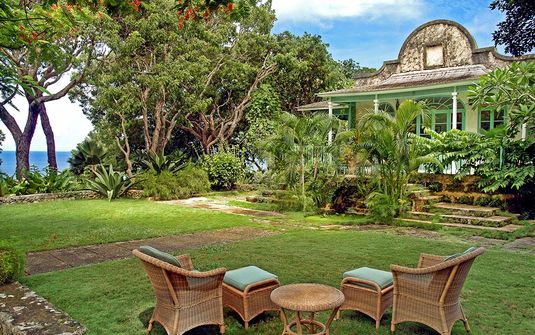
Inland and garden-centred settings offer another degree of enclosure. A planted court, established trees or a sequence of terraces can give the house its own landscape, allowing the residence to feel complete without every room opening toward the sea. These close views are especially rewarding during a longer stay, when the household spends substantial time within the grounds. The property has depth at several scales, with a wider outlook providing context and the immediate garden making ordinary domestic spaces attractive, comfortable and personal from within.
Fustic House: An Architectural Estate within St. Lucy
A House Reimagined by Oliver Messel
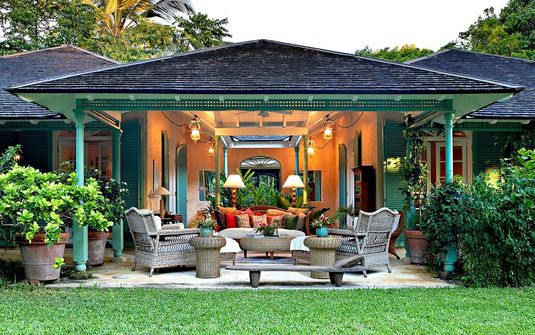
Fustic House provides a distinctive residential reference within the parish, combining an established estate setting with architecture associated with Oliver Messel. The house’s historic character and its relationship to landscaped grounds give the stay a more layered atmosphere than a residence conceived only around one outward-facing view. The architecture can be appreciated through its sequence of spaces, with shared rooms, quieter accommodation and exterior settings contributing different parts of the experience. The estate offers a recognisable private world whose identity comes from house and garden together rather than from scale alone.
A layered estate arrangement gives individual parts of the residence room to retain their own character. The principal shared spaces can feel generous, while quieter accommodation relates more closely to garden areas and more intimate exterior corners. This makes a larger property easier to inhabit as a household. Guests remain connected to a clear domestic centre without occupying the same room continually, and the landscape gives the spaces between interiors a purpose. The home feels coherent because the grounds, rooms and private wings belong to one considered composition rather than simply sharing a large parcel of land.
The Garden as a Domestic Setting
At a garden-rich estate, the near landscape becomes part of everyday private life. A tree framed by a bedroom window, a wall beside a sheltered passage or a terrace with planting close to the furniture can be as memorable as a broad coastal prospect. These settings give the house texture and a more personal scale, allowing secondary rooms to remain attractive in their own right. The grounds are experienced from within the residence as well as around it, creating a sequence of smaller views that makes the home rewarding through repeated use.
Exterior rooms can extend that experience without making every space equally open. A veranda provides a more sheltered gathering area, while a smaller court or private terrace offers greater intimacy. Their different proportions give the household choices throughout the property. One setting may accommodate everyone, another only a few guests, and a quieter corner beside a suite can feel distinctly personal. This variety allows a substantial estate to retain warmth and domestic ease, with smaller spaces that remain inviting alongside the larger rooms intended for shared life.
Interior Character with a Sense of Permanence
Materials and furnishings give a St. Lucy residence another degree of individuality. Textured masonry, timber detailing and comfortable seating can create warmth within rooms whose wider setting is open or expansive. A bedroom may feel more enclosed than the principal lounge, while a garden-facing sitting area introduces a different visual centre. The house becomes richer when its interiors have distinct moods, connected by recurring details rather than a repeated decorative treatment. This gives the residence substance beyond its principal outlook, making quieter rooms as rewarding to inhabit as the more immediately impressive shared spaces.
A considered plan allows those differences to support the household naturally. Separate suites, quieter circulation and secondary rooms give guests places to withdraw without leaving the domestic setting. The principal lounge remains an obvious point of connection, but does not need to carry every part of daily life. Over an extended stay, this flexibility becomes increasingly valuable, allowing different routines to coexist without making the residence feel fragmented. The house is generous through the usefulness of its spaces, accommodating a small gathering comfortably while retaining room for the whole household to come together.
Privacy Grounded in the Actual Property
Discretion in St. Lucy remains specific to the residence. The depth of planting, the position of neighbouring buildings and the orientation of terraces influence how private a particular exterior room feels. A larger parcel or a more rural context does not automatically resolve those relationships. The most comfortable setting comes from the way boundaries, gardens and private accommodation work together, preserving an appropriate connection to the surrounding parish while creating spaces that feel personal to the household. Privacy becomes part of the architecture and landscape rather than a general promise attached to the destination.
St. Lucy offers a northern Barbadian setting with a strong relationship between natural scale and individual estate character. Its wider coastal landscape and private homes such as Fustic House provide different ways to experience the parish, from broad outlooks to a more intimate garden-centred world. A rewarding residence brings its actual conditions into focus through coherent rooms, considered grounds and a clear balance between company and retreat. Luxury feels personal when the home remains comfortable beyond its first impression, offering enough architectural depth and domestic variety to sustain a longer island stay.


