




St. Joseph: Private Houses within Barbados’ Eastern Landscape
St. Joseph gives Barbados a distinctive eastern setting, where changing ground, greener inland views and an open Atlantic coast create a different residential atmosphere from the island’s western shore. Within the wider Caribbean, its appeal is closely tied to landscape. A private house can frame a broad coastal prospect, establish a quieter garden world or combine the two across several levels. The residence becomes personal through its actual position, with the relationship between rooms, grounds and surrounding land giving the household a particular way to inhabit this part of the island.
The setting has depth beyond an immediate beach view. The land behind the shore can become a strong part of the composition, allowing a house to acknowledge vegetation and changing levels as well as the sea. This makes the architecture’s response to the site especially important. A principal room may feel expansive and outward-looking, while a quieter suite turns toward a more enclosed foreground. The household enjoys several degrees of openness within one home, with spaces that retain their own comfort and identity rather than depending entirely on a single panoramic facade.
An Eastern Coast with a Recognisable Natural Character
Bathsheba’s coastal landscape gives part of St. Joseph a particularly clear visual identity, with substantial rock forms near the shore and a broader Atlantic outlook beyond. The village setting and the ground behind it add a more inhabited scale to that natural composition. A residence can experience these elements differently according to its position, making the actual view and foreground important to the atmosphere of the stay. A house that frames a selective part of the coast can feel as compelling as one with a wider panorama, particularly when its private interiors have a character of their own.
The parish’s relationship to the Scotland District introduces another dimension through rolling and more deeply shaped land. This gives some residential sites a layered perspective in which vegetation, slopes and distant coast appear together. The architecture need not occupy the most exposed position to acknowledge that setting. A sheltered terrace, a garden-facing room or a smaller opening along a private passage can bring the landscape close at a more intimate scale. These different relationships allow a residence to feel rooted in the eastern ground while remaining comfortable as a home from within.
Zazen: A Contemporary House at Cattlewash
Several Levels and a Distinct Private Retreat
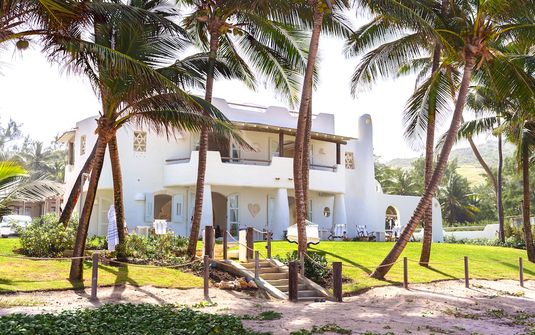
Zazen provides an example of a more contemporary residential expression associated with St. Joseph’s coast. Its Cattlewash setting gives the architecture a strong natural context, while the house’s different interior levels create several relationships to the outlook. The principal suite has a distinct private scale, with its own work area and exterior space, illustrating how a larger home can offer accommodation that feels meaningfully separate from shared life. The residence’s individuality comes from this organisation as well as its coastal position, allowing the household to occupy more than one domestic centre within the same house.
A multi-level plan becomes comfortable when private accommodation remains clearly connected to the principal rooms without losing its independence. A quieter suite above the main terrace has another atmosphere from a bedroom close to the shared living area, and those differences can suit several generations or couples staying together. The house feels coherent when its circulation is clear and its smaller settings have useful proportions. Changes of level then become part of the residence’s character, giving guests choices within the home rather than simply creating a sequence of impressive but disconnected viewpoints.
Pebble: Architecture Closely Related to the Shore
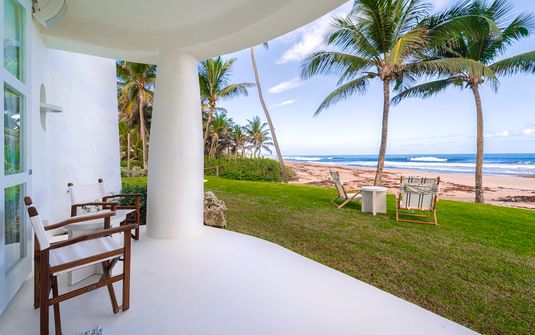
Pebble adds another individual residential form within the eastern coastal collection. Its shoreline position places the immediate landscape close to the house, giving the relationship between building, exterior spaces and natural ground particular importance. A residence in this context benefits from a clear domestic foreground, with terraces and more enclosed interiors providing several ways to occupy the site. The coast remains a strong presence, but the quality of the experience comes from the house itself: its proportions, private rooms and the coherence with which its different spaces belong to one complete residential setting.
The transition from interior to exterior can give such a house considerable depth. A covered room offers a more sheltered way to enjoy the coast, while a larger open terrace provides another scale of shared space. Bedrooms and quieter interiors can retain more selective views or relate to planting closer to the building. These contrasts prevent the residence from becoming a repetition of one outward-facing arrangement. The household has several attractive settings within the property, allowing the stay to feel personal and comfortable even when guests want different degrees of company or enclosure.
A Private Foreground within a Larger Landscape
Gardens and courtyards can bring a more intimate scale to St. Joseph’s broader natural setting. Planting beside a bedroom, a defined terrace edge or a sheltered court between wings gives the house close views that remain attractive independently of the horizon. The grounds become part of the domestic plan, shaping the way rooms connect and creating spaces that feel private without requiring every interior to turn away from the landscape. A residence gains substance through these smaller compositions, with the near ground carrying as much everyday importance as the more immediately dramatic coastal prospect.
Interior materials provide another degree of warmth and enclosure. Timber joinery, textured surfaces and comfortable furnishings can give quieter rooms a distinct identity, while the principal lounge remains more open to the setting. A bedroom may feel softer and more intimate than the main shared space, and a garden-facing room can offer an alternative visual centre. Recurring details keep the house coherent without making each interior identical. Over time, these differences allow the residence to acquire a familiar rhythm, with rooms that remain rewarding through ordinary use rather than relying entirely on the first impression of the view.
Privacy and the Domestic Rhythm of a Longer Stay
Seclusion in St. Joseph remains specific to the property. The direction of neighbouring windows, the placement of terraces and the depth of planting influence how private an exterior room feels. Within the house, separate suites and quieter circulation allow guests to follow different daily rhythms without weakening the ease of shared life. A broad landscape does not by itself resolve these domestic needs. The most comfortable residence brings them together through a considered plan, giving the household a clear private atmosphere and enough spatial variety to spend time together or apart naturally.
St. Joseph offers an eastern Barbadian setting with a strong relationship between natural scale and private residential architecture. The coastal context of Cattlewash and Bathsheba, the changing inland ground and individual homes such as Zazen and Pebble provide different foundations for a stay. A rewarding residence responds to its actual site with clarity, balancing open outlooks with more enclosed rooms and shared spaces with private retreat. Luxury feels grounded in place when that whole remains comfortable and personal beyond its principal view, sustaining a longer island stay through domestic quality and architectural individuality.


