





Rendezvous Bay: A Sweeping Southern Coast with a Private Residential Perspective
Rendezvous Bay gives the southern shore of Anguilla one of its most expansive coastal compositions. The broad curve of pale sand and the distant profile of Saint Martin create a setting whose appeal begins with space and visual continuity. Within West End, the bay supports several different relationships between residence and shore, from houses closely tied to the coastal foreground to properties with a wider outlook from the ground behind it. The experience depends on that particular position, with the chosen home giving the landscape a personal domestic scale.
Within the Caribbean, this southern perspective has a recognisable depth. The nearer sand introduces a pale horizontal edge, the channel provides a broad expanse of water and Saint Martin supplies a more substantial landform beyond. A residence can frame those elements together or reveal them selectively from different rooms. The setting does not need to dominate every interior to remain important. A private house becomes more rewarding when its quieter spaces have their own character, allowing the wider coastal outlook to enrich a complete home rather than replace its domestic substance.
The Scale of the Bay
The long curve of Rendezvous Bay creates a different atmosphere from a compact cove. Its shoreline carries the eye beyond the immediate property, giving a terrace or principal room a sense of connection to a much broader landscape. This can make a residence feel open even when the house itself has a relatively contained plan. The architecture is most persuasive when its proportions acknowledge that scale, using substantial thresholds and clearly defined exterior rooms to provide a private foreground. The bay remains visually expansive, while the household occupies spaces that feel comfortable and appropriately domestic.
The land behind the beach adds another dimension to the setting. Rendezvous Bay Pond forms part of the wider coastal landscape, giving the area an inland water feature alongside the southern shore. The relationship between these elements helps explain the bay’s depth beyond its most familiar beachfront image. Individual properties experience that landscape differently according to position and orientation. Some homes look broadly across the coastal scene, while others establish their principal atmosphere through gardens and more enclosed rooms, making the actual site important to the character of the stay.
Different Ways to Occupy the Southern Outlook
Closer Shore and Broader Perspective
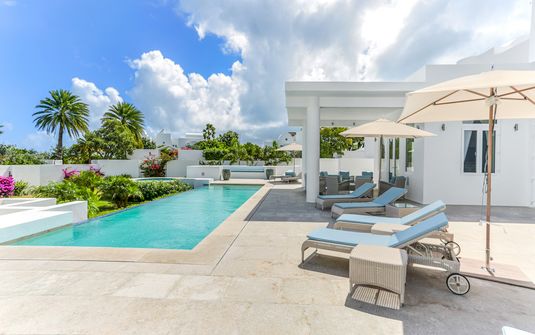
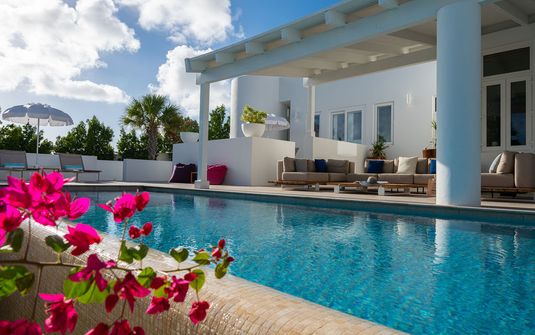
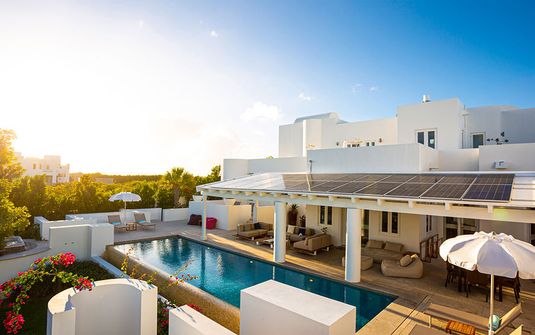
A residence near the sandy edge can give the main living space an immediate relationship to the shore. The terrace becomes a transition between the interior and the wider landscape, with its depth and enclosure determining whether it feels like a full exterior room. A covered area offers a more intimate setting beside an open deck, and a planted boundary can protect quieter corners without obscuring the principal outlook. These distinctions make the property useful as a home, allowing guests to enjoy the coast from several settings rather than one continuous outward-facing platform.
A house set back or positioned on higher ground offers another interpretation of Rendezvous Bay. The shoreline can appear as a curve within a wider panorama, with vegetation and the immediate grounds creating a more layered foreground. This position can give private accommodation a different relationship to the landscape from the principal terrace, especially where rooms are arranged across several levels. The quality lies in how naturally these spaces connect, keeping the residence coherent while allowing suites, gardens and shared rooms to have individual moods within the same coastal setting.
Songbird and the Blend of Contemporary and Caribbean Forms
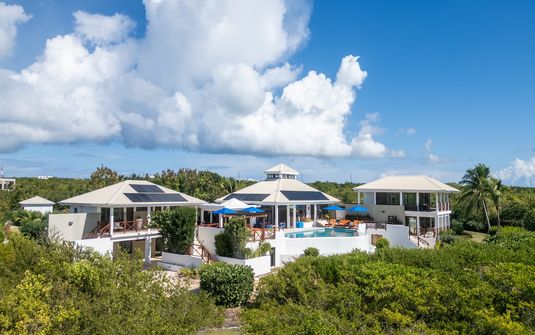
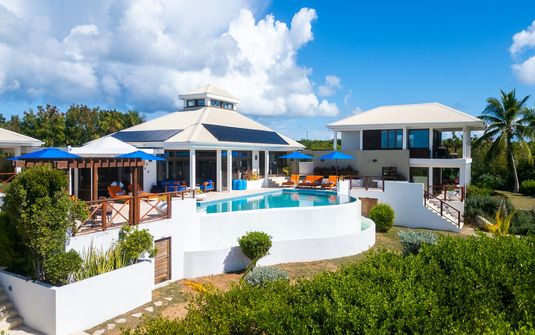
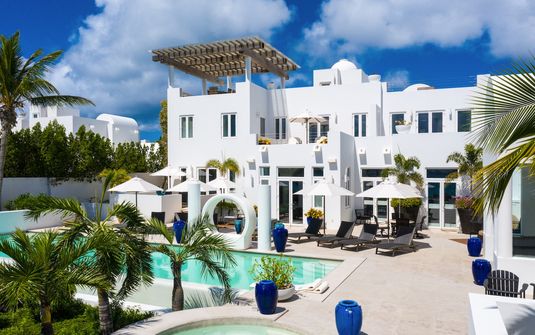
Songbird Villa provides an example of the architectural variety associated with Rendezvous Bay. Its combination of contemporary and more traditional Caribbean elements gives the house a residential character alongside its outlook toward the bay and Saint Martin. This blending of forms offers an alternative to a purely minimal coastal facade. The residence can remain open in its principal rooms while using rooflines, terraces and more intimate interior details to create a sense of warmth. The setting is important, but the house retains an identity that can be appreciated from within as well as through its wider view.
The contrast between open and enclosed spaces is particularly valuable during a longer stay. A principal lounge may face broadly toward the sea, while a quieter bedroom or garden-facing sitting area provides another atmosphere. Traditional elements can introduce texture and a more domestic rhythm, and contemporary openings can connect the main interior clearly to the terrace. Their relationship matters more than a fixed stylistic label. A coherent home gives each room a purpose and allows the household to enjoy several degrees of company, privacy and connection to the surrounding landscape.
Private Grounds and a More Intimate Interior World
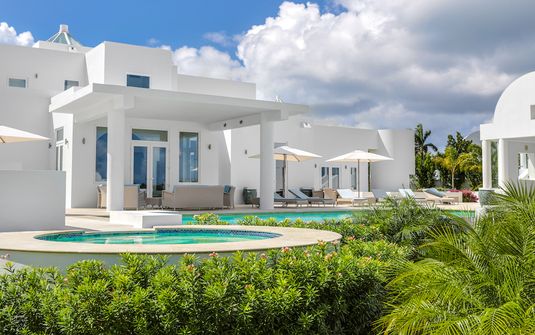
A broad coastal setting benefits from close views that give the residence depth at a smaller scale. A planted court, a garden wall beside a bedroom or a defined terrace edge can make secondary rooms attractive independently of the panorama. These elements bring the landscape into ordinary domestic life, allowing the house to remain rewarding when attention turns inward. The grounds become part of the architecture, connecting wings, shaping entrances and creating more protected exterior spaces that complement the openness of the principal outlook rather than repeating it everywhere.
Privacy at the property boundary remains specific to the chosen house. The direction of neighbouring windows, the placement of suites and the treatment of garden edges influence how secluded a particular space feels. A smaller exterior room can be protected through planting or masonry while the main terrace remains open to the bay. Within the house, quieter circulation and separate accommodation allow different daily rhythms to coexist. These decisions give discretion a practical form, creating a private home that belongs to its coastal setting without making every room equally exposed to shared life or the wider surroundings.
A Comfortable Rhythm for a Shared Stay
For families and private groups, the usefulness of the plan becomes increasingly important over time. A secondary lounge, an independent suite or a modest exterior corner offers an alternative to the principal gathering area, allowing guests to be together or apart naturally. Comfortable furniture, considered lighting and rooms with distinct material character make these smaller settings inviting. The residence feels generous through this variety, supporting a few guests as comfortably as the whole household. Its appeal grows through repeated use, with familiar rooms and garden spaces sustaining the stay alongside the broader coastal prospect.
Rendezvous Bay combines an expansive southern shoreline with several distinct forms of private residential life. The broad curve of the coast and the distant island give it a clear identity, while the actual home determines the atmosphere within the grounds. A thoughtfully arranged residence balances those scales through measured architecture, private accommodation and exterior rooms that feel integral to the house. Luxury is expressed in the coherence of the whole, with enough openness to appreciate the bay and enough domestic variety to make an extended Anguillan stay comfortable, individual and rewarding.


