




Shoal Bay East: Pale Sand and Private Living on Anguilla’s Northern Coast
Shoal Bay East gives East End one of its most recognisable coastal landscapes. A long sweep of white sand meets shallow water and an open northern outlook, creating a setting whose appeal begins with the clarity of its composition. Within Anguilla, the bay has an established identity, yet individual residences can offer very different relationships to the shore. Some houses make the beach the immediate foreground to their principal rooms; others gain a wider perspective from ground set further back. The character of the stay depends on that particular relationship between residence and coastline.
Among Caribbean villa settings, Shoal Bay East is distinctive for the way pale sand, coastal vegetation and broad water create successive bands of colour. The landscape is expansive without needing a mountainous backdrop. Its scale can be appreciated from a single room or terrace, where a carefully positioned opening brings the curve of the bay into the interior. For a private household, the attraction lies in combining this recognisable setting with a home that retains its own atmosphere, allowing the beach to remain visually important without making every space feel directed toward the same outlook.
A Shoreline with Breadth and Continuity
The bay’s long sandy edge gives it a different character from East End’s smaller coves and rocky coastal addresses. There is a sense of continuity along the shore, with the sweep of sand carrying the eye beyond the immediate property. Coastal vegetation introduces a softer boundary between the beach and the developed land behind it, while a patch reef forms part of the bay’s marine setting. These elements establish the broad identity of Shoal Bay East. A residence responds most convincingly when its architecture acknowledges their horizontal scale rather than relying on height or visual dominance to make an impression.
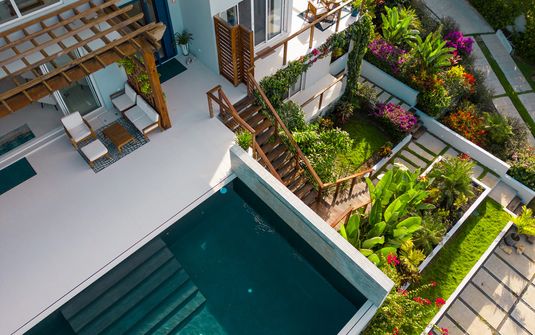
The landscape behind the shoreline adds another layer to the setting. Shrubland and areas of dry forest give the coastal foreground a more textured inland counterpart, creating a transition between the open water and the residential ground. A garden can echo this sense of enclosure without attempting to reproduce the beach within the property. The result is a house with several distinct views: a principal room looking outward across the bay, a bedroom oriented toward planting and an internal court that provides a quieter visual centre. That variety gives the address greater depth than frontage alone.
Two Ways to Relate to the Bay
Immediate Shore and Wider Perspective
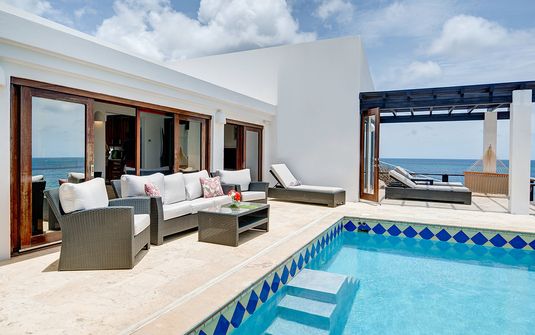
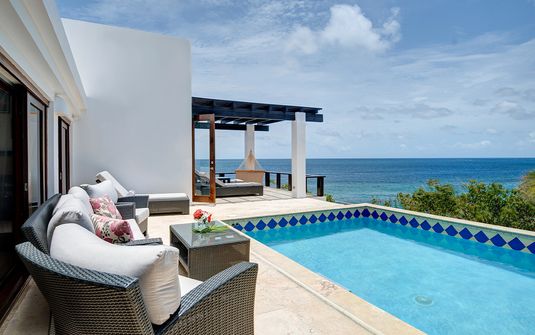
A residence close to the sandy edge can establish a strong visual continuity between terrace and shore. Broad openings bring the pale foreground into the main interior, and a covered exterior room gives the household a sheltered place within that composition. The strongest architecture makes the transition measured rather than abrupt, preserving a degree of enclosure behind the principal facade. A sitting room can remain unmistakably domestic even when the beach is prominent beyond it. This balance allows a coast-facing home to feel comfortable and personal rather than like a transparent viewing platform placed at the edge of the landscape.
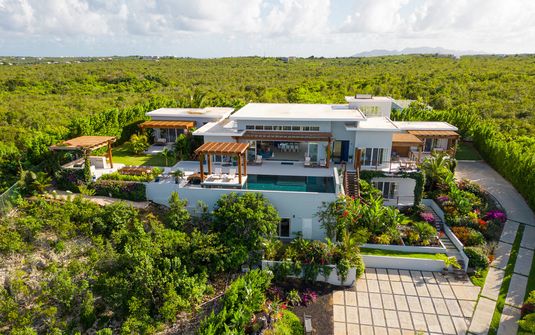
A house set further back or on higher ground offers another reading of Shoal Bay East. The shoreline may appear as a curve within a wider panorama, with gardens and surrounding roofs creating a more layered foreground. Such a setting can give the principal rooms a broader spatial relationship to the bay while allowing more protected corners around the residence itself. The quality of the address is therefore not reducible to distance from the sand. Its appeal depends on the clarity of its outlook, the privacy of its grounds and the coherence with which the house occupies its individual site.
Privacy at a Recognisable Coastal Address
Shoal Bay East is an established destination, and a private residence needs to create intimacy through its own arrangement. Setbacks, garden boundaries and the orientation of terraces can distinguish the household’s private world from the wider shoreline. A side court may offer greater enclosure than a main sea-facing deck, while bedroom windows can be positioned to acknowledge the view without becoming part of the principal gathering space. These decisions allow openness and discretion to coexist. The property feels connected to the bay, yet guests retain places whose character is shaped by the house rather than the broader coastal scene.
Privacy within the household deserves equal attention. Separate bedroom wings or carefully placed suites allow a shared stay to accommodate different daily rhythms. A secondary lounge creates an alternative to the principal terrace, and a small exterior space beside a suite can feel more personal than another oversized shared room. For families or couples travelling together, these distinctions make the residence easier to inhabit over time. The pleasure of a generous house comes from being able to choose between company and retreat, with the main living spaces remaining a natural meeting point rather than an unavoidable centre of circulation.
Architecture that Gives Light a Human Scale
The brightness of a pale coastal setting can be balanced by depth within the architecture. Verandas, recessed doors and substantial rooflines introduce a gradual movement from the open terrace to the interior. Contemporary houses may express this through simple horizontal forms; Caribbean-influenced residences may use pitched roofs and a rhythm of smaller openings. Both approaches can create a comfortable relationship to the bay. Their refinement lies in proportion and the handling of thresholds, giving the main rooms a connection to the landscape while keeping more enclosed interiors attractive and useful in their own right.
Materials bring a more tactile scale to that relationship. Timber joinery, textured plaster and stone surfaces can provide quiet variation against the broader coastal palette. A principal lounge may remain light and outward-looking, while a bedroom introduces deeper colour or softer finishes that encourage a more intimate atmosphere. The rooms need not repeat the same treatment to feel coherent. A few recurring details can connect the house while allowing each space to have a distinct purpose, making the residence rewarding through its interiors as well as through its most immediately impressive view.
A Residence for a Longer Island Stay
Over an extended stay, the quality of a Shoal Bay East home becomes apparent in smaller, repeated moments. A comfortable interior seat, a quiet room away from the main terrace and a garden that offers an alternative to the coastal outlook all contribute to the experience. These spaces broaden the house beyond its principal image. Guests can enjoy the bay without needing every part of the day to revolve around it, and the residence acquires a familiar domestic rhythm. The setting remains striking, but the house offers enough variety to support both shared time and individual privacy.
Shoal Bay East combines an enduring Anguillan landscape with several distinct forms of private living. Its white sand and open northern outlook give the destination a clear identity, while the position and design of a particular residence determine the atmosphere within it. A house can be closely tied to the shore or more removed, expansive in its shared spaces or intimate in its courts and private wings. The most convincing expression of luxury brings those choices into one coherent home, allowing the bay to provide a lasting sense of place without overshadowing the comfort and individuality of the stay.


