


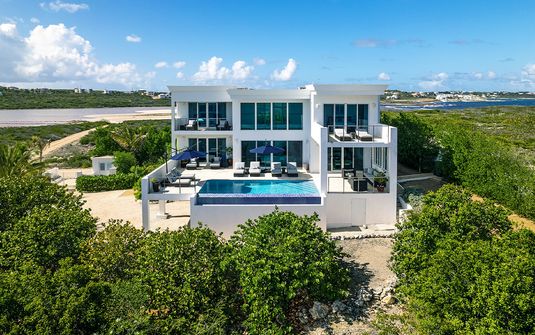
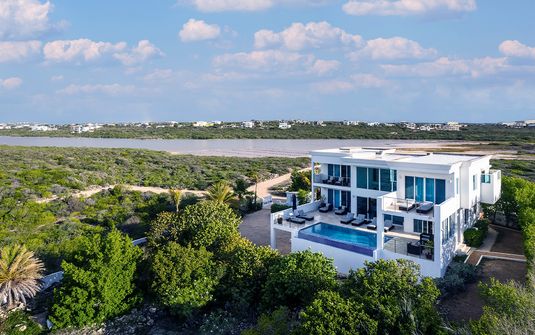


Jopsey Bay: A Private Coastal Setting in Anguilla
Jopsey Bay belongs to the more dispersed residential landscape of East End, where the relationship between an individual house and its surroundings gives each address a distinct character. Here, the appeal is intimate in scale: a coastal outlook, a private domestic setting and a sense of separation that depends on the particular site. The bay offers a quieter expression of Anguilla, suited to guests who appreciate a residence with room to establish its own atmosphere. Its identity is best understood through that local setting, rather than through the expectation of a large, self-contained resort environment.
Within the wider Caribbean, Jopsey Bay provides a restrained context for private living. The visual interest comes from the meeting of the coast, the open sky and the architecture nearest the house. A carefully framed view can be more compelling than a building that attempts to expose every room to the same panorama. The residence becomes a place to inhabit at different scales, from the principal terrace to a quieter bedroom interior, with the landscape providing continuity between them. This is an address whose appeal develops through the quality of the house as much as the first impression of its outlook.
The Scale of a Bay-Side Residence
A smaller coastal setting places particular importance on the immediate composition of the property. The distance between a boundary and the principal rooms, the placement of neighbouring buildings and the position of the main terrace all influence how private the house feels. A generous view does not by itself establish seclusion. That comes from decisions closer to the building: a planted screen beside an outdoor room, a wall that protects a courtyard or a bedroom positioned away from shared circulation. At Jopsey Bay, these details give practical meaning to the idea of a personal retreat.
The approach to the house also contributes to its character. An entrance that reveals the setting gradually can create a distinct change of atmosphere between the surrounding residential landscape and the main living spaces. A compact arrival court, a sheltered doorway and an interior passage leading toward the view establish a sequence rather than a single open expanse. That sense of progression allows even a contemporary house to feel grounded and domestic. It gives the coast a stronger presence when it finally comes into view, while preserving enclosed spaces that are comfortable in their own right.
Architecture in Conversation with the Shore
Open Rooms and Sheltered Thresholds
Coastal architecture works particularly well when the main interior and the terrace are related without becoming indistinguishable. Deep openings can preserve a clear outlook from the sitting room, while a substantial covered area creates an intermediate space outside. The distinction gives the household several ways to occupy the same aspect: fully indoors, beneath a roof at the edge of the house or on a more open terrace beyond. Furniture scale, floor finishes and the line of the roof help connect these settings. The effect is one of continuity, with enough variation to keep each room useful and recognisable.
Contemporary forms can bring clarity to the landscape through simple volumes and carefully proportioned glazing. Caribbean-influenced houses may create a softer rhythm with pitched roofs, verandas and separate wings. Neither approach needs elaborate decoration to feel refined. Textured masonry, timber joinery and a well-resolved junction between wall and roof can provide a stronger impression of quality than an oversized architectural gesture. In a coastal setting such as Jopsey Bay, restraint also allows the surrounding landscape to retain its importance. The building establishes a comfortable frame for the view rather than competing with it.
A House with Several Private Worlds
For a shared stay, bedroom placement deserves as much attention as the main gathering space. Suites opening directly onto a principal terrace create a different domestic arrangement from rooms reached through a quieter passage or separate wing. The strongest plan allows guests to join the household easily while retaining a meaningful sense of their own space. A bedroom with its own small sitting area or screened exterior corner can feel particularly complete. These are matters of arrangement rather than sheer size, and they make a substantial difference when several generations or couples occupy one residence.
Shared interiors benefit from a similar degree of choice. A large principal room can hold the household together, but a second, more enclosed space provides an alternative for conversation, reading or focused work. The relationship between those rooms should feel natural, with clear circulation that does not make a private corner part of the main passage through the house. This variety lends the residence an ease that is difficult to achieve with one oversized central room alone. Guests can spend time apart without feeling removed from the house, then return to its shared spaces without ceremony.
Grounds, Materials and the Close View
The broader coastal outlook is only one part of the landscape experienced from a villa. A garden beside a bedroom, a carefully planted boundary or the texture of a courtyard wall may occupy more of a guest’s attention during an extended stay. These nearer elements give the property depth. They also allow principal windows to frame something attractive without depending entirely on a distant horizon. At a more intimate address, the combination of a wide view and a considered close foreground can make the house feel established within its site, with privacy created through design rather than visual isolation alone.
Inside, tactile materials introduce a quieter counterpoint to the open coastal setting. Timber doors, textured fabrics and stone surfaces can give otherwise simple rooms individuality. The most coherent interiors allow these materials to recur without making every room identical: a bedroom may feel warmer and more enclosed, while the principal lounge remains lighter and outward-facing. Details such as well-placed reading lights, generous bedside surfaces and comfortable seating make the residence convincing as a home. Their value becomes clearer over time, as the stay moves beyond the initial appeal of the setting into the practical enjoyment of its rooms.
The Character of a Longer Stay
A house in Jopsey Bay is most rewarding when its quieter spaces receive the same care as its principal outlook. A sheltered terrace for two, a comfortable interior chair and a bedroom that feels acoustically separate can sustain the quality of a stay as effectively as a dramatic shared room. These smaller settings give the household choices without imposing a fixed pattern. The experience becomes personal through repeated use: particular rooms suit different moods, and the relationship between interior, garden and coast becomes familiar. The residence acquires a domestic rhythm while retaining the distinct character of its location.
Jopsey Bay’s appeal rests on that balance between a recognisable coastal address and a genuinely individual house. Its East End context gives it a place within Anguilla’s broader residential landscape, while the quality of the immediate site determines how private, open or enclosed the stay feels. A well-composed residence draws these elements together through measured architecture, thoughtful room placement and grounds that belong to the setting. For guests who value discretion and a strong sense of home, this offers a persuasive expression of island luxury, grounded in the character of the property rather than an accumulation of promises.


