
What Most Travelers Don't Know About Mallorca
Most travelers picture Mallorca as a summer beach island, and they're only half right. The largest of Spain's Balearic Islands is also a place of limestone mountains, stone farmhouses, almond orchards and quiet market towns, and the Mallorca luxury villas worth knowing about often sit in that older, slower landscape rather than on a busy seafront.
That's the side of Mallorca we find guests fall for. They arrive expecting a week by the pool and leave talking about a mountain road, a village lunch or the view from a terrace at dusk.
Where Is Mallorca?
Mallorca lies in the western Mediterranean, off the east coast of mainland Spain. It's the largest of the Balearic Islands, a group that also includes Menorca, Ibiza and Formentera. Palma, the capital, sits on a broad bay on the southwest coast, and its airport is the island's main gateway, with direct flights from mainland Spain and much of Europe.
The island is large enough to hold several distinct landscapes, yet compact enough that most of it can be explored as day trips from a single base. For travelers weighing luxury villas in Spain more widely, our Spain collection also covers the mainland coast and the neighboring islands.
What Most Travelers Don't Know About Mallorca
The surprises are mostly about variety. These are the points we share with guests planning a first villa rental in Mallorca:
The mountains are the headline. The Serra de Tramuntana runs along the northwest coast, and its terraced slopes, olive groves and stone villages were inscribed as a UNESCO World Heritage cultural landscape in 2011.
Palma is a real city. Its Gothic cathedral faces the sea, and the old quarter behind it is a maze of narrow lanes, courtyards and stone mansions.
The interior is farm country. The central plain is a patchwork of almond, olive and carob trees, low stone walls and old market towns, and the almond blossom turns it white in late winter.
The southeast is about coves. Small inlets with sheltered water and pine-backed shores line much of this coast, and some of it is protected as natural parkland.
The off-season is a different island. Spring and autumn bring walkers and cyclists to the mountain roads, while winter is quiet, mild and very local.
Why Mallorca Rewards a Slower Pace
The island's character changes noticeably from one side to the other, which is why a well-chosen base matters. In the northwest, roads climb and twist through the Tramuntana, and villages of honey-colored stone cling to the slopes above the sea. It's walking and cycling country, and the views from the coastal lookouts are reason enough to spend a morning on the road.
Inland, life follows the rhythm of the farming year. Weekly markets still anchor many of the old towns, and the countryside feels a world away from the coastal resorts. The southeast, by contrast, is softer and lower, with small coves that reward an early swim before the day warms up.
Food ties it all together. Mallorcan cooking leans on local olive oil, sobrassada (a soft, paprika-spiced sausage), slow-cooked vegetables and fresh fish, and the ensaïmada, a coiled, sugar-dusted pastry, is the island's breakfast signature. Inland vineyards produce local wines, and a long lunch on a shaded terrace is part of the local way of life.
When Is the Best Time to Visit Mallorca?
The best time to visit Mallorca is May, June, September or October, when days are warm, the sea is pleasant for swimming and the island is noticeably calmer than in high summer. These months also suit walking, cycling and long lunches outdoors.
July and August are the hottest and busiest months, when the beaches and Palma are at their liveliest. If you're traveling with children during school holidays, a villa with its own pool and grounds makes those weeks far more comfortable. Winter is mild and quiet, and many coastal businesses close for the season, but it's a lovely time for the mountains, the city and the almond blossom in late winter.
Who Mallorca Suits Best
Mallorca suits travelers who want more than one kind of holiday in a single trip. A week can easily combine beach days, a mountain drive, a morning in Palma and an evening in a village square.
Families and Multi-Generational Groups
Families do well here because the island offers space as well as sea. A countryside estate with gardens, a tennis court and a pool lets every generation set its own pace, with beaches and towns within an easy drive.
Couples, Walkers and Food Lovers
Couples and active travelers tend to gravitate toward the northwest, where the Tramuntana's trails, coastal roads and village tables shape the days. Those who prefer coves and swimming often favor the southeast.
Mallorca Luxury Villas: Where We Place Guests
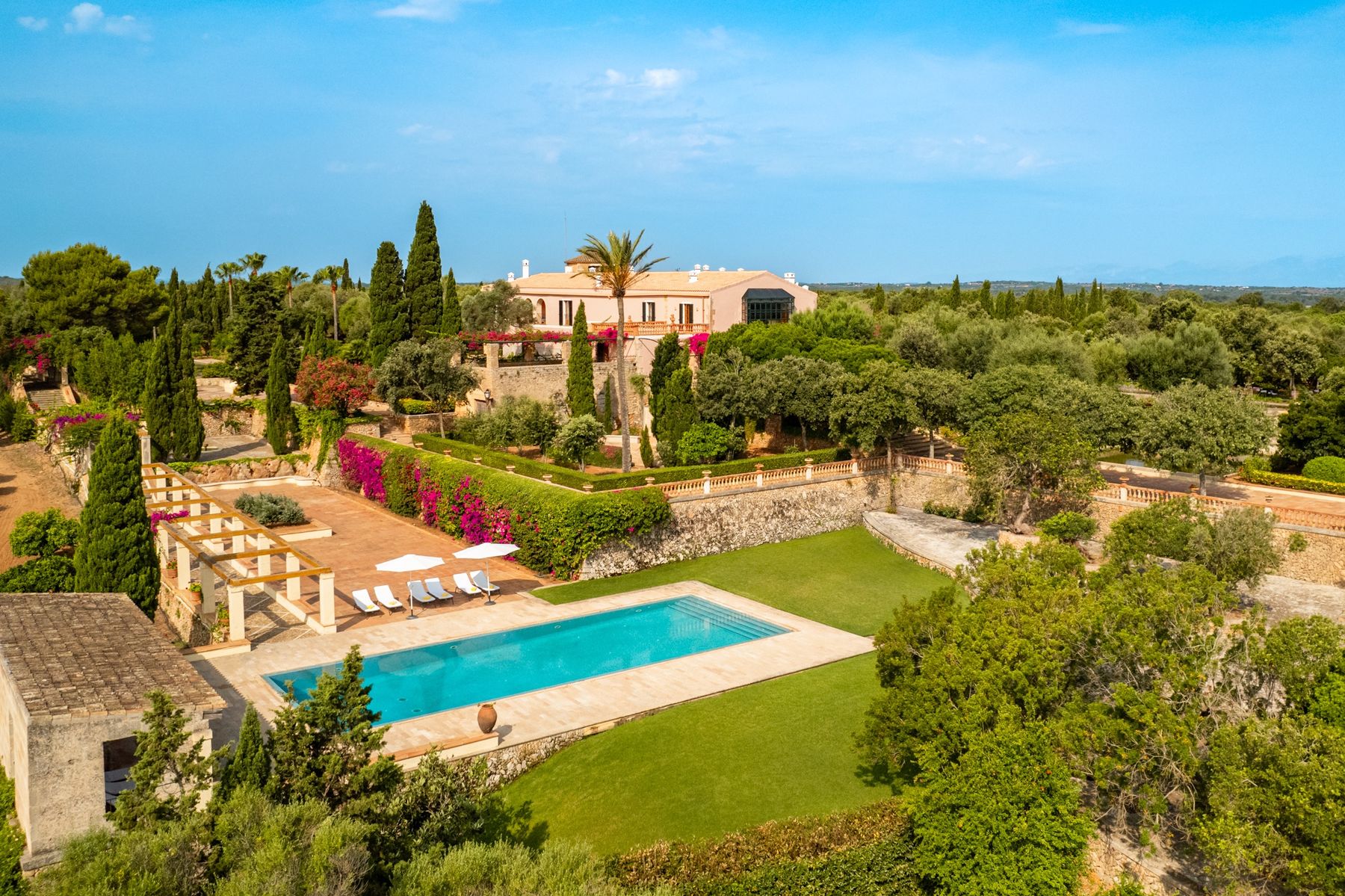
Our Mallorca homes reflect the island's range, from working-farm landscapes to minimalist architecture and medieval stonework. Here are three we know well.
For space on a grand scale, Son Doblons is set on 130 hectares of countryside, with seven landscaped gardens, fountains and ponds, a pool, a tennis court and a private soccer pitch. Inside, the restored house keeps its traditional character, with a library, a music room and fireplaces, and a tower looks out over the island. According to our listing, Son Serra beach is about five minutes away by car.
Architecture lovers often ask about Neuendorf House, designed by John Pawson and Claudio Silvestrin near Santanyí in the island's southeast. The house has two saltwater pools, one heated, a private clay tennis court, a children's playhouse, a vegetable garden and a rooftop terrace with sea views. Our listing places Cala S'Amarador about four kilometers away, and breakfast from the private chef is included, with lunch and dinner at an additional fee.
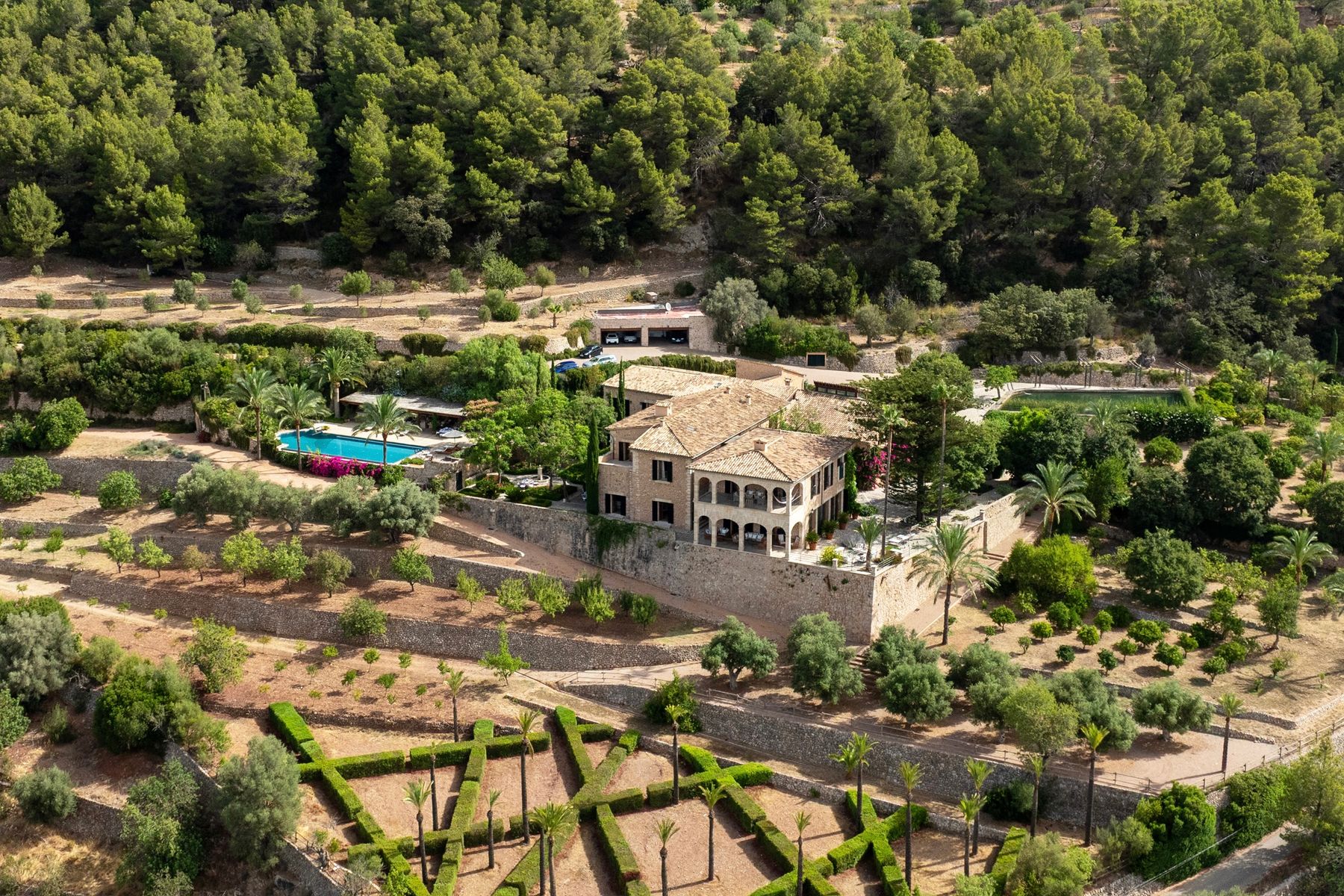
In the quiet countryside of the northwest, Son Balagueret pairs traditional Spanish stonework with views of the sea and mountains. You enter through an arched courtyard, and the house keeps an original turret dating to the 13th century. Outside, there's a heated pool, an outdoor dining area and a tennis court, and our listing places Banyalbufar about six kilometers away.
How to Choose Your Corner of the Island
Every villa in Mallorca offers a different version of the island, so we usually start by asking how you want to spend your days:
For mountains and walking: the northwest, near the Tramuntana, where a house like Son Balagueret puts the coastal villages within a short drive.
For coves and swimming: the southeast, where Neuendorf House sits close to protected coastline.
For space and privacy: the countryside, where an estate such as Son Doblons gives a large family room to spread out.
For culture and dining: a base within easy reach of Palma, so the cathedral, the old town and the waterfront are an easy evening out.
Many guests who love Mallorca later ask about its neighbors. Menorca is quieter and more rural, while Ibiza has its own countryside beyond its well-known nightlife.
Planning Your Mallorca Villa Holiday
Mallorca's real secret is how much it holds: mountains, farmland, coves and a capital city, all on one island. Choose the right base, and luxury villa holidays here can feel like several trips in one.
Since 1979, we've matched guests with villas for rent around the Mediterranean and beyond. Every home in our collection is personally inspected, and each stay is checked before arrival, so the details are settled before you land. Our concierge team can arrange transfers, provisioning and day trips across the island. Explore our Mallorca luxury villas on the Mallorca page, and when you're ready, we're here.

Our Destinations


