
Menorca: Where to Stay and Why It's Worth It
Menorca is worth it if you want a Mediterranean island that still feels unhurried: protected countryside, small sheltered coves, stone farmhouses and two historic towns rather than a long strip of resorts. As for where to stay in Menorca, our answer is a country house in the island's farmland, where the coast becomes something you visit rather than something you share.
It's often described as the quieter sibling among the Balearic Islands, and that's precisely its appeal. Guests who choose Menorca usually come for space, swimming and long, slow days, and they tend to return.
Why Menorca Is Worth It
Menorca's case rests on restraint. The whole island was declared a UNESCO Biosphere Reserve in 1993, recognizing the way farming, villages and natural landscapes have been kept in balance. Much of the countryside is still a patchwork of green fields divided by dry-stone walls, with white farmhouses scattered among them.
The coast matches that calm. A historic bridleway, the Camí de Cavalls, circles the island and links beaches, coves and headlands on foot. Walk a stretch of it in the morning and you'll understand why so many visitors describe Menorca as the Balearics as they used to be.
There's history, too. The island is dotted with prehistoric stone monuments from its Talaiotic period, including the T-shaped taulas and the boat-shaped Naveta des Tudons, a burial monument near Ciutadella.
Where Is Menorca?
Menorca lies in the western Mediterranean, northeast of Mallorca, and is the second-largest of Spain's Balearic Islands. Mahón (Maó), the capital, sits in the east on a long, deep natural harbor, and the island's airport is close to the town. Ciutadella, the former capital, lies at the western end, with an old quarter of stone streets and a small harbor.
Ferries link Menorca with Mallorca and the mainland, which makes a two-island trip easy to arrange. The island is part of our wider Spain collection.
What Sets Menorca Apart
These are the details we share with guests choosing between the Balearic Islands:
Two coasts, two characters. The south coast is known for sheltered coves with pale sand and pine woods, while the north is rockier, wilder and more exposed to the Tramontana wind.
Two towns, two moods. Mahón's harbor and architecture recall the island's 18th-century British period, while Ciutadella feels older and more Spanish.
A walkable coastline. The Camí de Cavalls makes it easy to explore the shore on foot, a section at a time.
Island flavors. Mahón cheese, local gin from the British era and caldereta de langosta, a rich lobster stew, are the island's signatures.
A view from the middle. Monte Toro, the island's highest point, looks out across both coasts.
When Is the Best Time to Visit Menorca?
The best time to visit Menorca is June or September, when the sea is warm, days are long and the island is calmer than at the height of summer. May and October are ideal for walking and cycling, with mild weather and green countryside, though the sea is cooler.
July and August are the hottest and busiest months, when the popular coves fill early. Winter is quiet and many seasonal businesses close, so it suits walkers and travelers who simply want peace rather than beach days.
Where to Stay in Menorca
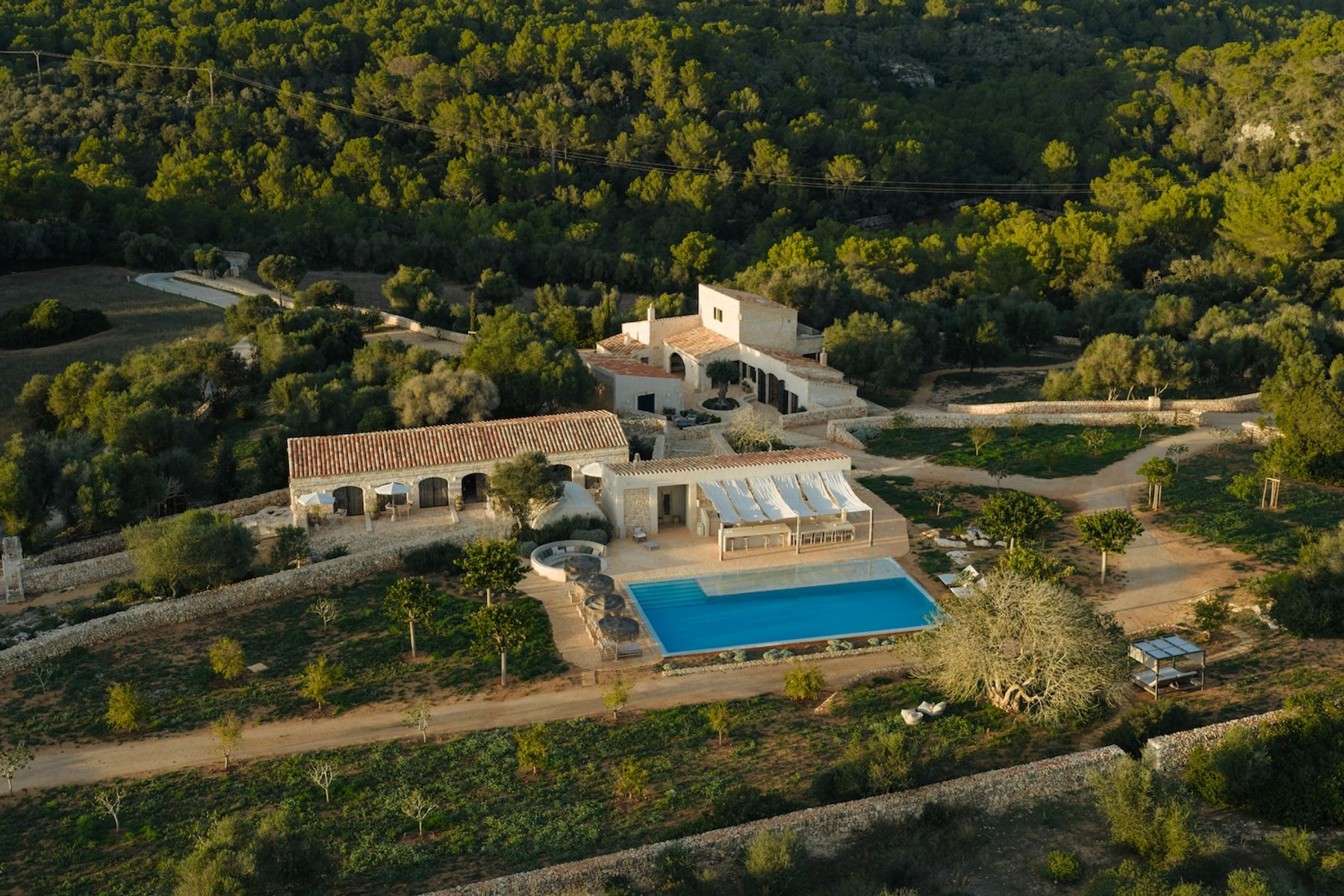
Where you stay shapes how you experience the island. The towns offer harbor views and evening strolls, while the coast puts the sea at your door in high season. For most of our guests, though, the countryside is the answer: more space, more privacy and the freedom to choose a different cove each day.
That's where Santa Ana comes in. It's a restored farmhouse set within a 210-hectare estate, made up of several old agricultural buildings brought back to life. The main house, once the farmer's residence, holds a living room, a library, a dining room, a kitchen and a primary suite with a private terrace over the countryside. A second large suite sits in the granary, further bedrooms occupy a converted barn near the pool, and a gym fills the former horse stables.
Outside, a pool with a sunbathing terrace, a firepit, an outdoor kitchen with a barbecue and several lounge areas set the pace for long days. Guests have exclusive use of the facilities, and our listing notes daily housekeeping and a host. It's the kind of luxury holiday villa that suits a family or a group of friends who want to stay put and let the island come to them.
Getting around is simple. Menorca is small enough that a single base works for the whole stay, and a car, or a driver arranged in advance, makes it easy to reach the southern coves in the morning and one of the towns for dinner. In high summer, we suggest heading to the most popular coves early, or exploring the coast by boat, when the beaches reached on foot are at their busiest. Spending a day or two in each town gives you a feel for both ends of the island.
Combining Menorca With a Neighboring Island
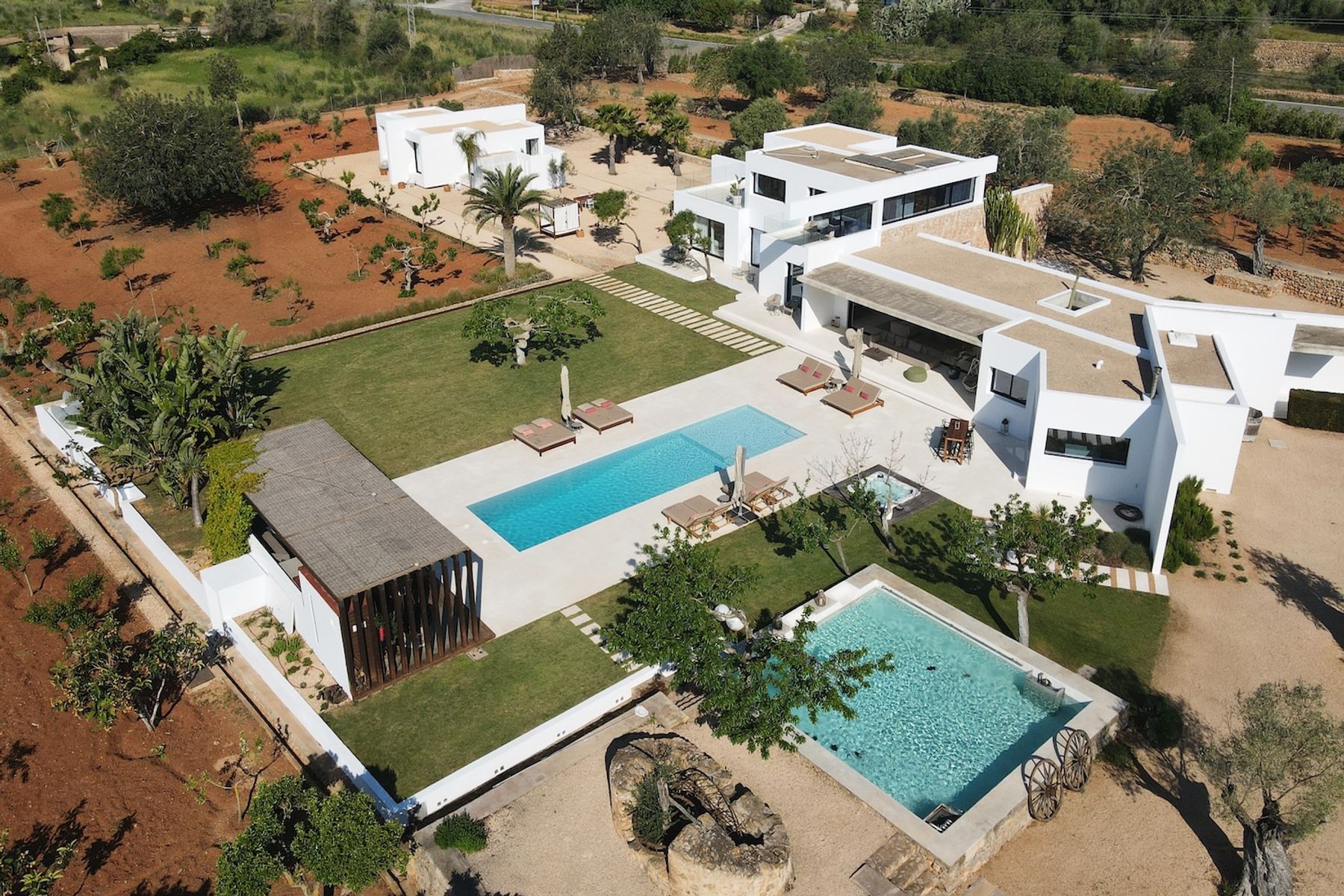
Santa Ana is currently our only home on Menorca, so guests who want more choice, or a two-island trip, often add a stay elsewhere in the Balearics. On Mallorca, Neuendorf House is a minimalist home by John Pawson and Claudio Silvestrin near Santanyí, with two saltwater pools and a clay tennis court. On Ibiza, Villa Nina sits among farmland and orchards in Sant Joan de Labritja in the north of the island, with a pool, a hot tub, an outdoor cinema, a gym and a sauna. Both are on their own islands, not on Menorca.
Who Menorca Suits Best
Menorca suits travelers who value calm over nightlife. Families like the sheltered southern coves and the space of a country house, and family-friendly villas with pools make the hottest afternoons easy. Couples and walkers love the coastal path and the quiet roads, and anyone interested in history will find the prehistoric sites and the two old towns rewarding.
Frequently Asked Questions
Is Menorca worth visiting?
Yes, if you want a quieter Balearic island. Menorca is a UNESCO Biosphere Reserve, with protected countryside, sheltered southern coves, prehistoric monuments and two historic towns, and it's less built-up than many Mediterranean resort coasts.
Where should you stay in Menorca?
For space and privacy, we recommend the countryside. Our home on the island is Santa Ana, a restored farmhouse on a 210-hectare estate with a pool, a library and a gym in the former stables.
What is the best month to visit Menorca?
June and September offer warm sea and fewer crowds. May and October are best for walking, and July and August are the hottest and busiest months.
Is Menorca good for families?
Yes. The south coast's sheltered coves suit children, the pace is relaxed and a country house gives everyone room to spread out.
Planning Your Menorca Stay
Menorca is worth it for the same reason it's easy to overlook: it has chosen calm over spectacle. Knowing where to stay in Menorca comes down to how much space and privacy you want, and a country house in its quiet farmland is, for many guests, the right answer.
We've arranged luxury villa holidays since 1979, and every home in our collection is personally inspected, with each stay checked before arrival. Our concierge team can arrange transfers, provisioning and boat days along the coast. Explore our villas for rent in Menorca and across the Balearics, and when you're ready, we're here.

Our Destinations


