
What Makes Catalonia So Timeless?
Catalonia feels timeless because almost nothing here has been replaced, only added to. Greek and Roman ruins, medieval stone villages, fishing towns and Pyrenean farms all still sit in their original landscapes, and the region's language, food and architecture carry on alongside them. For travelers considering luxury villas in Catalonia, that continuity is the real draw.
It's also why the region rewards a slower kind of stay. A private home in Catalonia can be a seafront house above a rocky cove, a manor in the Girona countryside, or a mountain retreat with snow on the peaks in winter. Each one belongs to a different chapter of the same place.
Where Is Catalonia?
Catalonia occupies the northeastern corner of Spain, bordered by France and Andorra along the Pyrenees to the north and by the Mediterranean to the east. Its four provinces are Barcelona, Girona, Lleida and Tarragona, and the city of Barcelona is its capital.
The coast north of Barcelona, running up toward the French border, is the Costa Brava, known for small coves, pine-covered headlands and whitewashed fishing towns. Inland, the Empordà plain and the Girona countryside give way to wooded hills, and then to the high valleys of the Pyrenees. In a single week, you can move between sea, farmland and mountains without ever feeling rushed.
Why Catalonia Feels Timeless
The answer lies in layers. These are the threads that give the region its unhurried, lasting character:
Ancient foundations. The Greek and Roman site at Empúries sits on the Costa Brava, and Roman Tarragona, once Tarraco, is a UNESCO World Heritage Site.
Medieval villages that still function. Stone towns across the Girona countryside keep their walls, arcades and narrow lanes, and they're lived in rather than staged.
Romanesque churches in the mountains. The Vall de Boí in the Pyrenees holds a group of Romanesque churches recognized by UNESCO.
A living language. Catalan is spoken alongside Spanish, on street signs, menus and in daily conversation.
Art rooted in the landscape. Salvador Dalí was born in Figueres and made his home at Portlligat beside Cadaqués, and the light of this coast runs through his work.
None of these feel like museum pieces. They're simply part of the everyday backdrop.
The Costa Brava: Coves, Light and Fishing Towns
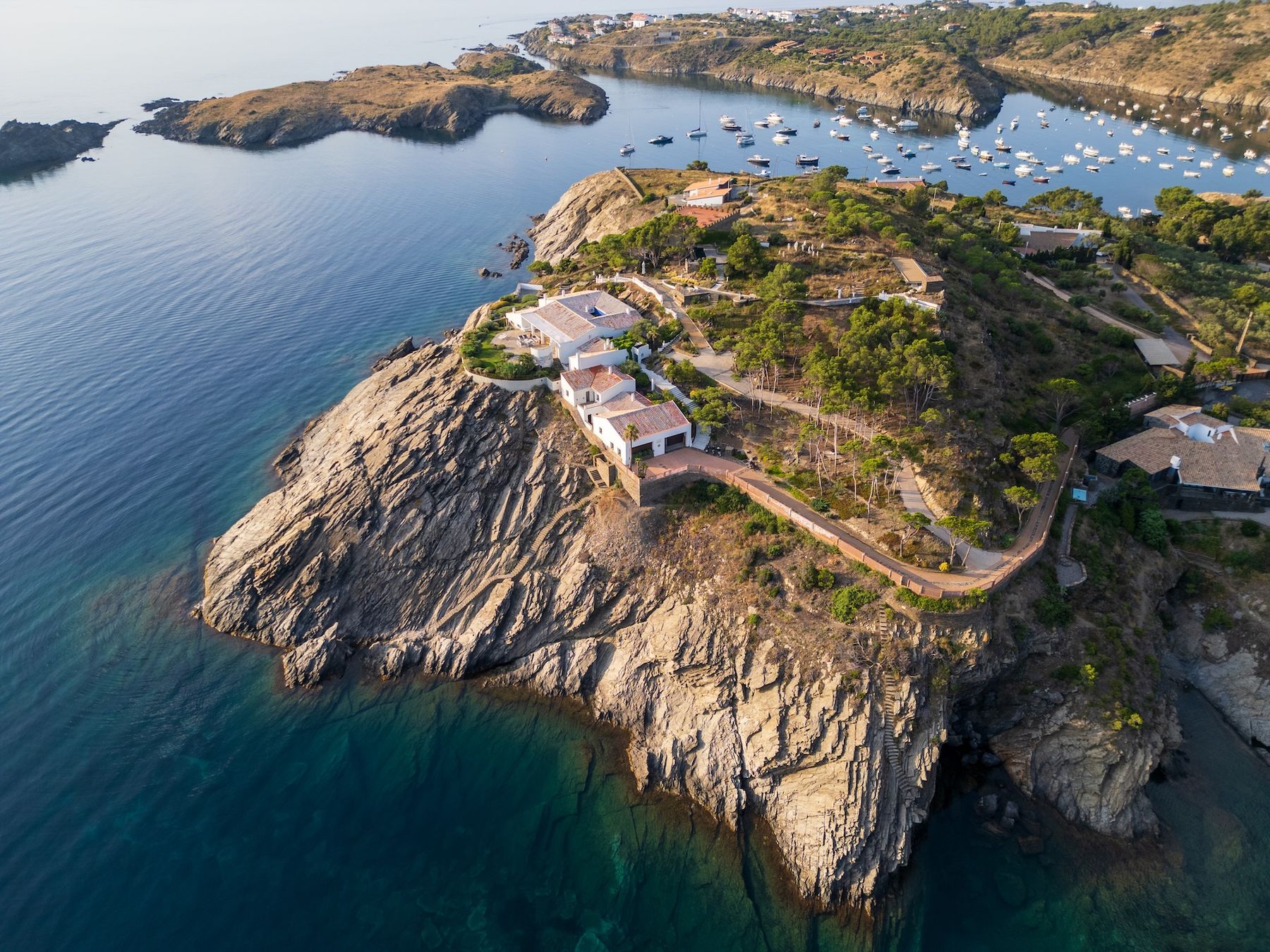
The Costa Brava is the side of Catalonia most visitors picture first. Its shoreline is broken into rocky inlets and small beaches, many reached by coastal paths, and the water is clear enough for snorkeling and swimming straight off the rocks.
At the far northern end, Cadaqués is a whitewashed fishing village set within the rugged Cap de Creus Natural Park. It's here that we offer Villa Dali, a seafront home on the edge of the village. According to our listing, it was first designed in 1962 by the American architect Peter Harnden and renovated in 2018 with care for the original architecture. For nearly two decades it was home to Dalí's personal manager, which explains the statues and the small chapel hidden in its terraced park.
The house is a single storey built above the rock, with a heated infinity pool and direct access to the beach. Views reach across the natural park toward Portlligat, and the Salvador Dalí House Museum is 1.4 km away according to our listing.
Further south, inland from the central Costa Brava, a different kind of stay is possible. Mas Torroella occupies a 14th-century Catalan manor in the Girona countryside, a short drive from Palafrugell (6.6 km by our listing) and from the coastal village of Llafranc (9.8 km). Exposed stone walls and wooden beams carry the house's history, and a first-floor terrace looks out toward the Mediterranean.
Inland Catalonia: Stone Houses and Working Land
Step back from the coast and Catalonia becomes quieter and greener. The traditional country house here is the masia, a substantial stone farmhouse with thick walls and tiled roofs, built to work the land around it. Many of the region's most characterful private homes began life this way.
Mas Torroella shows how well that heritage adapts to a family holiday. Its grounds include a private tennis court and a children's playground, while a private spa holds a heated indoor pool, a hot tub and a Finnish sauna. There's an outdoor pool too, and a fitness room for early mornings. Our listing describes it as particularly well suited to multi-generational stays and larger groups, with communal spaces generous enough for everyone to gather.
The countryside around Girona also rewards day trips. Girona itself has a well-preserved medieval old town and Jewish quarter along the River Onyar, and the hilltop villages of the Empordà are made for long lunches and slow afternoons.
The Pyrenees: Catalonia's Mountain Retreat
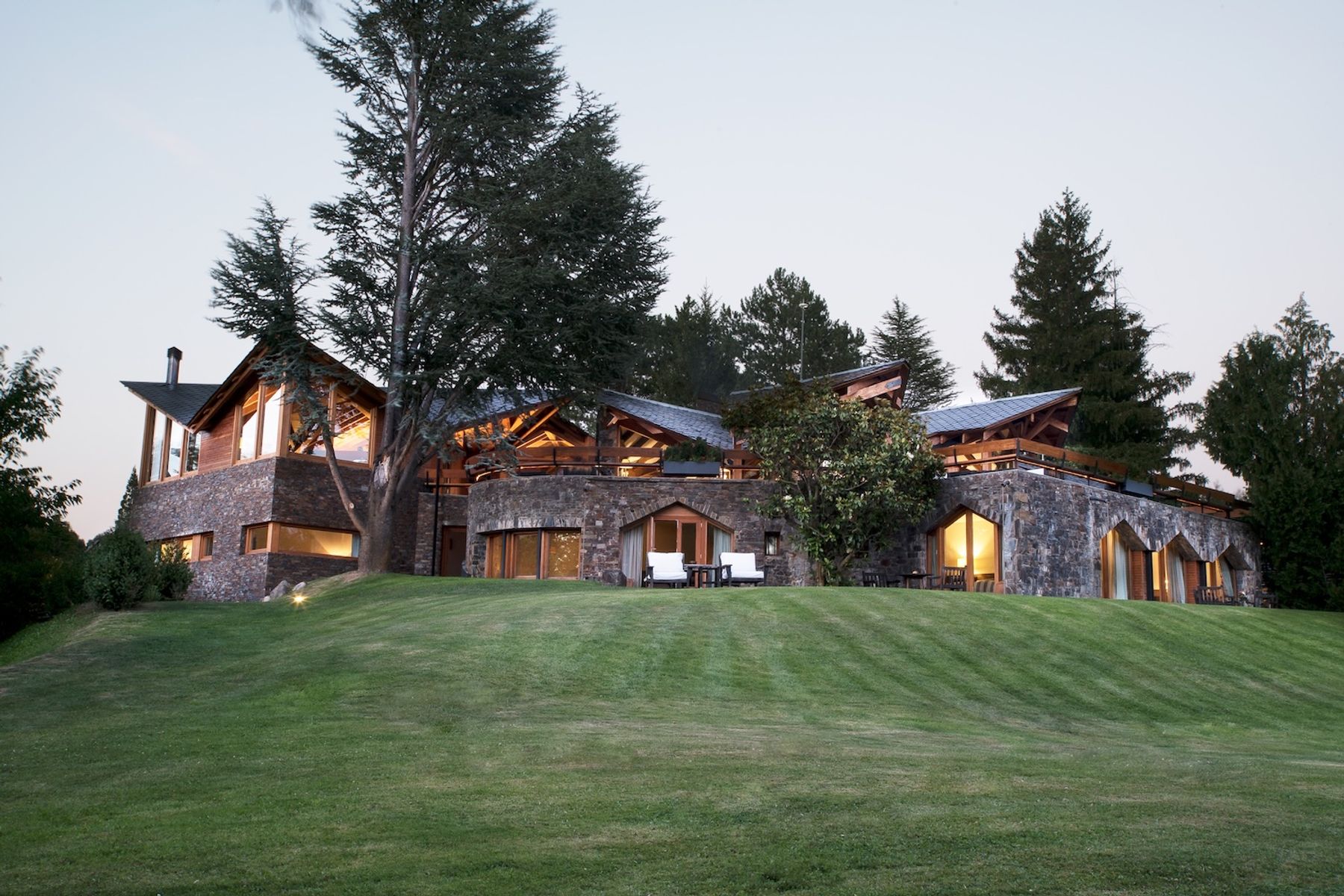
Catalonia's northern edge is mountain country. The Cerdanya is a broad, high valley in the eastern Pyrenees shared with France, with Spain's small enclave of Llívia sitting inside French territory. Summer brings hiking and cycling, and winter brings a ski season to the surrounding slopes.
Our Cerdanya Retreat sits in this valley, combining traditional architecture with views of the surrounding peaks. Inside, cathedral ceilings with exposed wood beams frame a living area centred on a fireplace. Outside, a private pool, a covered dining area, a barbecue and an outdoor fireplace sit among gardens and terraces facing the mountains.
The listing also includes a sauna, a games room with a snooker table and foosball, and services from a daily housekeeper, a butler and an estate manager. According to our listing, La Molina ski resort is 32.5 km away, Andorra is about thirty minutes by car, and Barcelona around one hour and twenty minutes.
When Is the Best Time to Visit Catalonia?
The best time depends on which Catalonia you want. The coast has a Mediterranean climate with hot summers and mild winters, while the Pyrenees bring cold, snowy winters and fresh summers.
Late May and June: warm sea days on the Costa Brava before the busiest weeks, with long evenings and green countryside.
July and August: peak season on the coast. It's the time for swimming and boating, though villages are livelier and roads busier.
September to early October: our favorite window for the coast and the Empordà, with warm water, the grape harvest inland and a calmer pace.
December to March: the winter ski season in the Pyrenees, and a quiet, crisp time for city and countryside visits.
Food, Wine and the Catalan Table
Catalan cooking is one of the clearest expressions of the region's continuity. It moves between the sea and the mountains, pairing fish and seafood with cured meats, wild mushrooms and garden vegetables.
The simplest dish, pa amb tomàquet, is bread rubbed with ripe tomato, olive oil and salt, and it appears at almost every meal. Cava comes from the Penedès, southwest of Barcelona, and the Empordà and Priorat produce wines with real character. In late winter and early spring, the calçotada, a gathering around grilled spring onions, brings friends and families outdoors.
Villa life fits this rhythm easily. A long lunch on a terrace, local produce from the market and an evening meal outside are as much a part of a Catalan holiday as any sightseeing.
Which Part of Catalonia Suits You?
Most guests choose between the three settings above, and each suits a different kind of trip:
Couples and art lovers often lean toward Cadaqués, where Villa Dali places the sea, the Cap de Creus landscape and Dalí's world within easy reach.
Families and larger groups find that the manor setting of Mas Torroella, with its tennis court, playground and spa, keeps everyone busy without leaving the estate.
Active travelers gravitate to the Cerdanya Retreat, with mountain walks in summer and ski days in winter.
Many guests also combine a countryside or coastal stay with a few nights in Barcelona, the Catalan capital, for Gaudí's architecture and the city's dining culture.
Planning a Villa Holiday in Catalonia
Barcelona's international airport is the main gateway to the region, and Girona also has an airport serving the Costa Brava. A car is the easiest way to explore, since the coves, villages and mountain valleys are spread out and public transport thins out in rural areas.
Every home in our collection is personally inspected before it joins, and we complete a pre-arrival check before every stay. Since 1979, our team has helped guests plan villa holidays with the same care, and we've been named among Condé Nast Traveler's Top Travel Specialists for more than fifteen consecutive years.
Catalonia's Lasting Appeal
Catalonia doesn't ask you to choose between history and comfort, or between the sea and the mountains. It offers all of them within a few hours' drive, each with its own deeply rooted character. Whether you picture a seafront terrace at Cadaqués, a 14th-century manor among the fields, or a Pyrenean valley under snow, our luxury villas in Catalonia let you settle into that timeless pace. When you're ready, explore our homes in Catalonia and we'll help you find the one that fits.

Our Destinations


